

 United Kingdom (UK)
 United States (US)
 Canada
 South Africa
 India
India Australia
 New Zealand
 China
China Russia
 Germany
 France
 Spain
Spain Netherlands
 Vietnam
 United Arab Emirates
 Italy
Italy Poland
 Thailand
 Türkiye









 Algeria


Most single English teachers spend roughly 900 to 1,300 euros a month in a mid-sized Spanish city, sharing a flat. Numbeo puts a single person’s costs at about 719 euros before rent, so your room and your lifestyle decide where in that range you land.
Cost of Living in Spain for English Teachers: A Full Budget Breakdown
The cost of living in Spain for English teachers is comfortably manageable on a teaching wage: budget roughly 900 to 1,300 euros a month in a mid-sized city, less in the south and more in central Madrid or Barcelona. For jobs and legal routes, see our guide to teaching English in Spain. On a typical academy salary you live well and put a little aside, because Spain pays you in lifestyle rather than savings.
Key takeaways
- A single English teacher can live on roughly 900 to 1,300 euros a month in a mid-sized Spanish city, with rent the biggest single variable.
- Independent data backs this up: Numbeo puts a single person’s monthly costs at about 719 euros before rent, with a one-bedroom flat adding 700 to 900 euros or a shared room far less.
- Rent is what separates the cities: a room runs about 450 to 650 euros in Madrid or Barcelona against 300 to 450 euros in Seville, Granada or Valencia.
- A typical academy salary of 1,000 to 1,400 euros a month covers a comfortable life in most cities, so the maths works, but hard saving does not.
- Everyday Spain is cheaper than the UK or Ireland for eating out, transport and coffee, which is a large part of the appeal.
- The fastest way to protect your budget is to pick your city with your eyes open and add a few private tutoring hours at 15 to 25 euros each.
What is the cost of living in Spain for English teachers?
The cost of living in Spain for English teachers usually lands between 900 and 1,300 euros a month for a single person sharing a flat in a mid-sized city, which a normal academy salary covers with a little room to spare. Spain is one of the more affordable countries in western Europe, and for teachers coming from the UK or Ireland the day-to-day prices, a coffee, a menu del dia, a metro ride, feel noticeably gentle.
The independent cost tracker Numbeo puts the estimated monthly costs for a single person at about 719 euros before rent, based on thousands of user submissions. Add a room in a shared flat and most teachers land in that 900 to 1,300 euro band, while anyone renting a one-bedroom flat alone should budget several hundred euros more. The table below breaks a realistic month down line by line for a single teacher in a mid-sized city, in euros and rough pounds, and the figures are approximate and monthly.
| What you spend on | Typical cost (EUR) | Rough cost (GBP) |
|---|---|---|
| Room in a shared flat | 350 to 500 | 300 to 430 |
| Groceries | 200 to 250 | 170 to 215 |
| Eating and drinking out | 120 to 180 | 105 to 155 |
| Transport (monthly pass) | 30 to 45 | 25 to 40 |
| Utilities and internet (share) | 70 to 110 | 60 to 95 |
| Mobile phone | 10 to 15 | 9 to 13 |
| Leisure and odds and ends | 90 to 140 | 78 to 120 |
| Rough monthly total | 870 to 1,240 | 750 to 1,070 |
That total sits neatly under a mid-range academy wage, which is exactly why Spain works as a lifestyle destination even though it is not a saving one. For the pay side of the same equation, our companion guide to the English teacher salary in Spain sets out what academies, assistant schemes and international schools actually pay.
How much is rent for teachers across Spanish cities?
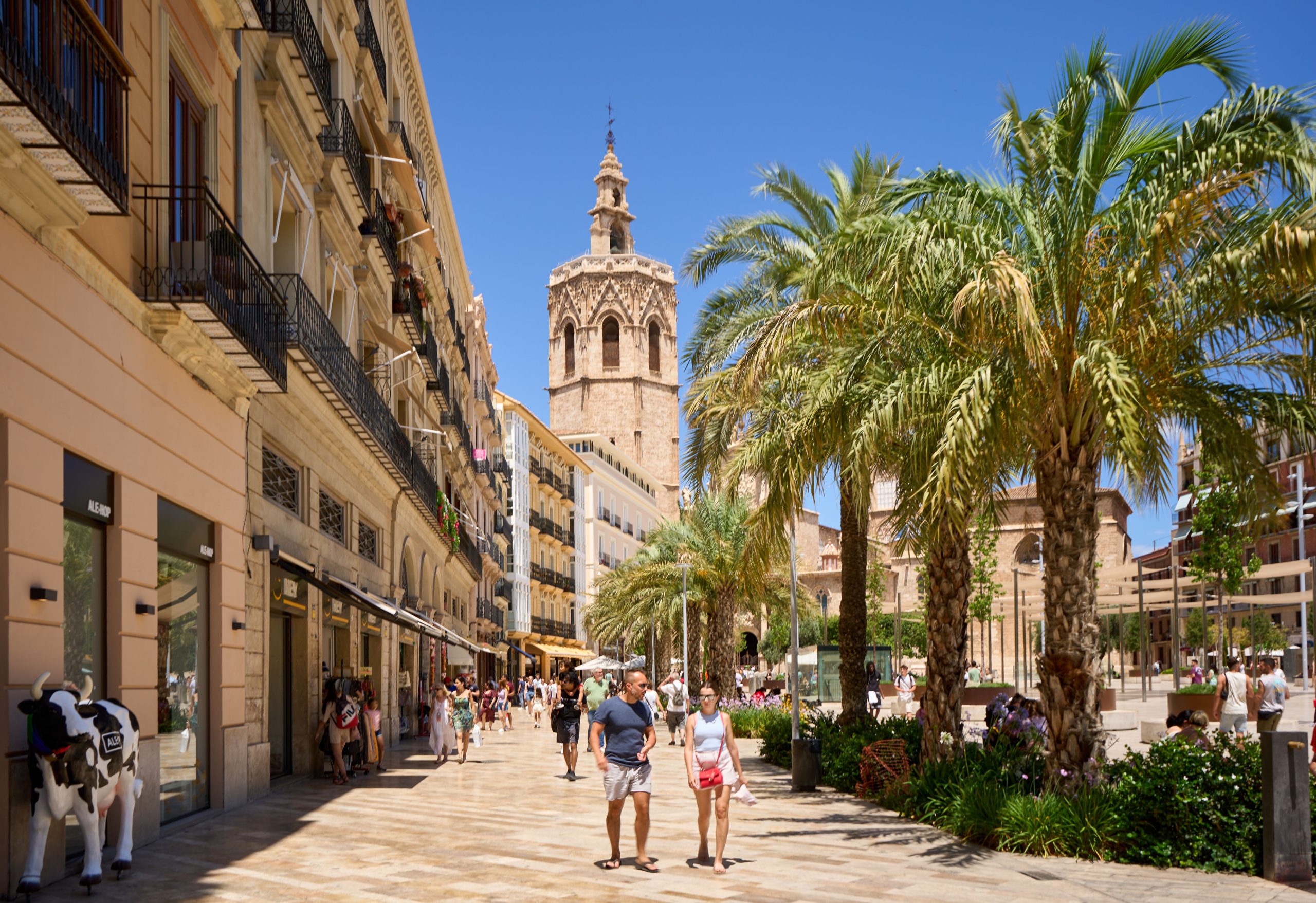
Rent is the single biggest line in any teacher’s budget in Spain, and it swings more by city than anything else you buy. A room in a shared flat, which is how most teachers live in their first year or two, runs roughly 450 to 650 euros a month in Madrid or Barcelona, but only 300 to 450 euros in Seville, Granada, Valencia or Malaga. A whole one-bedroom flat is a different order of spending: Numbeo puts the national average at about 905 euros a month in a city centre and 711 euros outside it, which is why sharing is the norm on a teaching wage.
The important thing to grasp is that the highest-paying cities are also the most expensive to live in, so a bigger salary in Madrid does not automatically leave you better off than a smaller one in the south. Deposits usually run to one or two months up front, and many landlords ask for a Spanish bank account and a NIE number, the foreigner’s identity number, before they will sign. Budget for that initial outlay, because arriving with only your first month’s rent in hand is one of the most common ways new teachers get caught short.
What do food, transport and bills cost each month?
Everyday spending in Spain is where the country quietly rewards you, because groceries, transport and bills all come in below UK and Irish levels. A single teacher who cooks at home most nights spends roughly 200 to 250 euros a month on groceries, and Spain’s markets and neighbourhood supermarkets make fresh food genuinely cheap. Eating out is part of the culture rather than a treat, and a set lunchtime menu del dia, two or three courses with a drink, still costs around 12 to 15 euros in most cities.
Transport is another gentle line. A monthly public transport pass is roughly 30 to 45 euros depending on the city, and younger teachers often qualify for discounted travel cards. Utilities for a shared flat, electricity, water, heating and internet split between flatmates, usually land at 70 to 110 euros a head, though summer air conditioning and winter heating push that up at the edges of the year. A mobile plan with plenty of data is about 10 to 15 euros a month. None of these are large numbers on their own, and together they are the reason a modest salary stretches to a full social life.
Healthcare is the other quiet saving. Teachers on a proper contract pay into the Spanish social security system and access the public health service, which is well regarded and keeps a major cost off the monthly budget entirely. Those on the assistant schemes or short stays should carry a UK Global Health Insurance Card or private cover for the gaps. Add a gym at 25 to 40 euros a month if you want one, and the picture is complete: a life that feels generous on a wage that would feel tight in London or Dublin.
Does a teacher’s salary in Spain cover the cost of living?
For most teachers a single academy contract covers the cost of living in Spain with a small margin, and private hours turn that margin into breathing room. A typical academy salary of 1,000 to 1,400 euros a month sits above the 870 to 1,240 euro budget in the table above, so a careful teacher in a mid-sized city ends the month a little ahead rather than behind. The picture tightens in central Madrid or Barcelona, where higher rent eats the difference, and loosens in the south, where cheaper living leaves more of the same wage in your pocket.
The teachers who feel comfortable are almost always the ones with a second income stream. Private tutoring at 15 to 25 euros an hour, a handful of online lessons in the evening, or summer exam camps are how most people lift a break-even salary into a genuinely relaxed one. If you want to see how the pay side varies by role and city before you plan a budget, our full breakdown of the English teacher salary in Spain and the wider guide to teaching English in Spain both sit alongside this cost guide. To compare Spain against the rest of the market before you commit, our English teacher salaries by country index gives the current monthly pay for every destination we track, in local currency and euro, with the date each figure was checked.
Academic
The TEFL Institute
Cost of Living in Spain for English Teachers: A Full Budget Breakdown
teflinstitute.comWatch on YouTube · The TEFL Institute Group
Which Spanish cities give teachers the most for their money?

The cities that leave teachers with the most at the end of the month are usually the smaller southern ones, where rents fall faster than salaries. Madrid and Barcelona offer the deepest job markets and the strongest business English work, but a room there can cost 200 euros a month more than the same room in Granada or Seville, and that gap is real money on a teaching wage. Valencia is the popular middle ground, with a decent supply of academy jobs, a coast, and rents that sit below the two big cities.
The public language assistant grant makes the point sharply, because it is a flat figure wherever you are posted. According to the British Council language assistants programme, assistants receive around 800 euros a month in most regions, rising to about 1,000 euros in Madrid and Valencia. That same grant buys a far easier month in Cadiz or Granada than in the capital. If you are weighing Spain against cheaper destinations elsewhere, our budget breakdown of the cost of living in Morocco for English teachers is a useful comparison a short flight away.
The TEFL Institute Group
Every figure here is researched, sourced and dated
The costs and salaries in our country guides come from official and independent sources, carry a named author, and are checked before we publish. You can read exactly how we research and fact-check every guide in our Editorial Charter.
Can you save money while teaching English in Spain?
Saving in Spain is possible but modest, and most teachers aim to break even comfortably rather than build a nest egg. On a single academy contract in a mid-sized city you can usually put a small amount aside each month once rent, food and a social life are covered, and adding regular private students turns that trickle into something you would actually notice. What Spain rarely allows is hard saving, which is the honest trade for the climate, the food and the cheap flights across Europe.
The arithmetic is simple enough to plan around. Your academy salary is the base, your rent is the biggest variable, and your extra private or online hours are the difference between just getting by and having real room to spare. Teachers who arrive expecting Gulf-style savings tend to leave disappointed, while those who come for the life and treat a monthly surplus as a bonus often stay for years. For a sense of how the routes and contracts affect what you keep, our guide to how to teach English in Spain lays out the assistant schemes, academies and private work side by side.
How can teachers cut the cost of living in Spain?
The simplest way to protect your budget in Spain is to choose your city and your flatshare well, because those two decisions shape everything else. A room in a good shared flat in a mid-sized city, rather than a place of your own in central Madrid, can save you 300 euros or more a month on its own. Living slightly outside the tourist centre, shopping at neighbourhood markets and the discount supermarkets, and using the monthly transport pass rather than taxis all add up quietly over a year.
A few teacher-specific moves help too. Line up a couple of private students early, since word of mouth builds fast once you are established in a neighbourhood, and keep a small buffer for the quiet summer weeks when many academies wind down. It also pays to open a local bank account promptly, because paying rent and bills from a Spanish account avoids the currency fees that quietly erode a foreign card. Non-EU teachers should factor in one-off costs that EU citizens avoid, such as visa fees and document legalisation — our apostille and police certificate costs desk prices and times those documents from the official source. It is also worth reading the UK government guidance on living in Spain before you go, because the residency route you take affects both your paperwork and your healthcare costs. Citizens of Ireland and other EU countries have the right to live and work in Spain on the same terms as locals, which sidesteps those extra fees entirely.
Is the cost of living in Spain worth it for English teachers?
For the right person the cost of living in Spain is very much worth it, as long as you judge the country on lifestyle rather than on savings. Spain suits teachers who want to live in a warm, sociable place with superb food and easy travel, who value their daily life over the size of their bank balance, and who are happy to build their income from more than one source. It suits dedicated savers less well, and it rewards anyone who plans ahead with a strong qualification and a clear idea of which city fits their budget.
Two practical points before you commit. Sort your qualification and your documents first, because academies want a certificate they can verify and, for non-EU teachers, a visa route takes time to arrange. And choose your city with your budget in mind, because the difference between Madrid rents and Granada rents will shape your monthly reality more than the salary on the contract. If you are still comparing destinations, the wider guide to jobs in Spain for English speakers is a sensible next stop.
Ready to qualify and budget for teaching in Spain?
Spanish employers want a certificate they can check, so start there and let your budget follow the job. The 120 Hour Advanced TEFL Course meets the standard entry requirement for language academy roles, and the Ofqual-regulated Level 5 TEFL Diploma is the stronger choice if international schools, universities or the best-paid academy work are your target. The TEFL Institute is Europe’s largest TEFL trainer by teachers certified, an Ofqual Approved Centre, number 21335, and has certified 161,000 teachers since 2017 who have gone on to teach in 80 countries, with a 4.7 rating from 488 verified reviews. Every certificate carries a number an employer can verify, which is exactly the proof a Spanish academy checks before it offers you the better-paid classes.
Cost of living series: France · Germany · Poland · Greece · Morocco · Mexico · Colombia

Katie Troy
Managing Director at The TEFL Institute Group. Katie has been with the TEFL team since 2018, is a qualified teacher with a degree in education and years of experience teaching abroad, and works closely with the academic team.
We love taking your call.

TEFL Institute guides
Plan for 2027
Japan
JET, ALT and eikaiwa pay
Read the guide
Plan for 2027
Thailand
Visas and teaching licences
Read the guide
Plan for 2027
Cambodia
Pay, requirements and visas
Read the guide
Plan for 2027
Germany
Freelance work and pay
Read the guide
Plan for 2027
Mexico
Jobs, pay and cities
Read the guide
Yes. A typical academy salary of 1,000 to 1,400 euros a month covers a comfortable life in most cities, with a little left over. Comfort tightens in central Madrid or Barcelona, where rents are highest, and eases in cheaper southern cities such as Granada or Seville.
Smaller southern cities such as Granada, Seville and Cadiz are the cheapest, mainly because a room rents for 300 to 450 euros rather than the 450 to 650 euros common in Madrid or Barcelona. Valencia is a popular middle ground with lower rents than the two big cities.
A room in a shared flat, the usual choice, costs about 450 to 650 euros a month in Madrid or Barcelona and 300 to 450 euros in southern cities. A whole one-bedroom flat averages around 905 euros in a city centre, according to Numbeo, so most teachers share.
Saving is possible but modest. A single academy contract covers rent, food and a social life with a little to spare, and adding private students at 15 to 25 euros an hour builds a small surplus. Spain rewards you with lifestyle rather than large savings.
For everyday spending, yes. Eating out, coffee, transport and groceries are generally cheaper in Spain than in the UK or Ireland, and rent outside the biggest cities is lower too. Salaries are also lower, so the gain shows in lifestyle rather than in savings.