
 United Kingdom (UK)
 United States (US)
 Canada
 South Africa
 India
India Australia
 New Zealand
 China
China Russia
 Germany
 France
 Spain
Spain Netherlands
 Vietnam
 United Arab Emirates
 Italy
Italy Poland
 Thailand
 Türkiye








 Algeria


Teach English in Denmark
TEFL jobs in Denmark
You can teach English in Denmark, but it is a small and competitive market. Danes speak excellent English, so most jobs are in international schools, private language schools and business English, mainly in Copenhagen and Aarhus. Employers usually want a degree and a TEFL certificate of at least 120 hours. EU and EEA citizens can work freely, while UK, US and other non EU teachers need a work permit, and most TEFL salaries fall below the 2026 Pay Limit Scheme threshold of DKK 552,000 a year.
Teaching English in Denmark at a glance
| Main employers | International schools, private language schools, business English providers, adult education, private students |
| Typical pay | Language schools and business English often pay about DKK 200 to 350 an hour; international schools pay monthly salaries |
| Minimum wage | No statutory minimum wage; pay is set by collective agreements |
| Hiring | Spring and early summer for an August start; language schools hire through the year |
| Minimum TEFL hours | 120 hours, with a Level 5 TEFL or CELTA preferred |
| Degree | Expected by most employers; international schools want a teaching qualification |
| Right to work | EU, EEA and Nordic citizens work freely; others need a residence and work permit |
| Main cities | Copenhagen, Aarhus, Odense and Aalborg |
Is it hard to find English teaching jobs in Denmark?
Yes, harder than in most of Europe. Danes learn English from an early age and speak it fluently, so there is little demand for general English classes, and state schools employ Danish teachers. Pay and working conditions are good, so teachers who find a post tend to stay, which keeps vacancies low. The realistic routes are international schools, business English and language schools, and your chances are far better if you hold an EU passport and already live in Denmark.
What kinds of English teaching jobs are there in Denmark?
International schools. Denmark has around 25 international and bilingual schools, mostly around Copenhagen and Aarhus, serving expat and Danish families. They want qualified teachers with a teaching licence and experience, and pay well.
Business English. The most active part of the TEFL market. Language schools and training firms teach professional and specialist English to staff at Danish companies, often in company offices.
Language schools and adult education. Private schools and evening institutions teach adults and exam candidates. Much of the work is part time and paid by the hour.
Private students. Exam preparation and conversation practice for professionals, usually added on top of other work.
How much do English teachers earn in Denmark?
Hourly pay at language schools and in business English often runs at about DKK 200 to 350 an hour, and international schools pay monthly salaries on Danish scales. Denmark has no statutory minimum wage; pay is set by collective agreements between employers and unions. Living costs, especially rent in Copenhagen, are among the highest in Europe, and income tax is high too, so full-time work matters. Compare pay across countries on the TEFL Salary Index, or read how much TEFL teachers make.
What qualifications do you need to teach English in Denmark?
Most employers want a degree and a TEFL certificate of at least 120 hours, and the competition means a Level 5 TEFL or CELTA and experience make a real difference. International schools ask for a teaching qualification and experience, and universities usually a master’s degree. You do not need to speak Danish to teach at a language or international school, though state school posts require Danish and a recognised teaching qualification, and learning Danish helps with daily life. The Ofqual-regulated Level 5 TEFL course can be verified on the Ofqual register.
Which visa do you need to teach English in Denmark?
EU, EEA, Swiss and Nordic citizens, including Irish passport holders, can live and work in Denmark freely and register once they arrive. UK citizens lost that right after Brexit. UK, US and other non EU teachers need a residence and work permit through the Danish Agency for International Recruitment and Integration (SIRI). The main route, the Pay Limit Scheme, needs a salary of at least DKK 552,000 a year in 2026, and the supplementary scheme DKK 446,000, so most TEFL roles do not qualify, though some international school posts do. Young people from countries with a Danish working holiday agreement, including Canada, may be able to work temporarily. Check current rules on New to Denmark and our Visa Desk before you apply.
Where are the English teaching jobs in Denmark?
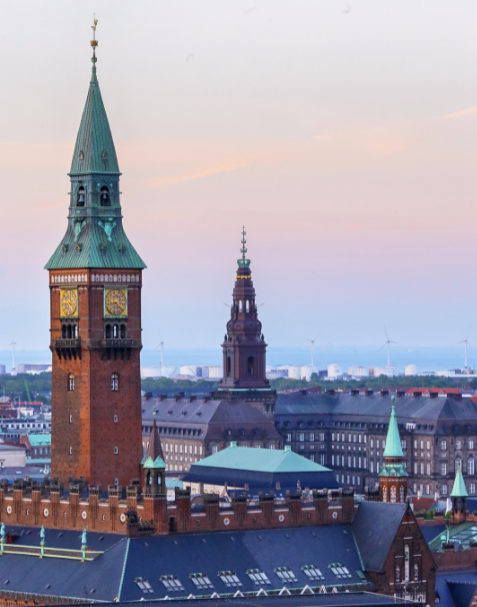
Copenhagen has most of the international schools and business English work and the highest rents. Aarhus, the second city, has a large university and growing international community. Odense and Aalborg have smaller markets and lower living costs.
What is it like living in Denmark?
Denmark regularly ranks among the happiest countries in the world, with a strong work and life balance, short working weeks and long holidays. Cycling is the main way to get around, cities are safe and clean, and the idea of hygge, a cosy and relaxed way of life, shapes daily life through long, dark winters. Classes are informal and students expect discussion rather than lectures.
Teaching in Denmark: read next
- Comparing the Nordics? See our guides to Norway and Finland, or nearby Germany.
- Choosing a course? Read our guide to the best TEFL certifications for Europe.
- Compare pay in our TEFL Salary Index and check entry rules on the Visa Desk.
Last updated: 2 October 2026. Pay figures are approximate typical ranges, not quotes. Work permit thresholds change every January, so confirm current requirements with SIRI before you apply.

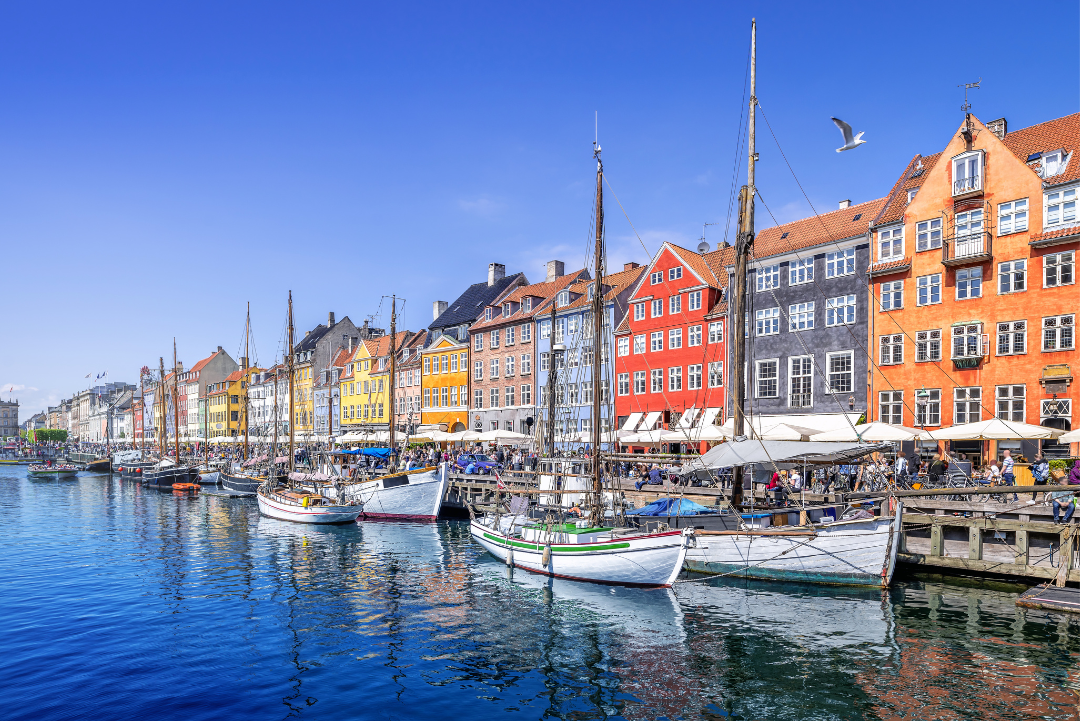
Living costs
Denmark is one of the most expensive countries in Europe, and Copenhagen rent is the biggest cost by far. Most new teachers share a flat, and landlords often ask for up to three months’ deposit plus rent in advance, so arrive with savings. Aarhus, Odense and Aalborg are noticeably cheaper.
Income tax is high, but it pays for free healthcare and excellent public services. Cycling keeps transport costs low, while eating and drinking out are expensive, so most people cook at home.
All figures below are in Danish kroner (DKK) and are Numbeo’s Copenhagen averages and current rental listings, checked on 2 October 2026. Prices change, so check a current source before you budget.
- One-bedroom flat: DKK 7,500 to 14,000 a month
- Monthly transport pass: About DKK 460
- Inexpensive meal: DKK 140
- Mid-range dinner for two: DKK 800
- Fast-food combo meal: DKK 90
- Cappuccino: DKK 47
- A pint of beer: DKK 60
- Soft drink: DKK 34
TEFL jobs in Denmark : KEY POINTS

SALARY
About DKK 200–350 an hour; no statutory minimum wage

EDUCATION
Degree expected by most employers

MAIN JOB TYPES
International schools, business English, language schools, adult education, private students

TEFL CERTIFICATION NEEDED
120 hour TEFL certificate
KEY FACTS
- Popular locations for TEFL jobs: Copenhagen, Aarhus, Odense and Aalborg
- The average salary for EFL teachers: Language schools and business English often pay about DKK 200 to 350 an hour, and international schools pay monthly salaries on Danish scales. Denmark has no statutory minimum wage; pay is set by collective agreements.
- TEFL qualification requirements: A minimum of 120-hour TEFL qualification will be required.
- Prerequisite university degree: A degree is usually required; some jobs might specify certain subjects to study, such as a degree in education.
- Term times: The school year runs from August to June.
- Currency: Danish Krone (DKK)
- Language: Danish/English
- Teaching programmes: Language Schools, International Schools, Voluntary Teaching, Business English, Advanced English.
- Age restrictions: None.
- Previous teaching experience: Usually required, particularly for international schools and business English.
Most English teaching in Denmark is in international schools, business English and language schools, because Danish state schools employ Danish teachers of English. Business English classes often take place in company offices and are paid by the hour, so many teachers combine several employers to build a full timetable.
Private tutoring and online teaching are common ways to add income. Students are usually improvers or advanced learners rather than beginners. Self-employed tutors must register and report their earnings to the Danish tax authority, SKAT.
If you plan to teach in a state school, your foreign teaching qualification must be assessed by the Danish Agency for Higher Education and Science, and you will need Danish. Allow plenty of time for this.
Facts about Denmark

LANGUAGE
Danish/English

POPULATION
About 6 million

TEFL JOB DEMAND
Low
CURRENCY
Danish Krone (DKK)
CAPITAL
Copenhagen

OUR DENMARK TEFL RATING
3/5
TEFL jobs in Denmark : FAQS
How much can I make teaching English in Denmark?
Language schools and business English often pay about DKK 200 to 350 an hour, and international schools pay monthly salaries on Danish scales. Denmark has no statutory minimum wage; pay is set by collective agreements. Rent and tax are high, so a full timetable matters.
Where can I teach English in Denmark?
Most jobs are in Copenhagen, which has the majority of international schools and business English work. Aarhus, the second city, has a large university and a growing international community, and Odense and Aalborg have smaller markets with lower living costs.
Is Denmark expensive to live and work in?
Yes. Denmark is one of the most expensive countries in Europe, and a one-bedroom flat in Copenhagen costs roughly DKK 7,500 to 14,000 a month. Income tax is high but pays for free healthcare and strong public services. Sharing a flat and living outside Copenhagen make a big difference.
What is the best TEFL certificate for teaching in Denmark?
Because Denmark’s market is small and competitive, a higher level qualification matters more than in most countries. An accredited TEFL certificate of at least 120 hours is the minimum, and an Ofqual-regulated Level 5 TEFL Diploma or CELTA gives you a clear advantage for business English and language school work. International schools want a teaching qualification such as a PGCE. Our guide to the best TEFL certifications for Europe compares the options.
Do I need to speak Danish to teach English in Denmark?
Not for international schools, language schools or business English, which teach in English. State school posts are different: they require Danish and a teaching qualification recognised by the Danish Agency for Higher Education and Science. Learning some Danish still helps with daily life and with building a network.
Can non EU citizens get a work permit to teach English in Denmark?
It is difficult. The main route, the Pay Limit Scheme, needs a salary of at least DKK 552,000 a year in 2026, or DKK 446,000 under the supplementary scheme, and most TEFL roles pay less. Some international school posts qualify. Young people from countries with a Danish working holiday agreement, including Canada, may be able to work temporarily. Check current rules on our Visa Desk.
TEFL courses
Become a confident, qualified English teacher with flexible online, classroom or mixed learning.

TEFL internship
With accommodation, training and full in-country support sorted – it’s the hassle-free way to kick-start your TEFL career.

TEFL jobs
Check out new TEFL job listings on our sister company’s well-stocked jobs board.