

 United Kingdom (UK)
 United States (US)
 Canada
 South Africa
 India
India Australia
 New Zealand
 China
China Russia
 Germany
 France
 Spain
Spain Netherlands
 Vietnam
 United Arab Emirates
 Italy
Italy Poland
 Thailand
 Türkiye








 Algeria


English teacher salaries in Spain are modest but liveable: expect roughly 1,000 to 1,400 euros a month at a private language academy, 800 to 1,000 euros as a public-school language assistant, and 1,800 euros or more at an international school. For legal routes and requirements, see our guide to teaching English in Spain. Spain is a lifestyle choice, so most teachers aim to live well rather than to save.
Key takeaways
- A typical English teacher salary in Spain runs from about 1,000 to 1,400 euros a month at a private language academy, for roughly 20 to 25 teaching hours a week.
- Government language assistant schemes, including the British Council programme, pay a grant of 800 to 1,000 euros a month rather than a full salary, for far fewer hours.
- International and bilingual schools pay the most, commonly 1,800 to 2,500 euros or more, but they expect a degree and often a teaching licence.
- Madrid and Barcelona post the highest headline pay, yet high rents mean your money often stretches further in Valencia, Seville or Granada.
- Most teachers lift their income by stacking a contract with private tutoring at 15 to 25 euros an hour, or a few online hours in the evening.
- An Ofqual-regulated Level 5 qualification, exam preparation skills and some Spanish are the three things that move you up the pay ladder fastest.
How much do English teachers earn in Spain?
Most English teachers in Spain earn between 1,000 and 1,400 euros a month at a private language academy, which is the single most common first job in the country. That is a real, spendable wage in most cities, but it is not a saving salary, and it sits below what teachers earn in the Gulf or parts of Asia. The honest framing is that Spain pays you in weather, food and quality of life rather than in a fat bank balance.
Compare Spain with other countries: our TEFL Salary Index sets the language assistant stipend beside programmes in France, Japan, Korea and more.
The figure you actually take home depends on four things: the kind of employer, the city, your qualifications, and how many extra private hours you are willing to teach. A newly certified teacher at an academy in a mid-sized city will usually land near the lower end of that range, while an experienced teacher with an Ofqual-regulated diploma and business English skills can push toward the top of it, or move into a better-paid school role entirely. For a broader view of the market before you commit, our full guide to teaching English in Spain covers the day-to-day of living and working there alongside this pay breakdown.
Pay is also quoted differently depending on the role. Academies usually advertise a gross monthly salary, private tutoring is priced by the hour, and the public language assistant schemes give a monthly grant rather than a contracted wage. Keeping those three formats straight is the key to comparing offers sensibly, so the sections below take each one in turn.
What is the average monthly salary at a Spanish language academy?

A language academy in Spain typically pays between 1,000 and 1,400 euros a month for around 20 to 25 contact hours a week, and this is the benchmark most new teachers are measured against. These private schools, known locally as academias, run classes for children, teenagers and adults after school and after work, so the timetable is often split across late afternoons and early evenings rather than a neat nine to five.
The contract itself matters as much as the headline number. A proper full contract includes social security cover and paid holidays, and the academic year usually runs from October to June, which means summer can be lean unless you line up a camp or private students. Some academies offer only an autonomo arrangement, where you invoice as a self-employed worker and cover your own social security, so always ask which one is on the table before you accept.
Roughly 1,200 euros a month, the middle of the academy range, works out at close to 1,000 pounds, which funds a comfortable if careful life in most Spanish cities. It covers a room in a shared flat, food, transport and a social life, with a little left for weekend travel. It does not usually cover a flat of your own in central Madrid, which is why so many teachers treat the academy contract as a base and build private hours on top of it.
How much do language assistant and public school programmes pay?
Government language assistant schemes pay a monthly grant of about 800 to 1,000 euros, not a full salary, in exchange for far fewer classroom hours. This is a different kind of arrangement to an academy job, and it suits people who want a legal, structured first year in a Spanish public school rather than a career wage. According to the British Council language assistants programme, assistants receive 800 euros a month in most regions, rising to 1,000 euros in Madrid and Valencia, for 12 to 16 hours a week.
Because the hours are low, the hourly value of a language assistant grant is actually decent, and many assistants top it up with private tutoring in the afternoons. The programme also handles the paperwork that makes staying in Spain legal, which is a genuine benefit for non-EU teachers who cannot simply arrive and work. British applicants should read the UK government guidance on living in Spain first, since Brexit changed the residence rules and the assistant schemes are one of the cleaner routes still open.
For citizens of Ireland and other EU countries, the calculation is simpler. You have the right to live and work in Spain on the same terms as a local, a right the EU sets out in its guidance on working in another EU country, so you can take an academy contract directly without needing a programme to sponsor your stay. That freedom is worth real money, because it lets EU teachers chase the better-paid academy and school roles rather than the fixed grant.
What do English teachers earn in Spain by role and school type?
The table below sets the main types of English teaching work in Spain side by side, so you can see where the money is and what each role asks of you. The figures are typical advertised ranges rather than guaranteed offers, and they are approximate and gross.
| Role or employer | Typical pay (EUR) | Hours and what to expect |
|---|---|---|
| Private language academy | 1,000 to 1,400 a month | 20 to 25 contact hours, terms from October to June, afternoons and evenings |
| Public school language assistant | 800 to 1,000 a month grant | 12 to 16 hours, a stipend rather than a salary, paperwork handled for you |
| Private tutoring | 15 to 25 an hour | Flexible top-up, often paid in cash or by simple invoice |
| International or bilingual school | 1,800 to 2,500 or more a month | Degree expected, often a teaching licence, daytime school hours |
| University language centre | 1,200 to 1,800 a month | Term-time, higher qualifications and some experience preferred |
| Online teaching from Spain | 8 to 20 an hour | Fills gaps in a timetable, pay depends on the platform and your experience |
The pattern is clear once you see it laid out. The steady middle of the market is the academy contract, the ceiling is the international school, and almost everyone lifts their real income with private or online hours. If you are still choosing where to start, our guide to the routes into teaching English in Spain explains how the assistant schemes, academies and private work fit together.
How do you actually get hired and paid in Spain?
The Spanish market rewards teachers who are in the country, certified and ready to start, because academies like to meet you and watch a short demonstration lesson before they commit. A plan that has you arriving in early September with a recognised certificate and a tidy CV will beat a stack of emails sent from home in spring, since that is when the academic year staffs up.
Work several channels at once. Apply directly to named academias in your target city, many of which never advertise externally, use reputable job boards and the group’s own jobs board, and once you are there, walk in with printed CVs during the first weeks of term. It also pays to widen the net beyond classrooms, and our look at jobs in Spain for English speakers covers the tutoring, camps and online work that often fill out a teacher’s income.
Every TEFL opening, salary and deadline that matters.
In your inbox every two weeks. Free, no spam, unsubscribe any time.
Teacher pay by country
New TEFL openings
Programme and visa dates
Hiring windows close while you scroll.
Deadlines, salaries and visa notes for teaching jobs worldwide, checked against official sources and sent free every two weeks.
Get on the WireAcademic
How Much Do English Teachers Earn in Spain? Salaries by City and School Type
Which Spanish cities pay English teachers the most?
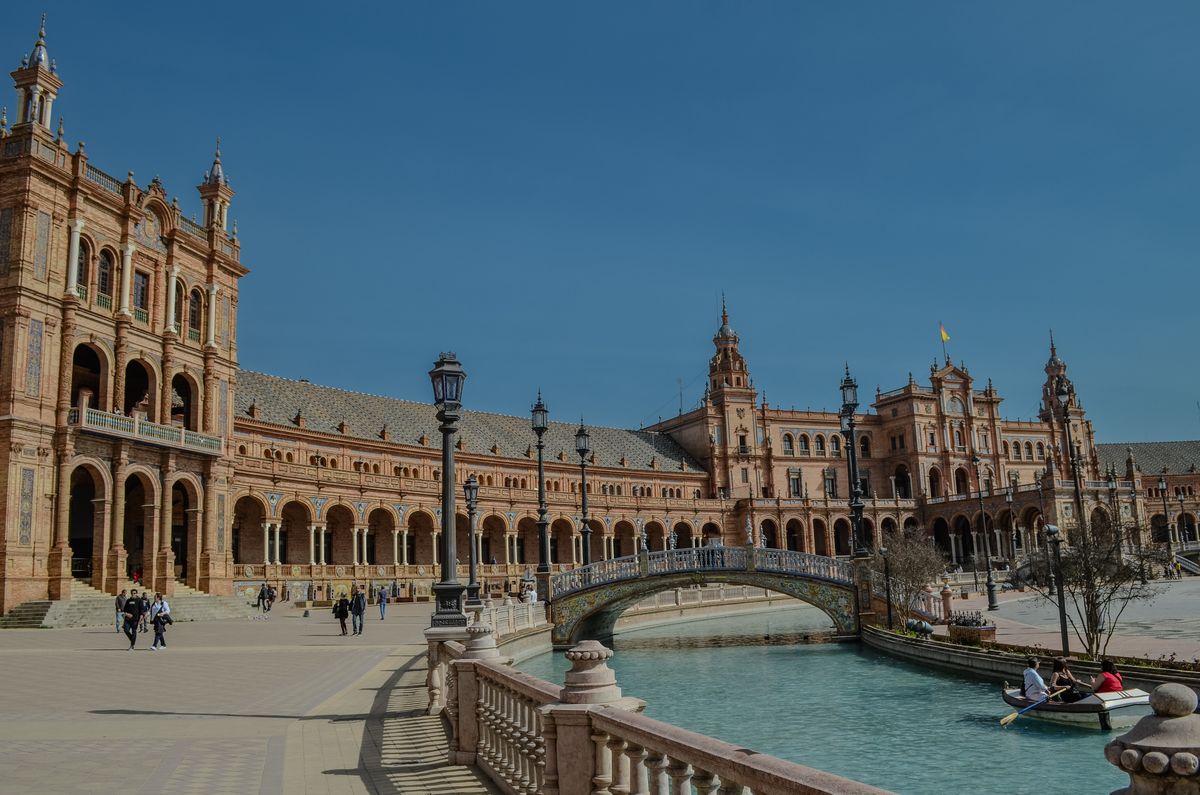
Madrid and Barcelona post the highest headline salaries, but they also have the highest rents, so the city that leaves you with the most at the end of the month is often a smaller one. This is the single most important thing to understand about pay in Spain: the nominal number and the money you actually keep are two different figures, and rent is what separates them.
In Madrid and Barcelona, a busy teacher with private students can earn well, and the business English market in both cities is deep, but a room in a shared flat can swallow 450 to 650 euros a month. In Valencia, Seville, Granada or Malaga, academy pay is a little lower, yet rooms often run 300 to 400 euros, and the warmer, slower lifestyle is a large part of why teachers choose Spain in the first place. The public language assistant grant is a flat figure wherever you are posted, which means it goes noticeably further in a cheaper southern city than it does in the capital.
| City | Typical academy pay (EUR) | Rough room rent (EUR) | The honest feel |
|---|---|---|---|
| Madrid | 1,100 to 1,500 | 450 to 650 | Most jobs and business English, but the highest costs |
| Barcelona | 1,100 to 1,500 | 450 to 650 | Strong market, high rents, huge quality of life |
| Valencia | 1,000 to 1,300 | 350 to 500 | A popular middle ground of jobs and affordability |
| Seville or Granada | 950 to 1,250 | 300 to 450 | Lower pay, cheaper living, the classic Spanish lifestyle |
Can you save money teaching English in Spain?
Saving is possible but modest, and most teachers break even comfortably rather than build a nest egg. A single academy contract in a mid-sized city covers rent, food, transport and a genuine social life, and if you add a steady handful of private students you can put a little aside each month. What Spain rarely does is let you save hard, which is the honest trade for the climate, the food and the short flights across Europe.
The arithmetic that matters is simple. Your academy salary is your base, your rent is the biggest variable, and your private or online hours are the difference between just getting by and having real breathing room. Teachers who arrive expecting Gulf-style savings leave disappointed, while those who come for the life and treat a small surplus as a bonus tend to stay for years. If you are weighing Spain against other destinations on pay alone, it helps to know that a degree is not always required, and our guide to teaching English abroad without a degree shows where the doors stay open.
How can you earn more as an English teacher in Spain?
The fastest way to raise your pay in Spain is to raise your qualification and your range, because employers pay more for teachers they can charge clients more for. Three things move the needle. The first is the level of your certificate. An Ofqual-regulated Level 5 TEFL diploma sits on the UK regulated qualifications framework at the same level as well-known classroom courses, and it is what lets you compete for the better academy and school roles rather than the entry-level ones.
The second is specialism. Exam preparation for Cambridge and IELTS, business English for the many companies in Madrid and the north, and young learner skills are the three add-ons Spanish employers pay a premium for. The third is private work: once you have a base contract, private students at 15 to 25 euros an hour are the simplest way to lift your monthly total, and word of mouth builds quickly once you are established in a neighbourhood. The TEFL Institute is Europe’s largest TEFL trainer by teachers certified, is an Ofqual Approved Centre, number 21335, and every certificate carries a number an employer can verify, which is exactly the kind of proof a Spanish academy checks before it offers you the better-paid classes.
Is teaching English in Spain worth it for the money?
For the right person, yes, as long as you judge it on lifestyle rather than savings. Spain suits teachers who want to live in a warm, sociable country with a rich culture and easy travel, who value their day-to-day life over the size of their bank balance, and who are willing to build their income from more than one source. It suits dedicated savers less well, and it rewards teachers who plan ahead with a strong qualification and a clear idea of which city fits their budget.
Two practical points before you commit. Sort your qualification and your documents first, because academies want a certificate they can check and, for non-EU teachers, a visa route takes time to arrange. And decide your city with your eyes open, because the difference between Madrid rents and Seville rents can matter more to your monthly reality than the salary on the contract. If you are still comparing destinations, our roundup of countries hiring TEFL teachers right now is a sensible next stop.
Ready to qualify for a better-paid teaching job in Spain?
Spanish employers want a certificate they can verify, so start there. The 120 Hour Advanced TEFL Course meets the standard entry requirement for language academy roles, and the Ofqual-regulated Level 5 TEFL Diploma is the stronger option if international schools, universities or the best-paid academy work are your target. The TEFL Institute has certified 161,000 teachers since 2017, who have gone on to teach in 80 countries, and we hold a 4.7 rating from 488 verified reviews. You can read how our guides are researched and checked in our Editorial Charter before you spend a penny.

Jessica Jeffery
Recruitment and Partnerships Specialist at The TEFL Institute Group. Jessica holds a business degree alongside TEFL and CELTA qualifications, has taught in Thailand and Italy, and helps students find high-quality teaching jobs and internships abroad.
Tara and Jess talk through different TEFL and EFL topics, from finding work abroad to life in the classroom.
FAQs
Questions students ask us
Most English teachers in Spain earn about 1,000 to 1,400 euros a month at a private language academy, for roughly 20 to 25 hours a week. International schools pay 1,800 euros or more, while public school language assistants receive a grant of 800 to 1,000 euros.
Yes, an academy contract covers rent, food, transport and a social life in most Spanish cities, but it rarely leaves much to save. Teachers who want more usually add private tutoring at 15 to 25 euros an hour, or a few online evening hours.
Madrid and Barcelona advertise the highest headline pay, roughly 1,100 to 1,500 euros a month, but they also carry the highest rents. Smaller cities such as Valencia, Seville and Granada pay a little less, yet cheaper living often leaves you with more each month.
According to the British Council, language assistants in Spain receive a monthly grant of 800 euros in most regions, rising to 1,000 euros in Madrid and Valencia, for 12 to 16 hours a week. It is a stipend rather than a contracted salary.
Not always. Many private language academies will hire a strong, well qualified teacher without a degree, though a degree is usually required for international schools, universities and the public language assistant schemes. A recognised TEFL certificate of at least 120 hours is the practical minimum.
Raise your qualification to an Ofqual-regulated Level 5 diploma, add specialisms such as exam preparation or business English, and build private students on top of a base contract. Some Spanish also helps, and it widens the range of schools willing to hire you.