

 United Kingdom (UK)
 United States (US)
 Canada
 South Africa
 India
 Australia
 New Zealand
 China
 Russia
 Germany
 France
 Spain
 Netherlands
 Vietnam
 United Arab Emirates
 Italy
 Poland
 Thailand
 Türkiye






 Algeria


Last reviewed: 7 November 2026
Will I get a job after a TEFL course? Most people who finish an accredited course of 120 hours or more and then actually apply, properly and often, do find teaching work within about three months. The certificate opens the door. What gets you through it is a CV written for schools, a decent intro video, applying in the right hiring window, and someone checking the contract before you sign.
I work in the Employability Department at The TEFL Institute Group, so “will I get a job after a TEFL course” is the question I answer most weeks, usually from someone who has the course page open in another tab and a finger hovering over the button. It is the right question. Nobody buys a TEFL course because they want a certificate. They buy it because they want a job in Hanoi, or Madrid, or a spare room with a webcam, and they are worried the money disappears if the job never comes. This post is my honest answer, with the things that go wrong, the things that go right, and what we do about the gap in between. If you want the full application mechanics, our step by step guide to applying for a TEFL job goes deeper on the paperwork.
Key takeaways
- A TEFL certificate is a hiring filter, not a job offer. Most language schools and online platforms list 120 hours as the minimum, and they do check it.
- Whether you get hired depends more on how you apply than on which course you took. A tailored CV, an intro video and five to ten applications a week in the right season beat a stronger certificate sent out twice.
- Nobody can guarantee you a job. Any course that promises one is either hiding conditions in the small print or counting unpaid work as a placement.
- The Employability Department exists because the certificate alone is not enough. CV and cover letter reviews, mock interviews, intro video feedback, contract vetting and a monthly job coaching seminar are part of the course package, not an add on.
- Our own measure is that more than 85 per cent of graduates who use the employability service go on to teaching work, abroad or online. That is our figure, counted on graduates who actually use the service, and it is not independently audited.
- The usual timeline from certificate to first offer is six to twelve weeks of active applying. Government programmes such as JET and EPIK take longer because they run on annual deadlines.
Is it easy to teach TEFL, or is that just what the adverts say?
Is it easy to teach TEFL? Getting into the job is easier than most careers. Doing the job well takes practice, and the first month in front of a class is hard for almost everyone. Those are two different questions and the adverts tend to blur them.
On the first one, the honest picture is this. English teaching is one of the few professions where a 120-hour course, a clean background check and a willingness to move are enough to get hired in a lot of the world. The demand is real. Language schools in Vietnam, Thailand, Spain and Mexico hire every month of the year, online platforms take on new tutors every week, and government programmes in Japan, South Korea, France and Spain recruit on a fixed annual cycle. You do not need a teaching degree for most of that. You do not need to speak the local language. In many countries you do not even need a university degree, though you usually need one for the work visa in East Asia and the Gulf.
On the second one, I will not pretend. Your first week teaching eight year olds in Chiang Mai will be chaos, and your first adult business class in Milan will make you wish you had revised the present perfect. That is normal. The course is what stops the chaos lasting a term, and it is why employers ask for one. If you want a sense of what the job itself involves day to day, our guide to TEFL certification explains what the hours actually train you to do.
So, is it easy to teach TEFL? Easy to start, yes. Easy to be good at, no, and the people who treat it as a working holiday with a whiteboard are the ones who email me in March asking why their contract was not renewed. Treat it as a job and the job treats you well.
Will I get a job after a TEFL course if I have no experience?

Yes, and most of our graduates do, because entry level TEFL hiring is built around people with no classroom experience. Schools that recruit new teachers from abroad expect to train them. What they are screening for is the certificate, a clear speaking voice on video, reliability, and whether you will still be there in month six.
Where new teachers go wrong is in assuming the certificate speaks for itself. It does not. A recruiter at a chain of language centres in Ho Chi Minh City might receive forty CVs for one post in August. Thirty of them list a TEFL certificate. The ten that get an interview are the ones whose CV mentions teaching, tutoring, coaching, youth work or customer service in the first half of the page, with the TEFL qualification at the top rather than buried under a hospitality job from 2019. That is the whole difference, and it is a formatting job, not a qualifications gap.
Experience you already have usually counts for more than you think. Running a kids’ sports club, training new staff in a shop, volunteering with refugees, tutoring your cousin through an exam. All of that is teaching, and all of it belongs on a TEFL CV. We rewrite those sections with graduates every week.
Is a 120-hour TEFL course enough to get hired?
Is a 120-hour TEFL course enough to get hired? For most private language schools, summer camps and online platforms, yes. It is the number that appears in job listings as a minimum, and an accredited 120-hour TEFL certificate meets it. Where 120 hours is not enough is the better paid end of the market: international schools, university language centres, some Gulf employers and the more competitive government schemes, which either want a Level 5 qualification, a degree in a related subject, or a licence to teach in your home country.
The way I explain it to students is that the certificate decides which doors are open, and the Level 5 Diploma opens more of them. An Ofqual-regulated Level 5 TEFL Diploma sits at the same level on the UK framework as a foundation degree, and you can check that for yourself on the government’s register of regulated qualifications. Employers who know the framework treat it as the serious option. Employers who do not know the framework still notice 180 hours on a CV next to 120 on the one beside it.
The table below is how I actually talk graduates through it. It is typical, not universal. Every listing is its own small law and you should read it.
| Employer type | TEFL hours asked for | Degree | Experience | Is 120 hours enough? | What usually decides it |
|---|---|---|---|---|---|
| Online marketplaces (Cambly, Preply) | None required by the platform | No | No | Yes, and a certificate lifts your profile above the tutors without one | Intro video, profile, early reviews |
| Online platforms with a certificate rule (NativeCamp for non-native speakers, most kids’ platforms) | 120 hours | Sometimes | Preferred | Yes | Demo lesson, internet and equipment check |
| Private language schools in Southeast Asia and Latin America | 120 hours | Often needed for the work permit, not by the school | No | Yes | CV, intro video, being in the right place at hiring time |
| Private academies in Spain, Italy and the Czech Republic | 120 hours, Level 5 preferred | Usually not | Preferred | Yes for most, Level 5 helps for the better academies | Right to work, timing (September and January), interview |
| Government programmes (JET, EPIK, NALCAP) | Varies: JET and NALCAP none, EPIK 100 hours or more unless your degree is in education, TESOL or a related field | JET and EPIK yes, a bachelor’s degree. NALCAP also takes current students from second year | No | Yes where a certificate is asked for | Annual deadline, nationality rules, paperwork done on time |
| International schools and universities | Level 5 or higher, often a teaching licence or PGCE | Yes, often in education | Yes, usually two years | Rarely | Licence, experience, references |
One more thing on hours. A course that is 120 hours on paper but took you a weekend is not 120 hours, and the schools that have been burned by those certificates have started asking for the awarding body and a verification link. Every certificate we issue carries a number an employer can verify online. It sounds like a small thing until a recruiter in Seoul emails you at 2 am asking for it.
Do employers recognise online TEFL courses?
Do employers recognise online TEFL courses? Yes. Online study has been the normal route into TEFL for years, and employers care about the accreditation and the hours, not whether you sat in a classroom in Dublin to earn them. What some employers do want on top is evidence that you have stood in front of learners, which is why the better online courses include assessed teaching practice and why we push graduates to get a few hours of volunteer or online tutoring on the CV before they apply for in-country jobs. The British Council’s free TeachingEnglish material is a good place to sharpen up between the course and the first interview.
The exception is the small group of employers who name a specific qualification, usually a CELTA or a licence to teach in your home country. If a listing says that, a TEFL certificate of any kind will not substitute, and no amount of cover letter will change it. We tell graduates to skip those listings and spend the hour on three that fit.
From the course to a classroom in Vietnam: Claire’s story
Why does nobody offer a TEFL guaranteed job placement?
Nobody serious offers a TEFL guaranteed job placement because no training provider controls who a school hires, and a guarantee that cannot be kept is a marketing line with conditions hidden under it. When you see “guaranteed job” on a course page, read the terms. Usually one of three things is going on. The guarantee only covers an unpaid or low paid internship. The guarantee only applies if you accept any placement offered, anywhere, at any pay. Or the guarantee is a refund you can claim only after you have documented a set number of rejected applications in a set window, which almost nobody manages to do.
Hiring windows close while you scroll.
Every TEFL opening, salary and deadline that matters.
In your inbox every two weeks. Free, no spam, unsubscribe any time.
Teacher pay by country
New TEFL openings
Programme and visa dates
Deadlines, salaries and visa notes for teaching jobs worldwide, checked against official sources and sent free every two weeks.
Get on the WireI would rather tell you what we can do and what we cannot. We cannot make a school in Osaka hire you. We can make sure that when your application lands on that school’s desk it is the best one in the pile, that you applied in the week they were actually hiring, and that the contract they send back does not have a clause that keeps your passport in a drawer. That is a different promise and it is one we can keep.
If you want a sense of where the paid jobs are right now, with salaries checked against official sources and dated, the Hire Wire publishes the open programmes and their deadlines every fortnight. It is the page I have open most of the day.
What does the Employability Department actually do?
The Employability Department is a team of people who have taught abroad themselves and now spend their working week getting graduates hired. It is not a help page. It is a department with a budget, which is unusual in TEFL, and it exists because we worked out years ago that a graduate who gets a job tells five friends and a graduate who does not tells everyone.

Here is what that means in practice, because “career support” on a course page can mean anything from a PDF to a person. For us it means a one to one CV and cover letter review with written feedback, not a template. It means we watch your introduction video and tell you, kindly, that the lighting is wrong and the first ten seconds are about you rather than the student. It means a mock interview before the real one, run by someone who has sat on the other side of the table. It means a monthly job coaching seminar for alumni where we go through what is hiring that month and what the listings are really asking for. It means visa guidance for the country you have chosen. And it means contract vetting, which is the part I would pay for myself if I were starting again.
Contract vetting deserves its own paragraph. Most first contracts are fine. A minority are not, and the problems are always the same: a probation period with no pay, a “training” deduction from the first month, a penalty for leaving early that is larger than a month’s salary, housing that is in the contract but not in the city, or a clause that puts your passport in the school’s safe. None of those are visible to someone who has never read a teaching contract. All of them are visible to us in about four minutes. We read the contract before you sign it, we tell you what to push back on, and we tell you when to walk away.
Alongside the people there are the tools. The is TEFL worth it question gets easier to answer when you can see live listings, so graduates get the group’s jobs board, the TEFL Salary Index with pay by country checked against official sources, and the free Job Hunter’s Pack with the CV and cover letter templates we actually use in reviews.
How long does it take to get a TEFL job after the course?
Six to twelve weeks of active applying is the normal range for private schools and online platforms. Government programmes take months because they run on annual deadlines, so the answer there is “when the next intake is”, not “how long after my course”.
The timeline we give graduates runs like this. Weeks one and two are for the CV, the cover letter templates and the intro video, with feedback from us on each. Weeks three and four are for choosing a region and a job type and starting to apply, five to ten roles a week, which is more than most people expect and fewer than feels productive. Month two is interviews, demo lessons and the small humiliations of learning what a recruiter in Bangkok means by “flexible hours”. Month three is offers, contract checks and either a flight or a webcam. People who follow that pattern tend to have something signed by the end of it. People who send three applications in week one and then wait tend to email me in month four.
Timing matters more than most graduates realise. Europe hires for September and January, and an academy in Seville that is fully staffed in October will not read your CV however good it is. Southeast Asia hires year round with peaks in the months before each semester. South Korea’s public school programme, EPIK, recruits twice a year with deadlines months ahead of the start date and asks for a certificate of at least 100 hours unless your degree is in a teaching field. Japan’s JET Programme closes applications in late autumn for a start the following summer. We keep those windows in the Hire Wire so you apply when the door is open, not when you happen to finish the course.
Is teaching English online a quicker way to get hired?
Usually, yes. The marketplaces such as Cambly and Preply will have you live within days if your profile and video pass, and the platforms with a certificate rule tend to onboard within one to two weeks. The trade off is pay. Fixed rate platforms sit around US$9 to US$12 an hour and the better money comes later, once you have regulars or a specialism. If online is the plan, our guide to the best TEFL certification to teach English online sets out what each platform asks for, and the group’s teach English online hub compares them side by side.
A lot of our graduates do both. They start online in the month after the course, which pays for the flight and gives them real teaching hours to put on the CV, and then move abroad for the September or January intake with a stronger application than the people arriving cold. I think that is the smartest route for anyone who is nervous, and I tell most people to do it.
What is the honest answer, then?
Will I get a job after a TEFL course? If you finish an accredited course, let us fix your CV and video, apply in volume in the right window, and read the contract before you sign it, the odds are strongly in your favour. Our own figure is that more than 85 per cent of graduates who use the employability service end up teaching, abroad or online. It is our number, measured on the graduates who actually come to us, and I would rather you treated it as what it is than as a guarantee.
What the certificate buys you is not a job. It is a seat at the table where the jobs are handed out, and a team whose whole week is about getting you one. Everything we claim about hiring is checked against the employer’s own pages and dated, under our Editorial Charter, and if you find something on this page that is out of date, tell us and we will fix it with the date on it.
Ready to get qualified and get hired?
Start with the course the employers recognise and the department that gets you through the door afterwards. The TEFL Institute Group is Europe’s largest TEFL trainer by teachers certified, with 161,000 teachers certified since 2017 who have gone on to teach in 80 countries, and every certificate carries a number an employer can verify. The Level 5 Diploma is the one I recommend to anyone who wants the better paid end of the market open from day one.
Get TEFL qualified and start applying
Last updated: 7 November 2026. Employer requirements are typical, taken from employer and programme pages at the dates checked, and change without notice. Always read the individual listing and contract. The 85 per cent figure is The TEFL Institute Group’s own measure of graduates who use the employability service and is not independently audited.

Jessica Jeffery
Recruitment and Partnerships Specialist at The TEFL Institute Group. Jessica holds a business degree plus TEFL and CELTA qualifications, taught in Thailand and Italy, and helps students find high quality jobs and internships.
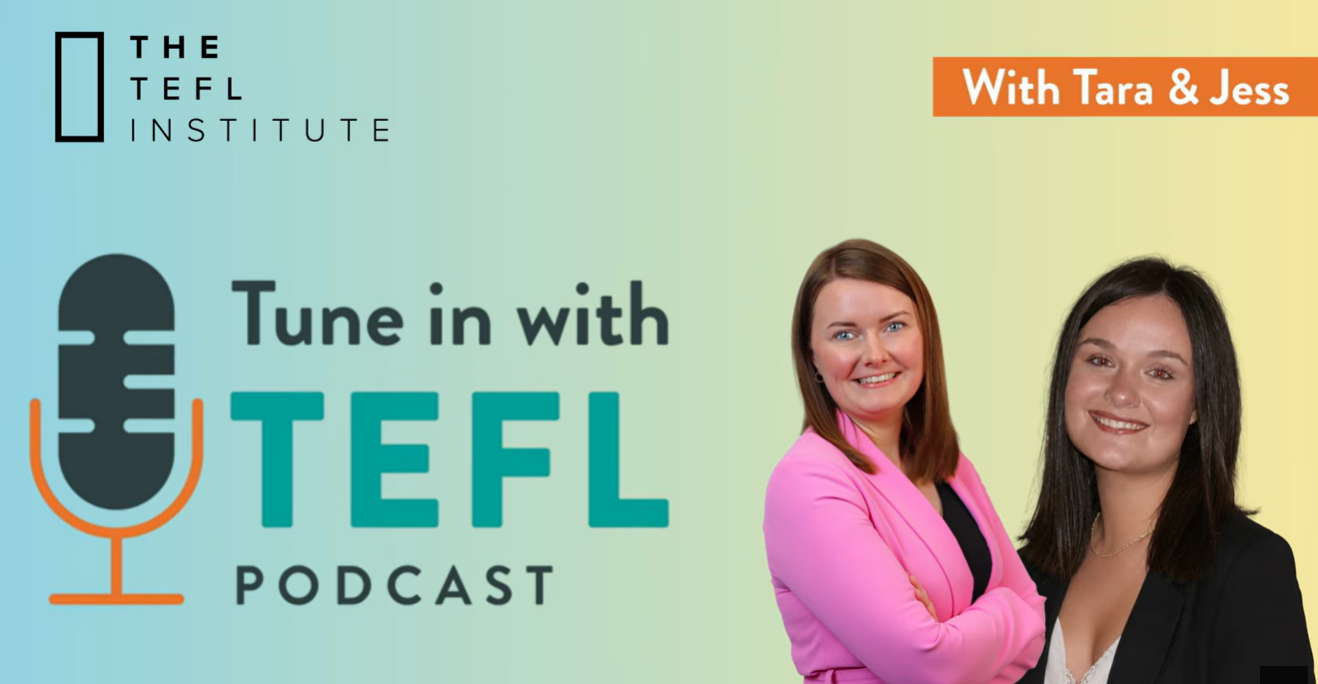
Tara and Jess talk through different TEFL and EFL topics, from finding work abroad to life in the classroom.
FAQs
Questions students ask us
Most graduates who finish an accredited course of 120 hours or more and apply consistently find teaching work within six to twelve weeks, abroad or online. The TEFL Institute Group’s own measure is that more than 85 per cent of graduates who use its Employability Department go on to teaching roles. No provider can guarantee a job.
Getting into TEFL is easier than most careers: a 120-hour accredited certificate, a clean background check and a willingness to relocate are enough for most language schools and online platforms. Teaching well takes practice, and the first weeks in a classroom are hard for almost everyone, which is what the course prepares you for.
Yes for most private language schools, summer camps and online platforms, which list 120 hours as the minimum. It is usually not enough for international schools, university language centres and some Gulf employers, which want an Ofqual-regulated Level 5 TEFL Diploma, a related degree or a teaching licence. Always read the individual listing.
Yes. Employers check the accreditation, the number of hours and whether the certificate can be verified, not whether you studied online or in a classroom. Some want evidence of teaching practice on top, so a few hours of volunteer or online tutoring on your CV helps. Only listings that name a specific qualification, such as a CELTA, are the exception.
No, and no honest provider can, because schools decide who they hire. What the group does instead is run an in-house Employability Department: one to one CV and cover letter reviews, intro video feedback, mock interviews, a monthly job coaching seminar, visa guidance, contract vetting and access to the group’s jobs board, all included with the course.
Six to twelve weeks of active applying is typical for private language schools and online platforms: two weeks on the CV and intro video, then five to ten applications a week, interviews in month two and offers in month three. Government programmes such as JET and EPIK run on annual deadlines, so they take longer.
