

 United Kingdom (UK)
 United States (US)
 Canada
 South Africa
 India
India Australia
 New Zealand
 China
China Russia
 Germany
 France
 Spain
Spain Netherlands
 Vietnam
 United Arab Emirates
 Italy
Italy Poland
 Thailand
 Türkiye








 Algeria


Teach English in Argentina
TEFL jobs in Argentina
Yes, you can teach English in Argentina, and it remains one of the most popular TEFL destinations in South America, especially Buenos Aires. Most work is at language institutes, in business English and in private and online lessons. A 120 hour TEFL certificate is the usual requirement and a degree often is not. The catch is legal work: non South American teachers rarely get employer sponsored work visas, so plan your route carefully.
Teaching English in Argentina at a glance
| Main employers | Language institutes, business English providers, private students and online platforms |
| How pay works | Local work is usually paid hourly in pesos and adjusted often for inflation. Online lessons for foreign students are usually paid in US dollars or euro |
| Minimum wage benchmark | ARS 391,200 a month for full time work from 1 October 2026, under Resolution 4/2026, rising monthly to ARS 437,000 by April 2027 |
| Hiring season | February to March, before the school year starts in March, with a smaller round in July and August |
| Minimum TEFL hours | 120 hours, with business English and exam training valued |
| Degree required | Often not for language institutes. Usually required for universities, international schools and formal work visas |
| Main cities | Buenos Aires, Córdoba, Rosario and Mendoza |
Who can legally teach English in Argentina?
This is the most important question for Argentina, and the honest answer depends heavily on your passport.
South American citizens. Nationals of Mercosur and associated countries can apply for Argentine residence under the Mercosur residence agreement, which gives the right to live and work.
Working holiday participants. Argentina has working holiday agreements with several countries, including Ireland, Australia and New Zealand, which allow younger applicants to live and work for up to a year. For eligible Irish, Australian and New Zealand teachers, this is the cleanest legal route into a language institute job. Check the current age limits and quotas with the Argentine embassy in your country.
US, UK, Canadian and most other citizens. You can visit Argentina without a visa for up to 90 days, but that does not give you the right to work for an Argentine employer. Formal work visas require an employer to sponsor you, and most language institutes do not. Many foreign teachers have historically worked informally on tourist entry, but it is not legal, it leaves you without employment protection, and it is a risk we do not recommend.
Remote and online teachers. Argentina has offered a digital nomad visa for people working remotely for foreign employers or clients. Teaching English online to students outside Argentina can fit that model, but it does not cover working for local schools. Confirm the current conditions with the Argentine immigration authority before you rely on it.
Our guide to teaching English abroad as a non EU citizen explains how working holiday and sponsored routes compare, and the Visa Desk tracks current entry rules.
How much do English teachers earn in Argentina?
Less than in Chile or Brazil in hard currency, and in a fast changing economy. Local pay is usually quoted per hour in pesos and revised regularly for inflation, so dollar figures move from month to month.
| Type of work | How it is usually paid |
|---|---|
| Language institute | Hourly in pesos, with hours concentrated in the evening |
| Business English, in-company | Hourly in pesos at a higher rate, often through an agency |
| Private lessons | Set by you, sometimes agreed in US dollars |
| Online lessons for foreign students | Typically around US$10 to US$25 an hour, paid in foreign currency |
| International schools and universities | Monthly salary, the most stable option, usually requiring a degree or teaching licence |
Because of this, many teachers in Argentina combine local classes with online students paid in foreign currency, which protects their income from inflation. For context, the national minimum wage for full time work is ARS 391,200 a month from 1 October 2026. Compare pay across countries on the TEFL Salary Index.
Teaching English in Argentina vs Chile
Where are the English teaching jobs in Argentina?
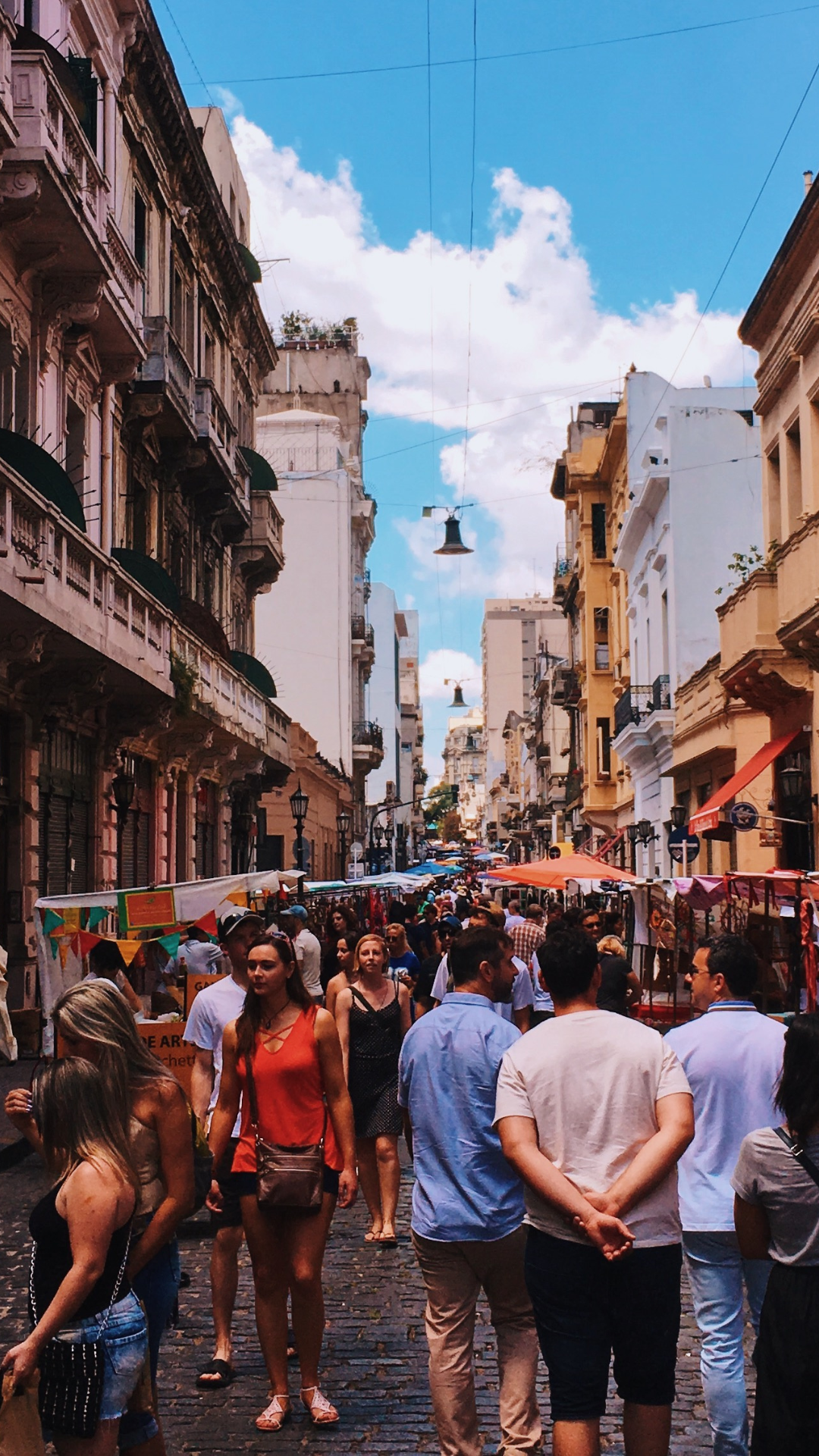
Buenos Aires has by far the largest market: language institutes, business English providers, bilingual schools and a big community of foreign teachers. Córdoba, a major university city, has steady demand and lower costs. Rosario and Mendoza have smaller markets but less competition, and Mendoza adds wine country and the Andes.
The main types of work are language institutes teaching children, teenagers and adults, mostly in the late afternoon and evening; in-company business English, often arranged through agencies; private students; bilingual and international schools, which usually want qualified schoolteachers; and universities, which generally expect a master’s degree. Online teaching is a large part of most teachers’ timetables.
What qualifications do you need?
A TEFL certificate of at least 120 hours is the practical minimum for language institutes, along with native or near native English. A degree is often not required for institute work, but it is usually needed for universities, international schools and any formal work visa.
Business English and exam preparation, particularly for Cambridge exams, are the best paid specialisms. A regulated qualification such as our Ofqual-regulated Level 5 TEFL course can be verified by any employer on the Ofqual register, and our 120 Hour Advanced TEFL Course meets the standard institute requirement. Some Spanish makes daily life, housing and paperwork much easier.
When should you apply?
- February to March. The main hiring period, before the Argentine school and institute year starts in March.
- July to August. A smaller mid year round after the winter break.
- December to February. The southern summer, when many institutes slow down or close, so plan your income for these months.
Most institutes hire in person, so being in Buenos Aires or Córdoba with a CV and a demonstration lesson ready is a real advantage.
What does it cost to live in Argentina?
Prices in Argentina change quickly with inflation and exchange rate movements, so any figure in dollars dates fast. As a pattern, rent in central Buenos Aires neighbourhoods such as Palermo and Recoleta is the largest cost, provincial cities are cheaper, and everyday costs such as public transport, cafés and local food are moderate. Many foreign teachers share a flat for their first months and take short term furnished rentals while they settle. Teachers earning part of their income in foreign currency online usually find Argentina comfortable. Teachers relying only on peso income from institutes need to budget carefully.
What is it like teaching in an Argentine classroom?
Argentine learners are typically sociable, talkative and opinionated, which makes speaking lessons lively. Adult students value fluency and practical English for work and travel. Classes are often in the evening, after work or school, and dinner rarely starts before nine. Greetings are warm, often with a kiss on the cheek once you know people, and relationships matter in finding work. Expect to be flexible: schedules change, and patience with bureaucracy goes a long way.
Where to find English teaching jobs in Argentina now
Argentine institutes hire mainly in February and March, before the school year starts, with a second round in July and August. Many roles are found in person in Buenos Aires, so these are the best ways to see what is open and plan your timing.
- Browse current vacancies on our TEFL jobs board, where partner schools post roles worldwide.
- Sign up for Deadline Alerts to hear about application windows before they close.
- Check entry rules on the Visa Desk before you plan your move.
- Use the Eligibility Checker to see which routes your passport and qualifications open.
Teaching in Argentina: read next
- Comparing Latin America? Read our guide to the best TEFL certification for Latin America.
- Considering Chile too? See our guide to teaching English in Chile.
- Compare pay in our TEFL Salary Index and check entry rules on the Visa Desk.
- Planning to teach online alongside? Read how much TEFL teachers make.
- Not sure where to teach? Try our Country Matcher or browse more destinations on the Teach English Abroad hub.
Last updated: 4 October 2026. 2026 figures checked October 2026: minimum wage of ARS 391,200 a month from 1 October 2026, rising monthly to ARS 437,000 by April 2027. The minimum wage figure is from Argentina’s Resolution 4/2026 of the National Council for Employment, Productivity and the Minimum Wage. Pay, prices and immigration rules change frequently in Argentina, so confirm current details with employers and the Argentine authorities before you travel.



Living costs
Prices in Argentina change quickly with inflation and exchange rate movements, so check current figures shortly before you travel. Rent in central Buenos Aires neighbourhoods such as Palermo and Recoleta is the biggest cost, while Córdoba, Rosario, Mendoza and smaller cities are cheaper.
Everyday costs such as public transport, cafés and local food are moderate, and eating out at neighbourhood parrillas is part of daily life. Teachers who earn part of their income online in foreign currency usually find Argentina comfortable, while those relying only on peso income need to budget carefully and review their rates often.
- Accommodation: Highest in central Buenos Aires, lower in provincial cities
- Utilities: Tariffs change frequently, so ask for recent bills
- Health insurance: Public hospitals, with many teachers taking private prepaid cover
- Monthly transport pass: Pay as you go with a SUBE card on buses, trains and the subte
- Basic dinner out for two: Good value at neighbourhood parrillas; prices change often
- Cappuccino in an ex-pat area: Changes often with inflation
- A beer in a pub: Changes often with inflation
- 1 litre of milk: Changes often with inflation
- 2 litres of Coca-Cola: Changes often with inflation
TEFL jobs in Argentina: KEY POINTS

SALARY
Hourly in pesos locally, online US$10–25 an hour

EDUCATION
BA degree preferred but not a requirement

MAIN JOB TYPES
Language institutes, business English & online

TEFL CERTIFICATION NEEDED
120 hour TEFL Training
KEY FACTS
- Popular locations for TEFL jobs: Buenos Aires: The capital city is a major hub for education, culture, and business. There are numerous language schools and institutions where TEFL teachers can find employment. Cordoba: The city of Cordoba is another important educational center in Argentina, hosting several universities and language institutes. Mendoza: This city, known for its wine production and outdoor activities, also offers TEFL job opportunities in language schools and private tutoring.
- Average salary for EFL teachers: Local teaching is usually paid hourly in pesos and adjusted often for inflation, so its value in dollars or euro changes from month to month. Online lessons for foreign students typically pay around US$10 to US$25 an hour. The national minimum wage for full time work is ARS 391,200 a month from 1 October 2026. Many teachers combine local classes with online students to protect their income.
- TEFL qualification requirements: There is no legal minimum, but most language institutes expect a TEFL certificate of at least 120 hours. Business English and Cambridge exam training are the most valued specialisms, and a regulated Level 5 qualification strengthens applications for better paid roles.
- Prerequisite university degree: Argentina generally does not have strict legal requirements regarding a specific degree for teaching English as a Foreign Language (TEFL). However, individual language schools and institutions may have their own hiring preferences and requirements.
- Term times: The school year runs from early March to mid December. Language institutes hire mainly in February and March, with a smaller round in July and August, and many slow down over the December to February summer.
- Currency: Argentine Peso
- Language: Spanish
- Teaching programmes: Teaching adults or children in private language schools as well as international schools or as a private tutor.
- Age restrictions: None
- Previous teaching experience: While having previous teaching experience can certainly be beneficial when looking for TEFL (Teaching English as a Foreign Language) positions in Argentina, it is not always a strict requirement. The level of teaching experience required can vary depending on the specific institution, location, and type of TEFL job you are applying for.
When to go
Climate and hiring in Buenos Aires
Arrive in February: it is warm, and institutes are hiring for the March start. July is a smaller second window after the winter break.
Summers (December to February) are hot and humid, about 84 to 86°F at their peak, and winters are mild and damp, with lows around 46°F. Rain falls all year, heaviest in summer and autumn and lightest from June to September. Snow is extremely rare.
Average daily highs and lows, 1991 to 2020, Servicio Meteorológico Nacional (Buenos Aires Central Observatory). Hiring months are typical patterns, not guarantees.
Facts about Argentina

LANGUAGE
Spanish

POPULATION
47 Million

TEFL JOB DEMAND
Mid
CURRENCY
Argentine Peso
CAPITAL
Buenos Aires

OUR ARGENTINA TEFL RATING
3.6
TEFL jobs in Argentina: FAQS
How much can I earn as an English teacher in Argentina?
Local language institute and business English work is usually paid hourly in pesos and adjusted often for inflation, so its value in dollars changes month to month. Online lessons for foreign students typically pay around US$10 to US$25 an hour. The national minimum wage for full time work is ARS 391,200 a month from 1 October 2026.
Is Argentina expensive to live in?
It depends on how you are paid. Prices change quickly with inflation and exchange rates. Teachers earning part of their income online in foreign currency usually find Argentina affordable, while teachers paid only in pesos by local institutes need to budget carefully, especially in central Buenos Aires.
Can I teach English in Argentina without a degree?
Often, yes, for language institutes and private teaching, which usually ask for a TEFL certificate of at least 120 hours rather than a degree. A degree is normally required for universities, international schools and formal work visas. Working holiday visas, available to citizens of countries such as Ireland, Australia and New Zealand, do not require a degree.
What is the best TEFL certificate for teaching in Argentina?
An accredited TEFL certificate of at least 120 hours, such as our 120 Hour Advanced TEFL Course, is what most institutes ask for. For business English and the better paid institutes in Buenos Aires, an Ofqual-regulated Level 5 TEFL Diploma gives you a stronger application and is recognised wherever you teach, including online.
Can UK and US citizens teach English in Argentina?
Yes, but legal work needs the right visa. A formal work visa usually requires a job offer and a degree. Argentina’s working holiday visa is only open to citizens of countries with an agreement, such as Ireland, Australia and New Zealand, so check whether your passport qualifies. Many teachers combine local work with online teaching. Check current rules on our Visa Desk.
Do I need to speak Spanish to teach English in Argentina?
Not to teach, since lessons are in English, but basic Spanish makes daily life, renting and paperwork much easier, and Argentine Spanish has its own accent and slang. Many teachers take classes once they arrive. For a nearby market, see our guide to teaching English in Uruguay.
TEFL courses
Become a confident, qualified English teacher with flexible online, classroom or mixed learning.

TEFL internship
With accommodation, training and full in-country support sorted – it’s the hassle-free way to kick-start your TEFL career.

TEFL jobs
Check out new TEFL job listings on our sister company’s well-stocked jobs board.