

 United Kingdom (UK)
 United States (US)
 Canada
 South Africa
 India
 Australia
 New Zealand
 China
 Russia
 Germany
 France
 Spain
 Netherlands
 Vietnam
 United Arab Emirates
 Italy
 Poland
 Thailand
 Türkiye









 Algeria


Updated for 2027 intakes. Last reviewed: 6 November 2026
The best TEFL certification for Europe is an accredited course of at least 120 hours, and an Ofqual-regulated Level 5 TEFL Diploma for the better paid work. No European country writes a TEFL certificate into law. What decides your options is your passport, because EU citizens can work anywhere in the bloc and everyone else needs a visa route.
Eight countries, one single market, and two very different experiences depending on which passport you hold. This guide sets out what employers in Spain, Italy, Germany, France, the Czech Republic, Portugal, Poland and Hungary actually ask for, which certificate level fits each type of job, and the legal route that gets a non EU teacher into the classroom for the 2027 academic year. Where a figure comes from a government decree or a programme’s own pay page, we name it. Where it is an advertised range, we say so.
Key takeaways
- A 120-hour accredited TEFL certificate is the hiring standard at private language academies in all eight countries. None of them sets a legal minimum number of hours.
- A degree is a programme or visa condition, not an academy rule. Spain’s and France’s state assistant schemes require one, and most non EU work permits are easier with one.
- Irish and other EU passport holders can start work the week they arrive. UK and US teachers need an assistant programme, a working holiday visa, a student visa or an employer permit, and the first two are the realistic routes.
- Germany and the Czech Republic are the two countries where a non EU teacher can legally work for themselves, through Germany’s freelance residence permit and the Czech trade licence.
- Spain’s NALCAP assistant programme shut on 30 June 2026 and had published no 2027/28 date when we checked. France’s TAPIF is open until 15 February 2027, and the British Council’s assistant round opens in November 2026.
- A Level 5 TEFL Diploma does not change the visa rules, but it moves you up the shortlist for international schools, Cambridge exam preparation and the business English work in Milan, Frankfurt and Paris that pays best per hour.
What is the best TEFL certification for Europe, country by country?
The short answer is the same everywhere: a recognised certificate of 120 hours or more from a provider whose qualification can be checked on a public register. The detail that changes is the legal route in, and how much pay that route attaches to. The table sets out the position for teachers starting in 2027.
| Country | Realistic route for UK and US teachers | TEFL legally required? | Hours employers expect | Statutory minimum wage | Typical pay (approximate) |
|---|---|---|---|---|---|
| Spain | State assistant programme (NALCAP shut, no 2027/28 date) or student visa | No | 120 hours | €1,221 a month, 14 payments, from 2026 (Royal Decree 126/2026) | Academies €1,000 to €1,400 a month, often part time |
| Italy | INDIRE assistantship or student visa; work permits quota limited | No | 120 hours | None; sector collective agreements set floors | Full time school contracts €1,200 to €1,400; €15 to €25 an hour |
| Germany | Freelance residence permit, applied for after arrival | No | 120 hours | €13.90 an hour from 1 January 2026, rising to €14.60 in 2027 | Freelance €25 to €40 an hour; employed €2,400 to €3,200 gross a month |
| France | TAPIF (US) or British Council assistant post (UK); working holiday for Canada, Australia, New Zealand | No | 120 hours | €1,867.02 gross a month from 1 June 2026 | Assistants €1,010.67 gross (about €810 net); schools €15 to €25 an hour |
| Czech Republic | Employee card or trade licence (zivno) | No | 120 hours | CZK 22,400 a month from January 2026 (about €920) | CZK 25,000 to CZK 35,000 a month (about €1,027 to €1,437) |
| Portugal | Residence visa for work, employer led | No | 120 hours | €920 a month, 14 payments, from 1 January 2026 (Decreto-Lei 139/2025) | €1,000 to €1,400 gross a month at language schools |
| Poland | Employer led work permit and visa | No | 120 hours | PLN 4,806 gross a month in 2026 (about €1,094) | PLN 4,000 to PLN 6,500 gross a month (about €911 to €1,480) |
| Hungary | Single residence and work permit, employer led | No | 120 hours | HUF 322,800 gross a month from 1 January 2026 (about €887), HUF 373,200 for qualified roles | Usually hourly; full time contracts must meet the minimum |
Pay and minimum wage figures come from our country guides, checked against the official decrees in October 2026, with euro equivalents for the Czech koruna, Polish zloty and Hungarian forint at the European Central Bank reference rates of 6 November 2026. The Polish language school figure dips below the statutory minimum at the bottom of the range because many contracts there are part time or hourly; a full time employee must be paid at least PLN 4,806.
Is a 120-hour TEFL certificate enough for Europe?
Yes. A 120-hour certificate from an accredited, verifiable provider is what private language academies across Europe ask for in their job adverts, and academies hire more foreign English teachers than every other employer type combined. It is the entry ticket in Madrid, Bologna, Prague, Krakow and Lisbon alike.
What a 120-hour certificate will not do is get you past the two gates that matter more. The first is the passport gate, which no certificate can move. The second is the quality gate at the top of each market, where international schools, bilingual schools and the corporate English providers want a longer, regulated qualification and often a teaching licence. Our 120 Hour Advanced TEFL Course meets the academy standard, while the Level 5 TEFL Diploma sits on the UK’s regulated qualifications framework at the same level as CELTA, which is what a school in Frankfurt or Milan is checking when it asks whether your certificate is “Level 5”.
Does your passport matter more than your TEFL certificate in Europe?
It does. An Irish, EU or EEA citizen has the right to live and work in any of the eight countries without a permit, under the free movement rules the European Union sets out on its Your Europe work permits page. A UK citizen has needed a visa route since 1 January 2021, and a US citizen always has.
That is why so much of this guide is about programmes rather than certificates. Government assistant schemes come with their own visa, which is the single biggest reason they fill up. Working holiday agreements do the same job for Canadians, Australians and New Zealanders in several of these countries. Employer sponsored work permits exist everywhere, but language academies rarely use them for English teachers, because the employer usually has to show that no EU candidate could fill the post.
One thing to watch for 2027. The UK and the EU are negotiating a reciprocal youth experience scheme, and a draft joint statement ahead of the summit on 20 November 2026 described residence rights of up to three years for people aged 18 to 34 to work, study or travel. Nothing had opened for applications when we checked, so treat it as a possible route later in the decade rather than a plan for next September. If you are weighing the whole continent without a degree, our guide to teaching English in Europe without a degree works through the same two questions in the same order.
What TEFL certificate do you need for Spain?
Spanish academies ask for a 120-hour accredited certificate, and a degree is only required if you are entering through the state language assistant programme. Spain is the largest academy market in Europe and the one most UK and Irish teachers try first.
The programme news is the part to read twice. The North American strand, NALCAP, closed its 2026/27 window on 30 June 2026 after an unusually late and short round, and the Ministry’s own NALCAP page still described that year, with a grant of €800 to €1,000 a month depending on region and no 2027/28 date, when we re-read it on 6 November 2026. UK applicants go through the British Council instead, whose 2027/28 round opens in November 2026. Both schemes place assistants in state schools for 12 to 16 hours a week on a student style visa.
Outside the programmes, Spain’s statutory minimum wage is €1,221 a month in 14 payments under Royal Decree 126/2026, paid pro rata for the part time timetables most academies offer, and advertised academy pay sits around €1,000 to €1,400 a month. Our post on the best TEFL certification for Spain maps each employer type against the course level it accepts, and the guide to teaching English in Spain covers cities, hiring months and living costs.
What do Italian employers accept?
Italian language schools accept a 120-hour certificate and treat a Level 5 Diploma as the reason to interview you first. A degree is not always required by the schools themselves, but it is needed for the INDIRE assistantship and helps with every visa route.
Italy has no statutory national minimum wage. Pay floors are set by sector collective agreements, and advertised full time school contracts commonly run €1,200 to €1,400 a month, with hourly work at €15 to €25 and business English above that in Milan and Rome. The legal route is the hard part for non EU teachers. Italy issues most employer sponsored permits through the annual decreto flussi quota, which made 164,850 permits available across all sectors in the 2026 cycle and is very difficult for a language teacher to use, so most UK and US teachers arrive through the INDIRE assistantship, which applies from roughly October to December for a September start, or on a student visa.
Our post on the best TEFL certification for Italy goes deeper on summer camps, CLIL work and the Milan corporate market, and the guide to teaching English in Italy covers the cities and the hiring calendar.
Can you teach English in Germany as a freelancer?
Yes, and it is the reason Germany is the most open large market in Europe for a non EU teacher. Citizens of the UK, the US, Canada, Australia, New Zealand, Japan, South Korea and Israel can enter Germany without a visa and apply for a residence permit from inside the country, including the freelance permit that most English teachers in Berlin, Munich and Hamburg work on.
The economics follow from that. Freelance rates at language schools run about €25 to €40 an hour, business English about €30 to €45, and private lessons €25 to €50, while an employed language school post typically pays €2,400 to €3,200 gross a month. Germany’s statutory minimum wage is €13.90 an hour from 1 January 2026, rising to €14.60 in 2027, which matters because a freelancer invoicing below it will struggle to show the permit office a viable income. Employers expect 120 hours, and business English providers in Frankfurt and Düsseldorf favour a Level 5 Diploma with a business specialism because the client is buying the trainer’s credentials. See our guide to teaching English in Germany for the permit paperwork and the cities.
Spain or Italy? Pay, visas, hiring seasons and living costs compared
What do you need to teach English in France?
France expects a 120-hour certificate at language schools and a degree, or at least three years of higher education, for the government assistant programme that gives most non EU teachers their visa. Language schools hire mainly in September, October and January, and pay about €15 to €25 an hour, with business English at €20 to €35.
Every TEFL opening, salary and deadline that matters.
In your inbox every two weeks. Free, no spam, unsubscribe any time.
Teacher pay by country
New TEFL openings
Programme and visa dates
The assistant route has a date attached this year. TAPIF, the US strand, opened for 2027/28 on 15 October 2026 and closes on 15 February 2027, according to Villa Albertine’s call for applications. It pays €1,010.67 gross a month, about €810 net, for 12 hours a week from October to April, and asks for intermediate French at B1. UK applicants use the British Council English Language Assistants programme, which sends about 1,800 assistants a year to nine destinations and asks for five of the last ten years’ residence in the UK. France’s statutory minimum wage is €1,867.02 gross a month from 1 June 2026, so the assistant post is best understood as a part time job with a visa attached rather than a salary. Our explainer on TAPIF and the guide to teaching English in France have the rest.
What are the rules in the Czech Republic, Poland and Hungary?

All three ask for a 120-hour certificate, prefer a degree, and run their main hiring round from late August to early October with a second in January. What separates them is how a non EU teacher gets permission to work, and the Czech Republic is the most flexible of the three.
Prague’s language schools have hired non EU teachers for decades on the trade licence, known locally as the zivno, which lets a teacher invoice several schools as a self employed person, or on an employee card tied to one employer. Advertised pay is CZK 25,000 to CZK 35,000 a month full time, about €1,027 to €1,437, or CZK 250 to CZK 400 an hour freelance, against a statutory minimum of CZK 22,400 a month from January 2026. Working holiday schemes cover Canadians, Australians and New Zealanders. Our guide to teaching English in the Czech Republic covers Brno and Ostrava as well as Prague.
Poland is an employer led permit market. A non EU teacher needs a work permit that the school applies for, followed by a visa, unless an exemption such as the Karta Polaka applies. Language schools advertise PLN 4,000 to PLN 6,500 gross a month, about €911 to €1,480, with international schools from PLN 7,000, and the statutory minimum for full time work is PLN 4,806 gross a month in 2026, fixed by the Council of Ministers regulation of 11 September 2025. Read our guide to teaching English in Poland and our post on English teaching jobs in Poland for the school types and the permit sequence.
Hungary issues a single residence and work permit through the employer, and a degree is usually needed for it. Pay is commonly hourly, and any full time contract must clear the statutory minimum of HUF 322,800 gross a month from 1 January 2026, about €887, or HUF 373,200 for roles that require a qualification, under Government Decree 394/2024. Budapest holds most of the work. See our guide to teaching English in Hungary.
What do you need to teach English in Portugal?

Portugal’s language schools ask for a 120-hour certificate and prefer a degree, which is also usually needed for the residence visa a non EU teacher requires. EU and EEA citizens work freely; everyone else needs a residence visa for work, applied for through a Portuguese consulate with an employer behind the application.
Pay is modest. Language schools advertise about €1,000 to €1,400 gross a month, or €12 to €20 an hour, with private lessons at €15 to €25, against a statutory minimum of €920 a month paid 14 times a year from 1 January 2026 under Decreto-Lei 139/2025. Lisbon, Porto, Coimbra, Braga and the Algarve hold most of the work, and hiring runs in September and October with a smaller January intake. Bilingual and international schools pay more and expect a Level 5 Diploma or a teaching licence. Our guide to teaching English in Portugal covers the visa and the cities.
Is a Level 5 TEFL Diploma worth it for Europe?
A Level 5 TEFL Diploma is worth it if you are aiming above the academy tier, because it is a regulated qualification a European employer can check on the Ofqual register, and it is what international schools, Cambridge exam centres and corporate providers shortlist on. It is not a legal requirement in any of the eight countries.
Be wary of anyone who promises a fixed salary uplift. European pay is set by the employer, the city and the contract type, and in several countries by a collective agreement or statutory minimum that applies whatever certificate you hold. What a longer qualification does reliably is widen the set of jobs you can apply for. The business English market in Milan, Frankfurt and Paris, the CLIL and bilingual school sector in Spain and Italy, and the exam preparation classes that fill academy timetables in the spring all favour a Level 5 Diploma, and the first two pay well above the academy rate. Our Specialist Course Bundle adds business English, young learners and IELTS preparation, which between them cover most of the better paid European work.
Ian O’Sullivan, founder of The TEFL Institute Group
Ian founded The TEFL Institute Group in 2017 to bring honesty to TEFL training. Today it is Europe’s largest TEFL trainer by teachers certified, with 161,000 teachers certified and graduates working in 80 countries.
Which European country is easiest to get a teaching job in with a TEFL certificate?
For an EU passport holder, Spain, because it has the most academy jobs and the most predictable hiring calendar. For a UK or US teacher, Germany and the Czech Republic, because both let you work for yourself on a permit you apply for in your own name rather than waiting for an employer or a programme to sponsor you.
Each country suits a different kind of teacher. Spain and Italy reward people who can live on an academy wage for the lifestyle and are willing to build a second income from private lessons. France suits planners who want a visa settled a year ahead through TAPIF or the British Council. Germany suits teachers with a bit of savings and the patience for German paperwork, and rewards them with the highest hourly rates on this list. The Czech Republic suits those who want to arrive, interview in person and start within weeks. Poland and Hungary suit teachers already holding EU rights, or those with an employer willing to carry a permit application. Portugal suits teachers who value the climate more than the pay. Still deciding? The Visa Desk keeps the programme dates current, and the TEFL Salary Index carries the assistant stipends with the date each one was checked.
How do you prove your TEFL certificate is genuine to a European employer?
You prove it by giving the employer a certificate they can check independently, ideally on a government register, and by having your degree and police certificate apostilled when a visa file asks for them. All eight countries in this guide are parties to the Hague Apostille Convention, so a single apostille from your home country replaces the consular legalisation chain that the Gulf states still require.
A regulated qualification can be looked up on the Ofqual register, which is why a Level 5 Diploma travels well in a market where schools in Prague and Warsaw have seen every kind of certificate. Keep the original, a certified copy and the certificate number together, and check early whether your route wants a sworn translation, which Italy and Spain often do. Our explainer on accredited TEFL certification sets out what an employer is looking for and how to verify us before you pay.
Ready to get TEFL qualified for Europe?
Start with the qualification every academy on this list recognises. The TEFL Institute Group is Europe’s largest TEFL trainer by teachers certified, with 161,000 teachers certified since 2017 who have gone on to teach in 80 countries, and every certificate carries a number an employer can verify. If you want the strongest file for international schools, exam classes and the business English market, the Level 5 Diploma is the one to choose.
Last updated: 6 November 2026. Pay figures are approximate, not quotes, and visa and programme rules change. Always confirm the current requirements with your employer and the official source before you apply.

Katie Troy
Managing Director at The TEFL Institute Group. Katie has been with the team since 2018, is a qualified teacher with a degree in education and years of experience teaching abroad, and works closely with the academic team.
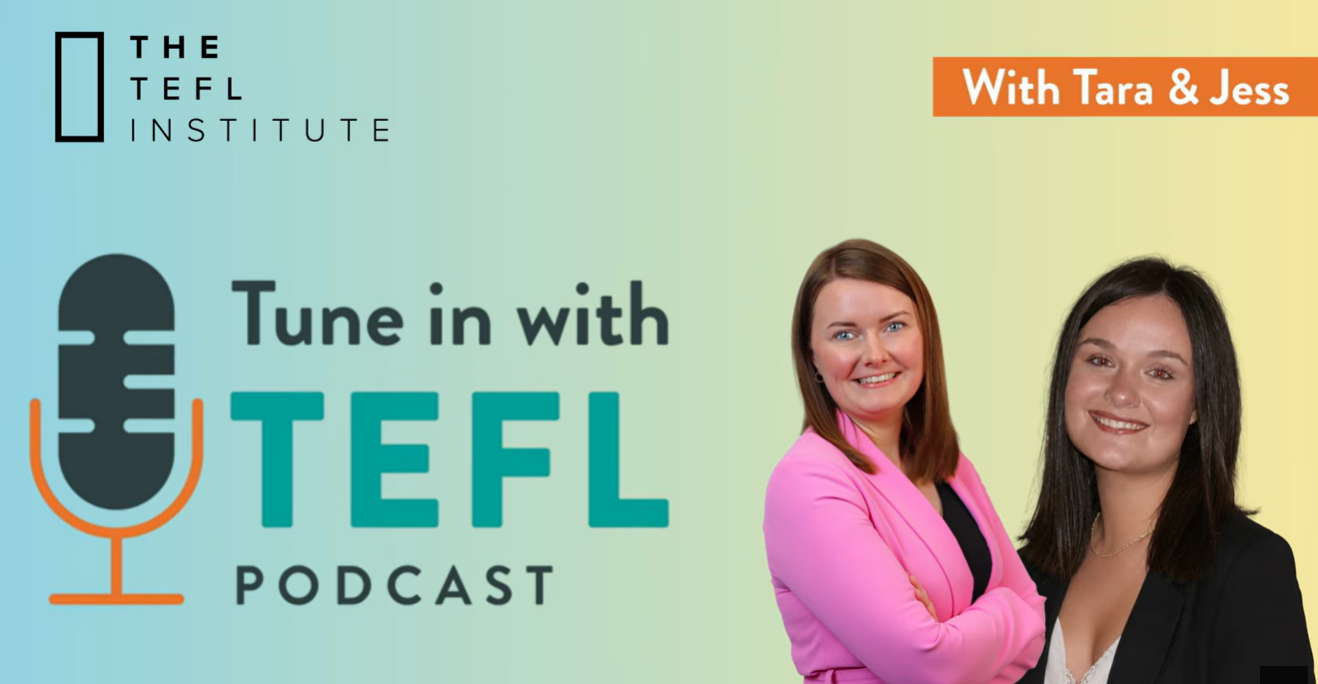
Tara and Jess talk through different TEFL and EFL topics, from finding work abroad to life in the classroom.
FAQs
Questions students ask us
A 120-hour accredited certificate meets the hiring standard at language academies in Spain, Italy, Germany, France, the Czech Republic, Portugal, Poland and Hungary, and an Ofqual-regulated Level 5 TEFL Diploma is the stronger choice for international schools, exam preparation and business English. No European country sets a legal minimum number of hours.
Not at most private academies, but a degree is required for Spain’s and France’s state assistant programmes, preferred by the better paid employers, and usually needed for a non EU work permit. Check the route you plan to use before you decide whether the degree matters in your case.
Yes, but they need a visa route. The realistic options are a government assistant programme such as the British Council English Language Assistants scheme, a working holiday or freelance permit where one exists, a student visa, or an employer sponsored permit. Irish passport holders keep full EU rights and can work anywhere in the bloc.
Germany and the Czech Republic, because both let a teacher apply for permission to work in their own name, through Germany’s freelance residence permit or the Czech trade licence known as the zivno. Elsewhere you usually need a programme place or an employer willing to sponsor a work permit, which language academies rarely do.
Not when we checked on 6 November 2026. Spain’s North American Language and Culture Assistants Program closed its 2026/27 window on 30 June 2026, and the Ministry of Education’s NALCAP page still showed no 2027/28 date. Check the Ministry page and our Hire Wire Deadline Alerts before you plan a year around it.
Advertised academy pay is roughly €1,000 to €1,400 a month in Spain and Portugal, €1,200 to €1,400 in Italy, CZK 25,000 to CZK 35,000 in the Czech Republic, PLN 4,000 to PLN 6,500 in Poland, and €2,400 to €3,200 gross for employed posts in Germany, where freelance rates reach €25 to €40 an hour. Figures are approximate, checked in October 2026.
