
 United Kingdom (UK)
 United States (US)
 Canada
 South Africa
 India
India Australia
 New Zealand
 China
China Russia
 Germany
 France
 Spain
Spain Netherlands
 Vietnam
 United Arab Emirates
 Italy
Italy Poland
 Thailand
 Türkiye







 Algeria


How to Specialize in Young Learners: A 2026 Guide
How to Specialize in Young Learners: A 2026 Guide
TL;DR:
- Specializing in young learners involves developing pedagogical, developmental, and classroom management skills tailored for children aged 3 to 12.
- Effective instruction combines child-centered methods, multisensory activities, and deliberate transition planning to enhance language learning and engagement.
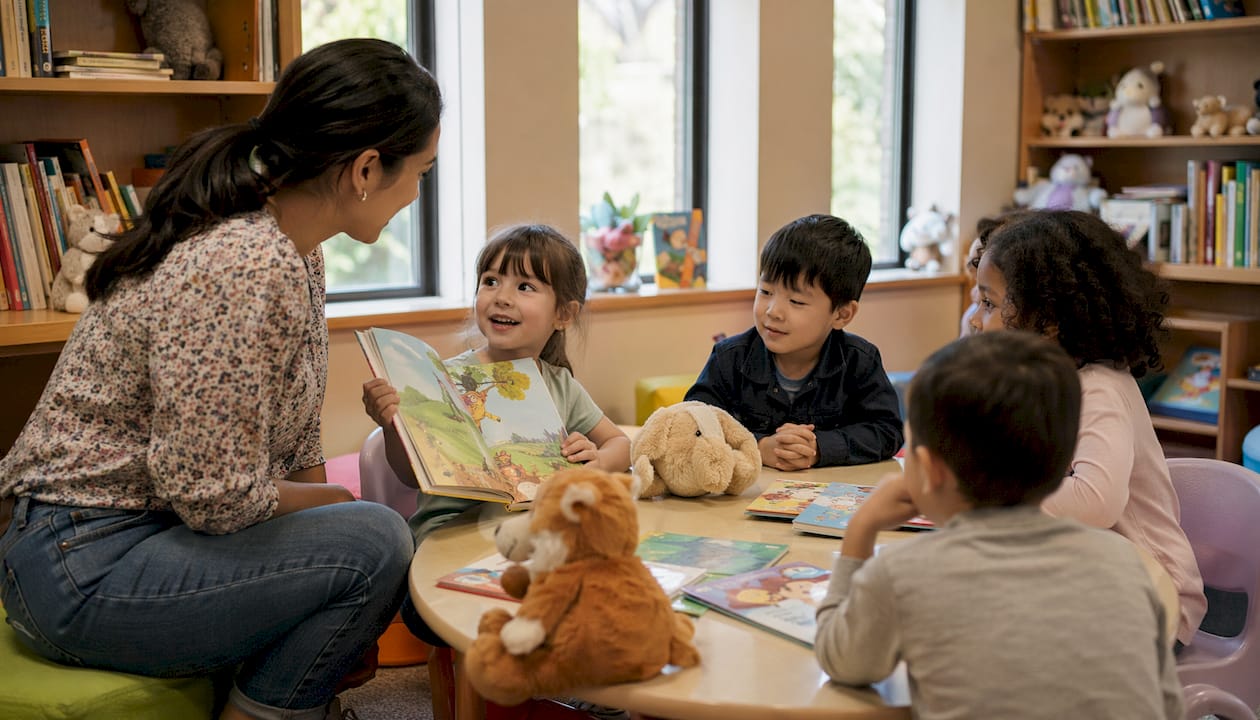
Specializing in young learners is defined as developing the targeted pedagogical skills, child development knowledge, and classroom management competencies required to teach children aged 3–12 effectively. This specialization sits at the intersection of second-language acquisition theory and early childhood education, demanding more than general teaching ability. Educators who pursue it must understand how children think, process language, and respond to instruction at each developmental stage. Teflinstitute offers structured pathways, including a dedicated young learners course, that prepare teachers to meet these demands with confidence and practical skill.
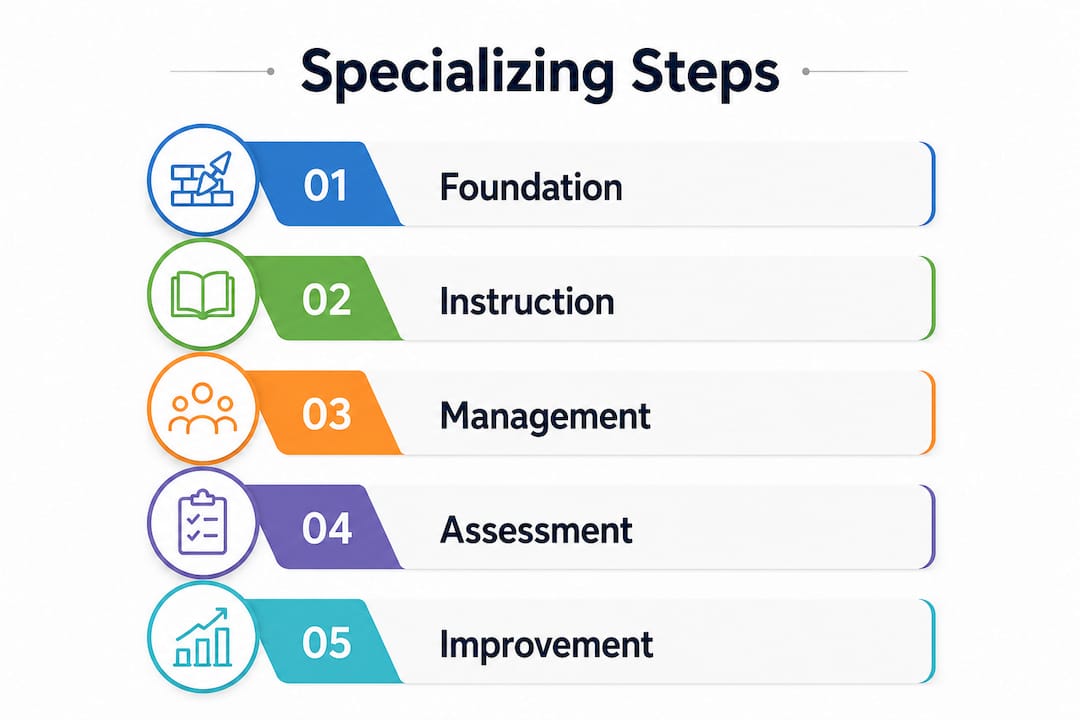
How to specialize in young learners: foundational skills you need first
Specializing in young learner education begins with understanding child cognitive and emotional development. Children aged 3–12 process information differently from adults. They rely on concrete experience, repetition, and emotional safety to build new knowledge. Without this foundation, even well-designed lessons fail to connect.
Teacher education programs need to focus on child-centered approaches and practical competencies, yet many educators enter young learner classrooms without this preparation. That gap produces lessons that are either too abstract or too passive for the age group. Closing it requires deliberate study of second-language acquisition theories specific to children, particularly the idea that comprehensible input must precede verbal output.
Educators also need fluency in multisensory instructional methods before they specialize. The most widely used framework in this area is Total Physical Response (TPR), a kinesthetic technique where students respond physically to verbal commands before they are expected to speak. TPR aligns directly with how young children acquire their first language: through listening and doing, long before producing.
The following competencies form the core preparation checklist for educators entering this specialization:
- Child development knowledge: Understand Piaget’s stages of cognitive development and how they affect lesson design for ages 3–12.
- Second-language acquisition theory: Study Krashen’s Input Hypothesis and its application to young learner classrooms.
- Multisensory instruction: Practice TPR, visual aids, and tactile activities before entering a classroom.
- Curriculum adaptation: Learn to modify adult-oriented materials into age-appropriate formats with shorter tasks and concrete objectives.
- Formal preparation: Complete a recognized certification such as Teflinstitute’s TEFL certification to validate these competencies professionally.
Pro Tip: Before your first young learner lesson, observe an experienced teacher for at least three sessions. Note how they handle transitions, give instructions, and respond to off-task behavior. Observation compresses months of trial and error into hours.
What instructional strategies work best for young learners?
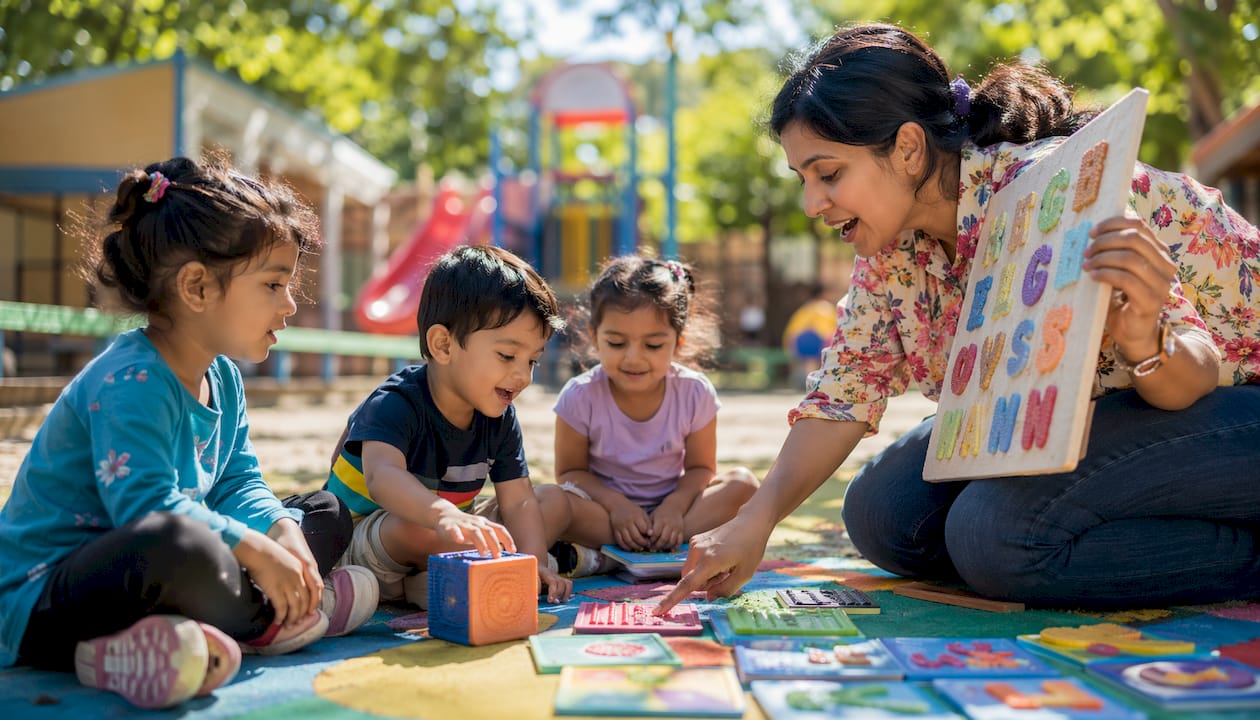
Multisensory methods incorporating visual, auditory, tactile, and kinesthetic elements enhance learning and reduce anxiety in young learners. Children develop stronger neural pathways through multisensory activities than through single-sensory instruction. That finding has direct implications for lesson design: every activity should engage at least two senses simultaneously.
The most effective approach combines guided play with explicit teaching. Guided play outperforms unstructured free play for early literacy development because teacher participation during play promotes scaffolding and targeted vocabulary gains. Free play has social value, but it does not reliably produce language learning without a teacher actively modeling and extending language in the moment.
Practical implementation follows a teach, practice, and apply cycle. Introduce a target structure explicitly, practice it through a controlled activity such as a call-and-response song, then apply it in a guided game where children use the structure in context. This cycle reinforces learning without overwhelming short attention spans.
The numbered steps below translate this framework into a replicable lesson sequence:
- Introduce with a visual anchor. Display a flashcard, object, or gesture that represents the target vocabulary or structure. Say the word clearly three times while pointing.
- Add movement with TPR. Assign a physical action to each new word. Students perform the action when they hear the word, building comprehension before production.
- Practice through a song or chant. Repetition embedded in rhythm reduces the cognitive load of new language. Songs like “Head, Shoulders, Knees and Toes” are effective because they combine auditory, visual, and kinesthetic input.
- Apply in a guided game. Use a simple activity such as “Simon Says” or a matching card game where children must use the target language to participate.
- Close with a brief review. Ask two or three students to demonstrate the target vocabulary. This provides formative data and signals lesson closure clearly.
Small-group intentional teaching improves vocabulary and sound awareness more than whole-class instruction alone. Rotating students through small groups while others work independently gives each child more direct teacher interaction per lesson. That interaction is the primary driver of language acquisition in early learners.
Pro Tip: Avoid lessons built entirely on free play. Children enjoy it, but without teacher scaffolding, they practice what they already know rather than acquiring new language. Stay in the activity with them and model target structures constantly.
What classroom management tactics support young learner specialization?
Young learners have short attention spans, and unplanned transitions often lead to classroom disruptions and loss of instructional time. Effective classroom management for this age group is therefore built around structure, predictability, and prepared transitions rather than reactive discipline.
The following practices form a reliable management framework for young learner classrooms:
- Plan every transition. Know exactly what students will do between activities. A simple cleanup song or a counting routine gives children a predictable signal and prevents downtime from becoming chaos.
- Use filler activities. Keep two or three short, familiar activities ready for moments when a lesson ends early or a resource fails. Finger rhymes, quick vocabulary reviews, and action songs work well because children already know them.
- Establish clear routines from day one. Young learners thrive on repetition. A consistent lesson opening, such as a greeting song followed by a calendar activity, reduces anxiety and focuses attention before new content begins.
- Use positive reinforcement specifically. Praise the behavior, not just the child. “I like how you put your pencil down quietly” is more effective than “Good job” because it tells the child exactly what to repeat.
- Keep instructions short and physical. Give one instruction at a time and demonstrate it. Young learners process verbal instructions slowly. Showing is faster and more reliable than telling.
Building a warm classroom community also reduces behavioral challenges before they start. Children who feel safe and recognized participate more willingly and recover faster from frustration. Learn more about managing ESL classroom behavior to build a practical toolkit for common challenges.
Pro Tip: Create a visual schedule displayed at child height. When students can see what comes next, they spend less energy worrying about it and more energy on the current task.
How can educators assess and improve their young learner practice?
Formal written tests are not appropriate for most young learners. Formative and informal assessment methods give educators far more useful data. Observation during activities, listening to student responses, and noting which vocabulary items children use spontaneously all reveal learning progress without the anxiety that formal testing creates.
Small intentional changes in teacher interaction and classroom setup can produce significant literacy gains. That finding means educators do not need to redesign entire programs to improve outcomes. Adjusting how much a teacher talks during a game, or moving from whole-class to small-group instruction for one activity per lesson, produces measurable change.
Adaptive expertise in teaching young learners develops through cycles of planning, implementing, observing, reflecting, and adjusting based on student feedback. Professional learning communities accelerate this cycle by giving teachers structured opportunities to share observations and test new approaches together.
Concrete improvement strategies include:
- Record and review lessons. A short video of a 10-minute activity reveals patterns in teacher talk time, student engagement, and transition quality that are invisible in the moment.
- Use student response as data. If three or more students consistently miss the same vocabulary item, the instruction needs adjustment, not the students.
- Join a professional learning community. Peer observation and collaborative planning produce faster growth than solo reflection alone.
- Pursue structured professional development. Teflinstitute’s TEFL strategies for young learners resource provides a practical reference point for ongoing skill development.
| Assessment method | What it reveals |
|---|---|
| Activity observation | Which students engage and which disengage during tasks |
| Spontaneous language tracking | Vocabulary items children use without prompting |
| Small-group interaction notes | Individual comprehension and production levels |
| Lesson video review | Teacher talk time, pacing, and transition quality |
Key Takeaways
Specializing in young learner education requires mastering child development knowledge, multisensory instructional methods, and structured classroom management before entering the classroom.
| Point | Details |
|---|---|
| Build foundational knowledge first | Study child development and second-language acquisition theory before designing lessons. |
| Use multisensory methods consistently | Combine visual, auditory, tactile, and kinesthetic elements in every activity to strengthen learning. |
| Prioritize guided play over free play | Teacher-led play with scaffolding produces measurable vocabulary gains; unstructured play alone does not. |
| Manage transitions deliberately | Plan every transition with a routine or filler activity to prevent disruption and maintain focus. |
| Assess informally and adjust often | Use observation and student response data to refine instruction in short, iterative cycles. |
What I have learned from specializing in young learner education
The most common mistake I see educators make when they first work with young learners is treating the classroom like a scaled-down adult class. They reduce the vocabulary list, slow down their speech, and assume that is enough. It is not. Young learners do not just need simpler content. They need a fundamentally different relationship between teacher, activity, and language.
What changed my own practice was accepting that I am not just a language teacher in a young learner room. I am also a behavior manager, a transition planner, a song leader, and an emotional regulator. The moment I stopped resisting those roles and prepared for them deliberately, my lessons became more effective and far less exhausting.
The research on guided play and scaffolding confirmed what I had already observed: children learn language fastest when a teacher is actively inside the activity with them, not watching from the side. That shift from observer to participant is the single most impactful change most educators can make without changing anything else about their lesson plan.
Specializing in this area also requires patience with your own development. The teach-practice-apply cycle sounds simple on paper. Executing it smoothly with a group of six-year-olds who have just come in from recess takes months of practice. Expect that, plan for it, and use every lesson as data rather than a performance.
— Muller
Teflinstitute courses for teaching young learners
Educators who want formal preparation for this specialization have a direct path through Teflinstitute. The platform offers a dedicated 30-hour young learners course that covers child-centered pedagogy, age-appropriate lesson design, and practical classroom management techniques specific to this age group.
For educators seeking broader TEFL qualification alongside their young learner focus, Teflinstitute’s internationally recognized TEFL certification provides the credential base that most employers and language schools require. Both pathways are available online, allowing working teachers to build their specialization without interrupting their current roles. Teflinstitute also provides ongoing resources and course support to help educators apply what they learn directly in the classroom.
FAQ
What does it mean to specialize in young learners?
Specializing in young learners means developing targeted skills in child development, multisensory instruction, and age-appropriate classroom management to teach children aged 3–12 effectively. It goes beyond general teaching ability and requires specific pedagogical preparation.
What is TPR and why does it matter for young learners?
Total Physical Response (TPR) is a kinesthetic teaching method where students respond physically to verbal commands before producing language themselves. It aligns with how young children naturally acquire language and reduces anxiety by removing early pressure to speak.
How do you assess young learners without formal tests?
Observation during activities, tracking spontaneous vocabulary use, and noting student responses during small-group work all provide reliable assessment data. These informal methods reveal comprehension and production levels without the anxiety that written tests create in young children.
How much does guided play differ from free play in outcomes?
Guided play with active teacher participation and scaffolding produces measurably stronger vocabulary and literacy gains than unstructured free play. The teacher’s role inside the activity, modeling and extending language, is what drives the difference.
What certification prepares educators to teach young learners?
A recognized TEFL certification combined with a specialized young learner course provides the strongest preparation. Teflinstitute offers both a general TEFL qualification and a dedicated 30-hour course focused specifically on teaching children in ESL and EFL contexts.
Recommended
TEFL Institute guides

Germany
Freelance work and pay
Italy
Jobs, pay and visa routes
Dubai
Pay, requirements and visas
Estonia
Jobs, pay and work routes
Vietnam
Work permits and requirements