

 United Kingdom (UK)
 United States (US)
 Canada
 South Africa
 India
India Australia
 New Zealand
 China
China Russia
 Germany
 France
 Spain
Spain Netherlands
 Vietnam
 United Arab Emirates
 Italy
Italy Poland
 Thailand
 Türkiye








 Algeria


Why choose TESOL certification in 2026: career paths

English is spoken by 1.5 billion people worldwide, but only 400 million are native speakers. This creates massive demand for qualified educators who can teach English as a second language. TESOL certification is the globally recognized credential that opens doors to international teaching careers, online instruction, and specialized ESL roles. This guide explains why TESOL stands out as the preferred pathway for aspiring and experienced educators.
Table of Contents
- Why TESOL Certification Matters For Teaching English Internationally
- How TESOL Programs Prepare You To Teach Effectively
- Comparing TESOL With TEFL And ESL: Which Certification Fits Your Goals?
- Challenges And Empowerment For Female TESOL Teachers
- How TESOL Certification Opens Doors To Global Teaching Careers
- Explore TESOL Certification Courses To Launch Your Teaching Career
- Frequently Asked Questions
Key takeaways
| Point | Details |
|---|---|
| Global recognition | TESOL is widely accepted by employers worldwide and often required for ESL positions. |
| Practical training | Programs teach language acquisition, lesson planning, classroom management, and assessment design. |
| Diverse career paths | Certification enables roles from classroom teacher to trainer, director, and online instructor. |
| Gender challenges exist | Female TESOL teachers face institutional biases in some regions, but equity efforts continue. |
| Student-centered focus | TESOL prepares educators to foster speaking, writing, listening, and reading skills effectively. |
Why TESOL certification matters for teaching English internationally
TESOL certification is a prerequisite for most ESL jobs worldwide. Employers value certified teachers because they understand language acquisition theories and proven teaching methodologies. This credential signals you possess the skills to design effective lessons, manage diverse classrooms, and assess student progress accurately.
TESOL training covers essential areas including phonetics, grammar structures, and second language learning principles. You learn to create lesson plans that engage learners, manage classroom dynamics professionally, and adapt instruction to different proficiency levels. These competencies make you competitive in both native English-speaking countries and international markets.
The certification provides essential skills preferred by employers across education sectors. Whether teaching children in South Korea, adults in Brazil, or professionals online, TESOL credentials demonstrate your commitment to quality instruction. This opens opportunities in language schools, international institutions, private tutoring, and digital platforms.
Pro Tip: Research specific country requirements before applying for teaching positions abroad. Some nations require minimum TESOL course hours or additional visa documentation beyond basic certification.
Key benefits of TESOL certification include:
- Enhanced job eligibility for positions requiring formal teaching credentials
- Deeper understanding of how adults and children acquire second languages
- Practical classroom management techniques for multicultural environments
- Professional credibility that increases salary potential and advancement opportunities
- Flexibility to teach English abroad or transition to online instruction seamlessly
How TESOL programs prepare you to teach effectively
TESOL courses provide comprehensive training in foundational linguistics, including phonetics and grammar concepts that help you answer student questions confidently. You study language acquisition theories that explain how learners process new vocabulary, grammatical structures, and pronunciation patterns. This theoretical foundation supports practical teaching decisions in real classrooms.
Programs emphasize student-centered learning by focusing on four essential language skill areas: speaking, writing, listening, and reading. You practice designing activities that develop each skill through interactive exercises, authentic materials, and meaningful communication tasks. This balanced approach ensures your students gain functional language abilities for real-world use.
TESOL training includes extensive work on lesson planning, classroom interaction patterns, and assessment design. You learn to structure classes with clear objectives, engaging warm-ups, focused practice activities, and effective review segments. Classroom management techniques help you maintain positive learning environments while addressing behavioral challenges professionally.
Pro Tip: Practice teaching micro-lessons to friends or family members while completing your TESOL course. This builds confidence and reveals areas needing improvement before your first professional classroom.
The experiential learning cycle built into quality programs supports continuous professional development:
- Observe experienced teachers to understand effective instructional strategies
- Plan lessons incorporating best practices from coursework and observations
- Deliver instruction to real or simulated student groups
- Reflect on teaching performance to identify strengths and growth areas
- Refine approaches based on feedback and self-assessment
This cycle prepares you to meet diverse learner needs across age groups, proficiency levels, and cultural backgrounds. TESOL certification equips educators to adapt instruction for business professionals, young learners, exam preparation students, and academic English contexts. These versatile skills support global career opportunities in multiple education sectors.
Comparing TESOL with TEFL and ESL: which certification fits your goals?
Understanding the distinctions between TESOL, TEFL, and ESL certifications helps you choose the credential aligned with your career aspirations. While these certifications share methodologies, they differ in focus and typical work environments. Each serves specific teaching contexts and professional goals.
| Certification | Primary Focus | Typical Teaching Context | Career Applications |
|---|---|---|---|
| TESOL | Teaching English to speakers of other languages globally | Both native and non-native English countries, plus online | Most versatile option for international and domestic ESL roles |
| TEFL | Teaching English as a foreign language abroad | Countries where English is not the primary language | Best for educators planning long-term international careers |
| ESL | English as a second language instruction | English-speaking countries for immigrant/refugee populations | Ideal for teaching within United States, Canada, UK, Australia |
TESOL certification offers maximum flexibility because it applies to teaching English learners anywhere in the world. You can work in China, teach immigrants in California, or instruct students online from your home. This versatility makes TESOL attractive for educators who value career mobility and diverse teaching experiences.
TEFL focuses specifically on teaching English abroad in countries where students use English as a foreign language for travel, business, or academic purposes. The difference between TEFL and TESOL is mostly contextual, as both cover similar pedagogical content. However, TEFL positions typically involve immersive cultural experiences and contract-based work overseas.
ESL certification targets teaching non-native English speakers residing in predominantly English-speaking nations. TESL credentials emphasize helping learners integrate into English-speaking communities through language acquisition. This path suits educators passionate about supporting immigrant and refugee populations through education.
Key factors when choosing your certification path:
- Geographic preferences: Do you want to teach internationally, domestically, or maintain flexibility for both?
- Student population: Are you drawn to helping immigrants integrate or experiencing foreign cultures abroad?
- Career timeline: Are you seeking short-term adventure or building a long-term ESL teaching career?
- Credential recognition: Research which certification employers prefer in your target countries or institutions
Most employers worldwide accept TESOL and TEFL certifications interchangeably, recognizing both demonstrate competency in English language teaching. Focus on program quality, course hours, and practical teaching components rather than certification label alone.
Challenges and empowerment for female TESOL teachers
Female TESOL teachers face gender bias, salary disparities, and limited promotion opportunities in various global contexts. Research reveals these challenges are particularly pronounced in Asian education markets, where cultural expectations and institutional structures favor male educators in leadership roles. Understanding these obstacles helps female teachers navigate careers strategically.
Women in TESOL often encounter expectations to demonstrate nurturing qualities while simultaneously maintaining classroom authority. This balancing act becomes more complex when cultural norms in host countries restrict female autonomy or professional advancement. Some female educators report being assigned lower-level classes or excluded from administrative discussions despite equivalent qualifications.
“Gender bias in TESOL manifests through unequal pay, limited career progression, and stereotyped teaching assignments that undervalue female educators’ professional capabilities and leadership potential.”
● THE HIRE WIREHiring windows close while you scroll.
Every TEFL opening, salary and deadline that matters.
In your inbox every two weeks. Free, no spam, unsubscribe any time.
In every issue01Salaries
Teacher pay by country02Jobs
New TEFL openings03Deadlines
Programme and visa datesDeadlines, salaries and visa notes for teaching jobs worldwide, checked against official sources and sent free every two weeks.
Get on the Wire
Salary disparities persist even when female teachers possess comparable or superior credentials to male colleagues. Women may receive lower compensation packages, fewer housing allowances, or reduced professional development opportunities. These inequities affect financial security and long-term career satisfaction for female TESOL professionals.
Critical challenges female TESOL educators face:
- Institutional policies that favor male candidates for leadership and training positions
- Cultural biases questioning female authority in classroom management
- Limited mentorship and networking opportunities in male-dominated administrative structures
- Work-life balance pressures disproportionately affecting women with family responsibilities
- Safety concerns when teaching in unfamiliar international environments
Despite these obstacles, organizations and individual educators actively work toward greater equity in TESOL professions. Advocacy groups promote policy reforms addressing pay disparities and advancement barriers. Female teachers build supportive networks sharing strategies for navigating cultural challenges and negotiating fair compensation.
Empowerment comes through awareness, preparation, and community support. Research potential employers thoroughly before accepting teaching positions abroad, asking direct questions about gender equity policies and female staff experiences. Connect with other female TESOL educators through online communities and professional associations to share insights and support.
How TESOL certification opens doors to global teaching careers
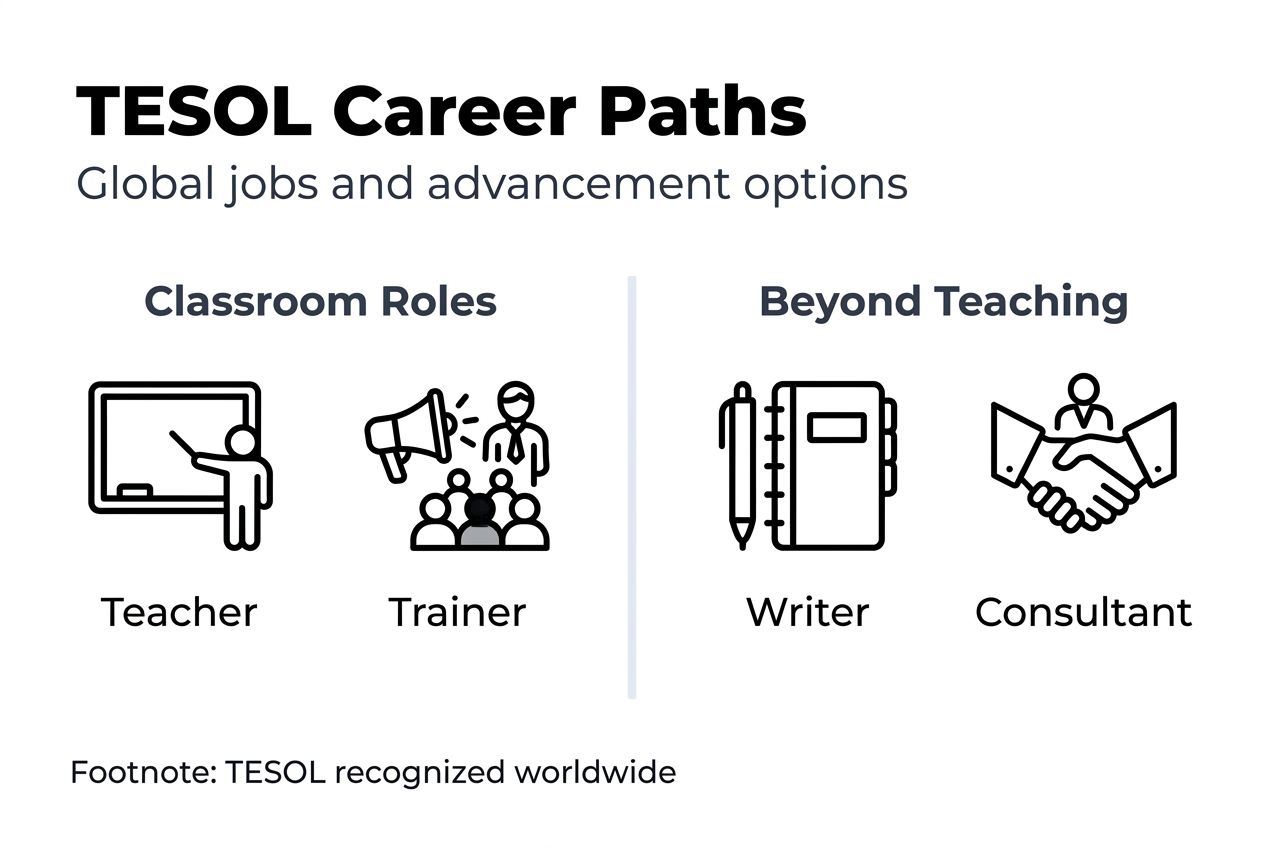
TESOL certification is globally recognized, enabling diverse roles including classroom teacher, curriculum developer, teacher trainer, and director of studies. This credential’s versatility allows you to work in traditional schools, language institutes, corporate training programs, or online platforms. The global ESL market continues expanding, creating steady demand for qualified educators.

Certification equips educators to teach English worldwide by building essential pedagogical skills and cross-cultural competencies. You gain confidence delivering engaging lessons, adapting to different learning styles, and assessing student progress effectively. These capabilities transfer across teaching contexts, from young learners in Vietnam to business professionals in Germany.
Emerging markets show particularly strong growth in English education demand. Countries developing their tourism, technology, and international business sectors prioritize English proficiency for economic competitiveness. This creates opportunities in talent acquisition markets seeking qualified TESOL educators to meet rising student enrollment.
Career paths available with TESOL certification:
- English language teacher in public or private schools internationally
- ESL instructor for adult education programs in English-speaking countries
- Online English teacher for platforms connecting students globally
- Corporate trainer designing customized English programs for professionals
- Curriculum developer creating materials for language schools or publishers
- Teacher trainer preparing new educators in TESOL methodologies
- Director of studies overseeing language program quality and staff development
Pro Tip: Gain specialized skills through micro-credentials in areas like business English, exam preparation, or young learners. These niche qualifications increase your value to employers and open higher-paying specialized positions.
Online teaching represents one of the fastest-growing segments for TESOL-certified educators. Digital platforms eliminate geographic barriers, allowing you to build international student bases while working from anywhere with reliable internet. This flexibility appeals to teachers seeking location independence or supplementary income streams.
TESOL certification enhances professional recognition and advancement potential throughout your career. Starting as a classroom teacher, you can progress to senior teacher, academic coordinator, or administrative leadership roles. The credential demonstrates commitment to professional standards that employers reward with greater responsibilities and benefits.
Global career opportunities extend beyond traditional teaching into materials writing, educational consulting, program management, and teacher education. TESOL certification provides the foundation for lifelong career development in the dynamic field of English language education.
Explore TESOL certification courses to launch your teaching career
Ready to start your TESOL journey? TEFL Institute offers accredited certification courses designed for aspiring and experienced educators seeking quality training. Our TESOL courses in Texas provide intensive in-person training with experienced instructors who guide you through practical teaching techniques and classroom management strategies.
Online learners benefit from flexible course extensions that allow you to complete certification on your schedule while maintaining work or family commitments. These programs include interactive modules, video demonstrations, and personalized feedback on your teaching practice.
Gain real-world experience through our January TEFL internship programs that place you in authentic teaching environments. Internships strengthen your resume, build confidence, and provide networking opportunities with schools actively hiring TESOL-certified teachers. Enroll today to transform your passion for education into a rewarding international teaching career with expert support every step of the way.
Frequently asked questions
What is TESOL certification and why is it important?
TESOL certification qualifies educators to teach English to non-native speakers in diverse global contexts. It provides practical training in language teaching methodologies, lesson planning, classroom management, and student assessment that employers worldwide value. Most ESL positions require TESOL credentials, making certification essential for job eligibility and professional credibility. The training equips you to design effective lessons, adapt instruction for different proficiency levels, and support learners in achieving their English language goals.
How does TESOL compare to TEFL and ESL certifications?
TESOL offers versatility for teaching English learners in both native English-speaking and international contexts. TEFL focuses primarily on teaching English abroad in countries where English is a foreign language. ESL targets teaching non-native speakers residing within English-speaking nations like the United States or Canada. While methodologies overlap significantly, your choice depends on preferred teaching locations and career goals.
Are TESOL certification courses suitable for beginners?
Most TESOL programs welcome beginners without prior teaching experience and cover foundational skills comprehensively. Courses include practical modules on lesson planning, classroom interaction, and language teaching principles that build your confidence progressively. Many programs incorporate teaching practice with real or simulated students, providing hands-on experience before your first professional position.
Can TESOL certification help advance my teaching career?
TESOL certification significantly increases employability and opens diverse global teaching opportunities beyond entry-level classroom positions. The credential supports career advancement into specialized roles like curriculum development, teacher training, academic coordination, and program administration. Employers recognize TESOL certification as evidence of professional commitment and pedagogical expertise worthy of increased responsibilities and compensation.
Recommended
- Teaching English as a career in 2026: certification paths | TEFL Institute
- Why specialize in TEFL: boost your teaching career in 2026 | TEFL Institute
- TEFL and TESOL Difference: Choosing Your Best Path | TEFL Institute
- Top 7 TESOL Jobs Online in 2026: Earn Up to $25/hr | TEFL Institute
- How to Become a Personal Trainer in 2026: The Real Career Path | TrainingPro

Tara and Jess talk through different TEFL and EFL topics, from finding work abroad to life in the classroom.