

 United Kingdom (UK)
 United States (US)
 Canada
 South Africa
 India
India Australia
 New Zealand
 China
China Russia
 Germany
 France
 Spain
Spain Netherlands
 Vietnam
 United Arab Emirates
 Italy
Italy Poland
 Thailand
 Türkiye





 Algeria


TESL Certificate: What It Means and Why It Matters
TESL Certificate: What It Means and Why It Matters

More than 1.5 million American teachers pursue language education careers worldwide, yet many overlook how vital the right certification can be. For anyone looking to teach English in an American classroom or abroad, understanding the role of a TESL Certificate matters. This guide sheds light on the core differences, critical requirements, and real opportunities available with TESL certification so you can make confident, informed decisions about your teaching future.
Table of Contents
- What A TESL Certificate Is
- Differentiating TESL, TEFL, TESOL
- How TESL Certification Works
- TESL Certificate Requirements
- Real-World TESL Teaching Applications
- Choosing Alternatives Like CELTA
Key Takeaways
| Point | Details |
|---|---|
| TESL Certification Focus | A TESL Certificate is specifically designed for teaching English to non-native speakers in English-speaking countries, emphasizing tailored language instruction techniques. |
| Distinct Certification Types | TESL, TEFL, and TESOL have unique focuses; educators should select the one that aligns with their teaching goals and desired location. |
| Certification Process | Obtaining a TESL Certificate requires completion of specific educational, practical, and proficiency standards, ensuring readiness to teach English effectively. |
| Diverse Teaching Applications | TESL-certified professionals can work in various educational settings, from K-12 schools to corporate training and online platforms, highlighting career versatility. |
What a TESL Certificate Is
A Teaching English as a Second Language (TESL) Certificate represents a professional credential designed to prepare educators for teaching English to non-native speakers in diverse learning environments. Unlike generic teaching qualifications, a TESL Certificate specifically focuses on language instruction techniques, cultural communication strategies, and pedagogical approaches tailored to English language learners.
The certification provides comprehensive training in critical areas such as understanding language learning methodologies, classroom management, curriculum development, and cross-cultural communication skills. Professionals who obtain this certificate gain specialized knowledge that enables them to effectively support students in acquiring English language proficiency across academic, professional, and social contexts.
TESL Certificates typically cover several core competencies that distinguish them from standard teaching credentials:
- Linguistic theory and second language acquisition principles
- Practical teaching methodologies specific to language instruction
- Assessment and evaluation techniques for language learners
- Strategies for teaching grammar, pronunciation, and communication skills
- Understanding cultural contexts that impact language learning
Pro Tip: Research Different Certificate Levels: Not all TESL Certificates are created equal. Investigate the specific requirements, accreditations, and international recognition of the certificate program you are considering to ensure it meets your professional teaching goals.
Pro Tip for Smart Preparation: Before enrolling in a TESL Certificate program, speak with current language teachers and program alumni to gain insights into the most valuable and comprehensive certification options in the market.
Differentiating TESL, TEFL, TESOL
While TESL, TEFL, and TESOL might seem like interchangeable acronyms in the world of English language teaching, they actually represent distinct approaches to language instruction. These certifications, though similar, have nuanced differences that significantly impact an educator’s teaching context and career opportunities.
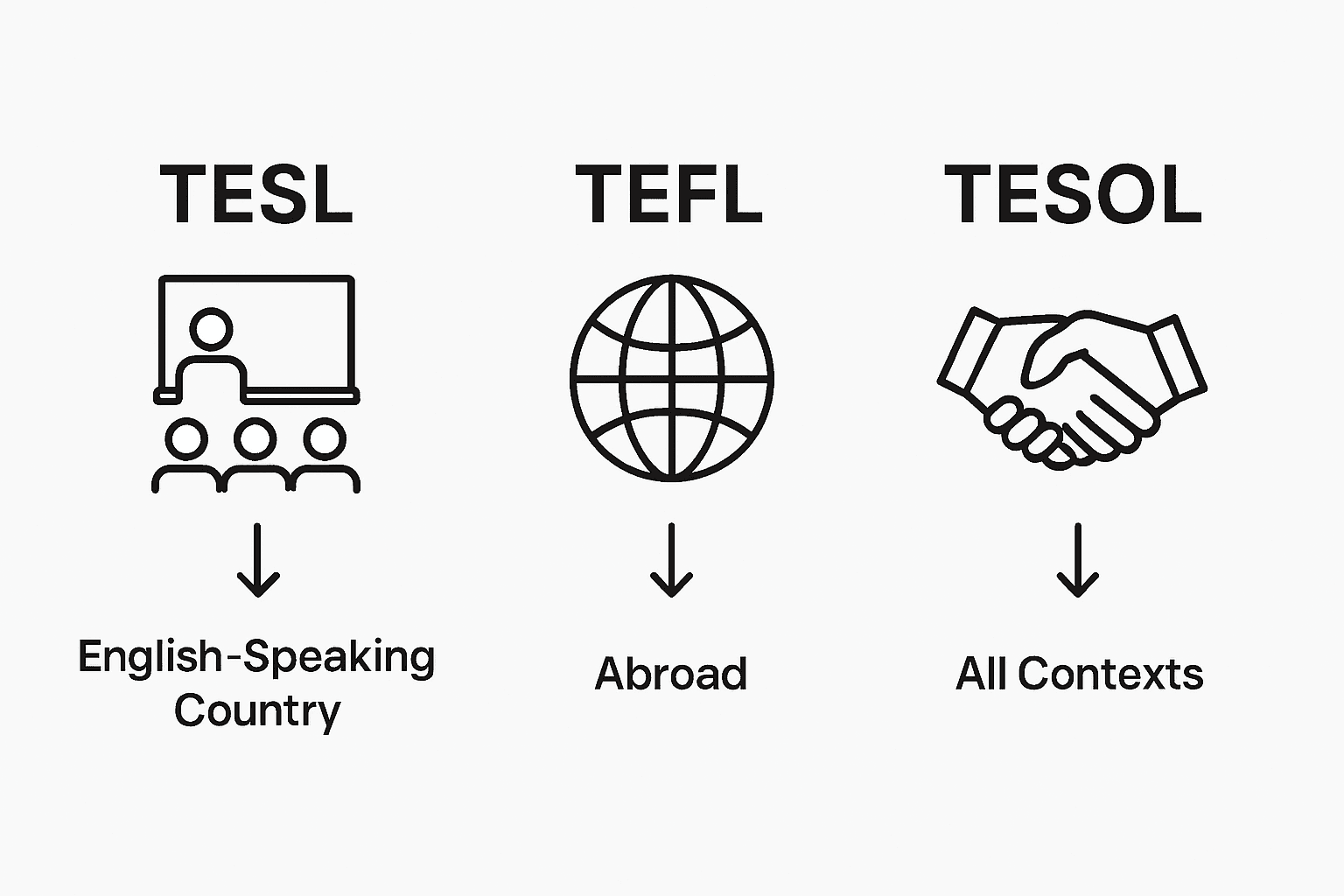
TESL (Teaching English as a Second Language) specifically focuses on teaching English to non-native speakers within English-speaking countries like the United States, Canada, or the United Kingdom. In contrast, TEFL (Teaching English as a Foreign Language) primarily prepares educators to teach English in countries where English is not the primary language of communication, such as Japan, Brazil, or South Korea.
The TESOL (Teaching English to Speakers of Other Languages) certification represents a more comprehensive umbrella term that encompasses both TESL and TEFL methodologies. TESOL programs typically provide broader training that integrates linguistic theory, cultural competence, and adaptive teaching strategies applicable in diverse international contexts:
- Global language teaching approaches
- Advanced linguistic theory
- Cross-cultural communication skills
- Adaptable classroom management techniques
- Specialized curriculum development strategies
Pro Tip for Career Planning: Choose Your Certification Strategically. The certification you select should align with your specific teaching goals, whether you aim to teach internationally or within English-speaking countries.
Pro Tip for Smart Preparation: Research the specific requirements of potential employers in your target teaching markets, as some regions may have distinct preferences for certain certification types.
Here is a concise comparison of major English teaching certifications and their ideal use cases:
| Certificate Type | Best for Teaching Location | Typical Program Format | Employer Preference |
|---|---|---|---|
| TESL | English-speaking countries | In-person or hybrid | Schools, colleges, community centers |
| TEFL | Non-English-speaking countries | Online or in-person | Private institutes, overseas schools |
| TESOL | Global flexibility | Blended or online | Universities, international programs |
| CELTA | International and academic settings | Intensive in-person | High-prestige and academic employers |
How TESL Certification Works
TESL Certification is a structured professional development pathway designed to equip educators with specialized skills for teaching English to non-native speakers. The certification process involves comprehensive training that combines theoretical knowledge with practical teaching strategies, ensuring teachers are thoroughly prepared for diverse classroom environments.
The typical TESL certification journey includes multiple critical components. Prospective teachers navigate through systematic course requirements that generally encompass academic coursework, practical training, and specialized language instruction modules. These programs typically require participants to complete:
- Theoretical linguistics courses
- Pedagogical methodology training
- Second language acquisition studies
- Classroom management techniques
- Practicum or student teaching experiences
Most TESL certification programs follow a standardized progression that includes both academic and practical training components. Candidates must typically demonstrate proficiency through written examinations, teaching demonstrations, and comprehensive assessments that evaluate their linguistic knowledge, cultural understanding, and instructional capabilities. Advanced certifications often require additional specialized training in areas such as curriculum development, assessment strategies, and adaptive teaching techniques.

Pro Tip for Certification Success: Document Everything. Maintain a comprehensive portfolio of your teaching experiences, lesson plans, and professional development activities to showcase your skills and stand out in the competitive language education market.
Pro Tip for Strategic Preparation: Research specific certification requirements for your target teaching markets, as different regions and institutions may have unique prerequisites and expectations for language instruction professionals.
TESL Certificate Requirements
Obtaining a TESL Certificate involves meeting a comprehensive set of academic and professional standards designed to ensure educators are fully prepared to teach English to non-native speakers. Candidates must navigate a structured pathway of educational and practical requirements that demonstrate their linguistic expertise and teaching capabilities.
Typical TESL Certificate requirements encompass several critical components that prospective teachers must successfully complete:
- Minimum education level (typically a bachelor’s degree)
- Completion of specialized TESL training program
- Minimum number of instructional hours (usually 100-120 hours)
- Comprehensive language teaching methodology courses
- Demonstrated English language proficiency
- Successful completion of practical teaching practicum
- Passing written and practical examinations
The academic requirements for TESL Certification are rigorous and designed to ensure high-quality language instruction. Most certification programs require candidates to demonstrate advanced understanding of linguistic principles, second language acquisition theories, and effective teaching strategies. Advanced certifications may also mandate additional qualifications such as graduate-level coursework, specialized endorsements in areas like curriculum development, or extensive classroom teaching experience.
Pro Tip for Certification Preparation: Create a Strategic Portfolio. Systematically document your academic achievements, teaching experiences, and professional development activities to strengthen your certification application and showcase your commitment to language education.
Pro Tip for Competitive Advantage: Research International Standards. Understand the specific certification requirements for different countries and regions to maximize your global teaching opportunities and career potential.
Real‑World TESL Teaching Applications
TESL Certification opens a world of diverse teaching opportunities across multiple professional contexts. Language instructors with TESL credentials can teach in a wide range of educational and professional environments, from traditional classroom settings to innovative online platforms that connect educators with students globally.
Practical teaching applications for TESL-certified professionals span several key environments:
- Public and private K-12 schools
- University language programs
- Corporate language training departments
- International language institutes
- Online tutoring platforms
- Community education centers
- Refugee and immigrant support programs
- International school systems
- Government language training initiatives
The versatility of TESL certification enables educators to adapt to different teaching contexts, each requiring unique instructional approaches. Professionals might find themselves designing curriculum for business English in a multinational corporation, supporting immigrant integration through language classes, or developing specialized language programs for academic or professional communication. Advanced TESL certification demonstrates not just language teaching skills, but a comprehensive understanding of cross-cultural communication, adaptive teaching strategies, and linguistic nuance.
Pro Tip for Career Flexibility: Build Diverse Skills. Develop supplementary skills like digital literacy, multicultural communication, and technology integration to enhance your marketability across different teaching environments.
Pro Tip for Strategic Career Planning: Network Strategically. Attend international education conferences, join professional language teaching associations, and connect with educators worldwide to discover unique teaching opportunities that leverage your TESL certification.
The following table summarizes the primary application areas for TESL-certified professionals:
| Application Area | Common Employers | Key Benefits |
|---|---|---|
| K-12 Schools | Public and private schools | Structured classroom experience |
| Corporate Training | Companies and organizations | Focus on workplace language skills |
| Online English Platforms | Virtual education companies | Flexible schedules and global reach |
| Community/Refugee Programs | Nonprofits, local agencies | Support for integration and social impact |
Choosing Alternatives Like CELTA
While CELTA represents a prestigious certification in English language teaching, professionals have multiple alternatives that offer comparable or specialized training pathways. Comparing different certification options helps educators select the most appropriate credential for their specific career goals and teaching environments.
Key alternatives to CELTA that aspiring language teachers should consider include:
- Level 5 TEFL Certificate
- Trinity CertTESOL
- Online TEFL/TESOL Diplomas
- University-based TESL Programs
- Advanced Teaching English Online Certifications
- Specialized Language Instruction Credentials
Each alternative certification offers unique advantages that might align more closely with specific professional objectives. Some programs provide more flexibility in terms of delivery format, with online and hybrid options becoming increasingly popular. Advanced certifications often include additional modules in areas like business English, young learner instruction, or digital language teaching technologies, which can significantly enhance a teacher’s marketability and professional versatility.
Pro Tip for Strategic Certification: Research Comprehensively. Investigate the specific accreditation, international recognition, and job market acceptance of each alternative certification before making your final decision.
Pro Tip for Career Optimization: Consider Your Specialization. Choose a certification that not only meets basic teaching requirements but also aligns with your intended teaching niche or geographic target market.
Take Your TESL Certification Further With Expert Online Training
Navigating the detailed requirements and specialized knowledge needed for TESL certification can feel overwhelming. If you aim to master practical teaching methodologies, grasp linguistic theory, and confidently enter diverse classroom environments you need a comprehensive and flexible learning solution. The challenges of meeting rigorous academic standards and gaining the right practicum experience make structured guidance essential to accelerating your journey toward becoming a qualified English language instructor.
Start with online TEFL courses designed to complement TESL certification goals while offering global teaching flexibility. TEFL Institute provides advanced diplomas and niche courses tailored to your exact career needs including practicum options that enhance your teaching portfolio. Take control today and access resources that clarify certification pathways, prepare you for real-world language teaching, and connect you with a supportive community of educators. Explore our offerings at TEFL Institute and begin your professional transformation now.
Frequently Asked Questions
What is a TESL Certificate?
A TESL Certificate is a professional credential that prepares educators to teach English to non-native speakers in diverse learning environments, focusing on language instruction techniques and cultural communication strategies.
How does a TESL Certificate differ from TESOL and TEFL?
TESL focuses on teaching English to non-native speakers within English-speaking countries, while TEFL prepares educators for teaching in non-English-speaking countries. TESOL is an umbrella term that encompasses both TESL and TEFL methodologies.
What are the typical requirements for obtaining a TESL Certificate?
Candidates usually need a minimum education level (typically a bachelor’s degree), completion of a specialized TESL training program, demonstrated English proficiency, and successful completion of a practical teaching practicum.
What types of teaching environments can I work in with a TESL Certificate?
TESL-certified professionals can teach in various settings, including public and private K-12 schools, universities, corporate language training departments, online platforms, community education centers, and refugee support programs.
