
 United Kingdom (UK)
 United States (US)
 Canada
 South Africa
 India
India Australia
 New Zealand
 China
China Russia
 Germany
 France
 Spain
Spain Netherlands
 Vietnam
 United Arab Emirates
 Italy
Italy Poland
 Thailand
 Türkiye










 Algeria



Complete Guide to TEFL Program Selection
Over 20,000 american teachers pursue TEFL certification each year, shaping careers around the world. With English as a global language, understanding what a TEFL program truly means is more important than ever for anyone seeking to make an impact abroad. This guide breaks down the essential facts, revealing what sets apart well-qualified teachers and how the right certification opens doors for meaningful work in diverse international settings.

Table of Contents
- Defining TEFL Certification And Its Purpose
- Comparing TEFL Program Types And Levels
- Accreditation And Recognized TEFL Standards
- In-Person, Online, And Hybrid Course Formats
- Career Paths And Practical Teaching Requirements
- Common TEFL Program Mistakes To Avoid
Key Takeaways
| Point | Details |
|---|---|
| TEFL Certification | TEFL certification equips educators with the skills to teach English to non-native speakers in international settings, facilitating cross-cultural understanding. |
| Course Levels | TEFL programs range from entry-level to advanced certifications, catering to various professional goals and experience levels. |
| Accreditation Importance | Choosing an accredited TEFL program ensures compliance with international educational standards, enhancing employability and teaching effectiveness. |
| Flexible Learning Formats | TEFL courses are available in online, in-person, and hybrid formats, allowing prospective teachers to select based on personal preferences and career aspirations. |
Defining TEFL Certification and Its Purpose
A TEFL certification represents a professional credential that qualifies educators to teach English to non-native speakers in diverse international settings. Teaching English as a Foreign Language training provides comprehensive preparation for instructors seeking to work across global educational environments, from private language schools to corporate training programs.
The primary purpose of TEFL certification extends beyond simple language instruction. It equips teachers with specialized pedagogical skills designed to effectively communicate complex linguistic concepts to students from varied cultural backgrounds. Educators learn advanced instructional techniques that enable them to create engaging, interactive learning experiences that support language acquisition through targeted teaching methodologies.
At its core, TEFL certification prepares professionals to bridge communication gaps across international contexts. By developing robust language teaching skills, certified instructors become critical facilitators of cross-cultural understanding. They learn not just how to teach grammar and vocabulary, but how to create meaningful connections that transcend linguistic barriers. This certification transforms language instruction from a mechanical process into a dynamic, transformative educational experience that empowers students to engage confidently with English in professional, academic, and personal contexts.
- Provides internationally recognized teaching credentials
- Enables instruction in diverse global settings
- Develops advanced pedagogical communication skills
- Supports cross-cultural language learning
Comparing TEFL Program Types and Levels
TEFL certification courses are available in multiple complexity levels and formats, designed to accommodate diverse learning needs and professional objectives. Different TEFL course levels provide aspiring educators with varying depths of training, ranging from foundational introductory programs to advanced professional credentials.
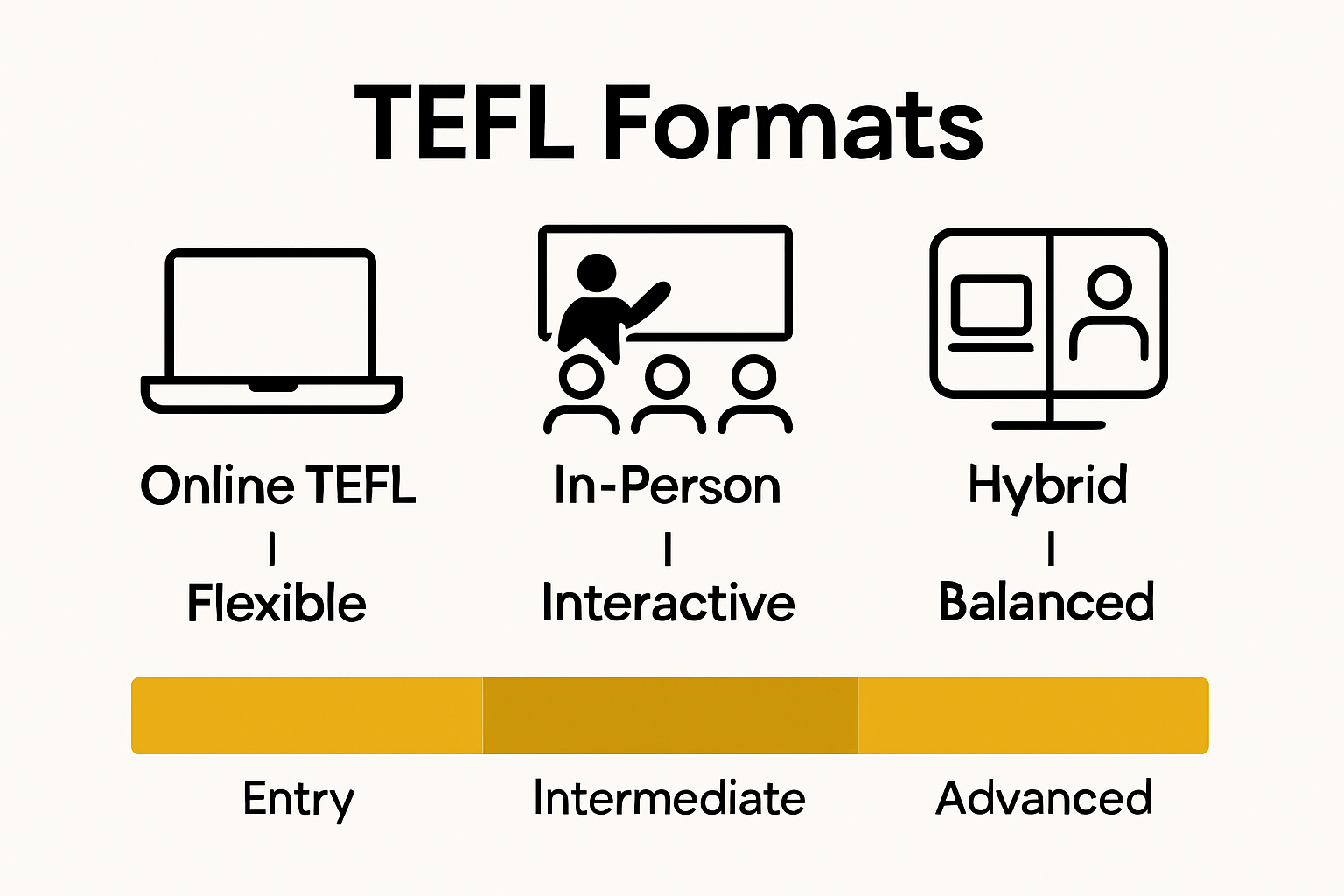
Typically, TEFL courses are categorized into three primary levels: entry-level, intermediate, and advanced professional certifications. Entry-level courses offer basic pedagogical skills and typically require 120 hours of instruction, making them ideal for individuals beginning their English teaching journey. Intermediate programs often include specialized modules like business English or young learner instruction, providing more nuanced teaching strategies. Advanced certifications represent comprehensive training programs that might include academic-level qualifications and in-depth methodological studies.
The most common TEFL course types include online self-paced courses, live online interactive training, hybrid programs combining digital and in-person learning, and intensive in-person bootcamp-style certifications. Each format offers unique advantages depending on a teacher’s schedule, learning preference, and career goals. Online courses provide maximum flexibility, while intensive in-person programs offer immediate feedback and hands-on teaching practice.
- Entry-level courses (120 hours)
- Intermediate specialized programs
- Advanced professional certifications
- Online, live online, hybrid, and in-person training formats
Validation and TEFL Standards
TEFL course represents a critical validation of educational quality and professional standards within language teaching certification programs. Understanding course ensures that prospective teachers invest in training programs that meet rigorous international educational benchmarks and provide legitimate, recognized credentials.

Recognized TEFL standards typically involve comprehensive evaluation across multiple dimensions, including curriculum design, instructor qualifications, teaching methodologies, and practical training components. Accredited programs undergo thorough external reviews that assess the depth and breadth of their instructional content, ensuring that graduates possess the necessary skills to teach English effectively in diverse global contexts. These standards often require courses to demonstrate alignment with international language teaching frameworks, comprehensive pedagogical approaches, and measurable learning outcomes.
However, the most respected TEFL bodies evaluate programs based on stringent criteria that go beyond basic curriculum requirements. They examine factors such as instructor expertise, course development processes, student support mechanisms, and the program’s ability to prepare teachers for real-world classroom challenges. Advantages of accredited courses include enhanced employability, international recognition, and a comprehensive skill set that enables teachers to adapt to various educational environments.
- Comprehensive external program evaluations
- Rigorous international teaching standards
- Validation of curriculum and instructional quality
- Enhanced professional credibility and recognition
In-Person, Online, and Hybrid Course Formats
TEFL training formats have evolved to provide aspiring educators with flexible learning options that accommodate diverse schedules and learning preferences. Online TEFL courses have dramatically transformed professional development opportunities, enabling students to pursue certification from anywhere in the world while maintaining professional or personal commitments.
Traditional in-person courses continue to offer unique advantages, particularly for individuals who thrive on direct interaction and immediate instructor feedback. These classroom-based programs provide hands-on teaching practice, real-time peer collaboration, and structured learning environments. Hybrid learning models represent an innovative approach that combines the best aspects of online flexibility and in-person instruction, allowing participants to balance digital coursework with practical teaching workshops and live training sessions.
Each course format presents distinct benefits and challenges. Online courses offer maximum convenience and self-paced learning, making them ideal for working professionals or international students. In-person training provides intensive, immersive experiences with direct mentorship, while hybrid programs create a balanced approach that leverages digital resources and face-to-face instructional techniques. The choice ultimately depends on individual learning styles, career goals, and personal constraints.
- Flexible digital learning platforms
- Intensive in-person training options
- Comprehensive hybrid certification models
- Personalized learning approach matching individual needs
Career Paths and Practical Teaching Requirements
TEFL certification opens diverse career pathways for language educators, extending far beyond traditional classroom settings. Importantly, global teaching careers encompass opportunities ranging from international school positions to online instruction, corporate language training, and specialized language programs across multiple sectors.
Furthermore, practical teaching requirements typically involve demonstrating comprehensive pedagogical skills through structured practicum experiences. TEFL practicum components often include supervised teaching practice, lesson planning demonstrations, classroom management techniques, and comprehensive assessment strategies. These practical components ensure that teachers develop the necessary skills to create engaging, effective learning environments across different student demographics and educational contexts.
In brief, Successful TEFL professionals must cultivate a diverse skill set that extends beyond language instruction. This includes cross-cultural communication abilities, adaptive teaching methodologies, technological proficiency, and the capacity to design curriculum that meets varied learner needs. Career opportunities span traditional academic settings, corporate training programs, online platforms, private tutoring, international language institutes, and specialized language preparation courses for academic and professional contexts.
- International school teaching positions
- Corporate language training roles
- Online and remote teaching opportunities
- Specialized language program instruction
Common TEFL Program Mistakes to Avoid
Course selection represents a critical decision for aspiring language educators, with potential long-term implications for professional development. Choosing the best TEFL course requires careful consideration to avoid common pitfalls that can derail career opportunities and educational quality.
Firstly, one of the most significant mistakes prospective TEFL students make involves overlooking course accreditation and international recognition. Secondly, Unaccredited or low-quality programs can limit job prospects, reduce professional credibility, and fail to provide the comprehensive training necessary for effective language instruction. Learners should thoroughly investigate program credentials, instructor qualifications, curriculum depth, and practical teaching components before committing to a specific certification pathway.
Additional critical mistakes include failing to match course formats with personal learning styles, neglecting practical teaching experience requirements, and underestimating the importance of specialized skills such as technology integration, cultural competence, and adaptive teaching methodologies. Moreover, successful TEFL professionals must look beyond basic language instruction and develop a holistic approach to educational training that prepares them for diverse global teaching environments.
- Verify course validation thoroughly
- Match learning format to personal needs
- Prioritize practical teaching experience
- Research job market requirements
- Understand international certification standards
Find Your Perfect TEFL Program and Start Teaching Today
Choosing the right TEFL certification can feel overwhelming with so many course levels, formats, and standards to consider. This article highlights key challenges like matching course type to your learning style and verifying to avoid common pitfalls. If you want to gain internationally recognized teaching credentials, develop practical skills, and open doors to diverse global career paths, you need a trusted source that guides you through every step.
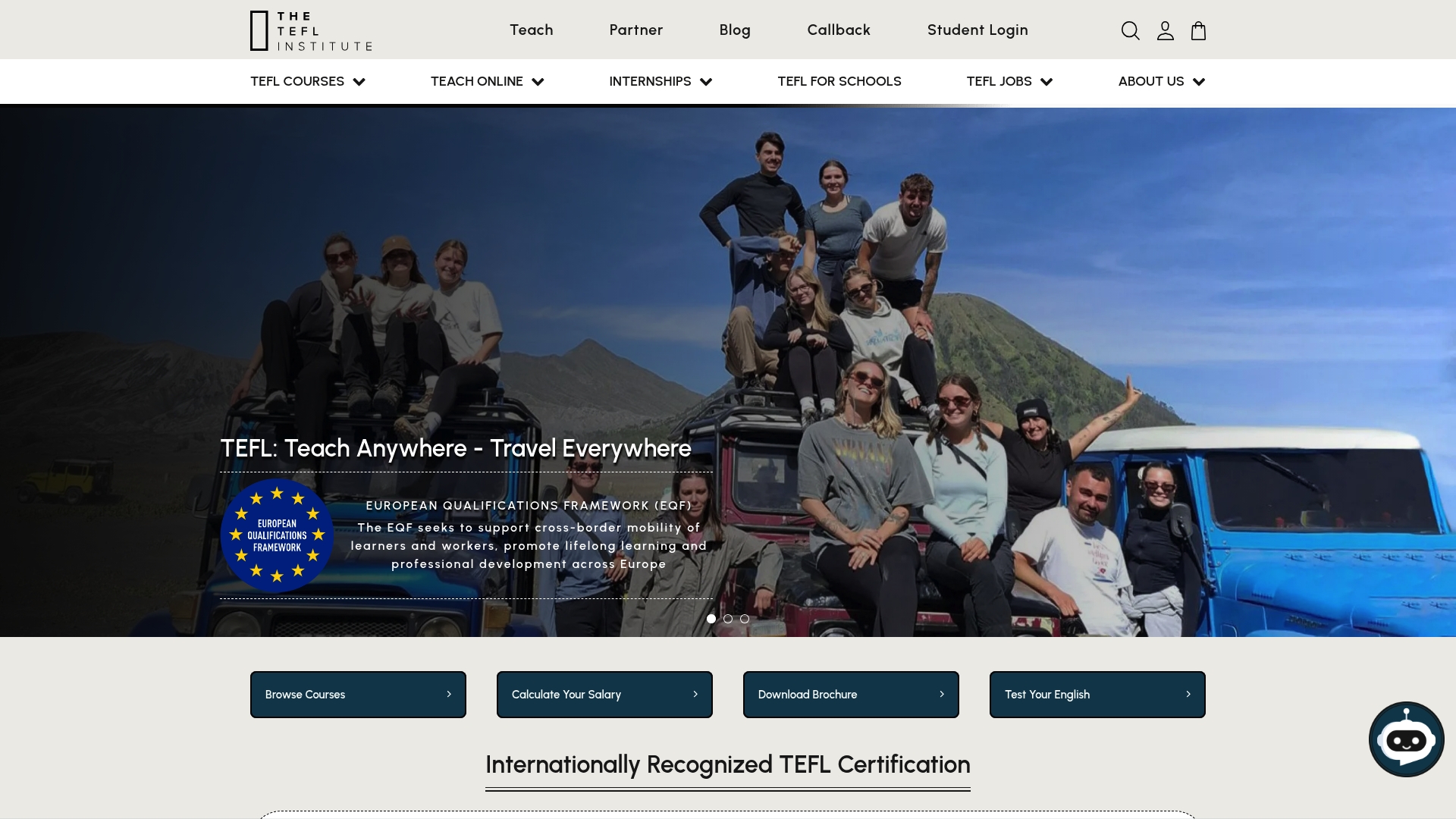
Explore the comprehensive range of flexible options at the TEFL Institute where you can find detailed course descriptions, including advanced diplomas and hybrid formats with practicum components. However, Learn how to align your professional goals with specialized programs and check validation to ensure maximum employability. Whereas, if you delay in securing your TEFL certification that prepares you for teaching success. Visit TEFL Institute’s online course catalog now and take the next step toward a rewarding teaching career abroad or online.
Frequently Asked Questions
What is a TEFL certification?
A TEFL certification is a qualification that allows teachers to teach English to people who don’t speak it as their first language. It gives them the skills they need to teach English clearly and effectively.
What are the different types of TEFL programs available?
TEFL courses are into entry-level, intermediate, and advanced professional certifications. They also come in several formats, including online, live online, hybrid, and intensive in-person courses.
Why is course validation important for TEFL certification?
Course validation ensures that a TEFL program meets international educational standards and provides recognized credentials, enhancing employability and validating the quality of training received.
What practical teaching requirements are involved in TEFL certification?
Practical teaching requirements typically include supervised teaching practice. Lesson planning, demonstrations, and classroom management techniques to ensure teachers develop the necessary skills for effective language instruction.