
 United Kingdom (UK)
 United States (US)
 Canada
 South Africa
 India
India Australia
 New Zealand
 China
China Russia
 Germany
 France
 Spain
Spain Netherlands
 Vietnam
 United Arab Emirates
 Italy
Italy Poland
 Thailand
 Türkiye









 Algeria



The Essential Guide to Hybrid Learning in TEFL
The Essential Guide to Hybrid Learning in TEFL

Nearly 60 percent of language teachers now use some form of hybrid learning in their classrooms, signaling a major shift in how TEFL is delivered. This flexible teaching model blends classroom energy with online convenience, offering opportunities that suit both educators and students who crave adaptability and rich engagement. Whether you want more control over lesson pacing or need robust digital tools to boost participation, hybrid learning is changing the way future teachers prepare for global classrooms.
Table of Contents
- Defining Hybrid Learning in TEFL
- Types of Hybrid Models for TEFL Training
- Key Components of a Hybrid TEFL Course
- Benefits and Challenges for TEFL Learners
- Comparing Hybrid, Online, and In-Person TEFL
Key Takeaways
| Point | Details |
|---|---|
| Hybrid Learning Defined | Combines traditional classroom instruction with digital methods, offering flexibility and personalized learning pathways for TEFL students. |
| Types of Hybrid Models | Various models like Rotation, Flex, and Self-Blended allow customization of learning experiences to meet different needs. |
| Key Course Components | Effective hybrid TEFL courses should incorporate synchronous sessions, interactive platforms, and multimedia resources for a comprehensive learning experience. |
| Benefits vs. Challenges | While hybrid learning enhances flexibility and access to resources, it also requires self-motivation and technical skills to overcome potential digital fatigue and barriers. |
Defining Hybrid Learning in TEFL
Hybrid learning in TEFL represents a transformative educational approach that strategically blends traditional classroom instruction with digital learning technologies. Klimova and Kacetl define this method as the integration of face-to-face teaching with online methods, creating a dynamic and flexible learning environment for language educators and students.
At its core, hybrid learning breaks down the traditional barriers of language instruction by combining multiple teaching modalities. According to Horn and Staker, this approach offers unprecedented flexibility, allowing students to access learning materials and complete assignments at their own pace while maintaining the benefits of personal engagement and immediate instructor feedback.
The key characteristics of hybrid learning in TEFL include:
- Flexible learning schedules
- Self-paced digital content consumption
- Interactive online and offline learning experiences
- Personalized educational pathways
- Integrated technology-enhanced instruction
By leveraging both digital platforms and traditional classroom interactions, hybrid learning creates a comprehensive educational experience that addresses the diverse needs of modern language learners. Discover more about hybrid TEFL certification methods to understand how this innovative approach can transform your language teaching journey.
Types of Hybrid Models for TEFL Training
Hybrid learning models in TEFL have evolved to accommodate diverse educational needs and technological capabilities. Wikipedia highlights the self-blended model as a particularly innovative approach, where students independently choose to supplement traditional face-to-face classes with online learning components, providing unprecedented flexibility in language education.
TEFL training offers several distinct hybrid learning models that cater to different learning styles and professional requirements. These models typically integrate various proportions of online and in-person instruction, allowing educators and students to customize their learning experience. MDPI research suggests that hybridization can involve combining two or more pedagogical approaches to create more comprehensive and adaptive learning environments.
The primary types of hybrid TEFL training models include:
- Rotation Model: Students alternate between online and classroom-based learning
- Flex Model: Majority of instruction occurs online with optional in-person support
- Self-Blended Model: Students independently supplement classroom learning with online resources
- Enriched Virtual Model: Primary instruction happens online with mandatory periodic in-person sessions
- A La Carte Model: Students take some courses entirely online while maintaining traditional classroom attendance
For language educators seeking to understand which hybrid model might best suit their professional development, exploring different TEFL teaching methods can provide deeper insights into these innovative learning approaches.
Key Components of a Hybrid TEFL Course
A comprehensive hybrid TEFL course requires a strategic blend of technological infrastructure and pedagogical innovation. Link Springer research highlights the critical importance of integrating technology to facilitate real-time interaction between online and in-person students, creating a seamless learning environment that transcends traditional educational boundaries.
The key components of an effective hybrid TEFL course encompass multiple dimensions of learning and technological engagement. Another Link Springer study emphasizes the need for adaptable learning spaces and robust technology integration, ensuring that students receive a dynamic and comprehensive language teaching experience.
Essential components of a hybrid TEFL course include:
- Synchronous Online Sessions: Live interactive classes with real-time instructor engagement
- Asynchronous Learning Materials: Pre-recorded lectures, reading resources, and self-paced modules
- Interactive Digital Platforms: Collaborative tools for communication and group work
- Practical Teaching Practicum: In-person or virtual classroom observation and teaching practice
- Multimedia Language Learning Resources: Video, audio, and interactive digital content
- Assessment and Feedback Mechanisms: Regular performance evaluations and personalized guidance
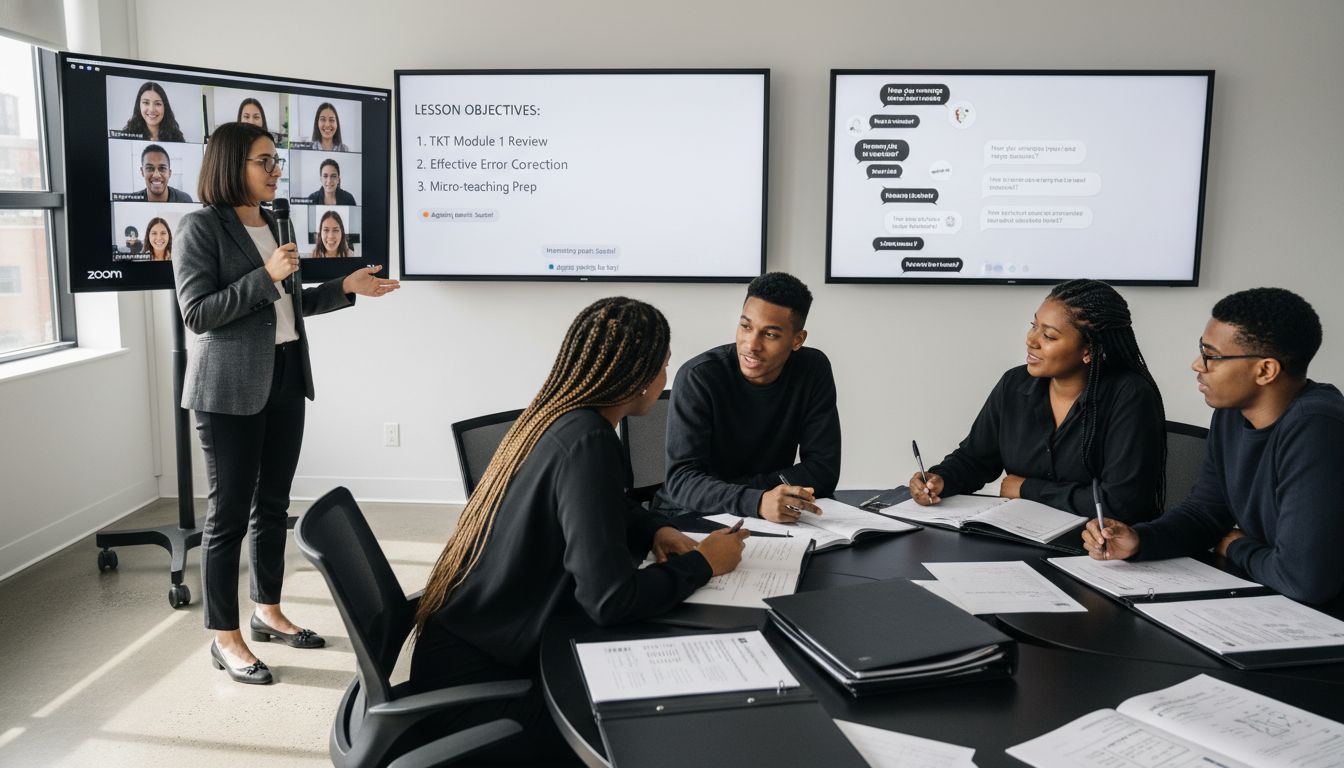
For aspiring TEFL educators looking to explore comprehensive training options, our 310-hour Level 5 hybrid TEFL course provides an excellent pathway to professional development in language education.
Benefits and Challenges for TEFL Learners
Hybrid learning in TEFL presents a transformative approach to language education, offering significant advantages alongside unique challenges. Mendeley research demonstrates that hybrid learning can enhance student performance more effectively than traditional face-to-face or purely distance learning methods, highlighting the potential for improved educational outcomes.
ArXiv studies reveal that integrating online and in-person components fosters a powerful sense of community among learners, which is crucial in language education where social interaction plays a vital role in skill development. This approach allows students to benefit from the flexibility of digital learning while maintaining the interpersonal connections essential to language acquisition.
Key benefits and challenges of hybrid TEFL learning include:
Benefits:
- Increased flexibility in learning schedules
- Personalized learning pace
- Access to diverse multimedia resources
- Reduced geographical constraints
- Cost-effective compared to traditional classroom training
Challenges:
- Technical skill requirements
- Potential for digital fatigue
- Need for self-motivation
- Potential communication barriers
- Varying quality of online resources
Aspiring TEFL educators can leverage these insights to maximize their teaching abroad experiences and navigate the evolving landscape of language education effectively.
Comparing Hybrid, Online, and In-Person TEFL
Wisdomlib research defines hybrid learning as a strategic approach that combines traditional in-person instruction with online components, emphasizing synchronized participation. This method represents a sophisticated middle ground between fully online and traditional classroom-based language teaching, offering unique advantages that address the diverse needs of modern TEFL learners.
Each TEFL learning format presents distinct characteristics and potential benefits.
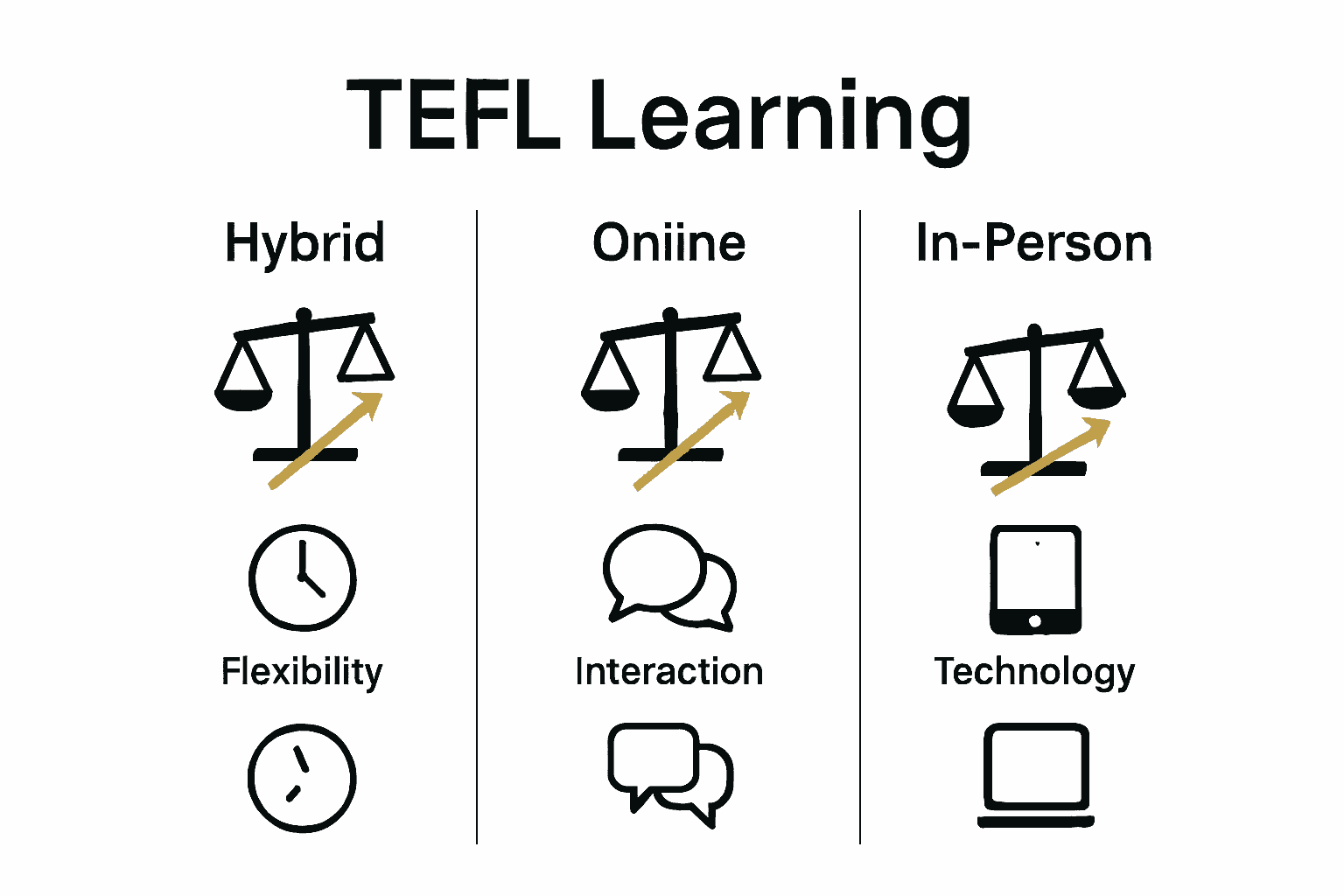 While in-person training provides direct, immediate interaction with instructors and peers, online learning offers unprecedented flexibility, and hybrid models blend the most effective elements of both approaches. Wikipedia highlights that modern language education increasingly focuses on improving not just linguistic skills, but also intercultural competence and digital literacies.
Key comparative aspects of TEFL learning formats:
In-Person TEFL:
- Immediate, face-to-face instructor feedback
- Direct peer interaction
- Structured learning environment
- Immediate language practice
- Traditional classroom dynamics
Online TEFL:
- Maximum schedule flexibility
- Self-paced learning
- Global accessibility
- Lower cost
- Digital skill development
Hybrid TEFL:
- Balanced learning approach
- Personalized learning paths
- Combination of digital and physical resources
- Reduced geographical constraints
- Enhanced technological integration
For aspiring TEFL educators seeking clarity on different certification approaches, exploring the comparison between online and offline TEFL diplomas can provide valuable insights into making an informed educational decision.
Unlock the Power of Hybrid TEFL Learning to Elevate Your Teaching Career
Navigating the challenges of hybrid learning in TEFL means mastering the balance between online flexibility and in-person interaction. If you are seeking to overcome the technical hurdles and need a structured path that offers personalized support, hybrid models provide a unique solution that matches your ambition. This approach not only adapts to your schedule but enhances your teaching skills with real-world practicum experience and interactive digital resources.
Take control of your professional growth today by exploring TEFL Institute’s comprehensive hybrid programs designed especially for aspiring and experienced English teachers. Whether you want to expand your career opportunities abroad or excel in online language education, our Level 5 hybrid TEFL course offers a trusted, flexible pathway suited to your goals. Learn how hybrid learning can transform your teaching journey at TEFL Institute. Start now and meet the future of English language teaching with confidence.
Frequently Asked Questions
What is hybrid learning in TEFL?
Hybrid learning in TEFL refers to an educational approach that combines traditional classroom instruction with online learning methods, creating a flexible and interactive environment for students and educators.
What are the main types of hybrid learning models for TEFL training?
The primary types of hybrid learning models for TEFL include the Rotation Model, Flex Model, Self-Blended Model, Enriched Virtual Model, and A La Carte Model, each offering different proportions of online and in-person instruction.
What are the key components of a hybrid TEFL course?
Essential components of a hybrid TEFL course include synchronous online sessions, asynchronous learning materials, interactive digital platforms, practical teaching practicums, multimedia resources, and assessment and feedback mechanisms.
What are the benefits and challenges of hybrid learning in TEFL?
Benefits of hybrid learning in TEFL include increased flexibility, personalized learning pace, access to diverse resources, and lower costs. Challenges may involve technical skill requirements, digital fatigue, and the need for self-motivation.