

 United Kingdom (UK)
 United States (US)
 Canada
 South Africa
 India
India Australia
 New Zealand
 China
China Russia
 Germany
 France
 Spain
Spain Netherlands
 Vietnam
 United Arab Emirates
 Italy
Italy Poland
 Thailand
 Türkiye









 Algeria



Understanding the Advantages of Accredited TEFL Courses
Understanding the Advantages of Accredited TEFL Courses

Getting certified to teach English abroad sounds simple, but not all TEFL courses are created equal. Some promise career opportunities, while only accredited TEFL programs meet rigorous standards and win recognition from employers worldwide. The surprising part is that having the right accreditation does not just help you land a job, it actually shapes your overall teaching success and opens doors you probably never considered.
Table of Contents
- Defining Accredited TEFL Courses: What They Are
- The Importance of Accreditation in TEFL Education
- How Accredited TEFL Courses Enhance Career Opportunities
- Understanding the Skills Developed Through Accredited TEFL Programs
- Real-World Impact: Why Schools Prefer Accredited TEFL Teachers
Quick Summary
| Takeaway | Explanation |
|---|---|
| Accreditation enhances TEFL course quality. | Accredited courses undergo rigorous evaluations ensuring they meet established educational standards and methodologies. |
| Employers value accredited TEFL certifications. | Recognized credentials are prioritized by employers, increasing hireability in the competitive education market. |
| Accredited programs cultivate essential teaching skills. | These programs equip educators with advanced pedagogical and cross-cultural communication competencies necessary for effective teaching. |
| Practical readiness is crucial for TEFL teachers. | Accredited teachers demonstrate immediate teaching effectiveness, minimizing training needs for hiring schools. |
| Diverse opportunities arise from accreditation. | Graduates can access varied teaching roles across international schools, online platforms, and corporate language training. |
Defining Accredited TEFL Courses: What They Are
Accredited TEFL courses represent professional training programs designed to prepare educators for teaching English as a foreign language with recognized credentials. Unlike standard language teaching certifications, these specialized programs undergo rigorous external evaluation to ensure they meet established educational standards. Learn more about TEFL certification basics and understand why accreditation matters significantly in the teaching landscape.
Understanding TEFL Course Accreditation
Accreditation serves as a critical quality assurance mechanism in professional education. When a TEFL course receives accreditation, it means an independent, recognized educational body has thoroughly examined and validated the curriculum, teaching methodologies, instructor qualifications, and overall educational standards. These evaluations typically assess multiple dimensions:
- Comprehensive curriculum design
- Instructor expertise and qualifications
- Instructional methodology effectiveness
- Student learning outcomes
- Professional development potential
Accredited programs demonstrate a commitment to maintaining high educational standards that go beyond basic language instruction requirements.
Key Characteristics of Accredited TEFL Courses
Professional TEFL courses with genuine accreditation distinguish themselves through several critical features. According to TEFL certification experts, accredited programs typically include:
- Standardized curriculum meeting international teaching standards
- Rigorous assessment and evaluation processes
- Practical teaching components and practicum experiences
- Comprehensive modules covering language teaching pedagogies
- Recognition by educational institutions and international employers
These characteristics ensure that graduates receive a robust, professionally recognized certification that opens doors to teaching opportunities worldwide. An accredited TEFL course goes beyond simple language instruction, providing aspiring educators with a comprehensive understanding of effective teaching strategies, cultural sensitivity, and professional classroom management techniques.
Below is a comparison table outlining the differences between accredited and non-accredited TEFL courses to clarify what sets professionally recognized programs apart in terms of validation, curriculum, and career impact.
| Aspect | Accredited TEFL Courses | Non-Accredited TEFL Courses |
|---|---|---|
| Quality Assurance | Independent, rigorous external evaluation | No formal external quality verification |
| Curriculum Standards | Meets international teaching requirements | Varies, often lacks standardization |
| Instructor Qualifications | Verified professional credentials | May not require qualified instructors |
| Employer Recognition | Widely recognized by international schools | Limited or no recognition by employers |
| Impact on Employability | Increases hiring opportunities worldwide | May restrict or limit job prospects |
| Skill Development | Comprehensive pedagogical and cultural skills | Often basic or outdated methods |
| Investment Value | High long-term career ROI | May not justify time or financial cost |
The Importance of Accreditation in TEFL Education
Accreditation represents a pivotal quality assurance mechanism that transforms standard TEFL training into professionally recognized credentials. By establishing rigorous external validation standards, accreditation ensures that educational programs meet comprehensive professional benchmarks.
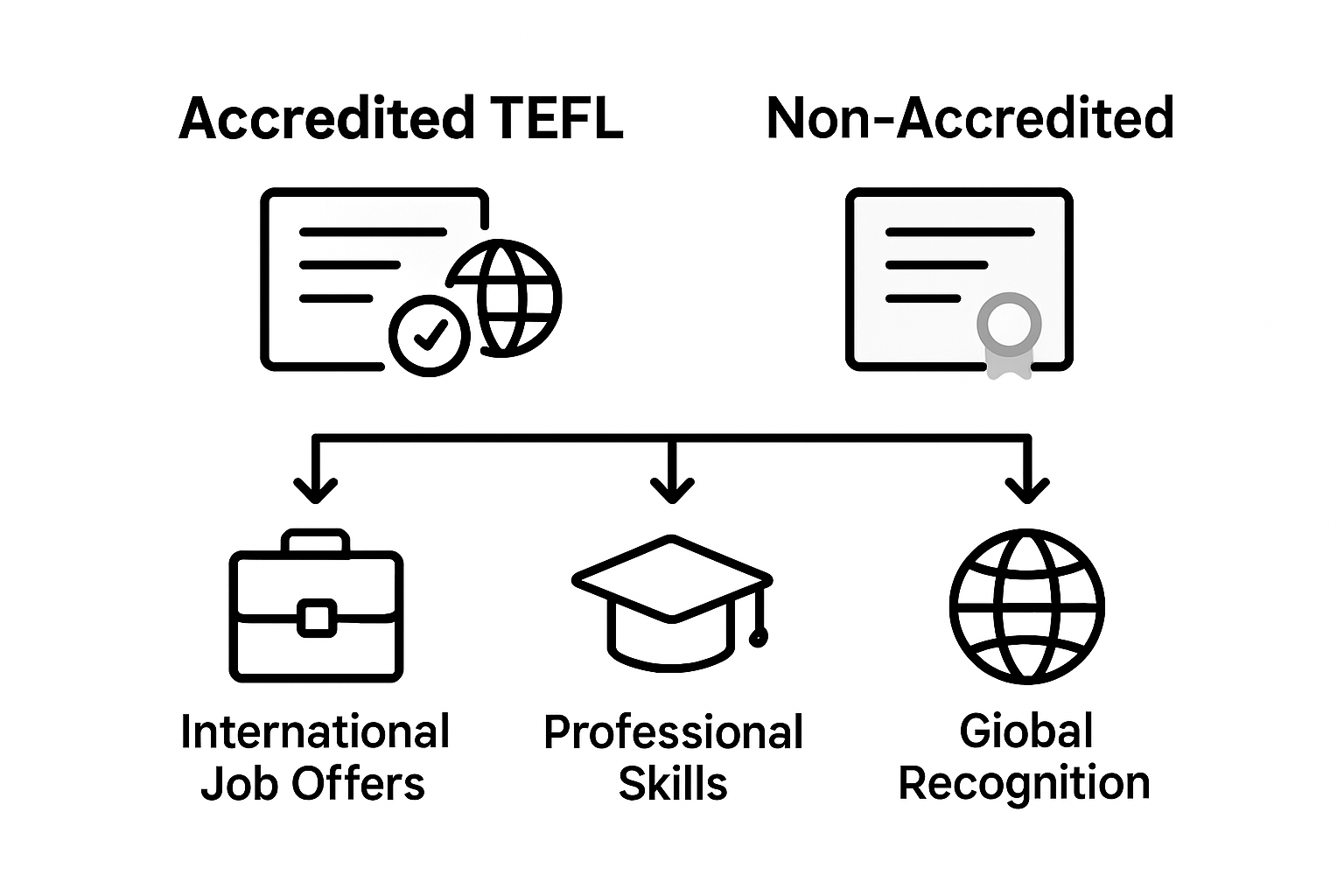 Explore employer recognition of online TEFL courses to understand how these credentials impact teaching opportunities worldwide.
Professional Validation and Credibility
Professional accreditation serves as a critical seal of approval that validates the educational quality and professional standards of TEFL courses. According to international education research, accredited programs demonstrate several fundamental attributes that distinguish them from non-accredited alternatives:
- Systematic curriculum development
- Consistent educational quality standards
- Transparent assessment methodologies
- Ongoing professional development frameworks
- Commitment to international teaching excellence
These attributes ensure that educators receive training that meets globally recognized professional standards, significantly enhancing their employability and teaching effectiveness.
Economic and Career Implications
The impact of accreditation extends far beyond academic recognition. Professionally accredited TEFL certifications create tangible economic advantages for educators seeking international teaching opportunities. Employers consistently prioritize candidates with credentials from recognized, validated training programs. Accreditation signals to potential employers that graduates possess:
- Comprehensive pedagogical training
- Standardized teaching competencies
- Verified instructional skills
- Professional-level language teaching capabilities
- Demonstrated commitment to educational excellence
By choosing an accredited TEFL course, educators invest in a credential that not only validates their skills but also significantly improves their prospects in the competitive global language teaching market.
How Accredited TEFL Courses Enhance Career Opportunities
Accredited TEFL courses provide transformative professional pathways for educators seeking meaningful international teaching careers. These specialized programs go beyond basic language instruction, offering strategic advantages that significantly expand global employment prospects. Discover key insights about TEFL courses to understand how professional certification can reshape your teaching trajectory.
Global Employment Marketability
Professional accreditation dramatically increases an educator’s employability across international contexts. According to international education employment research, accredited TEFL certifications serve as powerful credentials that differentiate candidates in competitive job markets. These credentials demonstrate:
- Standardized professional training
- Internationally recognized qualifications
- Comprehensive pedagogical competencies
- Validated instructional skill sets
- Commitment to professional development
Employers worldwide recognize accredited programs as reliable indicators of an educator’s preparedness to deliver high-quality language instruction across diverse cultural and educational environments.
Expanded Teaching Opportunities
Accredited TEFL courses unlock diverse teaching opportunities that extend far beyond traditional classroom settings. Many international institutions, language schools, and online platforms specifically require professionally accredited certifications. These opportunities include:
- International school teaching positions
- Corporate language training roles
- Online language instruction platforms
- University preparatory language programs
- International educational consulting
By investing in an accredited TEFL course, educators position themselves as competitive, professionally trained professionals capable of adapting to multiple teaching contexts and meeting rigorous international educational standards.

Understanding the Skills Developed Through Accredited TEFL Programs
Accredited TEFL programs represent comprehensive training environments that cultivate a sophisticated skill set far beyond basic language instruction techniques. These programs transform aspiring educators into versatile, culturally competent professionals capable of navigating complex international teaching landscapes. Learn about transferable TEFL skills to understand the profound professional development potential of these specialized training programs.
Pedagogical and Instructional Competencies
Professional TEFL programs develop robust pedagogical skills that extend well beyond traditional teaching methodologies. According to international language education research, accredited programs emphasize developing comprehensive instructional capabilities that include:
- Advanced lesson planning strategies
- Differentiated instructional approaches
- Classroom management techniques
- Multicultural communication skills
- Interactive teaching methodologies
These skills enable educators to create dynamic, engaging learning environments that accommodate diverse student backgrounds and learning preferences.
Cross-Cultural Communication and Adaptability
One of the most significant outcomes of accredited TEFL programs is the development of profound cross-cultural communication skills. Participants learn to navigate complex cultural interactions, understanding nuanced communication strategies that go far beyond language instruction. These skills encompass:
- Intercultural sensitivity
- Non-verbal communication interpretation
- Contextual communication strategies
- Cultural adaptation techniques
- Conflict resolution in multicultural settings
By cultivating these sophisticated interpersonal capabilities, TEFL-certified educators become adept at bridging cultural divides and creating inclusive, respectful learning environments across global contexts.
The following table summarizes key skills developed in accredited TEFL programs, highlighting how these competencies support effective teaching across diverse global classrooms.
| Skill Area | Description |
|---|---|
| Lesson Planning | Develops advanced strategies for structuring effective lessons |
| Classroom Management | Equips teachers with techniques for managing various learning environments |
| Cross-Cultural Communication | Builds ability to interact and teach in multicultural settings |
| Instructional Methodology | Focuses on interactive and differentiated teaching approaches |
| Cultural Adaptability | Enhances skills in adapting to new and diverse cultural contexts |
| Conflict Resolution | Encourages techniques for handling misunderstandings in class |
| Professional Development | Promotes ongoing learning and instructional improvement |
Real-World Impact: Why Schools Prefer Accredited TEFL Teachers
Schools and educational institutions increasingly prioritize hiring teachers with accredited TEFL certifications, recognizing these credentials as reliable indicators of professional competence and teaching quality. Explore why employers value certified teachers to understand the critical factors that make accredited TEFL teachers stand out in competitive job markets.
Quality Assurance and Professional Standards
Accredited TEFL certifications provide schools with a robust quality assurance mechanism that goes beyond traditional hiring assessments. According to international education recruitment research, schools rely on these credentials to ensure:
- Standardized teaching competencies
- Validated instructional methodologies
- Comprehensive pedagogical training
- Cultural sensitivity and adaptability
- Proven classroom management skills
These credentials signal that teachers have undergone rigorous professional preparation, reducing recruitment risks and ensuring consistent educational quality across diverse learning environments.
Practical Readiness and Immediate Effectiveness
Educational institutions value accredited TEFL teachers for their demonstrated practical readiness to perform effectively in complex teaching scenarios. Unlike non-accredited alternatives, these certified professionals bring comprehensive skill sets that enable immediate classroom integration:
- Advanced lesson planning capabilities
- Adaptable instructional strategies
- Multicultural communication expertise
- Understanding of diverse learning needs
- Professional development orientation
By selecting accredited TEFL teachers, schools minimize initial training investments and quickly deploy educators who can deliver high-quality language instruction across varied educational contexts.
Turn Your Accredited TEFL Ambitions Into Real-World Success
Are you feeling uncertain about which TEFL certification truly delivers results employers value? The article highlighted how accredited TEFL courses open doors to international teaching jobs and give you trusted professional credibility. Yet, many aspiring teachers are frustrated by confusing course options and worry about wasting time or money on programs with questionable recognition. At TEFL Institute, we understand you want confidence that your certification will lead to real opportunities and tangible skills. Our accredited courses are designed specifically to offer internationally respected credentials, up-to-date teaching methods, and career-ready preparation, just like the standards explained in the article.

Ready to invest where it truly counts? Explore the full range of accredited TEFL courses and resources designed for both new and experienced educators. See how our comprehensive programs have helped thousands achieve their dream teaching jobs worldwide. If you want to stand out in the global job market and feel secure in your investment, take the next step today by visiting TEFL Institute’s website. Let’s turn your certification into a powerful career advantage now.
Frequently Asked Questions
What are the benefits of taking an accredited TEFL course?
Taking an accredited TEFL course provides recognition from employers, ensures a high standard of education, enhances teaching skills, and opens up diverse job opportunities in international settings.
How does accreditation impact the quality of a TEFL course?
Accreditation ensures that a TEFL course meets rigorous educational standards, including comprehensive curriculum design, qualified instructors, and effective teaching methodologies. This validation enhances the overall quality and credibility of the course.
Why is employer recognition important for TEFL certifications?
Employer recognition is vital because it indicates that the certification holds value in the job market. Accredited TEFL certifications are viewed as a mark of competence, making candidates more attractive to potential employers.
What skills do accredited TEFL courses help develop?
Accredited TEFL courses cultivate a range of skills, including advanced lesson planning, classroom management, cross-cultural communication, and adaptable teaching methodologies, all essential for effective language instruction.