
 United Kingdom (UK)
 United States (US)
 Canada
 South Africa
 India
India Australia
 New Zealand
 China
China Russia
 Germany
 France
 Spain
Spain Netherlands
 Vietnam
 United Arab Emirates
 Italy
Italy Poland
 Thailand
 Türkiye









 Algeria


Who Needs TEFL Certification: Complete Guide
Who Needs TEFL Certification: Complete Guide

More than 1.5 billion people worldwide are learning English, making skilled teachers more valuable than ever. Whether you are a recent graduate, an adventurous career changer, or a professional aiming for international experience, TEFL certification offers a clear path to global teaching opportunities. This guide uncovers who truly benefits from this credential and how it can open unexpected doors for personal and professional growth.
Table of Contents
- Who Benefits from TEFL Certification
- TEFL Certification Categories Defined
- TEFL Requirements and Qualifications
- How Certification Enables Teaching Opportunities
- Practical Implications and Costs
- Alternatives to TEFL Certification
Key Takeaways
| Point | Details |
|---|---|
| Beneficiaries of TEFL Certification | TEFL certification is advantageous for recent graduates, career changers, language enthusiasts, and multilingual professionals looking to enhance their career prospects and global communication skills. |
| Diverse Career Options | TEFL certification opens various opportunities beyond traditional teaching roles, including positions in international corporations, consultancies, and online education. |
| Certification Levels | Different certification categories, ranging from basic to advanced, allow individuals to choose a TEFL path that aligns with their career goals and teaching contexts. |
| Recognition and Employment | Employers often prioritize TEFL certification for hiring, finding certified teachers more competitive in the job market for international teaching positions. |
Who Benefits from TEFL Certification
Tefl certification isn’t just for aspiring teachers straight out of college. A surprisingly diverse range of professionals and individuals can leverage this specialized qualification to enhance their career prospects and global communication skills. International career seekers, language enthusiasts, and educational professionals all stand to gain significant advantages from obtaining a TEFL certification.
Primary beneficiaries include recent graduates, career changers, and professionals seeking international teaching opportunities. These individuals range from recent university graduates looking to travel and teach abroad, to mid career professionals seeking a transformative professional pivot. Specifically, TEFL certification benefits groups like:
- Recent college graduates seeking international work experience
- Professionals wanting to transition into education
- Language enthusiasts interested in cross cultural communication
- Corporate trainers expanding their professional skill set
- Individuals wanting to teach English online or internationally
- Multilingual professionals seeking additional credentials
Additionally, experts discuss why employers want certified teachers and highlight that certification dramatically improves job market competitiveness. Certified teachers demonstrate a standardized skill level that makes them more attractive to language schools, international educational institutions, and online teaching platforms.
Beyond traditional teaching roles, TEFL certification opens doors in diverse professional domains. International corporations, diplomatic services, educational consultancies, and cultural exchange programs actively seek professionals with language teaching credentials. These credentials signal not just teaching ability, but also cross cultural communication skills, adaptability, and a global mindset.

Ultimately, TEFL certification is more than a qualification. It represents a passport to global opportunities, personal growth, and professional transformation. Whether you dream of teaching in bustling Asian metropolises, quiet European villages, or connecting with students through online platforms, a TEFL certification provides the foundational skills and credibility to turn those aspirations into reality.
TEFL Certification Categories Defined
The world of TEFL certification is diverse and multifaceted, offering various levels and types of qualifications to suit different professional goals and experience levels. Certification categories range from entry-level credentials to advanced professional qualifications, each designed to meet specific teaching and career objectives.
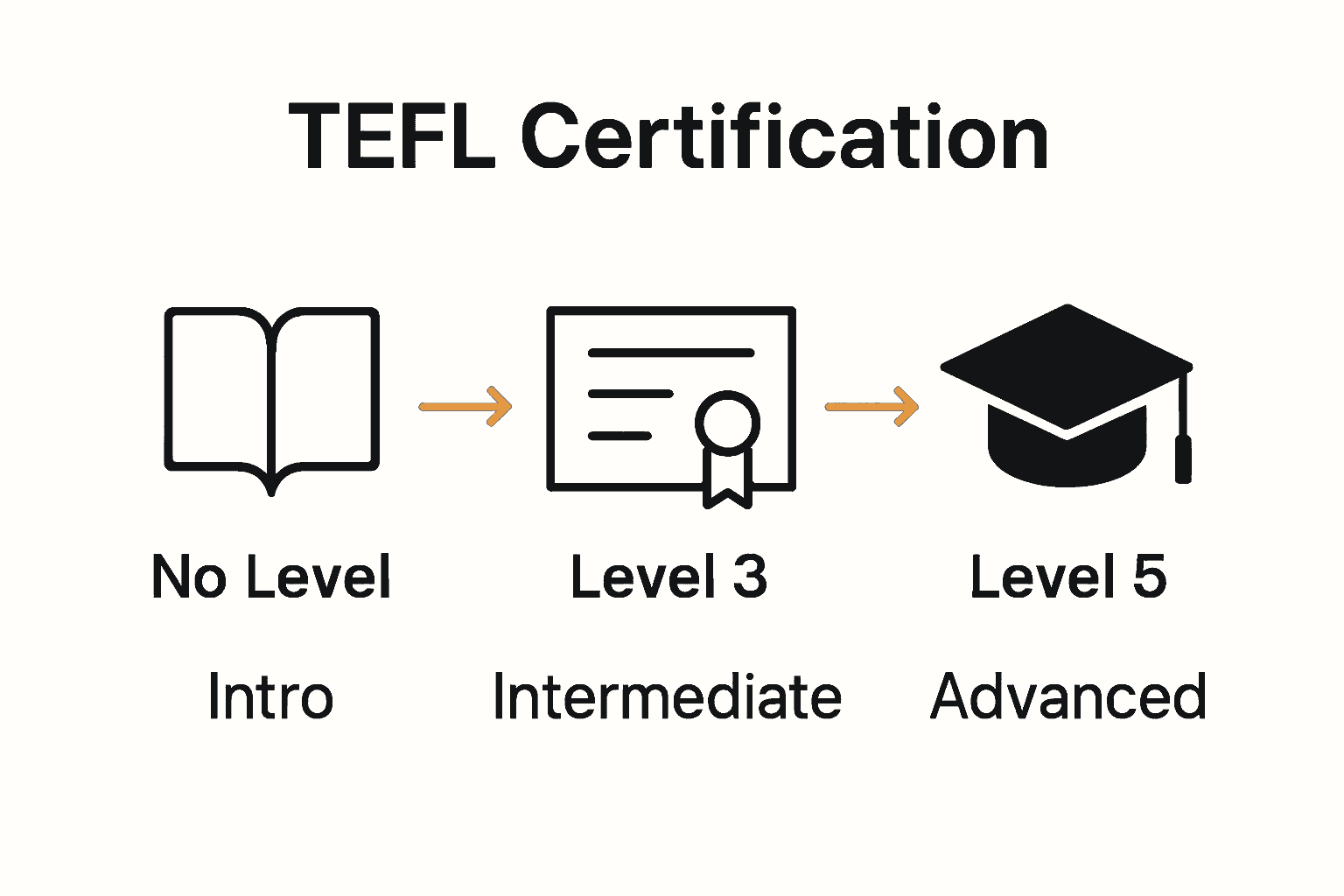
According to Wikipedia, TEFL online courses are typically categorized into three primary levels:
- No Level: Basic introductory courses
- Level 3: Intermediate certification
- Level 5: Advanced certification equivalent to a college diploma, preparing students for the most competitive global teaching positions
Professional certifications like the CertTESOL provide specialized credentials for those entering the field. As noted by Wikipedia, this qualification is particularly valuable for individuals with little to no prior teaching experience, offering a structured pathway into English language instruction.
Beyond standard categories, TEFL certifications can be further distinguished by their delivery method, specialization, and depth of study. These might include online courses, in-person training, specialized programs focusing on business English, young learners, or digital teaching platforms.
 Each category offers unique advantages, allowing professionals to tailor their certification to specific career goals and teaching environments.
The key is understanding that TEFL certification is not a one-size-fits-all credential. Professionals should carefully evaluate their career objectives, teaching context, and personal learning preferences when selecting a certification path. Whether you’re a recent graduate, career switcher, or experienced educator, there’s a TEFL certification category designed to support your professional development and global teaching aspirations.
TEFL Requirements and Qualifications
Navigating the landscape of TEFL requirements can be complex, with different certifications demanding unique qualifications and skill sets. Professional teaching credentials in the English language field vary widely, creating a nuanced pathway for aspiring educators looking to teach internationally.
According to Qualifi, advanced TEFL certifications like the Level 5 Certificate have specific entry requirements. For non-native English speakers, this typically includes:
- Minimum IELTS score of 6.5
- Completion of 10 mandatory units
- Total of 30 academic credits
- Demonstrated English language proficiency
For more experienced educators, Wikipedia notes that advanced qualifications like the DELTA require additional professional prerequisites. These advanced diplomas often mandate:
- An initial teaching qualification
- Minimum of one year’s verified teaching experience
- Proven track record in English language instruction
While requirements vary, most TEFL certifications share common foundational elements. Explore the essential skills needed for successful TEFL teaching to understand the comprehensive skill set required. Typically, aspiring TEFL teachers must demonstrate strong communication skills, cultural adaptability, lesson planning abilities, and a deep understanding of language acquisition principles.
Ultimately, TEFL requirements are designed to ensure high-quality English language instruction across diverse global contexts. Whether you’re a recent graduate, career changer, or experienced educator, understanding these qualifications is crucial for building a successful international teaching career. The key is selecting a certification that aligns with your professional goals, teaching environment, and personal learning style.
How Certification Enables Teaching Opportunities
TEFL certification serves as a powerful gateway to diverse and exciting teaching opportunities around the globe. Professional credentials transform aspirational teachers into competitive candidates, opening doors to international teaching positions that would otherwise remain closed.
According to GoAbroad, international schools increasingly rely on TEFL certification for critical employment processes. The certification impacts career prospects in several significant ways:
- Mandatory requirement for visa approval
- Essential for securing employment contracts
- Higher salary potential
- Access to enhanced employment benefits
- Increased credibility with international employers
The digital teaching landscape has further expanded opportunities for certified teachers. Online platforms and international language schools prioritize candidates with structured training, viewing TEFL certification as a mark of professional commitment and pedagogical competence. Learn more about the comprehensive benefits of TEFL certification to understand how this credential can transform your teaching career.
Beyond traditional classroom settings, certification enables teachers to explore specialized niches like business English instruction, academic preparation courses, and corporate language training. These targeted opportunities require not just language proficiency, but demonstrable teaching skills and structured pedagogical understanding.
Ultimately, TEFL certification is more than a piece of paper. It’s a passport to global teaching experiences, professional growth, and cross-cultural communication. Whether you dream of teaching in vibrant Asian metropolises, quiet European towns, or connecting with students through online platforms, a recognized TEFL certification provides the foundational skills and credibility to turn those aspirations into reality.
Practical Implications and Costs
Pursuing a TEFL certification involves carefully weighing financial investment, time commitment, and potential career returns. Professional development in the language teaching field requires strategic planning and a clear understanding of both immediate expenses and long-term professional benefits.
TEFL certification costs can vary dramatically, ranging from budget-friendly online options to more comprehensive in-person programs. Typical investment categories include:
- Online certification courses: $200-$600
- Comprehensive online diploma programs: $800-$1,500
- In-person intensive courses: $1,500-$3,000
- Advanced level 5 certifications: $1,200-$2,500
Explore the comprehensive guide to TEFL certification processes to understand the nuanced financial and time investments required. Potential teachers should consider not just the upfront course costs, but also additional expenses like:
- Study materials and resources
- Practice teaching requirements
- Potential travel or accommodation for in-person components
- Technology and internet costs for online learning
Beyond financial considerations, TEFL certification demands significant time investment. Most programs require 120-170 hours of comprehensive training, which can translate to 3-6 months of dedicated study. Part-time learners might extend their certification timeline, while full-time students can complete programs more rapidly.
Ultimately, viewing TEFL certification as a professional investment rather than an expense shifts perspective. The potential for increased earning potential, global travel opportunities, and career flexibility often far outweighs the initial financial and time commitments. Smart candidates approach certification as a strategic career enhancement tool, carefully selecting programs that align with their professional goals and learning styles.
Alternatives to TEFL Certification
While TEFL certification remains the most popular route for aspiring English language teachers, several alternative qualifications offer comparable professional credentialing. Professional teaching credentials in language education extend beyond traditional TEFL programs, providing diverse pathways for educators seeking international teaching opportunities.
According to Wikipedia, the CELTA (Certificate in Teaching English to Speakers of Other Languages) stands as a prominent alternative. This Cambridge Assessment English qualification provides comprehensive initial teacher training specifically designed for English language instruction:
- Internationally recognized credential
- Structured by Cambridge Assessment English
- Delivered through authorized training centers
- Focused on practical teaching skills
- Rigorous assessment process
Another advanced alternative is the DELTA, which targets more experienced educators. Explore how this qualification compares to standard TEFL certifications. The DELTA typically requires:
- An initial teaching qualification
- Minimum one year’s teaching experience
- Advanced pedagogical understanding
- Deeper exploration of language teaching methodologies
Additional alternatives include university-based TESOL programs, specialized language teaching diplomas, and country-specific teaching certifications. These options provide flexibility for educators with different backgrounds, career goals, and learning preferences. Some professionals even combine multiple credentials to create a comprehensive teaching profile.
Ultimately, the right certification depends on individual career objectives, target teaching markets, and personal learning styles. Thoughtful candidates research multiple options, considering factors like international recognition, practical training components, and alignment with specific teaching contexts.
Unlock Your Path with TEFL Certification Today
If you have ever wondered who truly benefits from TEFL certification or how to align your career goals with the right teaching credentials this guide highlights the challenges and opportunities ahead. Many face uncertainty about choosing the proper certification category or meeting the required qualifications yet desire to teach English online or abroad. Whether you are a recent graduate seeking global experience or a professional ready for change the key is confidence and the right support to navigate the TEFL landscape.
Why wait to turn ambition into action Start your journey with TEFL Institute where tailored online courses cover everything from foundational diplomas to advanced certifications. Our platform offers flexible study plans designed for busy learners combined with practical tools like salary calculators and certification verification. Empower your future by exploring how TEFL certification opens doors at TEFL Institute now and join thousands who have transformed their lives through teaching English worldwide. Take the first step toward your global teaching career today.
Frequently Asked Questions
Who can benefit from TEFL certification?
TEFL certification is beneficial for recent college graduates, career changers, language enthusiasts, corporate trainers, and multilingual professionals seeking teaching opportunities domestically or internationally.
What are the different categories of TEFL certification?
TEFL certification categories include entry-level courses, Level 3 intermediate certifications, and Level 5 advanced certifications. Each level caters to different professional goals and experience levels, with varying depth and specialization options.
What are the main requirements for obtaining a TEFL certification?
Requirements for TEFL certification can vary, but advanced certifications like Level 5 typically require proficiency in English, a minimum IELTS score, completion of specific units, and in some cases, previous teaching experience is necessary.
How does having a TEFL certification impact job opportunities?
TEFL certification improves job prospects by fulfilling visa requirements, enhancing salary potential, and increasing credibility with employers, making certified teachers more competitive in the job market.
Recommended
TEFL Institute guides

Vietnam
Work permits and requirements
Mexico
Jobs, pay and cities
Italy
Jobs, pay and visa routes
China
Z visa, pay and cities
Dubai
Pay, requirements and visas