

 United Kingdom (UK)
 United States (US)
 Canada
 South Africa
 India
India Australia
 New Zealand
 China
China Russia
 Germany
 France
 Spain
Spain Netherlands
 Vietnam
 United Arab Emirates
 Italy
Italy Poland
 Thailand
 Türkiye








 Algeria


Teaching English as a career in 2026: certification paths

The global English teaching market reached $289 billion in 2026, with demand projected to grow 8% annually through 2030. Despite this explosive growth, many aspiring teachers remain confused about minimum qualifications, certification standards, and viable career pathways. Understanding TEFL (Teaching English as a Foreign Language) certification requirements, regional hiring trends, and emerging teaching models is essential for launching a successful career in this dynamic field.
Table of Contents
- TEFL Certification And Qualification Requirements In 2026
- Top Countries And Regional Market Demand For English Teachers
- Online Vs. Traditional Teaching Models: Opportunities And Challenges
- Emerging Technologies Influencing English Teaching Careers
- Salary Benchmarks And Compensation In TEFL Careers
- Common Misconceptions In Teaching English As A Career
- Practical Steps To Launch And Sustain Your English Teaching Career
- Advance Your TEFL Career With Accredited Courses
- Frequently Asked Questions
Key takeaways
| Point | Details |
|---|---|
| Certification standard | 120-hour TEFL certification is the global minimum, with 168+ hours preferred for competitive positions. |
| Regional requirements | Asia and Middle East typically require bachelor’s degrees for work visas, while over 50 countries accept TEFL alone. |
| Teaching models | Online teaching offers flexibility and lower barriers, while traditional classroom roles provide higher salaries and benefits. |
| Technology integration | AI, VR, and data analytics are reshaping lesson delivery and requiring new digital pedagogy skills. |
| Career sustainability | Ongoing professional development, niche specialization, and strategic job searches drive long-term success. |
TEFL certification and qualification requirements in 2026
A 120-hour TEFL certification is the global industry standard minimum for teaching English abroad or online. Many competitive positions now require 168 hours or more, particularly roles in international schools or university programs. This increased hour requirement reflects growing emphasis on practical teaching methodology, classroom management techniques, and cultural adaptation skills.
A bachelor’s degree remains mandatory for work visa eligibility in major Asian markets like China, South Korea, and Japan, as well as Middle Eastern countries including the UAE and Saudi Arabia. However, more than 50 countries worldwide accept TEFL certification without a degree, especially for online teaching platforms and informal educational settings. This opens substantial opportunities for career changers and recent high school graduates.
Different certification acronyms can confuse new teachers:
- TEFL (Teaching English as a Foreign Language) focuses on non-English-speaking countries
- TESOL (Teaching English to Speakers of Other Languages) encompasses broader contexts
- CELTA (Certificate in English Language Teaching to Adults) offers Cambridge-backed prestige but higher costs
- DELTA represents advanced certification for experienced teachers
Choosing accredited TEFL courses ensures your certification meets international standards and employer expectations. Accreditation bodies verify curriculum quality, instructor credentials, and assessment rigor. Modern courses incorporate technology training, preparing you for digital classrooms and online teaching platforms that dominate 2026 hiring landscapes.
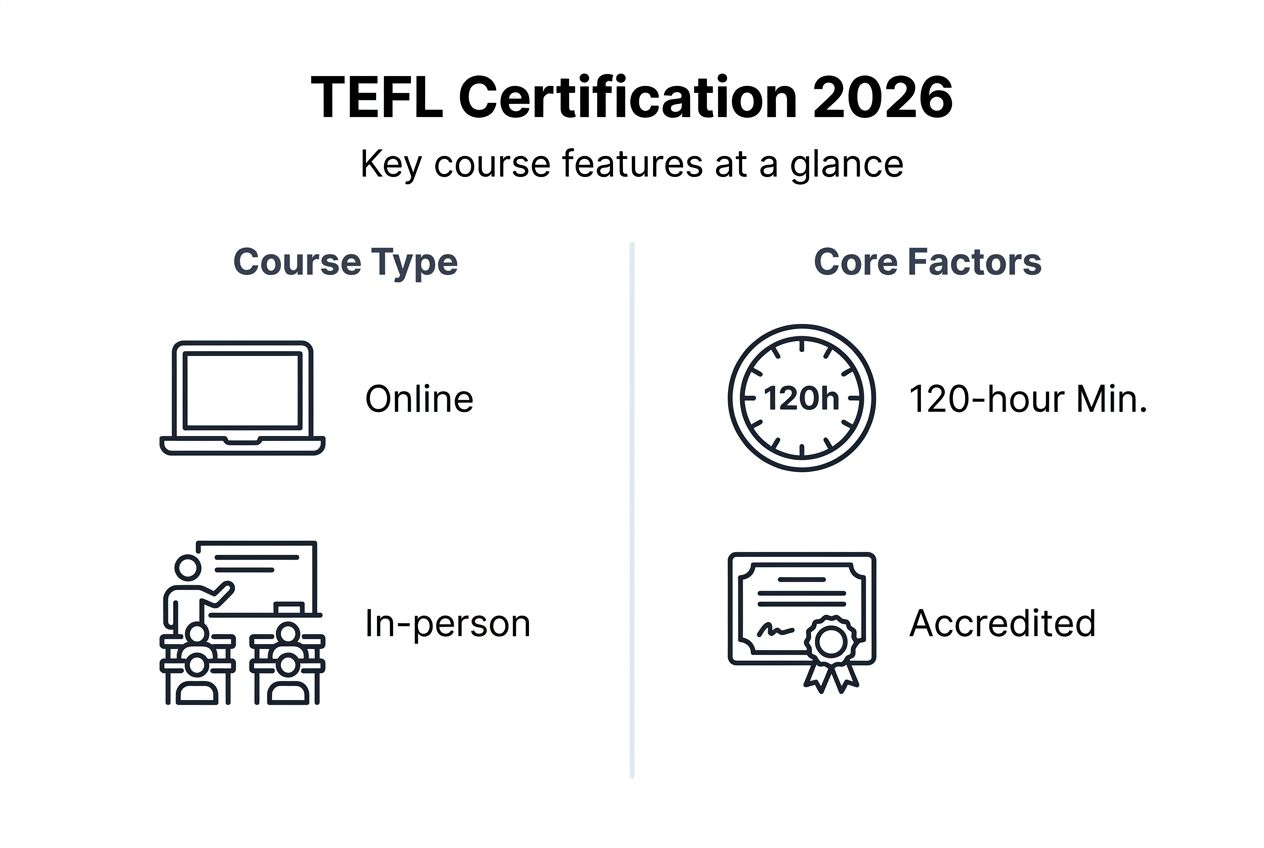
When you compare TEFL certifications, examine practicum components, job placement assistance, and alumni success rates. Courses with observed teaching practice provide hands-on experience that significantly improves classroom readiness. Many employers specifically request certification with practical teaching hours.
Pro Tip: Research whether your target country or platform recognizes online certifications or requires in-person components. Some visa authorities differentiate between fully online and hybrid programs.
The pathway to become an English teacher abroad varies by destination, but core requirements remain consistent. Strong English proficiency, cultural sensitivity, and adaptability complement formal qualifications. Teachers who invest in comprehensive certification programs report faster job placement and higher starting salaries.
Top countries and regional market demand for English teachers
Asia dominates global English teaching demand, accounting for 38% of the world’s English learners in 2026. China continues hiring thousands of teachers annually despite evolving regulations, while South Korea and Japan maintain steady recruitment through government programs and private language schools. Vietnam and Thailand offer lower salaries but significantly reduced living costs and relaxed visa processes.
Middle Eastern countries like the UAE, Saudi Arabia, and Qatar provide the most lucrative compensation packages, often including housing allowances, annual airfare, and health insurance. These positions typically require bachelor’s degrees, teaching licenses, and sometimes prior classroom experience. The high standards reflect prestigious international school environments and wealthy student populations.
Countries requiring bachelor’s degrees for work visas include China, South Korea, Japan, UAE, and most of Western Europe. Latin American countries like Mexico, Colombia, and Argentina offer more flexible requirements, accepting TEFL certification for language institute positions. Eastern European markets such as Poland and Czech Republic fall somewhere in between, with degree requirements varying by institution type.
| Country/Region | Average Monthly Salary | Degree Required | Key Benefits | Visa Difficulty |
|---|---|---|---|---|
| UAE | $2,500 to $5,000 | Yes | Housing, flights, health insurance | Moderate |
| South Korea | $1,800 to $2,500 | Yes | Housing, flights, pension | Low |
| China | $1,500 to $3,000 | Yes (new regulations) | Housing allowance | High |
| Japan | $2,000 to $3,500 | Yes | Limited benefits | Moderate |
| Vietnam | $1,200 to $2,000 | No | Low cost of living | Low |
| Thailand | $1,000 to $1,500 | No | Lifestyle, low costs | Low |
| Spain | $1,000 to $1,800 | Sometimes | EU travel access | Moderate |
| Mexico | $800 to $1,500 | No | Proximity to US, culture | Low |
| Colombia | $700 to $1,200 | No | Low costs, vibrant culture | Low |
| Czech Republic | $1,000 to $1,600 | Sometimes | Central Europe location | Moderate |
| Saudi Arabia | $2,500 to $4,500 | Yes | Tax-free income, housing | High |
| Poland | $900 to $1,500 | Sometimes | EU benefits | Moderate |
| Turkey | $800 to $1,400 | No | Cultural richness | Moderate |
| Taiwan | $1,500 to $2,200 | Yes | Healthcare, stability | Low |
| Brazil | $800 to $1,500 | No | Cultural diversity | Moderate |
The best cities to teach English abroad combine strong job markets with quality of life factors. Seoul, Tokyo, Dubai, and Barcelona consistently rank highest for career opportunities and cultural experiences. Secondary cities often provide better savings potential due to lower living costs while maintaining decent salaries.
Visa and legal authorization processes vary dramatically by country. Some nations offer straightforward work permits processed in weeks, while others require extensive documentation, background checks, and health screenings spanning months. Research country-specific requirements early, as visa denials can derail carefully planned teaching careers. Understanding English teaching abroad in 2026 means knowing both certification standards and immigration realities.
Online vs. traditional teaching models: opportunities and challenges
Online teaching has exploded since 2020, with platforms now employing over 500,000 teachers globally. This model offers unmatched scheduling flexibility, eliminating commutes and allowing you to work from anywhere with reliable internet. Startup costs remain minimal compared to relocating abroad, requiring only a computer, headset, and neutral background. You access students worldwide, diversifying income streams across time zones and platforms.

However, online teaching demands exceptional digital literacy and self-discipline. You troubleshoot technical issues independently, manage your own marketing on some platforms, and compete with thousands of other teachers for student bookings. Hourly rates typically range from $10 to $30, lower than traditional classroom salaries, though you offset this with higher volume and zero commuting costs.
Traditional classroom teaching provides structured environments with clear expectations and institutional support. Monthly salaries in Asia and the Middle East range from $1,500 to $5,000, often supplemented by housing, flights, and health insurance. You gain immersive cultural experiences, build local professional networks, and earn career prestige that enhances future opportunities. Physical classrooms also facilitate richer student interactions and more dynamic lesson delivery.
The trade-offs are significant. Relocation requires substantial upfront investment and cultural adjustment. Visa compliance can be stressful, with some countries imposing strict contract terms and exit procedures. You sacrifice proximity to family and familiar support systems. Work-life balance varies dramatically by country and institution type.
| Factor | Online Teaching | Traditional Classroom |
|---|---|---|
| Schedule flexibility | High (set your hours) | Low (fixed schedules) |
| Startup costs | $200 to $500 | $2,000 to $5,000 |
| Average earnings | $15 to $25/hour | $1,500 to $5,000/month |
| Benefits | Rare | Often included |
| Cultural immersion | None | Deep |
| Career prestige | Moderate | High |
| Required skills | Digital pedagogy, self-marketing | Classroom management, cultural adaptation |
| Job security | Variable | Contract-based |
Digital nomad visas introduced by countries like Portugal, Spain, and Thailand enable you to teach online while legally residing abroad. These programs blend travel aspirations with income generation, though tax implications require careful planning. You maintain online teaching flexibility while enjoying international experiences.
Pro Tip: Develop strong video presence and interactive teaching techniques for online success. Recording sample lessons and building student testimonials significantly improves platform ratings and booking rates.
The choice between online vs. abroad teaching models depends on your financial goals, lifestyle preferences, and career timeline. Many teachers start online to build experience before transitioning abroad, or alternate between models across different life stages.
Emerging technologies influencing English teaching careers
Artificial intelligence tools are revolutionizing lesson planning and student assessment in 2026. AI-powered platforms generate customized worksheets, suggest activity modifications based on learner profiles, and provide instant grammar feedback. Teachers using these tools report 40% time savings on administrative tasks, allowing more focus on actual instruction and relationship building.
Virtual reality creates immersive language environments impossible in traditional classrooms. Students practice ordering food in virtual restaurants, navigate airport scenarios, or participate in business meetings without leaving home. VR boosts engagement rates and accelerates practical language acquisition, particularly for intermediate and advanced learners seeking real-world application.
Data analytics platforms track student progress in real time, identifying struggling learners before they fall behind. Teachers access detailed performance metrics showing exactly which grammar points or vocabulary sets require reinforcement. This precision enables targeted intervention and personalized learning paths that significantly improve outcomes.
Key technologies reshaping English teaching:
- AI lesson generators and intelligent tutoring systems
- VR/AR immersive language environments
- Learning management systems with predictive analytics
- Automated pronunciation assessment tools
- Gamification platforms increasing student motivation
- Video conferencing enhancements for online classrooms
Mastering these technologies requires ongoing professional development. Teachers who choose AI-ready TEFL courses gain competitive advantages in hiring processes. Employers increasingly prioritize candidates demonstrating proficiency with educational technology platforms and digital pedagogy frameworks.
The integration challenge lies not in technology adoption itself but in balancing automated tools with human connection. Students still crave authentic interaction, cultural insights, and emotional support that only human teachers provide. Successful 2026 teachers leverage technology to enhance rather than replace relationship-based learning.
Staying current demands continuous learning as new tools emerge monthly. Following edtech blogs, attending virtual conferences, and experimenting with free platforms keeps your skills sharp. Technology proficiency now ranks alongside classroom management as a core teaching competency.
Salary benchmarks and compensation in TEFL careers
Salary ranges vary dramatically based on location, qualifications, and teaching model. The Middle East offers the highest monthly compensation, with UAE positions averaging $3,000 to $5,000 plus substantial benefits packages. Saudi Arabia and Qatar match or exceed these figures for qualified teachers with relevant experience and credentials.
Every TEFL opening, salary and deadline that matters.
In your inbox every two weeks. Free, no spam, unsubscribe any time.
Teacher pay by country
New TEFL openings
Programme and visa dates
Asian markets provide moderate salaries with excellent savings potential. South Korea’s $1,800 to $2,500 monthly range includes free housing and flights, enabling teachers to save 40% to 50% of earnings. China’s recent regulatory changes have compressed salary ranges but opportunities remain, particularly in tier-two cities offering lower living costs.
Online teaching hourly rates seem lower at $10 to $30 but scale with volume and eliminate housing costs. Experienced online teachers working 30 to 35 hours weekly earn $1,200 to $3,000 monthly from home. Top-rated teachers on premium platforms command $40 to $60 hourly for specialized instruction like business English or exam preparation.
| Region/Model | Monthly Salary Range | Housing Benefit | Flight Allowance | Health Insurance | Savings Potential |
|---|---|---|---|---|---|
| Middle East | $2,500 to $5,000 | Usually included | Annual | Yes | 50% to 70% |
| East Asia | $1,500 to $3,000 | Often included | Annual | Sometimes | 40% to 60% |
| Southeast Asia | $1,000 to $2,000 | Rare | Rare | Rare | 20% to 40% |
| Latin America | $700 to $1,500 | Rare | No | Rare | 10% to 30% |
| Europe | $1,000 to $2,500 | Rare | No | Sometimes | 20% to 40% |
| Online (full-time) | $1,200 to $3,000 | N/A | N/A | Self-funded | Variable |
Benefits packages significantly impact total compensation value. Free housing in expensive cities like Seoul or Dubai adds $800 to $1,500 monthly to effective salary. Annual flight allowances worth $800 to $1,500 reduce the financial burden of maintaining home-country connections. Comprehensive health insurance saves thousands in potential medical costs.
Understanding these benchmarks through resources like the TEFL teacher salary guide helps set realistic financial expectations. First-year teachers typically earn at the lower end of ranges, with substantial increases possible through experience, advanced certifications, and strategic job changes. Comparing top cities salary data reveals significant variation even within countries.
Long-term earning potential increases through specialization in exam preparation (IELTS, TOEFL), business English, or young learner instruction. Teachers with niche expertise command premium rates and enjoy stronger job security during economic downturns.
Common misconceptions in teaching English as a career
Many aspiring teachers assume native English proficiency alone qualifies them for teaching positions. Reality proves far different, as schools and platforms universally require formal TEFL certification demonstrating pedagogical knowledge. Being able to speak English and effectively teaching it are entirely separate skill sets requiring specific training in methodology, assessment, and classroom management.
The belief that bachelor’s degrees are universally mandatory prevents qualified candidates from pursuing viable opportunities. While major Asian and Middle Eastern markets do require degrees for visa purposes, more than 50 countries accept TEFL certification alone. Online teaching platforms rarely require degrees, prioritizing teaching ability and student ratings instead. This misconception costs potentially successful teachers years of missed opportunities.
Some candidates believe all TEFL certifications are equivalent, leading to poor course selection. A 40-hour weekend certificate lacks the depth and recognition of accredited 120 to 168-hour programs. Employers specifically request minimum hour thresholds and accreditation proof. Choosing inadequate certification results in job rejections and wasted money.
The notion that online teaching represents a less legitimate or financially unviable career path persists despite evidence. Successful online teachers earn competitive incomes while enjoying flexibility impossible in traditional classrooms. Platform diversity, niche specialization, and strong marketing enable sustainable online careers. Dismissing this model limits your options unnecessarily.
Additional misconceptions include:
- Teaching abroad is only for young people in gap years (many teachers are career changers aged 30 to 50)
- You need teaching experience before certification (quality TEFL courses include practical training)
- All teaching positions include flights and housing (benefits vary widely by country and institution)
- English teaching is a short-term adventure, not a real career (many teachers build decades-long international careers)
- You must be extroverted to succeed (introverts often excel through careful planning and smaller class settings)
Addressing these misconceptions early prevents costly mistakes in certification selection and job searching. Research country-specific requirements, compare legitimate course options, and seek advice from current teachers in your target market.
Practical steps to launch and sustain your English teaching career
Launching a successful teaching career requires strategic planning and systematic execution:
-
Obtain a minimum 120-hour accredited TEFL or TESOL certification with practical teaching components. Prioritize courses offering job placement assistance and alumni networks. Ensure accreditation from recognized bodies to maximize employer acceptance.
-
Research your target countries or platforms thoroughly, noting specific degree requirements, visa processes, and salary expectations. Create a shortlist of three to five destinations aligned with your qualifications and lifestyle preferences. Review current teacher experiences through forums and social media groups.
-
Develop robust digital literacy by familiarizing yourself with video conferencing tools, learning management systems, and interactive whiteboard software. Practice delivering lessons via video, as this skill applies to both online teaching and modern classroom environments requiring hybrid instruction.
-
Craft a teaching-focused resume highlighting transferable skills like communication, cultural competence, and adaptability. Tailor applications to specific job postings, addressing stated requirements directly. Prepare for video interviews by practicing common questions and testing your technology setup.
-
Build an online professional presence through LinkedIn profiles showcasing your certification, teaching philosophy, and language skills. Join TEFL teacher groups to network, ask questions, and learn about unlisted opportunities. Many jobs fill through referrals before public posting.
-
Commit to continuous professional development through workshops, webinars, and advanced certifications. Consider specializing in high-demand niches like business English, young learners, or exam preparation. These specializations command higher salaries and provide recession-proof job security.
-
Start with entry-level positions to gain experience, even if they don’t represent your ultimate goal. First-year classroom experience significantly strengthens applications for premium positions. Online teaching provides flexible experience building while you prepare for international moves.
Pro Tip: Leverage reputable job platforms like Dave’s ESL Cafe, TEFL.com, and specialized country forums rather than responding to unsolicited offers. Scams targeting new teachers are common, so verify employer legitimacy through multiple sources before accepting positions.
The teaching career step-by-step guide provides detailed timelines and checklists for each phase. Success requires patience, as quality positions often have lengthy hiring cycles. Starting your certification six to twelve months before desired start dates allows adequate preparation time.
Investment in choosing accredited TEFL programs pays long-term dividends through better job prospects and higher earnings. Combined with strategic use of salary and job search tips, you position yourself for sustainable career growth rather than short-term adventures.
Advance your TEFL career with accredited courses
Launching your English teaching career starts with selecting the right certification program. Accredited TEFL courses provide internationally recognized credentials meeting 2026 global hiring standards. TEFL Institute offers comprehensive online programs designed for both aspiring and experienced teachers seeking to advance their careers.
Whether you’re interested in classroom teaching abroad or building an online teaching business, proper certification opens doors to competitive positions worldwide. Programs include practical teaching components, job placement guidance, and ongoing career support. For those based in the United States, TEFL courses in New York City combine online convenience with optional in-person workshops.
Ready to start teaching English online or pursue international classroom opportunities? Investing in quality training today positions you for decades of rewarding work helping students achieve their language goals while building your own fulfilling career.
Frequently asked questions
What is the minimum TEFL certification requirement to teach English abroad or online?
The 120-hour TEFL certification is the global industry standard minimum recognized by employers worldwide. Competitive positions in international schools and premium online platforms often require 168 hours or more. Choose accredited programs with practical teaching components to maximize employability and ensure your certification meets evolving industry standards.
Do I need a bachelor’s degree to teach English abroad?
A bachelor’s degree is typically required for work visa eligibility in major markets like China, South Korea, Japan, UAE, and most Middle Eastern countries. However, over 50 countries worldwide accept TEFL certification alone, particularly in Latin America, Southeast Asia, and Eastern Europe. Online teaching platforms rarely require degrees, focusing instead on teaching ability and student satisfaction ratings.
What are the main advantages of online teaching compared to traditional classroom roles?
Online teaching offers unmatched schedule flexibility, minimal startup costs, and the ability to work from anywhere with reliable internet. You access global student markets and eliminate commuting time. Traditional classroom teaching provides higher base salaries, comprehensive benefits packages including housing and flights, deep cultural immersion, and stronger career prestige. The online vs. abroad teaching choice depends on your financial goals, lifestyle preferences, and career stage.
How can I build a sustainable and successful career teaching English?
Obtain accredited certification meeting international standards, then research target markets carefully to understand specific requirements. Develop strong digital pedagogy skills for modern teaching environments and commit to ongoing professional development. Network actively through teacher forums and professional groups, and consider specializing in high-demand niches like business English or exam preparation. Strategic job searching, continuous skill development, and building a strong professional reputation create long-term career sustainability and growth opportunities.
Recommended
- Teaching English Certification: Pathways and Practical Impact | TEFL Institute
- How to Become an Online English Teacher in 2026 | Complete TEFL Roadmap
- Teaching English As a Foreign Language: Career Pathways and Impact | TEFL Institute
- English as a Second Language Teacher Certification: Boost Your Global Career | TEFL Institute

Tara and Jess talk through different TEFL and EFL topics, from finding work abroad to life in the classroom.