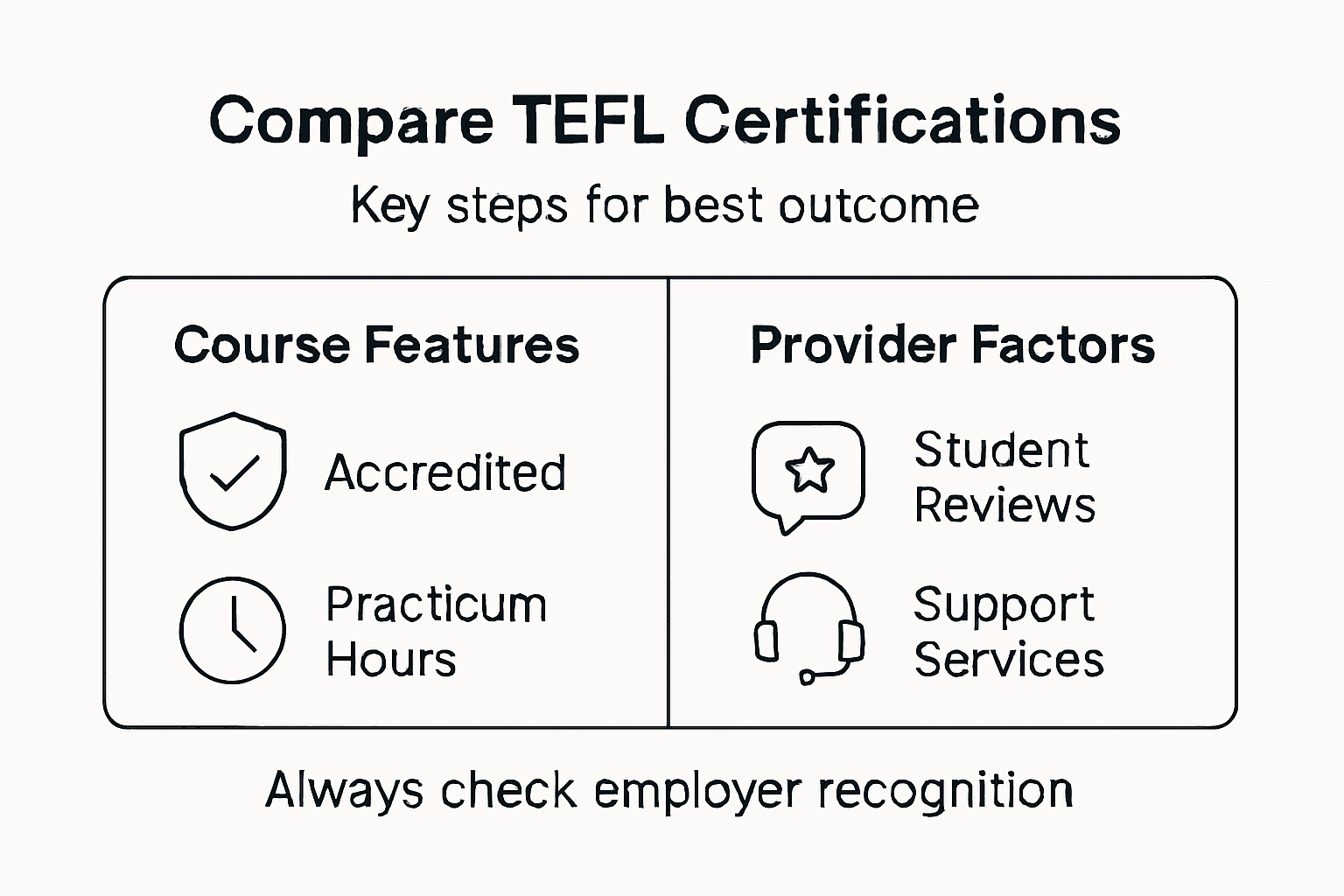
How to Compare TEFL Certifications for the Best Outcome

Sorting through TEFL certifications can feel overwhelming when every provider promises career-changing results. If you are planning to teach English in countries like Vietnam or online from your home base, choosing an accredited course is a crucial step toward opening global doors. Understanding the value of a TEFL certificate respected by employers worldwide gives you the clarity and confidence to focus on programs that actually boost your employability.
Table of Contents
- Step 1: Identify Your Teaching Goals And Required Qualifications
- Step 2: Research Accredited TEFL Providers And Course Options
- Step 3: Analyze Course Content, Duration, And Practicum Features
- Step 4: Evaluate Certification Recognition And Employer Acceptance
- Step 5: Check Student Reviews And Verify Support Services
Quick Summary
| Key Point | Explanation |
|---|---|
| 1. Define Teaching Goals Clearly | Establish your objectives for TEFL certification to guide your program selection based on location, age groups, and desired teaching style. |
| 2. Research Accredited TEFL Providers | Ensure programs are recognized by legitimate accreditation bodies to prevent wasting time and money on unrecognized certifications. |
| 3. Analyze Course Content and Structure | Evaluate the comprehensiveness and hands-on experiences of programs to ensure they build practical teaching skills relevant to your goals. |
| 4. Confirm Certification Recognition | Investigate which TEFL certifications are valued by employers in your target job market to ensure your investment leads to job opportunities. |
| 5. Review Student Feedback and Support | Look for independent reviews to gauge the quality of courses and the level of support provided during and after the program. |
Step 1: Identify your teaching goals and required qualifications
Your teaching goals act as a compass for selecting the right TEFL certification. Before you start comparing specific programs, spend time understanding what you actually want to achieve. Are you dreaming of teaching in a classroom in Southeast Asia? Do you prefer the flexibility of online instruction from your home office? Maybe you’re interested in volunteering abroad while gaining teaching experience. Each path has different requirements and demands from your certification, so clarity here saves you months of second-guessing later.
Start by writing down your top three reasons for pursuing TEFL certification. This isn’t busywork. Your answers will directly influence which certification features matter most. If your goal is teaching abroad, you’ll want to understand what qualifications employers expect in your target countries. Some nations require specific hour minimums or specialized training in certain age groups. If you’re teaching children in Vietnam, you might prioritize courses with dedicated young learner training. If you’re targeting adult learners in the Middle East, conversation and cultural sensitivity modules become crucial. The basic requirements to teach English typically include being at least 18 years old and demonstrating native English fluency, but employers often look for additional qualifications beyond these minimums. Your specific teaching context determines which bells and whistles actually matter versus which are marketing noise.
Consider your timeline and learning style in this same reflection. Do you want to complete certification in four weeks or are you willing to invest three months for a more comprehensive program? Can you handle intensive daily classes, or do you need flexibility to study around work commitments? Your answers shape whether you need an accelerated online course or a structured hybrid program with built-in practicum hours. Finally, think about your long-term career ambitions. Are you using this certification as a stepping stone to a Bachelor’s degree in TEFL later, or is this your primary credential? Your answer determines whether you should prioritize certifications known for advanced progression versus those valued for immediate international employability.
Pro tip: Write your specific teaching location, preferred age group, and desired start date on a single page, then keep it visible while comparing programs—this reference sheet prevents you from getting distracted by flashy features that don’t actually serve your goals.
Step 2: Research accredited TEFL providers and course options
Accreditation separates legitimate TEFL programs from questionable ones, so this research phase determines the quality of your investment. Not all TEFL certifications carry equal weight with employers, and spending time vetting providers now prevents regret later. Your goal here is to build a shortlist of reputable organizations that align with the teaching goals you identified in the previous step. Start by understanding what accreditation actually means. Recognized bodies like ACCET (Accrediting Council for Continuing Education and Training), TESOL International Association, and IALC (International Association of Language Centers) evaluate TEFL programs against specific standards for curriculum quality, instructor credentials, and student support. When you see a program claiming accreditation, verify it directly on the accrediting organization’s website rather than trusting the provider’s claim alone.
Once you understand accreditation, search for providers that match your specific needs. If you identified that you want to teach young learners in Asia, look for programs offering specialized young learner modules and check whether they’re recognized by employers in that region. Some providers excel at delivering content for online tutoring while others focus on in-person classroom preparation. Read recent reviews from actual graduates, not testimonials on the provider’s marketing page. Search Reddit communities dedicated to English teaching abroad and ELT forums where teachers discuss their experiences candidly. Pay attention to patterns in what former students say about course difficulty, instructor responsiveness, and whether the qualification actually helped them secure teaching positions. When comparing specific programs, evaluating course features and accreditation status becomes your decision-making framework. Create a simple spreadsheet tracking each provider’s accreditation status, course duration, cost, specialization options, and what current reviews say about outcomes.
During your research, contact providers directly with specific questions. Good organizations respond promptly and provide detailed answers rather than deflecting your concerns. Ask them to explain their accreditation, show you sample course materials, and connect you with recent graduates willing to discuss their experience. This interaction tells you whether they genuinely care about student success or simply process applications. The research phase takes time, but it’s far cheaper than discovering midway through an expensive program that it doesn’t meet your needs.
Pro tip: Create a comparison document with at least three accredited providers side by side, including their accreditation bodies, specific course modules offered, graduate job placement rates if available, and student reviews, then rate each against your original teaching goals from Step 1.
Step 3: Analyze course content, duration, and practicum features
Course content separates programs that teach teaching theory from those that build genuine classroom skills. This step requires you to look beyond marketing language and examine what you’ll actually study and practice. Duration matters because a 60-hour course compressed into two weeks demands a different commitment than one spread across three months, and the practicum component determines whether you gain hands-on teaching experience or simply watch demonstrations online. Start by requesting detailed course syllabi from your shortlisted providers. A quality syllabus breaks down exactly what topics appear in each module, what assignments you’ll complete, and how content builds progressively from fundamentals to specialized applications. Look for programs that cover essential foundations like grammar instruction, classroom management, lesson planning, and student assessment before moving into specialized areas like teaching business English or exam preparation.
Duration works differently for different learners and circumstances. Some programs offer intensive models requiring 20 or 30 hours weekly for four to five weeks, while others spread 120 hours across flexible schedules over several months. Consider your current work situation and learning style when comparing these options. Programs combining synchronous live instruction with asynchronous self-paced modules offer flexibility while maintaining instructor interaction. For example, comprehensive TEFL programs often structure content across foundational teaching components, specialized skill courses focusing on areas like grammar and pronunciation, and supervised teaching practice. This blended approach lets you absorb theory at your own pace while participating in live sessions where you ask questions and practice teaching techniques with instructors observing. The practicum component deserves particular attention because this hands-on experience directly prepares you for real classrooms. Evaluate whether the program offers teaching observation where you watch experienced teachers, supervised practice where you teach while an instructor provides feedback, or peer teaching where you practice with fellow trainees. Some programs incorporate TEFL practicum requirements that extend beyond the official course, meaning you might need to arrange your own practice teaching independently.

When analyzing specific programs, create a comparison focused on content alignment with your goals. If you plan to teach children, does the program include dedicated young learner modules and practice teaching with young students? If you target adult professionals, does content address professional communication and business contexts? Download sample course materials or video lessons whenever providers offer them. Watching even one module tells you whether the teaching style resonates with you and whether instruction quality matches the program’s reputation. The combination of solid foundational content, a duration fitting your schedule, and meaningful practicum experience separates programs that launch successful teaching careers from those that issue certificates nobody values.
Here’s a summary comparing different types of TEFL course delivery models:
| Delivery Model | Typical Duration | Instructor Interaction | Practicum Opportunities |
|---|---|---|---|
| Fully Online | 4-8 weeks | Email, forum, live chat | Limited or virtual options |
| In-Person | 1-3 months | Face-to-face, guided feedback | Onsite classroom practice |
| Hybrid (Online/In-Person) | 2-6 months | Live sessions plus online | Blended practicum settings |
Pro tip: Request a practice teaching video or sample lesson from at least two programs you are seriously considering, then watch both while imagining yourself completing that exact work and paying attention to which format and instructor style motivates you more.
Step 4: Evaluate certification recognition and employer acceptance
A certificate that employers don’t recognize wastes your time and money, so evaluating how hiring managers perceive your credential is critical before enrollment. Recognition comes from two sources: the accreditation bodies that validate the program and the actual employers in your target teaching markets who accept the qualification. This step ensures your investment translates into legitimate job opportunities rather than a framed piece of paper that opens no doors. Start by understanding what accreditation means in the TEFL world. Bodies like ACCET, TESOL International, and IALC conduct rigorous evaluations of teaching quality, curriculum design, and instructor qualifications. When a program carries accreditation from these recognized bodies, employers know the program met independent quality standards. However, accreditation alone doesn’t guarantee global recognition. Some programs are ACCET accredited but unknown in certain regions, while others enjoy strong regional reputations without international accreditation. Research whether ACCET accredited TEFL certifications are actually valued by employers in your target countries, as accreditation credentials provide a foundation for worldwide recognition and career advancement.

Now move beyond accreditation to employer acceptance in your specific markets. If you plan to teach in the Middle East, check job postings from schools and language centers there to see which certifications appear repeatedly in their requirements. Scan LinkedIn profiles of teachers working in your target regions and note which TEFL providers they completed. Join Facebook groups and Reddit communities dedicated to teaching English abroad in specific countries, then ask directly: which TEFL certifications do employers actually value in your region? You’ll quickly notice patterns. Teachers in Vietnam frequently mention specific providers because those schools hire graduates from those programs. Teachers in South Korea discuss different providers that carry weight there. This ground-level research reveals which certifications translate to actual job offers in places that matter to you. When comparing programs, examine how employers verify TEFL credentials and what they consider legitimate proof of teaching qualification.
Contact schools and language centers directly with your finalist certifications and ask whether they recognize and value them. Reputable employers respond to inquiries and clarify their credential expectations. This conversation accomplishes two things: you learn whether employers respect the certification, and you establish initial contact with potential employers who might hire you after completion. If a certification appears in multiple job postings and employers recognize it readily, you’ve found a program worth your investment. If you encounter skepticism or unfamiliarity, keep looking even if the program excels in other areas. The most affordable or well-designed course means nothing if employers won’t hire you based on it.
Pro tip: Contact five schools in your target teaching region directly and ask them to list the TEFL certifications they prefer, then cross-reference those certifications against your shortlist to identify which programs actually drive hiring decisions where you want to teach.
Step 5: Check student reviews and verify support services
Student reviews reveal what courses actually deliver versus what marketing promises. Support services determine whether you receive help when struggling or navigate technical issues. This step separates programs that abandon students after enrollment from those genuinely invested in your success. Real student experiences expose problems that glossy promotional materials never mention, so spending time analyzing reviews protects your investment and sets realistic expectations for what you’ll experience.
Start by gathering reviews from multiple independent sources rather than relying solely on testimonials featured on provider websites. Google reviews, Trustpilot, and Course Report aggregate unfiltered feedback from actual students. Read both positive and negative reviews carefully. Negative reviews often contain more useful information than glowing testimonials because they highlight actual frustrations. Look for patterns rather than individual complaints. If three reviews mention that video content loads slowly but only one person complains about instructor accent, the technical issue is more relevant than subjective preference. Pay attention to what TEFL course reviews reveal about red flags and problematic patterns that repeat across multiple student experiences. Search for reviews mentioning response times from instructors, clarity of course materials, and whether practice teaching feedback felt helpful or generic. Reviews discussing actual employment outcomes matter most. Did graduates land teaching positions within three months? Did their certifications open doors with the employers they targeted?
Beyond reviews, directly evaluate the support infrastructure. Contact each program’s support team with a specific question and time how long they respond. Send emails at different times of day to see if they maintain consistent availability. Ask about their support channels: do they offer email only, or also live chat and video support? What happens if you struggle with course content? Can you connect with instructors or teaching assistants? Do they provide revision materials if you fail assessments? Ask whether they offer career guidance and job placement support after completion. Some programs provide introductions to hiring schools or job boards while others simply hand you a certificate. Request information about refund policies if you need to withdraw before completion. Reputable providers offer transparent information about these details without evasion. During your research conversations with finalist programs, evaluate whether staff members feel genuinely helpful or perfunctory in their responses. This interaction quality predicts your entire experience as a student.
Consider these factors when evaluating TEFL provider support quality:
| Support Feature | Student Benefit | Red Flag to Watch For |
|---|---|---|
| Multi-channel support | Fast help via chat or phone | Slow or no response |
| Instructor availability | Personalized feedback | Generic or delayed answers |
| Career placement help | Job search assistance | No guidance on employment |
Pro tip: Read at least ten reviews from independent sources for each finalist program, taking notes on specific phrases about instructor responsiveness and student outcomes, then schedule a call with support for each program and document their response time and helpfulness before making your final choice.
Find the Perfect TEFL Certification for Your Teaching Goals Today
Choosing the right TEFL certification can feel overwhelming when faced with varied accreditation standards, course content, and practicum options. If you want to avoid costly mistakes and secure a qualification that truly opens doors in your target country, it is essential to prioritize programs that match your specific teaching goals and employer expectations. Pain points like understanding recognized accreditation, ensuring meaningful practicum experience, and confirming employer acceptance are common challenges that every aspiring teacher must navigate carefully.

Take control of your TEFL journey with TEFL Institute’s expert-designed online courses. We offer a comprehensive catalog of accredited programs tailored to meet diverse needs from young learner specialization to business English. With flexible schedules, clear practicum support, and proven employer recognition, you can confidently select a program that fits your timeline and career ambitions. Start your path to teaching success now at TEFL Institute, review detailed course outlines, and connect with expert support prepared to guide you every step of the way.
Frequently Asked Questions
How can I identify my teaching goals before comparing TEFL certifications?
To identify your teaching goals, take time to reflect on what you want to achieve with your TEFL certification. Write down your top three reasons, such as teaching abroad, online instruction, or volunteering, to ensure you choose a program that aligns with your specific desires.
What should I look for in accredited TEFL providers?
When researching accredited TEFL providers, focus on recognized accreditation bodies like ACCET and TESOL International. Verify each program’s accreditation status on the accrediting organization’s website to ensure you’re selecting a credible program that meets quality standards.
How can I assess the course content and duration of different TEFL programs?
Analyze course content by requesting detailed syllabi from shortlisted programs to see what topics will be covered. Compare the duration of each course to your schedule to ensure it fits your availability, whether you prefer intensive or flexible options.
How do I evaluate the recognition of TEFL certifications by employers?
To evaluate the recognition of TEFL certifications, check job postings in your target markets to see which programs are frequently mentioned. Directly contacting schools to ask about their preferred certifications can also help you understand which credentials are valued.
What are the key factors to consider in student reviews of TEFL programs?
When reviewing student feedback, look for patterns regarding course quality and support services. Pay attention to details about instructor responsiveness and employment outcomes to gauge the effectiveness of the program.
How can I verify the support services offered by a TEFL provider?
To verify support services, contact the provider’s support team with specific questions and track how quickly they respond. Assess if they have multiple channels for assistance and whether they offer guidance on career placement.
United Kingdom (UK)
United States (US)
Canada
South Africa
India
Australia
New Zealand
China
Russia
Germany
France
Spain
Netherlands
Vietnam
United Arab Emirates
Italy
Poland
Thailand
Türkiye