

 United Kingdom (UK)
 United States (US)
 Canada
 South Africa
 India
India Australia
 New Zealand
 China
China Russia
 Germany
 France
 Spain
Spain Netherlands
 Vietnam
 United Arab Emirates
 Italy
Italy Poland
 Thailand
 Türkiye










 Algeria



Qualifications to Teach English Abroad: What Matters Most
More than 60 percent of recent graduates dream of working abroad, but American candidates often find the maze of teaching requirements confusing. Starting a new chapter in Southeast Asia can feel overwhelming when employers expect more than a university diploma. By understanding the full range of qualifications for English teachers, you will discover how to turn your international goals into reality and stand out among other global applicants.

Table of Contents
- Defining Key Qualifications For English Teachers
- TEFL Certification Options And Importance
- Degree And Language Requirements Explained
- Work Visas And Legal Teaching Abroad
- Common Mistakes And How To Avoid Them
Key Takeaways
| Point | Details |
|---|---|
| Core Qualifications | A bachelor’s degree is essential, with TEFL certification enhancing employability and teaching effectiveness. |
| Language Proficiency | Advanced language skills (CEFR level C1 or C2) are required, with native speakers often having an advantage. |
| Visa Regulations | Understanding specific work visa requirements is crucial for legal employment in different countries. |
| Document Preparedness | Properly authenticating documents and understanding cultural expectations can prevent application pitfalls. |
Defining Key Qualifications for English Teachers
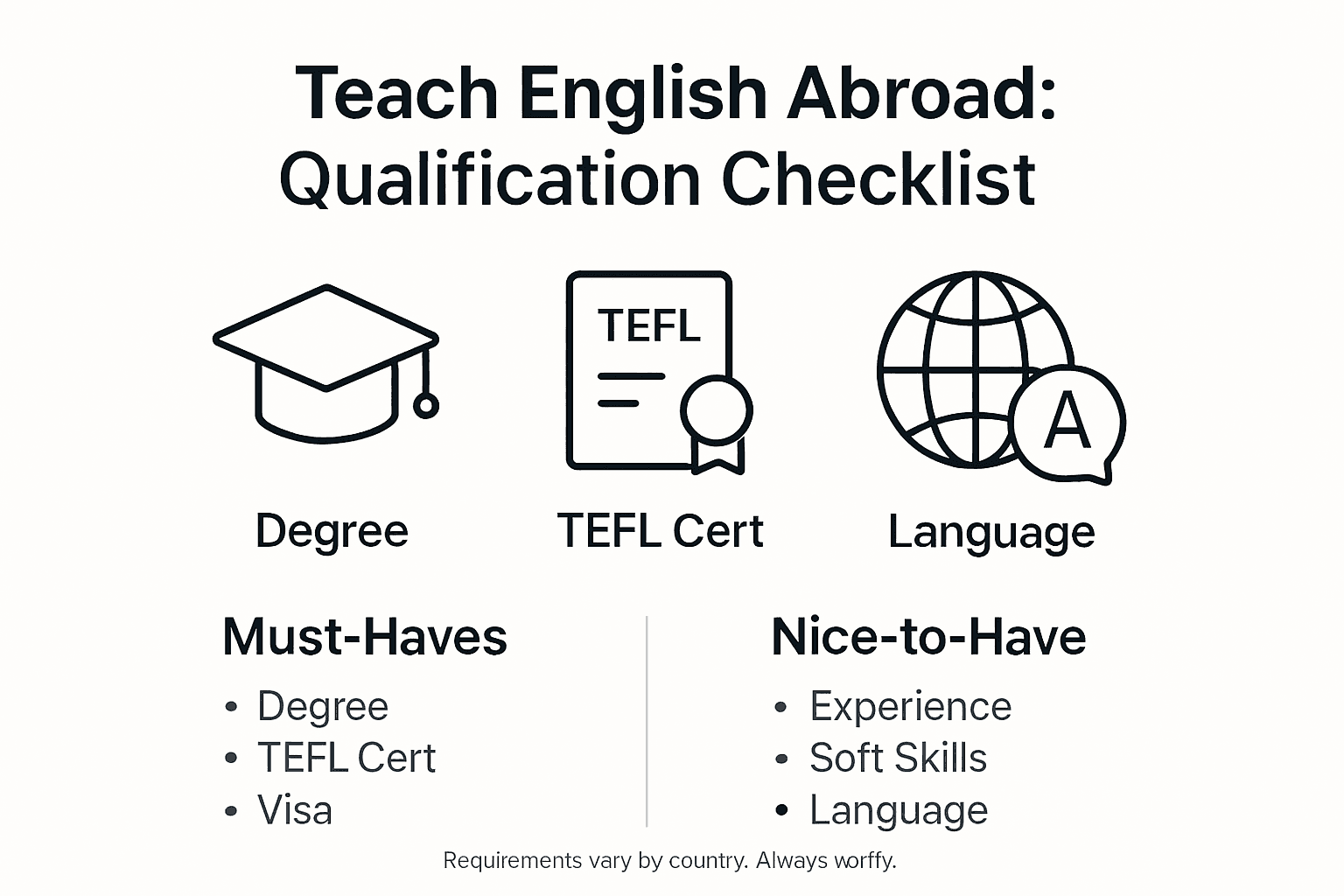
Teaching English abroad requires a strategic combination of professional credentials and personal skills. While academic requirements form the foundation, employers increasingly seek teachers who demonstrate comprehensive capabilities that extend beyond traditional qualifications. Understanding these key requirements can significantly improve your chances of securing desirable teaching positions in international markets.
At the core of most international teaching opportunities are several fundamental qualifications. A bachelor’s degree remains the baseline expectation for most programs, typically in any discipline. However, employers often prioritize candidates with additional specialized training, such as a TEFL certification that covers essential teaching skills. These specialized certifications validate a teacher’s ability to effectively manage classrooms, design curriculum, and engage students from diverse cultural backgrounds.
Beyond academic credentials, successful English teachers must cultivate a robust set of interpersonal skills. Language proficiency is paramount, but equally important are adaptability, cross-cultural communication abilities, and emotional intelligence. Employers seek professionals who can navigate complex cultural environments while maintaining professional standards. Native English speakers from countries like the United States, Canada, the United Kingdom, Australia, and New Zealand often have a competitive advantage, though individual teaching capabilities matter more than national origin.
Pro tip: Research specific country requirements and cultural expectations before applying, as qualification standards can vary significantly across different international teaching markets.
TEFL Certification Options and Importance
TEFL certification has become an essential credential for aspiring English language teachers seeking international opportunities. These specialized programs provide comprehensive training that goes far beyond basic language skills, equipping educators with practical classroom strategies and cultural competence. The comprehensive guide to TEFL course selection highlights the critical importance of choosing the right certification program tailored to your specific career goals.
Modern TEFL certifications come in multiple formats and levels, ranging from basic 120-hour online courses to advanced diploma programs. Standard entry-level certifications typically require between 100-170 training hours and cover essential teaching methodologies, lesson planning, classroom management, and language teaching techniques. More advanced options like Level 5 TEFL diplomas offer deeper professional development, often including practicum components that provide hands-on teaching experience.
International employers have increasingly sophisticated expectations for TEFL qualifications. While entry-level certifications can open initial teaching opportunities, advanced certifications significantly enhance employability and potential salary ranges. Some specialized programs focus on specific teaching contexts like business English, young learners, or online instruction, allowing teachers to differentiate themselves in competitive job markets. Recognized certifications from accredited institutions carry substantial weight, demonstrating a teacher’s commitment to professional standards and pedagogical excellence.
Here’s a quick comparison of TEFL certification levels and their career benefits:
| Certification Level | Typical Hours | Career Advantage |
|---|---|---|
| Basic Certificate | 120 hours | Entry-level jobs, limited advancement |
| Intermediate | 150–170 hours | Wider job options, higher pay potential |
| Advanced Diploma | 200+ hours | Specialized roles, leadership chances |
Pro tip: Research and compare multiple TEFL certification programs, paying close attention to accreditation, course content, and potential job placement support.
Degree and Language Requirements Explained
Teaching English abroad involves navigating a complex landscape of academic and linguistic prerequisites. Most international employers establish fundamental requirements that go beyond simple language proficiency. A bachelor’s degree remains the standard baseline, with many countries and institutions mandating this credential as a minimum qualification for teaching positions. Advanced TEFL courses can help teachers understand these nuanced requirements and prepare more effectively for international teaching opportunities.

Language requirements vary significantly across different regions and employers. While native English speakers from countries like the United States, Canada, the United Kingdom, Australia, and New Zealand are often preferred, some programs prioritize demonstrated language proficiency over nationality. Most positions require English language teachers to have a minimum CEFR level C1 or C2 in English, demonstrating advanced communication skills. Some specialized teaching roles, particularly in academic or corporate settings, may require additional language certifications or proof of professional communication competence.
Degree specifications can be quite diverse, with some countries and institutions maintaining strict guidelines while others remain more flexible. Many employers accept bachelor’s degrees in any discipline, though degrees in Education, Linguistics, Communications, or English are often viewed more favorably. International schools and universities tend to have more rigorous academic requirements, potentially seeking candidates with advanced degrees or specialized teaching credentials. Some regions, particularly in Asia and the Middle East, may have specific regulatory requirements that mandate particular degree qualifications or professional certifications.
Pro tip: Verify specific degree and language requirements for your target countries, as regulations can change frequently and vary dramatically between different regions and employers.
Work Visas and Legal Teaching Abroad
Navigating the complex world of international teaching requires a comprehensive understanding of work visa regulations and legal requirements. Each country maintains unique immigration policies that directly impact teachers’ ability to work legally. Understanding specific visa requirements for teaching destinations is crucial for aspiring English language instructors seeking opportunities abroad.
Work visa processes typically involve multiple layers of documentation and professional verification. Most countries require specific documentation, including a valid passport, authenticated academic credentials, clean criminal background checks, and a contract from an authorized employer. Some nations mandate additional health screenings or professional certifications, with requirements varying dramatically between regions. Southeast Asian countries like Vietnam, for instance, often require authenticated university degrees, TEFL certifications, and sponsorship from educational institutions to obtain legal work permits.
Employment regulations can significantly impact teaching opportunities and legal status. Some countries offer specialized work visas specifically designed for language instructors, while others incorporate English teachers into broader professional migration categories. Prospective teachers must carefully research specific legal requirements, as work visa regulations can change rapidly and carry significant consequences for non-compliance. Professional educators should anticipate potential challenges such as limited visa duration, renewal restrictions, and precise documentation requirements that differ across international jurisdictions.
Pro tip: Consult official embassy websites and work with reputable placement agencies to ensure a complete understanding of current visa requirements for your target teaching destination.
Common Mistakes and How to Avoid Them
Aspiring English teachers often encounter numerous pitfalls when pursuing international teaching opportunities. Many newcomers underestimate the complexity of preparing for overseas teaching positions, leading to potentially costly mistakes. Navigating teaching opportunities in specific countries like Vietnam requires careful preparation and strategic planning to avoid common professional missteps.
One of the most critical errors involves inadequate document preparation and authentication. Many teachers fail to properly validate their academic credentials, criminal background checks, and professional certifications before applying to international positions. Incomplete or improperly authenticated documents can result in immediate disqualification or last-minute job offer cancellations. Verification processes vary dramatically between countries, requiring meticulous attention to specific embassy and educational institution requirements. Some regions demand original documents with apostille certification, while others require multiple layers of translation and official stamping.
This summary highlights common document pitfalls and strategies to prevent them:
| Mistake Type | Example Problem | Best Prevention Step |
|---|---|---|
| Document authentication | Missing apostille on degree | Verify embassy authentication rules |
| Incomplete background check | Outdated or untranslated copy | Obtain multiple certified versions |
| Credential mismatch | Wrong subject area listed | Match degree to advertised position |
Professional conduct and cultural misunderstandings represent another significant area of potential mistakes. International teaching environments demand high levels of cultural sensitivity and professional adaptability. Teachers who approach their roles with rigid expectations or limited cultural awareness often struggle to integrate effectively. Language barriers, professional communication norms, and workplace expectations can differ dramatically between countries. Successful international educators invest time in understanding local cultural nuances, educational systems, and professional communication styles before and during their teaching assignments.
Pro tip: Create a comprehensive document portfolio with multiple certified copies of your credentials, and research cultural expectations thoroughly before accepting an international teaching position.
Secure Your Path to Teaching English Abroad with the Right Qualifications
Qualifying to teach English abroad means more than just meeting basic requirements like a bachelor’s degree and language proficiency. The article highlights the importance of specialized training, such as TEFL certification and understanding regional visa and legal regulations. These challenges can feel overwhelming if you do not have access to comprehensive resources and accredited courses tailored to your individual career goals.
Take control of your teaching journey by enrolling in expertly designed courses at TEFL Institute. Whether you need a foundational 120-hour TEFL certificate or an advanced diploma with practicum experience, our variety of online and hybrid programs helps you gain the practical skills and official certifications that international employers demand. Explore our guidance on TEFL course selection and discover how our offerings prepare you to meet legal and cultural expectations confidently. Don’t wait for opportunities to pass you by. Start your certification now at TEFL Institute’s website and build a credential portfolio that opens doors worldwide.
Frequently Asked Questions
What are the basic qualifications needed to teach English abroad?
Most international teaching positions require a bachelor’s degree and a TEFL certification. While a degree in any discipline can qualify you, degrees related to Education, Linguistics, Communication, or English are often preferred.
Why is TEFL certification important for teaching English abroad?
TEFL certification is crucial as it equips teachers with essential teaching skills, classroom management techniques, and cultural competence. Employers often prefer candidates with recognized certifications when hiring.
What language proficiency level is required to teach English internationally?
Most positions require English teachers to demonstrate a minimum CEFR level of C1 or C2, indicating advanced language proficiency. Some specialized roles may also demand additional language certifications.
What common pitfalls should aspiring English teachers avoid when applying for positions abroad?
Common mistakes include inadequate document preparation, such as failing to authenticate academic credentials or not understanding specific visa requirements. It is also vital to research cultural expectations and professional conduct for effective integration into a new teaching environment.