

 United Kingdom (UK)
 United States (US)
 Canada
 South Africa
 India
India Australia
 New Zealand
 China
China Russia
 Germany
 France
 Spain
Spain Netherlands
 Vietnam
 United Arab Emirates
 Italy
Italy Poland
 Thailand
 Türkiye











 Algeria


What Is Classroom Management? Complete TEFL Guide
What is classroom management?
Classroom management is the set of skills and techniques a teacher uses to keep students organised, focused and productive during a lesson. In a TEFL classroom it means more than discipline: it means building a room where learners feel safe enough to speak a language they have not mastered, make mistakes out loud, and keep trying.
Last updated 22 September 2026.
For TEFL educators, the challenge stretches beyond routine discipline into a blend of culture, language and motivation. Understanding how to foster participation and maintain order helps teachers create classrooms where students feel confident speaking up and taking risks with a new language. This guide sets out what the term covers, the strategies that work, the misconceptions that catch out new teachers, and the techniques that hold a mixed-level room together. Classroom management sits alongside the other core teaching concepts on our TEFL qualifications and terminology reference.
Dated reference data
The authoritative reference set for this topic. Every source below was opened and confirmed live on 22 September 2026.
The standard definition
- The Inter-agency Network for Education in Emergencies defines classroom management as “the wide variety of skills and techniques that teachers use to keep students organized, orderly, focused, attentive, on task, and academically productive during a class.”
The learner levels a TEFL classroom is managed across
- A1 and A2, Basic User. B1 and B2, Independent User. C1 and C2, Proficient User.
- Defined by the Council of Europe through the Common European Framework of Reference for Languages, using “can do” descriptors rather than year groups or hours studied. A mixed-level class typically spans two adjacent levels, which is what makes differentiation a management problem rather than only a planning one.
Regulated TEFL qualifications on the Ofqual public register
- Level 5 Diploma in TEFL, qualification number 610/1571/4, 180 guided learning hours, total qualification time 382 hours.
- Level 5 Advanced Diploma in TEFL, qualification number 610/1573/8, 300 guided learning hours, total qualification time 542 hours, 54 credits.
- Both are awarded by Highfield Qualifications, which holds Ofqual recognition number RN5219. They are separate specifications and should not be combined.
Sources. Definition: INEE, Education in Emergencies Glossary. Level descriptions: Council of Europe, Common European Framework of Reference for Languages. Qualification numbers: Ofqual, the qualifications regulator for England, publishes the Register of Regulated Qualifications, where each number above can be searched. The register is named here rather than linked because it blocks automated checking, so the entries were confirmed by hand on the date shown.
How to cite this. The TEFL Institute, “What Is Classroom Management? Complete TEFL Guide”, updated 22 September 2026, https://teflinstitute.com/blog/what-is-classroom-management-guide/.
Contents
- Defining classroom management in TEFL
- Core strategies and approaches explained
- Common challenges and misconceptions
- Roles and responsibilities of TEFL educators
- Effective techniques for diverse classrooms
- Frequently asked questions
Key takeaways
| Point | Details |
|---|---|
| It is more than discipline | Classroom management covers physical space, materials, time, routines and relationships, not just behaviour correction. |
| Language classrooms are a special case | Learners must speak a language they have not mastered, so psychological safety is a management requirement rather than a nicety. |
| Silence is not the goal | A quiet language classroom is usually a failing one. The aim is productive noise, not no noise. |
| Clear expectations come first | Transparent, consistently applied norms set in the first lesson do more than any intervention later. |
| Adaptability beats rigidity | What works with one group fails with the next. Real-time adjustment is the core skill. |
Defining classroom management in TEFL

Classroom management represents a complex set of strategic skills that enable TEFL teachers to create effective, productive learning environments. As the definition in the panel above sets out, it encompasses the wide variety of techniques teachers use to keep students organised, focused and academically productive during class sessions.
At its core, classroom management involves multiple interconnected dimensions that go far beyond simple discipline. Northern Arizona University highlights that effective classroom management requires thoughtful organisation of physical space, instructional materials, time allocation, and establishing consistent routines. These elements work together to create a safe, respectful learning atmosphere where language acquisition can thrive.
For TEFL teachers specifically, classroom management takes on additional nuanced challenges. Unlike traditional subject teaching, language instruction demands dynamic interaction, constant engagement, and adaptive communication strategies. Successful classroom management in TEFL means creating an environment where students feel comfortable making mistakes, taking linguistic risks, and actively participating in communication exercises. This involves carefully balancing structured learning activities with spontaneous conversational opportunities.
Here is a comparison of key classroom management components and their implementation in TEFL environments:
| Component | General teaching approach | TEFL-specific approach |
|---|---|---|
| Expectations & norms | Set classroom rules | Emphasise language-friendly guidelines |
| Learning environment | Create order & safety | Foster risk-taking for language use |
| Instructional strategies | Use standard lesson formats | Incorporate interactive activities |
| Student engagement | Manage participation | Sustain active communication |
| Feedback | General academic feedback | Personal, encouraging language support |
| Inclusiveness & support | Address basic needs | Balance cultural backgrounds |
| Flexibility | Adjust for tasks | Adapt to student proficiency and dynamics |
Key components of effective TEFL classroom management include:
- Establishing clear expectations and communication norms
- Creating inclusive, supportive learning environments
- Developing flexible instructional strategies
- Managing student participation and engagement
- Providing constructive, encouraging feedback
Mastering classroom management is not about rigid control, but about creating a dynamic, responsive learning space where language acquisition can naturally unfold.
Core strategies and approaches explained
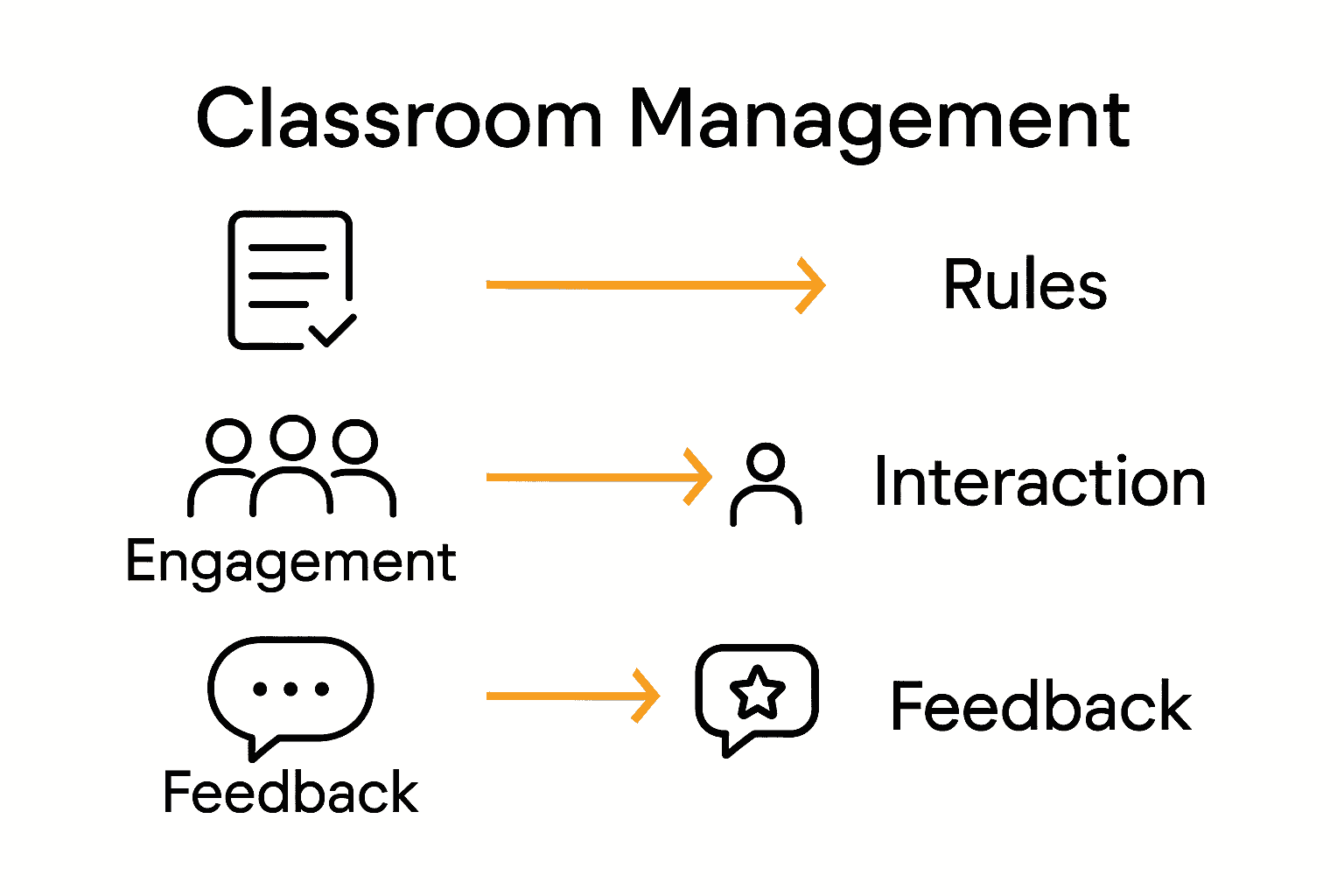
Effective classroom management in TEFL requires a multifaceted approach that integrates strategic techniques, psychological understanding, and adaptive communication skills. Teachers must develop a comprehensive toolkit that allows them to navigate diverse learning environments with confidence and flexibility.
The first critical strategy involves establishing clear classroom expectations from the very beginning. This means creating transparent rules, communication protocols, and behavioural guidelines that are consistently applied. Language learners need structured frameworks that provide psychological safety while encouraging linguistic exploration. By setting predictable boundaries, teachers create an environment where students feel secure enough to take communication risks.
Another fundamental approach centres on student engagement techniques. Successful TEFL classroom management requires dynamic, interactive teaching methods that maintain student motivation and participation. This involves designing lessons with varied activities, incorporating multiple learning styles, and creating opportunities for meaningful student interaction. Teachers must balance structured instruction with spontaneous conversational moments, ensuring that language learning feels both purposeful and enjoyable.
Key classroom management strategies include:
- Developing responsive classroom dynamics
- Creating inclusive learning environments
- Implementing flexible instructional approaches
- Maintaining consistent communication standards
- Providing constructive, encouraging feedback
- Adapting teaching methods to student needs
Practical implementation of these strategies requires ongoing professional development and self reflection. One specific technique worth learning early is Total Physical Response, which doubles as a vocabulary method and a way of pulling a restless class back into a lesson within a minute.
Common challenges and misconceptions
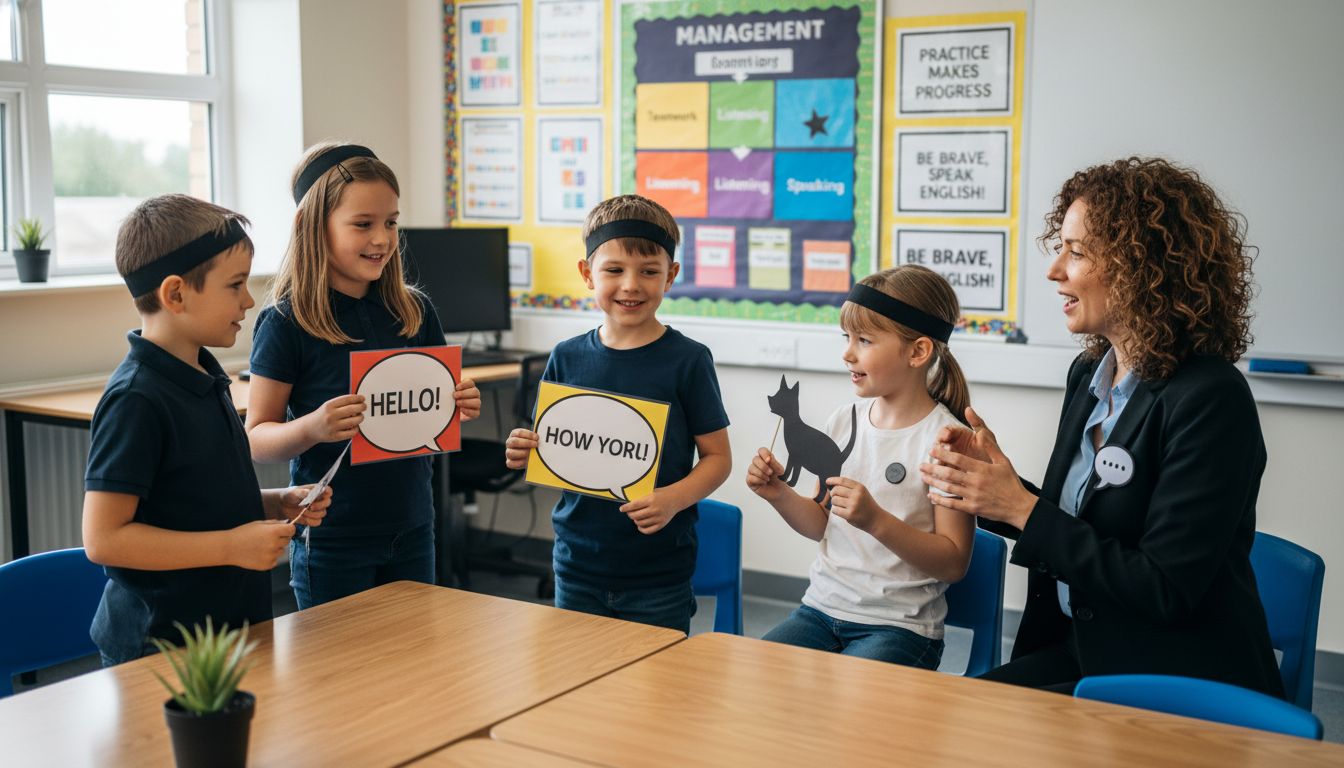
Classroom management in TEFL is often misunderstood as a simple set of disciplinary techniques. The Wing Institute warns that ineffective management can lead to chaos, disrupting student learning and damaging teacher morale. The reality is far more nuanced, requiring sophisticated interpersonal skills and strategic approaches.
One prevalent misconception is that strict control equals effective classroom management. Many new TEFL teachers believe that maintaining absolute silence and implementing rigid rules will create an ideal learning environment. However, language learning thrives on interaction, spontaneity, and student comfort. Effective classroom management actually involves creating a balanced, dynamic space where students feel safe to experiment with communication, make mistakes, and engage actively.
Another significant challenge emerges from cultural differences and communication barriers. TEFL teachers often work in environments where students have diverse linguistic backgrounds, learning styles, and cultural expectations. This requires exceptional adaptability and emotional intelligence. Teachers must develop strategies that respect individual differences while maintaining a cohesive learning environment. This means being flexible in instructional approaches, understanding non-verbal communication cues, and creating inclusive spaces that accommodate various learning preferences.
Common classroom management misconceptions include:
- Believing silence equals learning
- Thinking punishment is more effective than positive reinforcement
- Assuming one teaching strategy works for all students
- Underestimating the importance of building rapport
- Neglecting student psychological safety
Roles and responsibilities of TEFL educators
TEFL educators carry a complex and multifaceted set of responsibilities that extend far beyond traditional language instruction. US International Learning and Academic Collaboration Services emphasises that these professionals are fundamentally responsible for creating inclusive classroom environments, understanding student behaviour, and applying sophisticated classroom management techniques tailored to diverse learning contexts.
A critical professional responsibility involves designing strategic learning experiences that accommodate varied student needs. This means developing curriculum approaches that are flexible, engaging, and culturally sensitive. Teachers must constantly assess and adapt their instructional methods, ensuring that each student has meaningful opportunities to develop language skills. Professional development resources from UTeach at the University of Texas suggest that successful educators consistently set clear behavioural expectations, prepare proactively for potential challenges, and use positive behavioural modification strategies.
Beyond linguistic instruction, TEFL educators serve as cultural ambassadors, communication facilitators, and psychological support systems for their students. They must navigate complex interpersonal dynamics, understanding that language learning is intrinsically tied to emotional comfort, cultural understanding, and individual learner confidence. This requires exceptional emotional intelligence, adaptability, and a genuine commitment to student growth beyond mere linguistic proficiency.
Key responsibilities of TEFL educators include:
- Creating inclusive and supportive learning environments
- Designing adaptive, engaging curriculum
- Managing diverse classroom dynamics
- Providing constructive, personalised feedback
- Supporting students’ linguistic and cultural development
- Maintaining professional and ethical standards
Discover the essential skills needed to excel as a TEFL teacher and transform your understanding of this dynamic and rewarding professional role.
Effective techniques for diverse classrooms

Managing diverse classrooms requires sophisticated, adaptable strategies that recognise the unique learning needs of each student. Experienced practitioners recommend implementing a range of classroom management techniques that go beyond traditional disciplinary approaches, focusing instead on proactive engagement and positive student interaction.
One critical technique involves strategic proximity control and non-verbal communication. Experienced TEFL educators understand that physical positioning in the classroom can significantly influence student behaviour and engagement. By moving deliberately through the classroom, making strategic eye contact, and using purposeful body language, teachers can redirect potential disruptions, maintain student focus, and create a dynamic learning environment without relying on verbal interventions.
Active student engagement remains the cornerstone of effective classroom management in diverse learning environments. This means designing learning experiences that are inherently interactive, culturally responsive, and tailored to multiple learning styles. Group work, collaborative discussions, hands-on activities, and problem-solving tasks can transform potential classroom challenges into opportunities for meaningful language development. Teachers must constantly adapt their approaches, recognising that what works for one group of students might not be effective for another.
Key techniques for managing diverse classrooms include:
- Utilising proximity and non-verbal communication
- Designing interactive, multi-modal learning experiences
- Implementing flexible engagement strategies
- Providing personalised, constructive feedback
- Creating inclusive participation opportunities
- Adapting instructional methods in real time
Explore the top TEFL teaching methods that can transform your classroom approach and develop more effective, engaging strategies for diverse language learning environments.
Frequently asked questions
What is classroom management in TEFL?
Classroom management in TEFL is the set of strategic skills and techniques teachers use to create effective, productive environments for language acquisition. It includes organising physical space, instructional materials and time, establishing routines, and keeping students engaged while maintaining a safe and respectful atmosphere in which learners are willing to speak a language they have not yet mastered.
What are the four types of classroom management?
Classroom management styles are commonly grouped as authoritarian, authoritative, permissive and indulgent, according to how much control and how much warmth the teacher brings. The authoritative style, high on both, is the one most consistently associated with strong outcomes in language classrooms, because it combines clear structure with the psychological safety learners need in order to risk speaking.
How can TEFL teachers establish clear expectations in the classroom?
By setting transparent rules, communication protocols and behavioural guidelines in the first lesson and applying them consistently from then on. This gives learners a structured framework that encourages linguistic exploration while providing psychological safety. Expectations set early and kept are worth more than any intervention introduced after problems appear.
What are the most common classroom management mistakes new TEFL teachers make?
Treating silence as evidence of learning, reaching for punishment rather than positive reinforcement, assuming one strategy will work with every group, underestimating how much rapport matters, and overlooking psychological safety. In a language classroom the first of these is the most damaging, because a silent room is usually one where nobody feels safe enough to practise.
How do you manage a mixed-level English class?
Keep the core task the same for everyone and vary what you ask learners to do with it. Stronger students narrate, extend or explain; weaker students complete the basic version. Pair stronger learners with weaker ones for peer teaching, use proximity rather than verbal correction to redirect, and plan two exit points for every activity so nobody is left either stranded or idle.
Why is classroom management harder in a language classroom?
Because the subject and the medium are the same thing. In most classrooms a struggling student can still follow instructions; in a language classroom, the instruction itself may be the barrier. Add cultural differences in what counts as respectful classroom behaviour, and the teacher is managing behaviour, comprehension and confidence simultaneously.
Take control of your TEFL classroom with confidence
Mastering classroom management is one of the biggest challenges for TEFL teachers striving to create a supportive and engaging learning environment. This guide has set out the need for clear expectations, dynamic student engagement, and adaptable teaching strategies to overcome common hurdles like cultural diversity and maintaining active communication. If you want to turn these challenges into strengths, practical skills are what get you there.
The Ofqual regulated Level 5 TEFL diploma covers classroom management alongside methodology, lesson planning and assessment, and carries a qualification number an employer can look up. You can see the full range on our TEFL courses page.
Related reading
- TEFL qualifications and terminology explained, the reference page every teaching concept on this site links back to.
- What is Total Physical Response (TPR)?
- What is the communicative approach in ESL teaching?
- TEFL teaching tips and hacks for the classroom
TEFL Institute guides

Germany
Freelance work and pay
Cambodia
Pay, requirements and visas
Dubai
Pay, requirements and visas
Czech Republic
Pay, visas and cities
Taiwan
Buxibans, pay and visas