United Kingdom (UK)
 United States (US)
 Canada
 South Africa
 India
 Australia
 New Zealand
 China
 Russia
 Germany
 France
 Spain
 Netherlands
 Vietnam
 United Arab Emirates
 Italy
 Poland
 Thailand
 Türkiye





 Algeria


Most TEFL myths fall apart when you read the published rules. South Africans are eligible for EPIK and JET, a degree matters for some programmes and not others, and not every certificate is equal. Check each claim against the programme’s own page before you spend money or give up.
Our academic team hears the same worries from South African readers year after year. This guide takes six common claims and tests each against official sources, so you can separate fact from folklore. It sits under our main guide to the free TEFL certificate.
Key takeaways
- EPIK lists South Africa among the countries whose citizens can apply, so the idea that only UK or US passports count is wrong.
- EPIK and JET both require a bachelor’s degree, so the degree myth is true for those two programmes and cannot be assumed for others.
- The Ofqual register shows whether a qualification is regulated and at what level, so you can test any certificate yourself.
- Hour requirements differ: EPIK names at least 100 hours, and UK accredited centres add six hours of supervised practice.
- JET’s published rule is under 40, while other programmes set their own limits, so check each one.
- A certificate does not guarantee a job. Employers also look at documents, interviews and fit.
Myth 1: Only British or American passports can teach English abroad
This is false for the biggest government programmes. EPIK’s eligibility page lists Australia, Canada, Ireland, New Zealand, the United Kingdom, the United States and South Africa. South African applicants must also provide proof that their schooling from grade 7 through university was conducted in English, and letters from the schools are enough. The Embassy of Japan in Pretoria accepts JET applications from South African citizens. See our guide to jobs abroad for South Africans for the paperwork.
Myth 2: Your accent rules you out
No published rule says so. The Dictionary of South African English describes several recognised varieties, and the programme rules above turn on citizenship, education and qualifications. What employers test is clarity and teaching skill. Our guide to which English is used in South Africa sets out the census figures and the varieties.
Myth 3: You never need a degree
It depends on the employer, which is why this myth is dangerous. EPIK asks for a minimum of a bachelor’s degree, and JET asks for a bachelor’s degree by the time you depart. Other employers set their own rules, and some countries differ by law. Our guides on teaching English in Korea without a degree and teaching English in Spain without a degree look at two countries in detail.
Myth 4: Every TEFL certificate is the same
They are not, and you can check. The Ofqual Register of Regulated Qualifications shows whether a qualification is regulated, gives its details and lets you compare similar qualifications. GOV.UK sets out what the levels mean, with Level 5 alongside a diploma of higher education, a foundation degree and a higher national diploma. Our guide to what Ofqual regulation means explains it in plain terms.
What students say about studying with us online
 ★★★★★
“I’ve recently started my TEFL course and so far I’m very impressed with the experience. The course is well-organized, easy to navigate, and the content is engaging and informative …”
Jake Fitzgerald · 2026 · Google review
Rated 4.9 out of 5 from 1,875 Google reviews
Myth 5: More hours always means a better chance
Hours matter up to the threshold your target sets. EPIK names a certificate of at least 100 hours from an accredited programme. Accreditation UK expects at least 100 hours of input and six hours of supervised practice. Our guide on how many TEFL hours employers actually want compares the figures. Beyond the threshold, regulation, tutor support and practice add more than raw hours.
Myth 6: You are too old, or a certificate guarantees a job
Neither claim holds as a blanket rule. JET’s published criteria include being under 40, so it is the exception. Other employers set their own limits, so check each one. And no certificate guarantees work, since employers also check documents, interview you and weigh fit. Our guide on whether you will get a job after a TEFL course is honest about both sides.
Every TEFL opening, salary and deadline that matters.
In your inbox every two weeks. Free, no spam, unsubscribe any time.
Teacher pay by country
New TEFL openings
Programme and visa dates
Two more things the JET and EPIK pages make clear
A diploma is not a degree for JET. The Embassy of Japan says a diploma, even a diploma in education, is not sufficient, while a bachelor’s degree in any field is acceptable. That matters for South Africans with a three-year diploma, who should check before applying.
You also do not need classroom experience to apply. The embassy says teaching experience in a school is not required for JET, and that teaching certification is not required either, though a few contracting organisations ask for a TEFL. For EPIK, the 100-hour certificate can be completed during the application, as long as it is finalised no later than six weeks before your expected arrival date in Korea.
Real salaries, visa rules and hiring intel, before you apply
Compare take-home pay in the TEFL Salary Index and check the entry requirements for any country on the Visa Desk, so you know exactly what a destination offers before you commit.
TEFL myths: where should you start?
Start by testing every claim you hear against the programme’s own page, then plan around the rule that applies to you. Our teacher salary in South Africa guide helps you compare home pay with options abroad, and the South African course page shows current courses.
See TEFL courses for South Africa
Read next: our main guide, TEFL certificate free: what you really get and how to check it, plus the South African course page.
Last reviewed: 19 November 2026
Sources: EPIK, Eligibility, Embassy of Japan in South Africa, JET selection, Embassy of Japan in South Africa, JET FAQ, GOV.UK, Find a regulated qualification, GOV.UK, What qualification levels mean, British Council, Accreditation UK Academic staff qualifications (February 2025), Dictionary of South African English.

Reviewed by Katie Troy
Managing Director of The TEFL Institute Group. Katie has been with the team since 2018. She is a qualified teacher with a degree in education and years of experience teaching abroad, and works closely with our academic team.
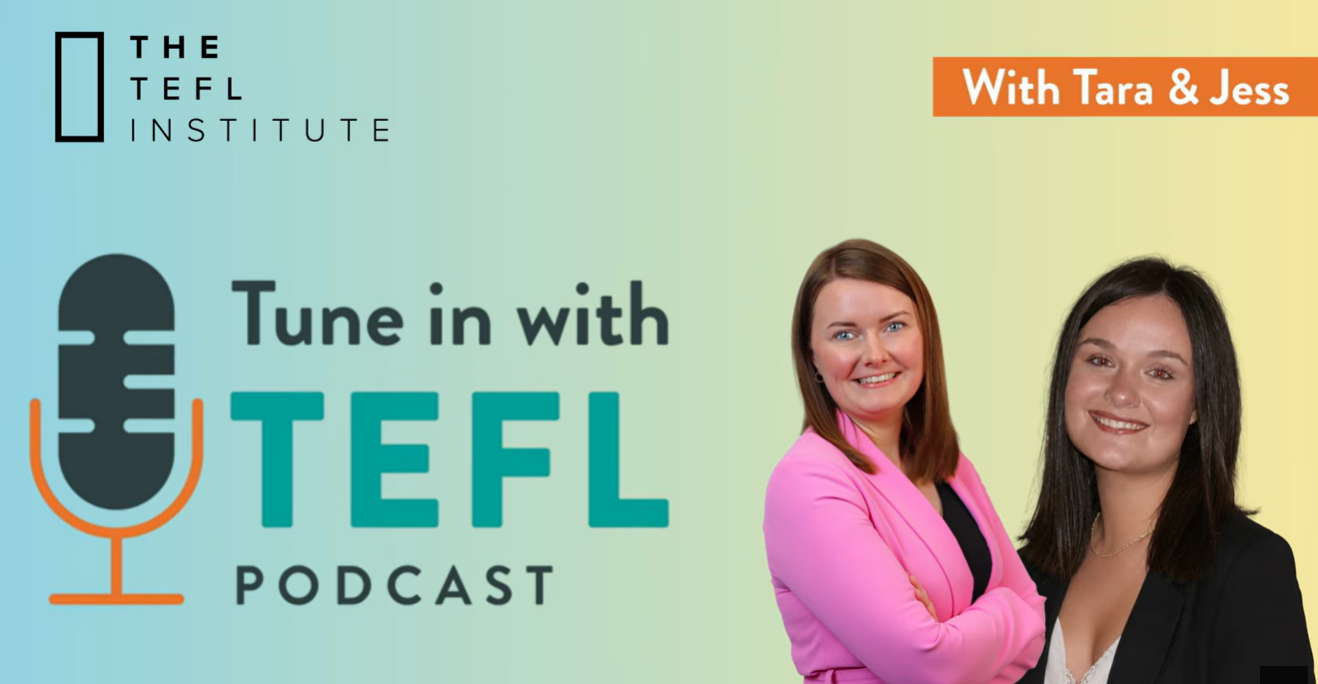
Tara and Jess talk through different TEFL and EFL topics, from finding work abroad to life in the classroom.
FAQs
Questions students ask us
Yes. EPIK lists South Africa among its eligible countries, and the Embassy of Japan in Pretoria accepts JET applications from South African citizens.
It depends on the employer. EPIK and JET both require a bachelor’s degree. Other employers and countries set their own rules, so check each before you commit.
No. The Ofqual register shows whether a qualification is regulated and at what level, and you can search it yourself before you pay.
The programme rules we checked turn on citizenship, education and qualifications, not accent. Employers mostly want learners to understand you, so clarity matters most.
It depends on the programme. JET’s published criteria include being under 40. Other employers set their own limits, so check each one.
No. A certificate meets a requirement, but employers also check documents, interview you and weigh fit. Treat it as a ticket to apply, not a guarantee.