

 United Kingdom (UK)
 United States (US)
 Canada
 South Africa
 India
 Australia
 New Zealand
 China
 Russia
 Germany
 France
 Spain
 Netherlands
 Vietnam
 United Arab Emirates
 Italy
 Poland
 Thailand
 Türkiye









 Algeria


South Africans can apply for the two biggest government English teaching programmes in Asia, EPIK in South Korea and JET in Japan, and both ask for a bachelor’s degree. Start the paperwork early, because verification and apostilles take the longest, and check each programme’s own rules before you pay for anything.
Our academic team has helped South African graduates plan teaching careers abroad since 2018. The most common mistake we see is starting the course first and the paperwork last. This guide sets out what the official programme pages say, in the order you should tackle it. It sits under our main guide to the free TEFL certificate, which shows how to check any course before you enrol.
Key takeaways
- EPIK lists South Africa among the countries whose citizens can apply, and asks for a bachelor’s degree from an accredited university.
- EPIK applicants from South Africa must prove that their schooling from grade 7 through university was conducted in English, and letters from the schools are sufficient proof.
- For EPIK, South African applicants apostille the original SAQA Verification Letter together with a notarised copy of the bachelor’s diploma.
- JET through the Embassy of Japan in South Africa is open to South African citizens with a bachelor’s degree who are under 40.
- JET interviews are generally held in mid to late February, and successful applicants depart in late July.
- Visas are free for JET participants, and the embassy in Pretoria or the consulate in Cape Town issues them in person.
Which teaching jobs abroad can South Africans apply for?
Two government programmes stand out for South African graduates, and they work differently. EPIK places teachers in South Korean public schools. JET places Assistant Language Teachers in Japan, and South Africans apply through the Embassy of Japan in Pretoria. Both are structured, salaried programmes, which is why people ask about them first.
Private schools, language academies and online platforms hire separately and set their own rules. Our teach English abroad hub links to each country, and our guide to the best TEFL certification for Asia compares what Japan, Korea, China, Thailand, Vietnam and Cambodia accept.
What does EPIK ask of South African applicants?
EPIK asks for South African citizenship, a degree and proof of English-medium schooling. Its eligibility page lists South Africa among the countries whose citizens can apply. A minimum of a bachelor’s degree from an accredited university is required.
South African applicants face one extra step. EPIK says applicants from areas where significant portions of the population might not speak English as their primary language must provide proof that their schooling from the 7th year or grade and through university was conducted in English. Letters from the schools are sufficient proof and go in with the initial application.
If your degree is not in education, EPIK asks for a TEFL, TESOL or CELTA certificate of at least 100 hours from an accredited programme. It can be completed during the application, as long as it is finalised no later than six weeks before your final expected arrival date in Korea. Our guide to what EPIK is explains the programme, and the best TEFL certification for South Korea covers what employers accept there.
What paperwork should South Africans start first?
Start the degree verification, because it takes the longest and everything else waits on it. EPIK requires an apostilled copy of your bachelor’s degree certificate. For South African applicants the original SAQA Verification Letter must be apostilled together with a notarised or verified copy of a standard non-honours bachelor’s diploma. Higher qualifications such as honours, master’s degrees and PGCEs can be apostilled with these documents, as long as they are all verified and included within the same SAQA Verification Letter.
Postgraduate degrees cannot substitute for the bachelor’s certificate. They can only be submitted as supplementary documents that may raise your starting salary level. Plan the order accordingly: SAQA verification first, then notarisation, then the apostille, then the course certificate.
| Step | Programme | Official source |
|---|---|---|
| SAQA verification letter, then apostille with a notarised diploma copy | EPIK | EPIK, apostilled bachelor’s degree guide |
| Letters from schools proving English-medium schooling from grade 7 | EPIK | EPIK, Eligibility |
| Application to the Embassy of Japan in Pretoria by the deadline | JET | Embassy of Japan, JET selection |
Rules checked on 19 November 2026. Confirm with each programme before you apply.
What does JET ask of South Africans?
JET asks for citizenship, a degree, age and residence history. The Embassy of Japan lists four general criteria for Assistant Language Teachers: you must be a South African citizen, hold or obtain a bachelor’s degree by the time you leave for Japan, have not lived in Japan for three or more years in total in the recent past, and be under 40.
The embassy describes a two-stage process. Applications are screened first, then shortlisted candidates are interviewed, and final decisions come from Tokyo. Interviews are generally held in mid to late February, final decisions arrive around early April, and participants depart in late July. For this year’s dates by country, see Hire Wire Edition 7, and for entry rules by destination see the Visa Desk.
What does the JET application and interview involve?
JET is a yearly cycle with fixed stages, so plan backwards from late July. The Embassy of Japan describes it this way: applications are processed and reviewed in January, applicants hear by early February whether they have an interview, interviews are generally held in mid to late February, final decisions come from Tokyo around early April, and successful applicants depart in late July.
The embassy’s FAQ adds several details South African applicants ask about:
Hiring windows close while you scroll.
Every TEFL opening, salary and deadline that matters.
In your inbox every two weeks. Free, no spam, unsubscribe any time.
Teacher pay by country
New TEFL openings
Programme and visa dates
Deadlines, salaries and visa notes for teaching jobs worldwide, checked against official sources and sent free every two weeks.
Get on the Wire- A degree in any field is acceptable, but a diploma, even a diploma in education, is not sufficient.
- Teaching certification and teaching experience are not required to apply.
- A few contracting organisations ask for a TEFL or TESL certificate, but it is not a must for applying.
- South Africans apply for the Assistant Language Teacher position only.
- Interviews are held in Pretoria, Cape Town and Durban, and applicants pay their own travel to the interview.
- Accepted applicants cannot defer to the following year.
- A criminal record does not automatically disqualify you, but its seriousness is weighed and Tokyo makes the final decision.
What do you need for the EPIK visa and placement?
EPIK’s visa comes after the placement, so budget time for it. EPIK says you need an E-2 visa before you arrive in Korea, and that you cannot attend orientation or work without it. The visa documents are sent to you only after you receive a contract from an Office of Education. EPIK lists the passport, contract, notice of appointment and E-2 application form, and tells you to ask your Korean consulate or embassy about any other documents.
Visa issuance times depend on the consulate. EPIK’s own page says that since COVID it usually takes a minimum of 14 business days. It also says all EPIK positions are available on request from the provincial and metropolitan offices of education, so placement is not something you can fix in advance.
| Stage | EPIK | JET (South Africa) |
|---|---|---|
| Degree | Bachelor’s degree from an accredited university | Bachelor’s degree in any field, a diploma is not enough |
| TEFL certificate | 100 hours or more unless you hold an education qualification | Not required, a few contracting organisations ask for one |
| Documents | Apostilled SAQA Verification Letter with notarised diploma copy, school letters | Application to the Embassy of Japan by the deadline |
| Visa | E-2, after you receive a contract | Free for participants, issued in person in Pretoria or Cape Town |
Rules checked on 19 November 2026. Confirm with each programme before you apply.
Do you still need a TEFL certificate?
For EPIK, yes unless you hold an education degree or a teaching licence. For JET, a TEFL is not among the listed criteria, but it prepares you for the classroom. For private employers and online platforms, it is usually the entry ticket. Our guide to TEFL hours compares the thresholds.
You can also see our course options on the South African course page, or read The Atlas, Edition 3 on Africa’s English teaching market.
Jobs abroad for South Africans: where should you start?
Start with SAQA verification, then choose the programme whose rules you meet. Check the official page for EPIK or JET before each step, book your documents early and keep every school letter. Then choose a TEFL course that meets the hours rule.
See TEFL courses for South Africa
Read next: our main guide, TEFL certificate free: what you really get and how to check it, plus the South African course page.
Last reviewed: 19 November 2026
Sources: EPIK, Eligibility, EPIK, Apostilled Bachelor’s Degree guide, Embassy of Japan in South Africa, JET selection, Embassy of Japan in South Africa, JET FAQ.

Reviewed by Olivia Klimczyk
Marketing Executive at The TEFL Institute Group and a marketing graduate who keeps students up to date through newsletters, blogs and reels.
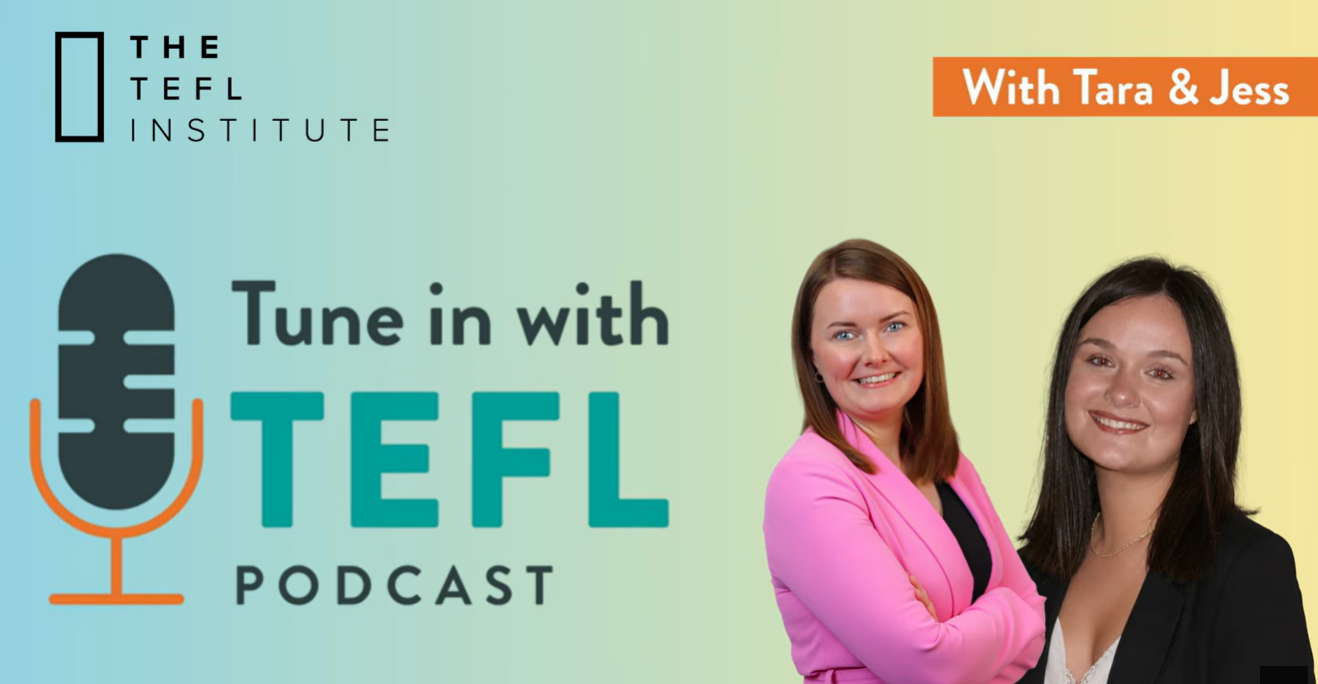
Tara and Jess talk through different TEFL and EFL topics, from finding work abroad to life in the classroom.
FAQs
Questions students ask us
Yes. EPIK lists South Africa among the countries whose citizens can apply. You need a bachelor’s degree and proof that your schooling from grade 7 through university was in English.
Yes, through the Embassy of Japan in Pretoria. You must be a South African citizen, hold or obtain a bachelor’s degree, and be under 40, among the other published criteria.
EPIK says South African applicants must apostille the original SAQA Verification Letter together with a notarised copy of a standard bachelor’s diploma. Start it first, because the other documents depend on it.
Yes, unless you hold a teaching licence, an education degree or a qualifying education major. Otherwise EPIK asks for a TEFL, TESOL or CELTA certificate of at least 100 hours from an accredited programme.
The embassy says interviews are generally held in mid to late February, final decisions arrive around early April, and participants depart for Japan in late July.
The Embassy of Japan says visas are free for JET participants. You attend the embassy in Pretoria or the consulate in Cape Town in person with your documents.
