

 United Kingdom (UK)
 United States (US)
 Canada
 South Africa
 India
India Australia
 New Zealand
 China
China Russia
 Germany
 France
 Spain
Spain Netherlands
 Vietnam
 United Arab Emirates
 Italy
Italy Poland
 Thailand
 Türkiye








 Algeria


Teaching English online to Chinese students is no longer the gold rush it once was. Since China’s 2021 Double Reduction rules, foreign teachers based overseas can no longer legally tutor school-age children in the mainland. For the types of online work that remain and what they pay, see our guide to online English teaching jobs, and for teaching in person, our guide to teaching English in China. What remains is real and worth knowing: teaching adult learners on global marketplaces, honest work that pays steadily rather than at the old headline rates.
Key takeaways
- The children’s market is closed to overseas teachers. China’s 2021 Double Reduction policy banned for-profit academic tutoring for school-age children and stopped platforms hiring foreign teachers based abroad to teach them.
- Adults are the market now. Chinese professionals, university students and exam candidates still study English online, and they book teachers on global marketplaces rather than the old China-only apps.
- Pay is modest and hourly. Expect roughly 6 to 22 US dollars an hour on marketplaces depending on your rate, reviews and specialism, not the 14 to 25 dollars the old kids’ platforms once advertised.
- A 120-hour TEFL certificate is the practical floor, and an Ofqual-regulated Level 5 diploma helps you charge more and stand out with adult and business learners.
- Teaching in China in person, on a proper Z visa, is now the more reliable route to a full-time income from Chinese students.
- Ignore any recruiter still promising online classes with Chinese children from your bedroom abroad. That model is not legal and the honest providers left it behind in 2021.
Can you still teach English online to Chinese students?
Yes, but only adults, and only through global platforms rather than the child-focused apps that once defined this market. If you are based outside China, you cannot legally teach English online to school-age children in the mainland, because the companies that used to hire foreign teachers for exactly that were forced to stop in 2021. The demand that survived sits with adult learners, and that is where a new teacher should look.
This matters because the internet is still full of guides describing a market that no longer exists. Articles promising bright mornings teaching cheerful Chinese six-year-olds from your kitchen in Cork or Cardiff are describing 2019, not now. Being clear-eyed about what changed is the difference between planning a career and chasing a ghost. The short version is that the rules moved, the big platforms pivoted or closed their overseas hiring, and the opportunity narrowed to adults who choose their own teacher.
There is a legitimate market here, and it can pay a useful part-time or full-time income once you build a profile. It simply looks different from the one your favourite travel blogger described a few years ago. The rest of this guide is the honest version.
One practical point shapes everything that follows: the time difference. China runs on a single time zone, UTC plus eight, so a working adult in Beijing wants lessons in their evenings and at weekends. For a teacher in Ireland or the UK that lands in the late morning or early afternoon, which is a friendlier schedule than the notorious dawn starts the old kids’ platforms demanded. If you are teaching from the Americas it means evenings your time. Knowing when your students are free is half the battle when you set up a marketplace calendar.
What changed with China’s 2021 Double Reduction policy?
In July 2021 the Chinese government introduced the Double Reduction policy, which banned for-profit academic tutoring for compulsory-education students and effectively ended overseas online teaching of Chinese children. The aim was to reduce academic pressure and household spending on private tuition, and its effect on foreign English teachers was immediate and severe. Companies that had employed tens of thousands of overseas teachers to tutor Chinese children online could no longer do so legally.
Two rules did the damage. Academic subjects, including English, could no longer be taught to compulsory-education pupils for profit outside school hours, and, crucially, tutoring companies were barred from hiring foreign teachers located outside China to deliver those lessons. The household-name kids’ platforms responded by winding down their international teacher base, pivoting to adults, or closing. For a fuller account of the announcement and its fallout, our explainer on China’s regulations for ESL teachers walks through what the restrictions actually said.
The best-known children’s platforms responded in different ways. Some ended their overseas teacher programmes outright, some pivoted to serve students in other countries, and some shifted to domestic, China-based staff for anything involving young learners. The upshot for a teacher abroad is the same either way: the salaried, company-assigned online job teaching Chinese children is gone, and it is not quietly available through a side door.
The policy has not been reversed, and the UK government’s guidance on working and engaging with China is a sensible reference point for the wider legal picture before you commit to anything. Treat any offer that contradicts this as a warning sign rather than a loophole.
Who can you legally teach English to online now?
You can teach adult Chinese learners who choose to study English online and book a teacher directly, which is a smaller but entirely legitimate market. The ban targeted for-profit academic tutoring of compulsory-education children delivered by companies. It did not stop an adult in Shanghai deciding to improve their business English and hiring a tutor on an international marketplace. That distinction is the whole opportunity.
In practice, the learners still worth building a timetable around fall into a few clear groups. Knowing who they are shapes how you position your profile and what you charge.
| Learner group | Status now | Where the work is |
|---|---|---|
| School-age children in mainland China | Closed to overseas teachers under the 2021 rules | Not a legal route from abroad |
| Adult professionals and business learners | Open | Global marketplaces, one to one |
| University students and exam candidates (IELTS, business English) | Open | Marketplaces and specialist tutoring |
| Chinese adults living overseas and the diaspora | Open | Marketplaces, word of mouth |
| Children taught in person inside China | Open with the right visa | Schools and centres in China, on a Z visa |
The pattern is simple. Adults who choose and pay for their own lessons are fair game, wherever they live. Children in the mainland are only a legal option if you are teaching them in person inside China on the correct work visa, which is a different plan entirely and one we come back to below.
Which platforms connect you with Chinese learners?

The platforms that matter now are the global one-to-one marketplaces where a Chinese adult can search for, choose and pay a teacher directly, rather than the old China-only apps built around children. Marketplaces such as italki, Preply and Cambly all carry Chinese learners among their international student base, and because the student does the choosing, you are not employed to teach a protected group. You are a tutor an adult has hired, which sits comfortably within the rules.
This is a genuine shift in how you get hired. On the old kids’ platforms, a company assigned you students and a fixed rate. On a marketplace you build a profile, set your price, record a short introduction video and compete on your specialism and your reviews. It rewards teachers who niche down, so business English, interview practice and IELTS preparation tend to attract Chinese professionals who know exactly what they want and will pay for it. Our honest look at becoming a Preply tutor covers how one of these marketplaces actually works, from commission to building your first bookings.
Every TEFL opening, salary and deadline that matters.
In your inbox every two weeks. Free, no spam, unsubscribe any time.
Teacher pay by country
New TEFL openings
Programme and visa dates
The wider online market is bigger than China alone, which is a comfort when you are starting out. A profile that attracts a professional in Shenzhen will just as happily attract one in Sao Paulo or Warsaw, so you are never wholly dependent on a single country. For the full landscape of apps and how they pay, our guide to the best platforms to teach English online is the natural next read.
How much can you earn teaching Chinese students online?
Realistically, expect roughly 6 to 22 US dollars an hour on the marketplaces, with your exact rate set by your experience, your niche and the reviews you accumulate over time. The figures below are typical ranges rather than promises, and they are approximate, because on a marketplace you set your own price and the market decides whether to book it. New teachers usually start low to gather reviews, then raise their rate as demand builds.
| Route | Typical pay | What to expect |
|---|---|---|
| Fixed-rate app (e.g. Cambly) | 10 to 12 an hour | Set rate, casual conversation, book around gaps in your day |
| Marketplace, new tutor (italki, Preply) | 6 to 12 an hour | Start low to earn reviews, commission taken by the platform |
| Marketplace, established tutor | 15 to 22 an hour | Higher rate once reviews and repeat students build up |
| Business English or IELTS specialist | 20 to 30+ an hour | Adult professionals pay more for a clear specialism |
| Old kids’ platforms (for context) | 14 to 25, now closed to overseas teachers | The rate people remember, no longer a legal route from abroad |
Two things quietly shape your take-home pay. The first is commission, since marketplaces keep a slice of your earnings, often larger on your first lessons with a new student and smaller thereafter, so the rate a student sees is not quite the rate you keep. The second is retention, because a teacher who turns first bookings into regular weekly students earns far more per hour of effort than one forever chasing trial lessons. Building a small base of loyal adult learners is the real work.
The honest arithmetic is that online teaching of Chinese adults is a solid top-up and a real part-time income, and a full-time wage only once you have built a busy, well-reviewed profile with a specialism. Teachers who treat it as a business, holding a regular schedule and specialising, out-earn those who log on casually. For a broader view of what online roles pay across the sector, our roundup of the top online TESOL jobs sets realistic expectations.
Academic
Teaching English Online to Chinese Students: Platforms, Pay and the Rules Now
Is teaching in China still an option instead?

Yes, and for a reliable full-time income from Chinese students, teaching in person inside China is now the stronger route. The Double Reduction rules changed the online market, but China still hires large numbers of foreign teachers to work legally in the country, in language centres, private schools and universities, on a proper Z work visa. This is the option that actually replaced the old online model for teachers who want China specifically.
The trade-off is obvious. You give up the freedom of teaching from anywhere, and you take on a move abroad, a visa process and a fixed contract. In return you get a stable monthly salary, often with housing help and flights, and a genuine cost-of-living advantage in many cities. Salaries vary widely by city and school type, and our guide to the top cities to teach English in China lays out where the demand and the pay are strongest.
If money is your main question, the city you choose matters as much as the school. Our breakdown of which Chinese cities pay TEFL teachers the most compares the big earners against living costs. For the practical side of arriving and settling, the UK government’s help and services for British nationals in China is a useful official starting point.
What qualifications do you need to teach Chinese students online?
A recognised 120-hour TEFL certificate is the practical minimum for both marketplace tutoring and in-person roles, and it is the first thing an adult learner or a Chinese school checks. Adults choosing a tutor look for evidence you can actually teach, and a genuine certificate with a verifiable number is exactly that evidence. Without one, you are competing on price alone, which is a race to the bottom.
Beyond the certificate, two things lift you above the crowd. The first is the level of your qualification. An Ofqual-regulated Level 5 TEFL diploma sits on the UK regulated qualifications framework and signals real depth, which matters most with business and exam-focused adult learners who are paying a premium. The TEFL Institute Group is an Approved Centre, number 21335, and delivers Ofqual-regulated Level 5 training, so the certificate stands up when a student or a school checks it. The second is a specialism, because business English, IELTS preparation and interview coaching are precisely what Chinese professionals search for and will pay more to book.
The reassuring part is that none of this requires a teaching degree to begin. Most marketplaces and many in-country roles ask for the certificate and clear spoken English rather than a prior teaching background. As Europe’s largest TEFL trainer by teachers certified, the group has certified 161,000 teachers since 2017 who now teach in 80 countries, and it holds a rating of 4.7 out of 5 from 488 verified reviews. You can read how our guides are researched and checked in our Editorial Charter before you spend a penny.
Ready to start teaching English online?
Start with a certificate an adult learner or a school can verify, because that is what turns you from a hopeful into a hireable tutor. The 120 Hour Advanced TEFL Course meets the standard entry requirement for marketplace tutoring and most online roles, and the Ofqual-regulated Level 5 TEFL Diploma is the stronger option if you want to charge more and target business or exam students. Every certificate carries a number an employer or student can check, and the British Council’s TeachingEnglish resources for China are a good free companion once you begin. Qualify first, choose your marketplace, and build the profile that brings the students to you.

Olivia Klimczyk
Marketing Executive at The TEFL Institute Group and the creative heart of our social media. A marketing graduate, she keeps students up to date through our newsletters, blogs and reels.
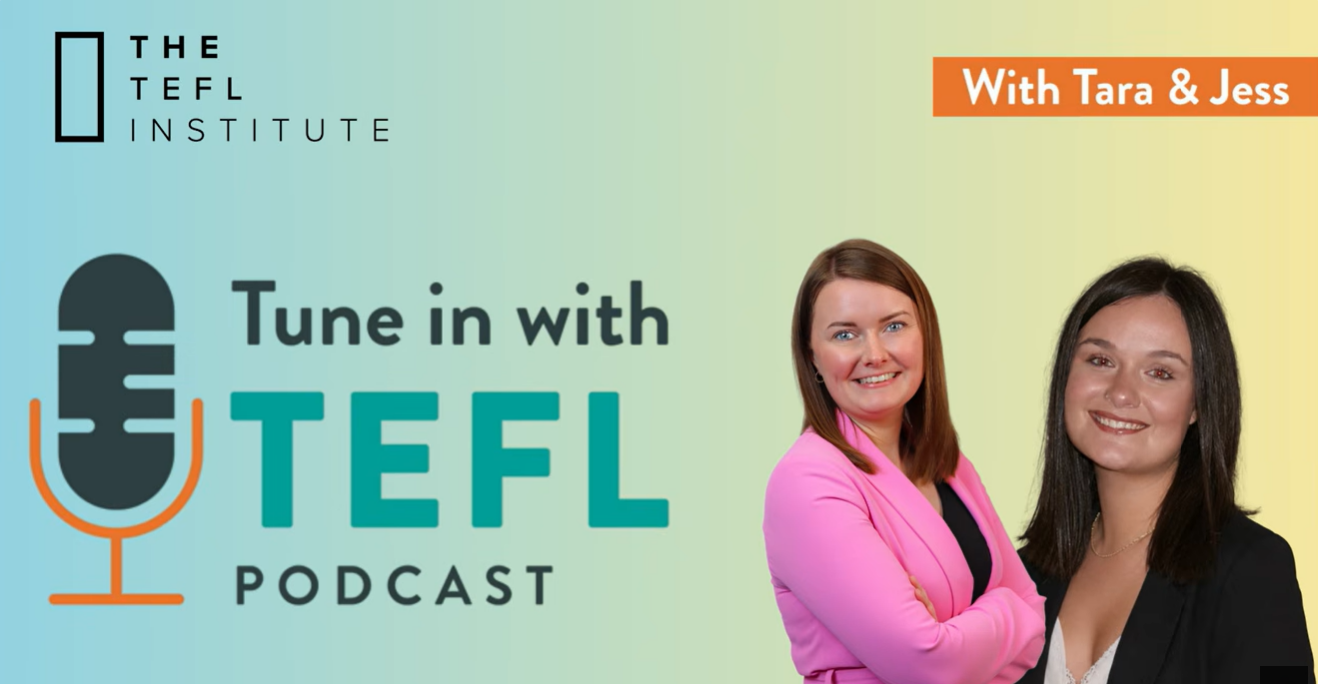
Tara and Jess talk through different TEFL and EFL topics, from finding work abroad to life in the classroom.
FAQs
Questions students ask us
No. Since China’s 2021 Double Reduction policy, tutoring companies cannot hire teachers based outside China to teach English online to school-age children in the mainland. That market is closed to overseas teachers. You can, however, legally teach adult Chinese learners who book you directly on a marketplace.
Double Reduction is a 2021 Chinese government policy that banned for-profit academic tutoring for compulsory-education students and stopped companies hiring foreign teachers based abroad to teach them. It was designed to cut academic pressure and family spending, and it ended the old overseas online teaching model for children.
On global marketplaces, expect roughly 6 to 22 US dollars an hour, set by your experience, reviews and specialism. New tutors start low to gather reviews, then raise rates. Business English and IELTS specialists charge more, often 20 to 30 dollars an hour, because adult professionals pay for expertise.
Global one-to-one marketplaces such as italki, Preply and Cambly carry Chinese adult learners among their international students. Because the student chooses and pays you directly, this sits within the rules. The old China-only apps built around children no longer hire teachers based overseas.
No degree is required to begin on most marketplaces. A recognised 120-hour TEFL certificate is the practical minimum, and an Ofqual-regulated Level 5 diploma helps you charge more with business and exam learners. Clear spoken English and a verifiable certificate matter more than a teaching degree.
For a reliable full-time income from Chinese students, yes. China still hires foreign teachers to work legally in language centres, schools and universities on a Z work visa, usually with a salary and housing help. Online teaching of Chinese adults suits a part-time or top-up income rather than a full wage.