

 United Kingdom (UK)
 United States (US)
 Canada
 South Africa
 India
India Australia
 New Zealand
 China
China Russia
 Germany
 France
 Spain
Spain Netherlands
 Vietnam
 United Arab Emirates
 Italy
Italy Poland
 Thailand
 Türkiye










 Algeria



Top ESL teaching methodologies to enhance classroom skills
Top ESL teaching methodologies to enhance classroom skills
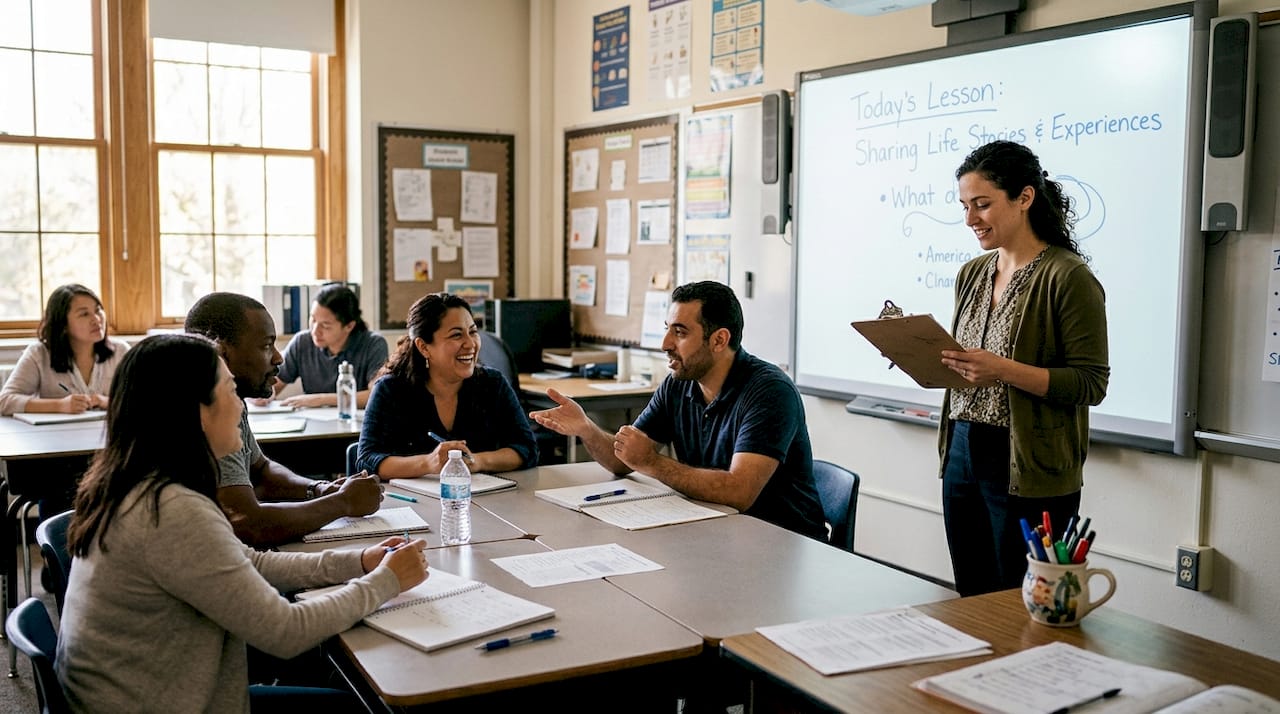
Choosing the right ESL teaching methodology can transform your classroom from chaotic to cohesive, yet many new teachers struggle to navigate the dizzying array of approaches available. Each methodology brings distinct strengths, from grammar mastery to conversational fluency, and understanding which fits your context is essential for learner success. This guide walks you through proven ESL teaching methodologies, evaluation criteria, and research-backed techniques to help you build effective, engaging lessons that meet diverse student needs and accelerate language acquisition.
Table of Contents
- Key takeaways
- How to choose the best ESL teaching methodology: key criteria
- Top ESL teaching methodologies explained: strengths and contexts
- Comparing ESL methodologies: a data-driven overview
- Advanced research-backed techniques to boost ESL teaching effectiveness
- Advance your ESL teaching career with expert courses
- FAQ
Key Takeaways
| Point | Details |
|---|---|
| CLT strengths | CLT emphasizes real life speaking and listening through interactive activities. |
| GTM focus on grammar | GTM builds reading accuracy and explicit grammar knowledge, useful for exams. |
| Hybrid approaches | Blending methods can balance accuracy, fluency, and learner engagement across diverse contexts. |
| Context matters | The most effective method depends on class size, goals, learner level, and available resources. |
| TBL benefits | Task Based Learning supports real world communication through meaningful practical tasks. |
How to choose the best ESL teaching methodology: key criteria
Selecting an ESL methodology requires careful analysis of your specific teaching context and learner needs. Start by assessing student proficiency levels and learning goals, whether they prioritize grammar accuracy, conversational fluency, or exam preparation. Your classroom environment plays a critical role too. Large classes may struggle with methodologies requiring extensive one-on-one interaction, while small groups can leverage discussion-heavy approaches effectively.
Resource availability and your own training background matter significantly. Some methodologies demand specialized materials, technology, or extensive teacher preparation time. Consider these practical factors:
- Learner proficiency and age range in your classroom
- Primary skill focus needed: speaking, writing, listening, grammar, or balanced development
- Class size and physical space constraints
- Available teaching materials, technology, and budget
- Exam pressures or curriculum requirements
- Your comfort level and training with different approaches
- Student motivation levels and learning preferences
Balance cognitive load carefully. Beginners often benefit from structured, predictable methods that reduce anxiety, while advanced learners thrive with open-ended communicative tasks. Match your methodology to desired outcomes. If students need workplace English, task-based approaches deliver practical communication skills. If they face grammar-heavy exams, traditional methods build necessary accuracy.
Student motivation influences methodology success dramatically. Engagement-focused approaches like CLT keep learners invested through meaningful interaction, while repetitive drills may suit disciplined, exam-driven contexts. Evaluate honestly what you can sustain long-term. The best methodology is one you can implement consistently with available resources and training.
Top ESL teaching methodologies explained: strengths and contexts
Understanding the landscape of effective ESL teaching methods empowers you to select approaches aligned with your teaching goals. Key methodologies include CLT, GTM, TBL, TPR, Audio-Lingual, Direct Method, PPP, and ESA, each offering unique advantages for different classroom scenarios.
Communicative Language Teaching (CLT) prioritizes real-life communication through interactive speaking and listening activities. Students engage in role-plays, discussions, and problem-solving tasks that mirror authentic language use. CLT excels in building conversational confidence and fluency, making it ideal for learners who need practical communication skills for travel, work, or social interaction. However, it requires smaller class sizes and teachers comfortable facilitating dynamic, student-led activities.
Grammar-Translation Method (GTM) focuses on explicit grammar instruction and translation exercises between the target language and students’ native language. This traditional approach builds strong reading comprehension and grammatical accuracy, particularly valuable for exam preparation or academic contexts. GTM works well in large classes with limited resources but offers minimal speaking practice.
Task-Based Learning (TBL) organizes lessons around completing meaningful tasks using the target language, such as planning a trip or solving a workplace problem. Students learn language naturally while focused on task completion rather than isolated grammar points. TBL develops practical communication skills and critical thinking simultaneously, though it demands careful task design and scaffolding.

Total Physical Response (TPR) links language learning to physical movement, with students responding to commands through actions. This kinesthetic approach reduces anxiety and works exceptionally well with beginners and young learners. TPR builds listening comprehension quickly but offers limited opportunities for production or abstract language.
The Audio-Lingual Method emphasizes repetition, drilling, and habit formation through pattern practice. Students repeat phrases until automatic, building pronunciation and basic structures. While effective for pronunciation and memorization, this approach can feel monotonous and lacks communicative authenticity.
The Direct Method creates immersive environments using only the target language, with no translation. Teachers demonstrate meaning through visuals, gestures, and context. This approach builds natural language acquisition and strong listening skills but requires highly skilled teachers and may frustrate beginners.
Presentation-Practice-Production (PPP) and Engage-Study-Activate (ESA) provide structured lesson frameworks. PPP introduces language explicitly, practices it in controlled exercises, then moves to freer production. ESA engages students emotionally first, studies language systematically, then activates it through communicative tasks. Both frameworks offer clear lesson structure and work across proficiency levels.
Pro Tip: Combine methodology strengths strategically. Use GTM for complex grammar introduction, then apply that grammar in CLT-style communicative tasks for balanced skill development.
Comparing ESL methodologies: a data-driven overview
Comparing methodologies side by side reveals clear patterns in effectiveness across different skill areas and contexts. Research shows CLT outperforms GTM in speaking/listening while GTM excels in grammar/reading, highlighting the importance of matching method to desired outcomes.
| Methodology | Primary skills | Engagement level | Resource needs | Best contexts | Key challenges |
|---|---|---|---|---|---|
| CLT | Speaking, listening | High | Moderate | Small classes, real-world communication | Requires teacher training, difficult in large classes |
| GTM | Grammar, reading | Low to moderate | Low | Exam prep, large classes | Minimal speaking practice, low engagement |
| TBL | All skills balanced | High | Moderate to high | Practical communication needs | Complex task design, scaffolding required |
| TPR | Listening, vocabulary | Moderate to high | Low | Beginners, young learners | Limited production, abstract concepts |
| Audio-Lingual | Pronunciation, patterns | Low to moderate | Low to moderate | Pronunciation focus | Repetitive, lacks authenticity |
| Direct Method | Listening, speaking | Moderate to high | Moderate | Immersive environments | Teacher skill intensive, beginner frustration |
| PPP/ESA | All skills | Moderate | Moderate | Structured curricula | Can feel formulaic |
Hybrid approaches combining methodologies often deliver superior results by balancing skill development. Pairing GTM’s grammar foundation with CLT’s communicative practice addresses both accuracy and fluency needs. Similarly, integrating TBL tasks within PPP frameworks provides structure while maintaining engagement.
Practical recommendations based on context:
- Exam-focused classes: GTM foundation with CLT practice activities
- Conversational fluency goals: CLT primary with TBL tasks
- Beginners: TPR and Direct Method for comprehension, transitioning to PPP structure
- Large classes: GTM or Audio-Lingual with small-group CLT activities
- Mixed-level classes: ESA framework accommodating differentiated tasks
Explore best TEFL teaching methods for deeper methodology comparisons and implementation strategies. Remember that methodology effectiveness depends heavily on consistent application and adaptation to your specific learner population.
Advanced research-backed techniques to boost ESL teaching effectiveness
Beyond traditional methodologies, modern research reveals specific instructional techniques that dramatically improve language acquisition and retention. Top techniques include spaced retrieval, input flood, task repetition, and chunking, each addressing different aspects of memory consolidation and skill automatization.
-
Spaced retrieval practice: Review vocabulary and structures at increasing intervals rather than massed practice. Students recall words after one day, three days, one week, and two weeks, strengthening long-term memory pathways far more effectively than cramming.
-
Input flood: Expose learners to high volumes of comprehensible input containing target structures without explicit instruction. Reading passages or listening activities saturated with specific grammar patterns help students notice and internalize forms naturally.
-
Task repetition: Have students perform the same communicative task multiple times with different partners or slight variations. Repetition builds fluency and accuracy simultaneously as learners refine their language with each iteration.
-
Chunking and formulaic sequences: Teach common multi-word phrases as single units rather than individual words. Phrases like “Would you mind” or “I was wondering if” become automatic, reducing cognitive load and increasing fluency.
-
Interleaving practice: Mix different language skills and structures within single lessons rather than blocking practice by type. This variation strengthens discrimination abilities and improves retention compared to repetitive drilling of one item.
-
Retrieval-based learning: Prioritize activities requiring students to recall information from memory rather than passive review. Low-stakes quizzes, memory games, and information gap activities force active retrieval, cementing knowledge more effectively than re-reading.
Integrate these techniques within your chosen methodology framework. CLT lessons benefit enormously from spaced retrieval of conversational phrases. GTM instruction becomes more effective when grammar practice is interleaved rather than blocked. TBL tasks gain power through repetition with variation.
Pro Tip: Combine input flood with retrieval practice by saturating reading passages with target structures, then testing recall through gap-fill exercises after increasing intervals. This dual approach maximizes both noticing and retention.
These evidence-based techniques work across learner types and proficiency levels. Beginners benefit from chunking and input flood to build foundational patterns. Advanced learners leverage spaced retrieval and interleaving to refine accuracy and expand range. Discover more strategies in our guide to ESL teaching tips 2025 for practical implementation ideas.
Advance your ESL teaching career with expert courses
Mastering ESL methodologies transforms your teaching effectiveness, but professional training accelerates your journey from novice to expert. TEFL Institute offers comprehensive courses designed to deepen your understanding of communicative approaches, task-based learning, and research-backed techniques covered in this guide.
Whether you’re starting your teaching career or refining advanced skills, our programs provide practical frameworks you can implement immediately. Explore specialized TEFL courses in Newcastle for hands-on training, or enhance your credentials with targeted TEFL course extensions in areas like young learners, business English, or exam preparation.
Visit TEFL Institute to discover programs matching your teaching goals and take the next step in building a rewarding ESL teaching career with methodology expertise that sets you apart.
FAQ
What is the communicative language teaching (CLT) method?
CLT emphasizes real-life communication through interactive speaking and listening activities that mirror authentic language use. Students engage in role-plays, discussions, and problem-solving tasks rather than isolated grammar drills. This approach builds conversational confidence and fluency by prioritizing meaningful interaction over accuracy alone. CLT works best in smaller classes where teachers can facilitate dynamic, student-centered activities effectively.
How does task-based learning (TBL) differ from traditional methods?
TBL centers lessons around completing meaningful tasks using the target language, such as planning events or solving problems, rather than studying grammar in isolation. Unlike traditional methods that teach language first then apply it, TBL immerses students in language use from the start, with explicit instruction following naturally from task needs. This functional approach prioritizes communication over form, helping learners develop practical skills they can transfer immediately to real-world contexts.
Can ESL teachers combine different teaching methodologies?
Combining methodologies creates balanced skill development by leveraging each approach’s strengths while minimizing weaknesses. For example, pairing GTM’s explicit grammar instruction with CLT’s communicative practice builds both accuracy and fluency simultaneously. Hybrid approaches adapt flexibly to diverse learner needs, classroom constraints, and curriculum requirements. Discover the benefits of hybrid TEFL programs for deeper insights into integrated teaching frameworks.
What are some effective techniques to boost ESL students’ retention?
Spaced retrieval practice and input flood significantly enhance memory consolidation and language acquisition. Spaced retrieval involves reviewing material at increasing intervals, strengthening long-term memory pathways more effectively than massed practice. Input flood exposes learners to high volumes of target structures in context, promoting natural noticing and internalization. Integrating these techniques within your chosen methodology, whether CLT, TBL, or GTM, improves learner outcomes measurably across proficiency levels.