

 United Kingdom (UK)
 United States (US)
 Canada
 South Africa
 India
India Australia
 New Zealand
 China
China Russia
 Germany
 France
 Spain
Spain Netherlands
 Vietnam
 United Arab Emirates
 Italy
Italy Poland
 Thailand
 Türkiye









 Algeria



ESL Teaching Tips 2025: Boost Oral Proficiency by 40%
ESL Teaching Tips 2025: Boost Oral Proficiency by 40%

Nearly half of ESL teachers report struggling to maintain student engagement in 2025, yet integrating modern digital platforms can increase participation by 45%. This guide unveils evidence-backed strategies transforming lesson planning and classroom dynamics. You’ll discover how to blend technology with proven pedagogical methods, design culturally responsive lessons, and avoid outdated misconceptions holding back your teaching effectiveness.
Table of Contents
- Introduction To ESL Teaching In 2025
- Leveraging Digital Tools In ESL Teaching
- Interactive And Communicative Language Teaching Methods
- Lesson Planning Frameworks For Diverse Learners
- Common Misconceptions In ESL Teaching And How To Avoid Them
- Applying ESL Teaching Tips In Practice For 2025
- Enhance Your ESL Teaching Career With TEFL Institute
- Frequently Asked Questions
Key Takeaways
| Point | Details |
|---|---|
| Digital Integration | Tools like Kahoot! boost engagement by 45% when paired with sound pedagogy. |
| Communicative Methods | CLT increases oral proficiency by 40% within six months of consistent application. |
| Cultural Responsiveness | Task-based learning with cultural competence lifts engagement by 35%. |
| Social-Emotional Support | Addressing anxiety and learner identity significantly improves participation rates. |
| Evidence Over Tradition | Modern interactive approaches outperform grammar translation methods consistently. |
Introduction to ESL Teaching in 2025
The ESL teaching landscape has shifted dramatically. Remote learning normalized during the pandemic, AI-assisted personalization emerged, and classrooms now host learners from increasingly diverse backgrounds with varied proficiency levels.
You face distinct challenges daily. Keeping mixed-ability classes engaged demands constant innovation. Planning lessons that honor cultural differences while meeting curriculum standards stretches your time thin. Digital tools promise help but require thoughtful integration to avoid becoming distractions.
Succeeding in this environment demands flexibility and willingness to adopt new strategies. The most effective teachers blend technology with human connection, update lesson planning workflows regularly, and stay current on effective ESL teaching methods that research validates.
Key factors shaping your work in 2025 include:
- Technology Integration: AI tutors, gamified platforms, and virtual reality language immersion
- Learner Diversity: Multi-level classes with students from 15+ countries in a single room
- Assessment Evolution: Formative feedback loops replacing high-stakes testing
- Personalization Demands: Adapting content to individual learning styles and paces
Adaptability isn’t optional anymore. Teachers who embrace innovation while maintaining core pedagogical principles report higher satisfaction and better student outcomes.
Leveraging Digital Tools in ESL Teaching
Technology transforms passive learners into active participants when you choose the right tools. Integrating digital platforms like Kahoot! and Quizlet boosts engagement by up to 45% compared to traditional methods, according to recent creator economy research.
The magic isn’t in the tool itself but how you deploy it. Kahoot! turns vocabulary review into competitive fun. Quizlet’s spaced repetition algorithms help students retain grammar patterns longer. Duolingo for Schools provides homework that feels like gaming.
Consider these proven digital applications:
- Vocabulary Building: Use Quizlet’s collaborative sets where students add words they encounter
- Pronunciation Practice: Record students with Flipgrid so they hear themselves and peers
- Grammar Drills: Deploy adaptive platforms like NoRedInk that adjust difficulty automatically
- Cultural Content: Share authentic materials through Edpuzzle with embedded comprehension checks
When using AI in ESL classrooms, start small. Introduce one tool per unit until you and students feel comfortable. Test technology before class to avoid wasting precious minutes troubleshooting.
Pro Tip: Schedule a 10-minute tech orientation at the semester’s start where students explore platforms in pairs. This peer learning reduces your support burden and builds student confidence with digital tools that boost engagement.
Teachers report the biggest wins come from best platforms for teaching English online that allow asynchronous practice. Students complete exercises at their own pace, freeing class time for interaction that requires your expertise.
Interactive and Communicative Language Teaching Methods
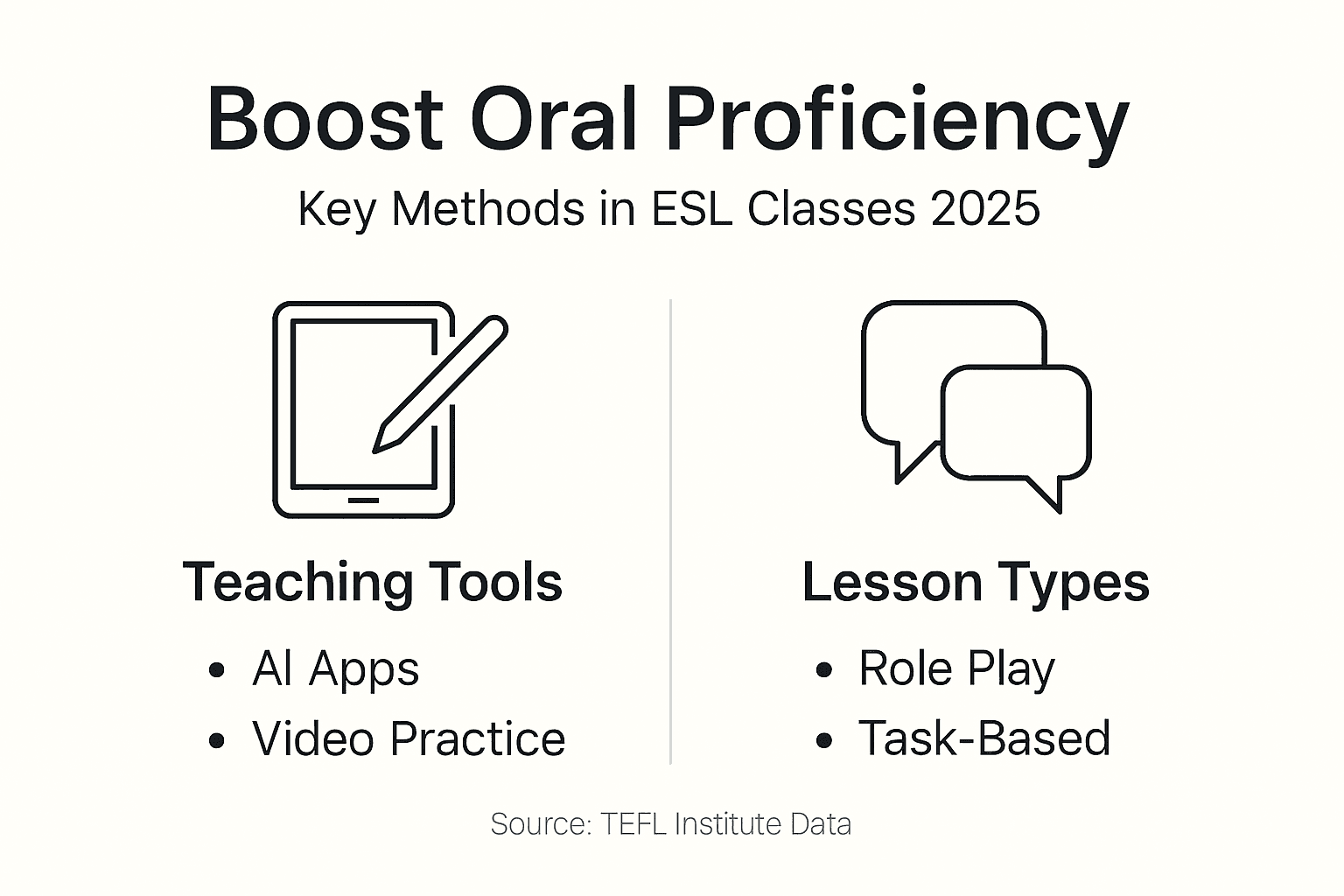
Communicative Language Teaching (CLT) prioritizes real interaction over rote memorization. CLT increases learner participation by 40% resulting in significant oral proficiency gains within six months, according to Cambridge research.
The approach works because it mirrors natural language acquisition. Instead of drilling verb conjugations in isolation, students negotiate meaning through information gaps, role plays, and problem-solving tasks requiring authentic communication.
| Method | Focus | Proficiency Gain (6 months) |
|---|---|---|
| Grammar Translation | Written accuracy | 12% improvement |
| Audio-Lingual | Pattern drills | 18% improvement |
| CLT | Real communication | 40% improvement |
Your role shifts from information provider to facilitator. You create scenarios demanding language use, then step back while students struggle productively through communication challenges.
Effective CLT activities include:
- Information Gap: Partner A has train schedule, Partner B needs travel advice
- Jigsaw Reading: Groups read different article sections, then teach each other
- Problem Solving: Teams plan a class party within budget constraints
- Role Plays: Simulate job interviews, customer complaints, or apartment hunting
Effective ESL teaching methods balance fluency and accuracy. During communicative activities, resist interrupting to correct errors. Take notes and address patterns later through focused practice.
Pro Tip: Record five minutes of student group work monthly. Play clips back for self-assessment, helping learners notice their own progress and identify areas needing attention.
The research backing CLT’s ability to improve oral proficiency shows consistent results across age groups and proficiency levels. Students simply learn better when language serves meaningful purposes.
Lesson Planning Frameworks for Diverse Learners
Task-based learning combined with cultural competence addresses the reality of modern classrooms. Tailored lesson plans improve learner engagement by 35% compared to one-size-fits-all approaches, Cambridge resources indicate.

Task-based learning organizes instruction around meaningful tasks rather than linguistic structures. Students might plan a community event, create a product review video, or debate environmental policies. Language instruction supports task completion.
Cultural competence means recognizing how students’ backgrounds shape their learning preferences and classroom participation. Asian students might hesitate to volunteer answers publicly, preferring written responses initially. Latin American learners often thrive in collaborative, social settings.
| Approach | Engagement Level | Completion Rate | Retention (30 days) |
|---|---|---|---|
| Standard Curriculum | 62% | 78% | 54% |
| Culturally Tailored | 89% | 94% | 81% |
Building effective ESL lesson plans for diverse classes follows this framework:
- Identify Real-World Task: Choose activities students will actually perform outside class
- Assess Cultural Backgrounds: Survey students about learning preferences and experiences
- Design Flexible Pathways: Offer choice in how students demonstrate understanding
- Scaffold Language Support: Provide vocabulary and structures needed for task success
- Build Reflection Time: Let students share cultural perspectives on the task
Review ESL lesson plan examples to see how experienced teachers adapt content. The best plans anticipate where cultural differences might create confusion or discomfort.
For instance, a lesson on making requests might need adjustment. Direct requests considered polite in some cultures sound rude in others. Address these differences explicitly, turning potential miscommunication into rich discussion about pragmatics.
The data supporting task-based and culturally competent lesson plans demonstrates benefits beyond engagement. Students retain language longer when they’ve used it for authentic purposes within culturally affirming contexts.
Common Misconceptions in ESL Teaching and How to Avoid Them
Outdated beliefs undermine even well-intentioned teaching efforts. Recognizing and correcting these misconceptions accelerates your professional growth and student progress.
Misconception 1: Grammar translation builds strong foundations. Reality shows that students taught through grammar translation struggle with spontaneous communication. They might ace written tests but freeze in conversations. Effective ESL teaching methods prioritize meaning-focused interaction from day one.
Misconception 2: Textbooks provide complete lesson content. Commercial textbooks offer valuable structure but rarely match your specific students’ needs or cultural contexts. Relying solely on published materials disengages learners who don’t see themselves reflected in examples and scenarios.
Misconception 3: Technology automatically improves learning. Digital tools without sound pedagogy waste time and frustrate students. A flashy app teaching vocabulary through decontextualized lists performs worse than conversation practice using those same words meaningfully.
Misconception 4: Native speaker status equals teaching qualification. Being able to speak English doesn’t mean understanding how to teach it. Effective instruction requires knowledge of language acquisition principles, assessment strategies, and differentiation techniques.
Misconception 5: Error correction should be immediate and constant. Interrupting students to fix every mistake kills fluency development and damages confidence. Strategic, delayed correction after communicative activities proves far more effective.
Replace these misconceptions with evidence-backed alternatives:
- Use communicative methods emphasizing interaction over translation
- Supplement textbooks with authentic materials reflecting student backgrounds
- Pair technology with clear learning objectives and teacher guidance
- Pursue proper certification demonstrating pedagogical knowledge
- Employ selective error correction focused on patterns blocking communication
Revisit your ESL lesson planning workflow quarterly to identify where outdated assumptions might be limiting effectiveness. Professional development keeps your practice aligned with current research.
Applying ESL Teaching Tips in Practice for 2025
Transforming knowledge into classroom action requires systematic implementation. Follow this sequence for integrating modern ESL teaching approaches:
-
Audit Your Current Practice: Record two typical lessons and note what percentage involves student talking vs. teacher talking. Aim for 70% student production time.
-
Select One Digital Tool: Choose a platform addressing your biggest challenge. Struggling with vocabulary retention? Start with Quizlet. Need better pronunciation practice? Try Flipgrid.
-
Design a Pilot Unit: Plan three weeks using your chosen tool and one new communicative method. Document what works and what needs adjustment.
-
Gather Student Feedback: Create anonymous surveys asking which activities helped learning most and which felt confusing or boring.
-
Refine and Expand: Based on feedback, improve your approach before adding additional tools or methods.
When integrating AI in classrooms, start with AI writing assistants helping students brainstorm and outline before drafting. This supports the writing process without replacing student thinking.
Engagement strategies for diverse classrooms include:
- Think-Pair-Share: Students reflect individually, discuss with partners, then share with the class
- Gallery Walks: Post student work around the room for peer review and comments
- Flexible Grouping: Rotate groups by proficiency, interest, and learning style
- Choice Boards: Offer activity menus where students select how to practice skills
Your lesson planning workflow should build in formative assessment checkpoints. Quick comprehension checks, exit tickets, and observation notes reveal whether students are actually learning or just completing activities.
Pro Tip: Block 15 minutes weekly to review formative assessment data and adjust upcoming lessons accordingly. This responsive teaching dramatically improves outcomes compared to rigidly following preset plans.
Study effective ESL teaching methods through the lens of your specific teaching context. Urban teenagers need different engagement approaches than rural adult learners. Adapt proven methods rather than applying them identically.
Balance remains crucial. Technology enhances but doesn’t replace human connection. Students need your encouragement, cultural insights, and personalized feedback just as much as they need digital practice tools.
Enhance Your ESL Teaching Career with TEFL Institute
Applying cutting-edge teaching strategies becomes easier with proper training and credentials. TEFL Institute courses equip you with frameworks, classroom management techniques, and digital integration skills employers value.
Our curriculum reflects current ESL teaching demands, preparing you for both traditional classrooms and online instruction. Whether you’re starting your teaching journey or expanding your skill set, specialized micro-credentials address specific areas like technology integration, cultural competence, and advanced lesson design.
Explore ESL teacher career pathways showing how proper certification opens doors to better positions and higher salaries. Graduates report increased confidence applying modern methods and managing diverse classrooms effectively.
Need immediate help with student behavior? Check out ESL classroom management tips addressing common challenges you face daily.
Frequently Asked Questions
How can I integrate AI tools in my ESL classroom effectively?
Start with one specific application like AI writing assistants for brainstorming or chatbots for pronunciation practice. Introduce the tool during a dedicated tutorial session, model its use with a whole-class activity, then assign structured practice with clear learning objectives. Always review AI-generated content with students to develop critical evaluation skills.
What are quick ways to reduce student anxiety in language learning?
Create a mistake-friendly environment by sharing your own language learning struggles and celebrating errors as learning opportunities. Use anonymous response systems like Mentimeter for initial practice before requiring public speaking. Pair high-anxiety students with supportive partners during communicative activities.
How do I adapt lesson plans for diverse cultural backgrounds?
Survey students about their learning preferences, comfort with public speaking, and prior educational experiences. Offer multiple ways to demonstrate understanding such as written, oral, or visual presentations. Include examples and scenarios reflecting various cultural contexts rather than defaulting to one cultural perspective.
What are efficient engagement activities for large ESL classes?
Use simultaneous pair work where all students practice at once rather than taking turns in front of the class. Implement numbered heads together by assigning students numbers within groups, then randomly calling numbers to answer so everyone stays prepared. Deploy digital polling tools for instant whole-class participation checks.
Recommended
- ESL Teaching Terminology: Boost Your Classroom Skills | TEFL Institute
- ESL Classroom Management Tips for Confident Teaching Success | TEFL Institute
- 7 Effective ESL Teaching Methods for New TEFL Teachers | TEFL Institute
- 7 Essential Teaching ESL Resources for Global Success | TEFL Institute
- IELTS Essay Problem Solution: Essential Tips