

 United Kingdom (UK)
 United States (US)
 Canada
 South Africa
 India
India Australia
 New Zealand
 China
China Russia
 Germany
 France
 Spain
Spain Netherlands
 Vietnam
 United Arab Emirates
 Italy
Italy Poland
 Thailand
 Türkiye








 Algeria


Tips for New TEFL Teachers: First-Year Success Guide

TL;DR:
- Successful new TEFL teachers focus on mastering classroom management, flexible lesson planning, and cultural sensitivity before their first class. Practical strategies include using visual rules, ICQs, and back-pocket activities to foster student engagement and adapt to language barriers. Building trust, observing cultural norms, and reflecting after lessons help teachers develop confidence and improve continuously.
New TEFL teachers succeed by mastering three core skills before their first class: classroom management, flexible lesson planning, and cultural adaptation. These are the practical areas where most first-year ESL instructors struggle, and where targeted preparation pays off fastest. This guide covers the most effective tips for new TEFL teachers, drawing on proven frameworks like the 70/30 rule, Instruction Checking Questions (ICQs), and back-pocket activities. Whether you are starting as a TEFL teacher abroad in South Korea or teaching English online from home, these strategies apply directly to your first year.
What are the best tips for new TEFL teachers?
Effective TEFL teaching requires a different skill set than general classroom instruction. The language barrier changes everything. Your students may understand a concept but lack the vocabulary to show it. The skills needed for TEFL success go beyond grammar knowledge and include clear communication, cultural awareness, and adaptive lesson delivery. Knowing this upfront saves you weeks of confusion in your first placement.
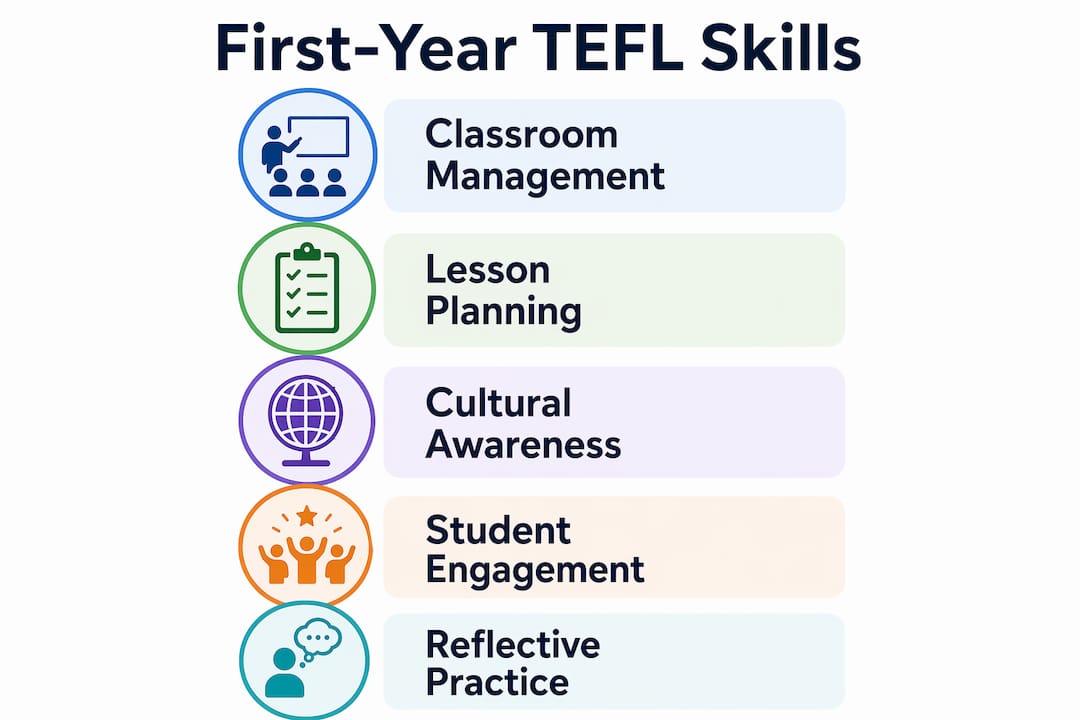
The three non-negotiable foundations are structured classroom management, student-centered lesson design, and cultural sensitivity. Each one builds on the others. A well-managed classroom makes student interaction easier. Flexible lessons reduce panic when things go off-script. Cultural awareness prevents misreading student behavior as disengagement or defiance.
How can new TEFL teachers effectively manage their classrooms?
ESL classroom management differs from mainstream teaching in one critical way: language barriers change the meaning of silence, confusion, and non-compliance. A student who stares blankly may not be defiant. They may simply not understand the instruction. Recognizing this distinction is the first step toward effective control.

Visual classroom rules work better than text-heavy rule lists for lower-level learners. Keep the rules to a maximum of five, pair each one with an icon, and post them where every student can see them. A B2-level written rule is incomprehensible to an A2 learner. Visuals remove that barrier immediately.
Here are the core TEFL classroom management techniques that work in practice:
- Post five visual rules with icons at the front of the room. Review them at the start of each class until they become routine.
- Use clear body language. Stand confidently, make deliberate eye contact, and position yourself to see the whole room. Controlled body language signals authority without aggression.
- Address disruptions privately. Public corrections embarrass students and escalate tension.
- Use proximity. Moving toward a distracted student often resolves the issue without a word.
- Separate comprehension from behavior. Before assuming a student is acting out, check whether they understood the task.
When behavior problems persist, a short private conversation in the student’s first language often reveals the real cause. Most persistent issues in ESL classrooms stem from confusion, not defiance. A 90-second check-in resolves more than a behavioral chart ever will.
Pro Tip: Learn two or three words in your students’ first language. Using them occasionally builds trust and signals respect, which directly improves classroom cooperation.
For a deeper breakdown of management strategies, Teflinstitute’s guide on TEFL classroom management tips covers techniques specifically designed for language-barrier environments.
What lesson planning strategies work for first-time TEFL teachers?
The most common lesson planning mistake new TEFL teachers make is over-scripting. A minute-by-minute lesson plan feels reassuring before class. Inside the classroom, it becomes a liability. Flexible lesson planning outperforms scripted lessons because students rarely follow the pace you expect. The best ESL teachers leave breathing space in their plans to adapt based on how students actually respond.
Follow this planning framework for your first year:
- Set one clear learning objective. Every activity should connect to it. If an activity does not serve the objective, cut it.
- Plan for 80% of your time. Leave 20% unscripted. This gives you room to slow down, repeat, or extend a productive activity.
- Prepare two back-pocket activities. These are simple, no-prep tasks like a quick vocabulary quiz, a drawing activity, or a short discussion prompt. Use them when a lesson finishes early or an activity falls flat.
- Use ICQs instead of “Do you understand?” Instruction Checking Questions verify real comprehension. Ask “Are you working alone or with a partner?” or “How many minutes do you have?” instead of closed yes/no questions.
- Build in a review segment. Spend the last five minutes recycling vocabulary or concepts from the lesson. Repetition drives retention in language learning.
Tools like Grammarly help you proofread written materials, worksheets, and instructions before class. Clear, error-free materials reduce confusion and model accurate English for your students.
Pro Tip: Write your lesson objective on the board at the start of class. Students who can see the goal stay more focused, and you have a reference point if the lesson drifts.
How can new TEFL teachers maximize student speaking time?
Student talk time is the most direct measure of an effective ESL class. The 70/30 rule defines the target: students should speak 70% of class time, and the teacher should facilitate 30%. This ratio prevents teacher talk dominance and gives students the practice volume they need to develop fluency.
Most new teachers invert this ratio without realizing it. They over-explain, repeat student answers back unnecessarily, and fill silence with their own voice. Each of these habits reduces the time students spend actually using English.
Practical techniques to increase student interaction include:
- Wait time. After asking a question, wait 3–5 seconds before accepting an answer. This gives English language learners time to process and formulate a response. Jumping in too quickly signals that silence is unacceptable and undermines student confidence.
- Avoid echoing. When a student answers correctly, do not repeat the answer back. Instead, redirect: “Good. Does everyone agree?” This keeps the conversation moving between students, not through you.
- Use pair and group work. Structured pair activities double speaking opportunities instantly. Every student talks simultaneously rather than waiting for a turn.
- Role plays and movement activities. These reduce self-consciousness and increase authentic communication. Students focused on a task speak more naturally than students performing for the teacher.
For students who are particularly reserved, strategies that build speaking confidence before whole-class participation can make a significant difference. Starting with pair work and gradually moving to group and class-wide sharing gives hesitant learners a lower-stakes entry point.
What cultural considerations should new TEFL teachers understand?
Cultural differences directly affect classroom behavior, and misreading them is one of the most common first-year pitfalls. Local classroom norms vary significantly by region. In many East Asian countries, students are trained to be reserved, avoid direct eye contact with teachers, and rarely volunteer answers. This is not disengagement. It is a learned cultural behavior that reflects respect.
New teachers who interpret this silence as failure or apathy often overcorrect by calling on students aggressively or restructuring lessons unnecessarily. Patience and observation are more effective responses.
Every TEFL opening, salary and deadline that matters.
In your inbox every two weeks. Free, no spam, unsubscribe any time.
Teacher pay by country
New TEFL openings
Programme and visa dates
Key cultural adaptation strategies for teaching abroad or online:
- Learn student names correctly. Mispronouncing or avoiding names signals indifference. Learning names and using them consistently builds rapport and increases engagement.
- Observe before you change. Spend your first two weeks watching how students interact with each other and with authority figures. Adapt your style to fit the environment rather than imposing a new one.
- Avoid humor that relies on cultural references. Jokes that land in an American classroom often confuse or alienate students from other backgrounds.
- Personalize interactions. Ask students about their interests, goals, and experiences. This signals that you see them as individuals, not just language learners.
Pro Tip: Before your placement begins, read one book or article specifically about classroom culture in your destination country. Teflinstitute’s resource on cultural sensitivity in TEFL is a practical starting point.
What mistakes do new TEFL teachers make most often?
The most damaging mistakes in the first year are predictable and preventable. Over-talking is the most common. New teachers fill silence with explanations, repeat instructions multiple times, and narrate their own actions. Each habit reduces student practice time and signals a lack of confidence.
Poor instruction delivery is the second major issue. Giving multi-step instructions verbally, without visual support or comprehension checks, leads to confusion and wasted class time. Pair every instruction set with a demonstration or written example.
“Classroom behavior issues often stem from miscomprehension rather than disciplinary problems. A private 90-second conversation in the student’s first language can resolve these efficiently.” — ESL Classroom Management Strategies
Other common pitfalls include:
- Ignoring cultural differences in student engagement and interpreting reserved behavior as a problem to fix.
- Setting unrealistic progress expectations. Language acquisition is slow. Students will not master a structure after one lesson. Plan for repetition across multiple sessions.
- Skipping reflection. Noting two successes and one change after each class builds a personal resource for improvement and tracks growth over time. This habit separates teachers who plateau from those who improve steadily.
Journaling after class does not need to be elaborate. Three sentences are enough. The act of writing forces you to process what happened rather than simply moving on to the next lesson.
Key takeaways
New TEFL teachers who apply structured classroom management, flexible lesson planning, and cultural awareness from day one build the foundation for a successful and sustainable first year.
| Point | Details |
|---|---|
| Apply the 70/30 rule | Students should speak 70% of class time to maximize language practice. |
| Use ICQs over yes/no questions | Ask “Are you working alone or with a partner?” to verify real comprehension. |
| Keep visual classroom rules | Post five icon-paired rules to overcome language barriers in lower-level classes. |
| Prepare back-pocket activities | Have two no-prep tasks ready for early finishes or activities that fall flat. |
| Reflect after every class | Note two successes and one change to build a personal record of professional growth. |
What i have learned after years of watching new teachers start
The advice that actually sticks is rarely the advice that sounds most impressive. After observing dozens of new TEFL teachers in their first placements, the pattern is consistent. The teachers who struggle most are not the ones with the weakest grammar knowledge. They are the ones who cannot tolerate uncertainty.
First-year TEFL teaching is inherently unpredictable. A lesson that worked perfectly on Tuesday fails on Wednesday with a different group. A student who was engaged last week is withdrawn today. The teachers who adapt quickly share one trait: they do not take these shifts personally. They observe, adjust, and move forward.
The relationship side of teaching is also underestimated. Students learn more from teachers they trust. Learning names, showing genuine curiosity about students’ lives, and being consistent in your behavior builds that trust faster than any lesson technique. You can have a mediocre lesson plan and still have an excellent class if the students feel respected and safe.
Self-care in the first year is not optional. Teaching abroad, in particular, adds the stress of cultural adjustment, language barriers outside the classroom, and social isolation. Teachers who build routines, maintain outside interests, and seek peer support last longer and teach better. The ones who pour everything into the classroom and neglect everything else burn out within six months.
The first year is where your teaching identity forms. Treat it as a learning period, not a performance. The goal is not to be perfect. The goal is to be better at the end of the year than you were at the start.
— Muller
Advance your teaching skills with Teflinstitute
Starting as a TEFL teacher is the first step. Building the skills to teach with confidence and advance your career requires structured, accredited training.

Teflinstitute offers the 120-hour Advanced TEFL Course for teachers ready to deepen their classroom techniques and expand their qualifications. For those pursuing long-term career development, the 240-hour Master TEFL Course provides externally accredited certification recognized by employers worldwide. Both programs are designed for working teachers who need flexible, online study options. Explore the full course catalog at Teflinstitute to find the program that fits your goals and timeline.
FAQ
What is the 70/30 rule in TEFL teaching?
The 70/30 rule means students should speak 70% of class time while the teacher facilitates 30%. This ratio maximizes language practice and prevents teacher talk from dominating the lesson.
How do icqs differ from regular comprehension checks?
Instruction Checking Questions ask specific, task-based questions like “How many minutes do you have?” instead of “Do you understand?” They verify actual comprehension rather than inviting polite but inaccurate yes responses.
What are back-pocket activities for TEFL teachers?
Back-pocket activities are simple, no-prep tasks prepared in advance for moments when a lesson finishes early or an activity does not work. Examples include quick vocabulary quizzes, drawing prompts, or short discussion questions.
How should new TEFL teachers handle cultural differences in the classroom?
New teachers should observe local norms before attempting to change student behavior. Reserved students in East Asian classrooms, for example, are often following cultural expectations rather than showing disengagement.
How can new TEFL teachers improve faster in their first year?
Reflecting after each class by noting two successes and one area for change builds a personal growth record and accelerates professional development more effectively than informal self-assessment alone.
Recommended

Tara and Jess talk through different TEFL and EFL topics, from finding work abroad to life in the classroom.