

 United Kingdom (UK)
 United States (US)
 Canada
 South Africa
 India
India Australia
 New Zealand
 China
China Russia
 Germany
 France
 Spain
Spain Netherlands
 Vietnam
 United Arab Emirates
 Italy
Italy Poland
 Thailand
 Türkiye





 Algeria


How to Succeed in TEFL Courses: Achieve Certification Goals
How to Succeed in TEFL Courses: Achieve Certification Goals

Over 80 percent of new American TEFL candidates admit they feel uncertain about choosing the right certification path. With so many course options and requirements, it is easy to feel overwhelmed before even starting. Knowing how to set precise goals and evaluate your options can be the difference between frustration and real teaching success. You will discover practical steps to organize your journey, select the best training, and make the most of your American TEFL certification experience.
Table of Contents
- Step 1: Assess Course Requirements And Set Clear Goals
- Step 2: Organize Study Materials And Create A Learning Schedule
- Step 3: Engage Actively With Course Content And Assignments
- Step 4: Participate In Peer Collaboration And Tutor Feedback
- Step 5: Verify Your Progress And Meet Assessment Criteria
- Step 6: Apply Practical Skills For Final Certification Success
Quick Summary
| Key Point | Explanation |
|---|---|
| 1. Assess Course Requirements | Research various TEFL programs to match them with your career goals for better alignment and success. |
| 2. Organize Study Materials | Create an efficient system for managing your study documents to enhance focus and reduce stress during the course. |
| 3. Engage Actively with Content | Transform your learning by actively participating with materials and assignments to deepen understanding and skill development. |
| 4. Collaborate with Peers | Leverage collaboration and feedback from classmates and tutors to foster growth and improve your teaching methodologies. |
| 5. Monitor Progress Regularly | Track your academic performance and ensure you meet assessment criteria, helping you stay accountable and focused on your goals. |
Step 1: Assess Course Requirements and Set Clear Goals
Successfully navigating TEFL certification starts with a strategic approach to understanding your professional goals and course expectations. Your first critical task involves carefully evaluating course requirements and establishing precise objectives that align with your teaching ambitions.
Begin by conducting thorough research into different TEFL programs. Choosing the right TEFL course requires understanding key factors like accreditation, course hours, and specialized modules. Consider your specific career aspirations – whether you want to teach abroad, work online, or specialize in business English. Examine each program’s curriculum details, looking for comprehensive training that matches your professional trajectory. Evaluate factors such as total instructional hours, practical teaching components, and potential job placement support.
Your goal is to select a certification program that not only meets international teaching standards but also provides targeted skills relevant to your desired teaching environment. Create a checklist of personal requirements: Do you need a fully online program? Are you seeking a course with live instruction? What geographic regions interest you for potential teaching opportunities? Matching your personal constraints and professional goals with the right TEFL course will dramatically increase your chances of success.
Pro tip: Create a detailed spreadsheet comparing different TEFL courses, tracking key details like cost, course hours, accreditation status, and specific modules to help you make an informed decision.
Here’s a concise comparison of key TEFL course features and their impact on your certification journey:
| Feature | Why It Matters | Impact on Career Success |
|---|---|---|
| Accreditation | Ensures global recognition | Access to more teaching opportunities |
| Course Hours | Indicates training depth | Meets employer requirements |
| Practical Teaching | Builds classroom skills | Improves job readiness |
| Job Support | Aids post-certification | Higher employment chances |
Step 2: Organize Study Materials and Create a Learning Schedule
Transforming your TEFL certification journey requires strategic planning and methodical organization. This step focuses on developing a structured approach to managing your study materials and creating a realistic learning schedule that maximizes your preparation and minimizes potential overwhelm.
Start by gathering all your course materials and creating a comprehensive digital and physical organization system. Invest in a dedicated laptop folder, cloud storage space, and physical binder to keep your course documents systematically arranged. Break down your course curriculum into manageable weekly modules, identifying the most time-intensive sections and allocating appropriate study blocks. Consider your personal energy patterns and schedule intensive learning sessions during your peak productivity hours. If you work full time or have other commitments, design a flexible study plan that allows for consistent progress without causing burnout.
As you develop your learning schedule, prioritize consistency over intensity. Aim for regular 60-90 minute study sessions rather than sporadic marathon learning periods. Track your progress using digital tools or a physical planner, marking completed modules and upcoming assignments. Build in buffer time for unexpected challenges and create accountability checkpoints to ensure you remain on track with your certification goals.

Pro tip: Use digital productivity apps like Trello or Notion to create visual study boards that break down your TEFL course into trackable tasks, helping you maintain motivation and monitor your learning progress.
Use this summary of effective study methods to optimize your TEFL course experience:
| Study Method | Description | Benefit for Learners |
|---|---|---|
| Weekly Modules | Divide content into weekly goals | Reduces overwhelm, increases focus |
| Digital Organization | Use cloud/folders for materials | Quick access to resources |
| Progress Tracking | Mark tasks and assignments | Monitors learning, boosts motivation |
| Reflective Journaling | Record insights and progress | Deepens understanding |
Step 3: Engage Actively with Course Content and Assignments
Successfully completing your TEFL certification requires more than passive learning. This step focuses on transforming your approach from merely absorbing information to actively engaging with course materials and assignments, ensuring deep understanding and practical skill development.
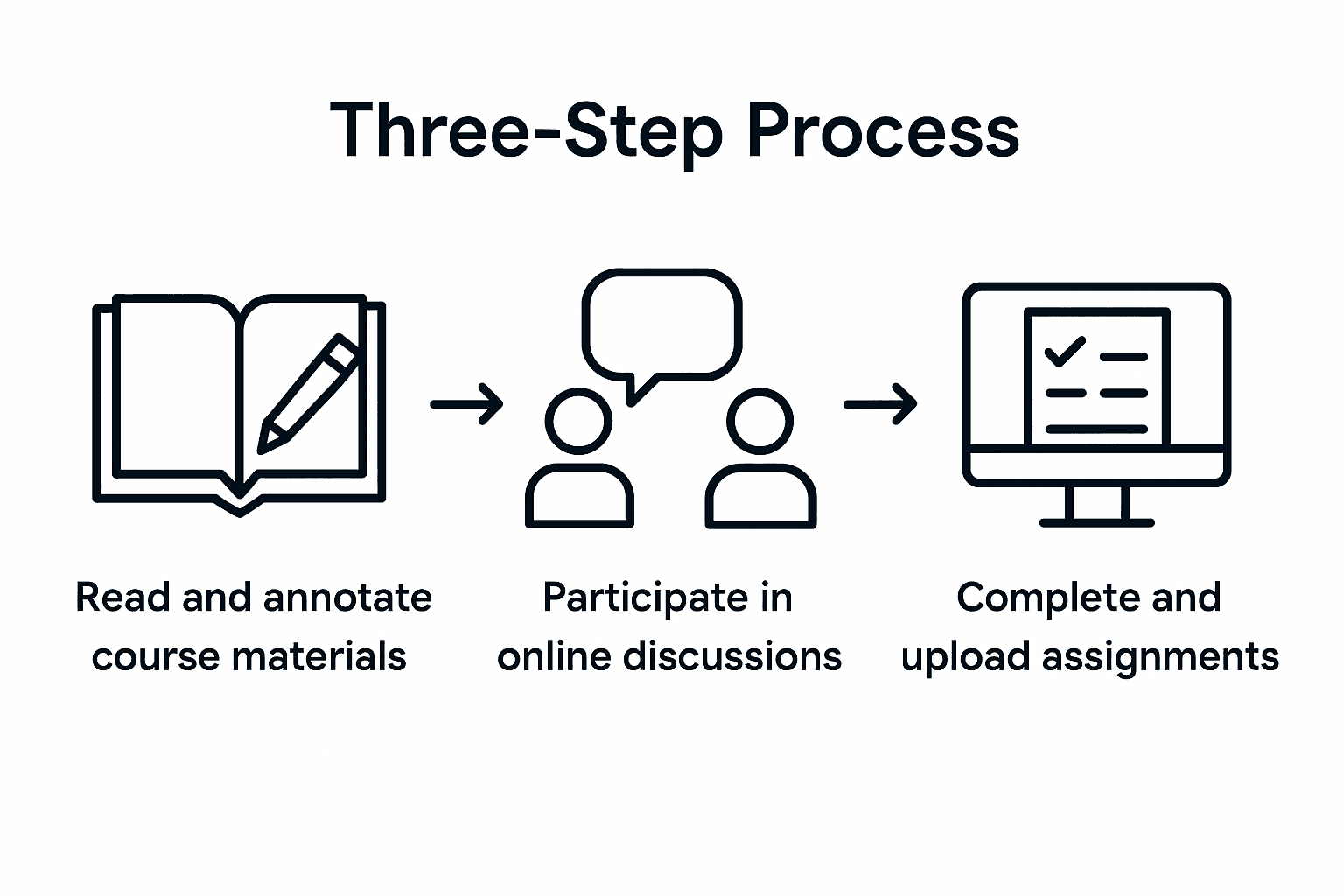
To maximize your learning, develop a proactive mindset toward course content. Effective classroom management strategies begin with understanding how to interact meaningfully with teaching materials. Read each module thoroughly, taking detailed notes and highlighting key concepts. Create summary sheets after each section that distill complex information into digestible insights. When completing assignments, go beyond surface level requirements by adding personal reflections, practical examples from potential teaching scenarios, and critical analysis of the course material.
Interaction is key to mastering TEFL concepts. Participate actively in any discussion forums, webinars, or peer review opportunities your course provides. Ask thoughtful questions, share your perspectives, and seek feedback from instructors and fellow students. Record your learning journey through a professional development journal, tracking not just your progress but also your evolving understanding of teaching methodologies, language acquisition theories, and classroom dynamics. Challenge yourself to apply theoretical concepts to real world teaching scenarios, demonstrating your ability to transform academic knowledge into practical teaching skills.
Pro tip: Create a digital portfolio alongside your course work, documenting your best assignments, lesson plan drafts, and reflective writings to showcase your growing expertise and prepare for future job applications.
Step 4: Participate in Peer Collaboration and Tutor Feedback
Successfully navigating your TEFL certification requires more than individual effort. This step focuses on leveraging collaborative learning opportunities and transforming tutor feedback into strategic professional development.
Peer collaboration is a powerful learning mechanism in TEFL courses. Classroom management resources demonstrate the importance of interactive learning strategies. Actively engage in online discussion forums, group projects, and peer review assignments. Approach these interactions with genuine curiosity and openness. When reviewing peer work, provide constructive, specific feedback that goes beyond surface level observations. Offer detailed suggestions that highlight strengths and provide actionable insights for improvement. Similarly, when receiving feedback, resist defensive reactions and view each critique as an opportunity for professional growth.
Tutor feedback represents a critical pathway to understanding your development as a TEFL professional. Schedule regular check-ins with your course instructors, preparing specific questions about your performance and areas for improvement. Maintain a feedback journal where you document each critique, track your progress, and develop targeted strategies for addressing skill gaps. Demonstrate your commitment to growth by implementing suggested improvements and showing how you’ve integrated instructor recommendations into subsequent assignments and learning approaches.
Pro tip: Create a digital feedback portfolio that chronologically tracks instructor comments, your reflective responses, and tangible evidence of skill improvement to showcase your professional development journey.
Step 5: Verify Your Progress and Meet Assessment Criteria
Successfully completing your TEFL certification demands strategic self monitoring and proactive assessment management. This step focuses on developing a systematic approach to tracking your academic progress and ensuring you consistently meet the course certification requirements.
Classroom management strategies extend beyond teaching techniques and include personal academic performance tracking. Create a detailed progress checklist that maps out all course requirements, assignment deadlines, and assessment criteria. Develop a color coded tracking system where you mark completed tasks, pending assignments, and upcoming evaluations. Regularly compare your current performance against the course syllabus, identifying potential gaps in your learning or areas requiring additional attention. Schedule periodic self assessments where you critically review your submitted work, comparing it against the course rubrics and grading standards.
Maintain open communication with course instructors about your progress and performance. Request comprehensive feedback after each major assignment, seeking specific insights into your strengths and areas for improvement. Use these evaluations as strategic development tools, creating targeted improvement plans that address specific skill deficiencies. Document your growth trajectory through a comprehensive portfolio that demonstrates your evolving competencies and reflects your commitment to professional development.
Pro tip: Develop a digital dashboard that tracks your course progress, assignment grades, and skill development metrics, providing a visual representation of your TEFL certification journey.
Step 6: Apply Practical Skills for Final Certification Success
Reaching the final stages of your TEFL certification requires translating theoretical knowledge into practical teaching competencies. This step focuses on synthesizing your learning and demonstrating your readiness to become an effective English language educator.
Classroom management techniques form the foundation of transforming academic learning into real world teaching skills. Design comprehensive lesson plans that showcase your ability to structure engaging learning experiences. Practice microteaching scenarios where you simulate actual classroom interactions, recording your performances for critical self review. Focus on demonstrating key skills such as clear instruction delivery, effective student engagement, adaptive communication strategies, and nuanced language explanation techniques. Develop a portfolio of sample teaching materials that highlight your instructional versatility including grammar exercises, conversation activities, pronunciation guides, and cultural context lessons.
Prepare for your final certification assessments by simulating professional teaching environments. Conduct mock teaching sessions with peers or online language exchange partners, soliciting constructive feedback on your instructional approach. Develop a reflective practice journal documenting your teaching strategies, student interaction techniques, and personal growth throughout the certification process. Concentrate on presenting a comprehensive demonstration of your pedagogical skills that goes beyond theoretical understanding and showcases your practical teaching capabilities.
Pro tip: Create a professional teaching portfolio featuring video demonstrations, lesson plan samples, and reflective narratives that comprehensively represent your TEFL training journey and professional potential.
Take Control of Your TEFL Certification Journey Today
Struggling to balance course demands and stay on track with your TEFL goals can feel overwhelming. Whether it is managing study schedules or mastering practical teaching skills, many aspiring educators face challenges in staying organized and engaged. This is where you need a trusted resource that offers structured programs, expert guidance, and flexible learning options tailored to your unique goals like teaching abroad or specializing in online ESL. Our comprehensive TEFL courses help you tackle these pain points head-on, ensuring you meet accreditation standards and build lasting classroom confidence.

Are you ready to confidently succeed in your TEFL certification and secure your teaching future? Explore flexible course options, detailed study resources, and expert support at TEFL Institute. Start your journey with our proven programs designed to match your career aspirations and learning style. Visit https://teflinstitute.com now to unlock your full potential and achieve your TEFL certification goals with clarity and confidence.
Frequently Asked Questions
What are the key requirements to succeed in TEFL courses?
To succeed in TEFL courses, you need to understand course requirements and set clear goals based on your teaching ambitions. Start by researching different TEFL programs to find one that matches your career aspirations, such as teaching abroad or specializing in business English.
How can I organize my study materials effectively for TEFL courses?
To organize your study materials, create a comprehensive filing system for both digital and physical documents. Use folders or binders to categorize your materials and break down the curriculum into manageable sections, planning dedicated study blocks each week.
What strategies can I use to engage actively with course content in TEFL?
Engage with course content by taking detailed notes, summarizing key concepts, and participating in discussion forums. Challenge yourself by adding personal reflections and practical examples to your assignments for deeper understanding.
How do I leverage peer collaboration and tutor feedback in my TEFL studies?
Leverage peer collaboration by actively participating in group projects and providing constructive feedback to classmates. Schedule regular check-ins with your tutor to discuss your progress and specific areas for improvement based on their feedback.
What steps should I take to track my progress in a TEFL course?
To track your progress, create a detailed checklist that outlines all course requirements and deadlines. Regularly assess your performance against grading standards and maintain communication with your instructor for feedback on completed assignments.
How can I best prepare for final assessments in my TEFL course?
To prepare for final assessments, practice teaching skills through mock sessions and develop comprehensive lesson plans. Document your teaching strategies and solicit feedback from peers to enhance your instructional approach.
