

 United Kingdom (UK)
 United States (US)
 Canada
 South Africa
 India
India Australia
 New Zealand
 China
China Russia
 Germany
 France
 Spain
Spain Netherlands
 Vietnam
 United Arab Emirates
 Italy
Italy Poland
 Thailand
 Türkiye










 Algeria



Qualifications for ESL Teaching: Unlocking Global Careers
Qualifications for ESL Teaching: Unlocking Global Careers

Setting out to teach English around the world can be both exciting and confusing, especially when every school and employer seems to ask for a different list of qualifications. Understanding exactly what counts as credible ESL teaching certification is crucial for aspiring teachers planning a move abroad or a career online. This guide breaks down the core components of ESL teaching qualifications, explains the difference between TEFL and TESOL, and shows how your choice impacts job opportunities in countries like China, Japan, or the United States.
Table of Contents
- Defining Qualifications For ESL Teaching
- Core Components Of ESL Teaching Qualifications
- Tiered Qualification Levels
- TEFL Vs. TESOL: Key Certification Differences
- Geographic And Scope Differences
- Organizational And Credentialing Differences
- Practical Career Implications
- Degree, Certification, And Experience Requirements
- The Degree Requirement
- Professional Certification Expectations
- Experience And Progression
- Legal Regulations For Teaching ESL Abroad
- Work Permits And Visa Requirements
- Certification And Background Check Requirements
- Country-Specific Regulations
- Legal Status Impact On Your Career
- Common Pitfalls And How To Avoid Them
- Certification Mistakes
- Credential Gaps
- Experience And Timing Problems
- Market Mismatch Errors
Key Takeaways
| Point | Details |
|---|---|
| Diverse ESL Qualifications | ESL teaching qualifications vary by region, encompassing foundational certifications, language proficiency, and practical experience. Ensure your qualifications align with your target teaching context. |
| Qualification Levels Matter | The tier of your ESL qualification impacts your job opportunities and salary potential. Higher qualifications open doors to advanced roles and competitive markets. |
| TEFL vs. TESOL | Understand the differences between TEFL and TESOL to choose the right certification based on your teaching goals and desired job location. |
| Legal Compliance is Crucial | Navigating visa and certification requirements is essential for international teaching. Research specific country regulations to ensure legal employment. |
Defining Qualifications for ESL Teaching
ESL teaching qualifications represent the credentials, competencies, and certifications that prepare educators to teach English to non-native speakers effectively. These qualifications vary globally, reflecting different regional standards, student needs, and employment expectations.
Qualifications for ESL teaching span multiple dimensions:
- Foundational certifications like TEFL or TESOL, which cover teaching methodology, classroom management, and lesson planning
- Language proficiency requirements, typically at advanced or fluent levels in English
- Subject-specific expertise, such as business English, academic writing, or exam preparation
- Practical teaching experience through observed practice hours or practicum components
- Specialized credentials for niche markets like young learners, corporate training, or online instruction
The scope of qualifications reflects the diversity of learners globally. ESOL qualifications address varied learner needs, including migrants, refugees, and adult learners seeking employment advancement. This reality means your qualifications must align with your target teaching context.
Core Components of ESL Teaching Qualifications
Most recognized ESL qualifications include these essential elements:
- Teaching methodology training covering communicative approaches, task-based learning, and evidence-based techniques
- Classroom management skills for maintaining productive learning environments with diverse student populations
- Assessment literacy to measure learner progress accurately and provide meaningful feedback
- Cultural competence for teaching multilingual, multicultural student groups
- Technology integration for both in-person and online teaching environments
These components prepare you to handle real classroom challenges, not just theoretical concepts. When researching teaching qualifications you’ll need abroad, look for programs addressing these five areas.
Tiered Qualification Levels
ESL qualifications exist at different levels, each opening different career doors:
- Certificate level (120-150 hours): Entry-level credential for teaching roles, acceptable in many countries and online platforms
- Diploma level (250+ hours): Advanced credential often required for competitive markets or management positions
- Micro-credentials: Specialized certifications in IELTS, TOEFL, young learners, or business English that enhance employability
- Graduate degrees: Master’s programs for university positions or specialized research roles
Your qualification tier directly affects job opportunities, salary potential, and geographic mobility in the ESL job market.
The qualification you pursue depends on your career timeline and target market. Entry-level positions accept certificate credentials, while premium markets and higher salaries often require diplomas or specialized micro-credentials.

Here is a summary table outlining ESL qualification levels and their typical career outcomes:
| Qualification Level | Typical Roles | Advancement Potential |
|---|---|---|
| Certificate (120-150h) | Entry-level ESL teacher | Private schools, online platforms |
| Diploma (250+h) | Senior teacher, manager | Leadership, curriculum design |
| Micro-credential | Specialist instructor | Niche roles: test prep, business |
| Graduate degree | University lecturer | Research, program leadership |
Pro tip: Start with a foundational TEFL certificate, then pursue micro-credentials matching your chosen niche—such as business English or exam preparation—to significantly increase your hiring appeal without extending your certification timeline.
TEFL vs. TESOL: Key Certification Differences
TEFL and TESOL are the two most recognized teaching credentials globally, yet many aspiring teachers confuse them or assume they’re identical. Understanding the distinctions helps you choose the right certification for your career goals.
Both certifications prepare you to teach English to non-native speakers, but they differ in scope, geographic focus, and organizational structure. The differences matter because employers in certain regions prefer one over the other, and understanding these key differences between TEFL and TESOL directly influences your job prospects.
Geographic and Scope Differences
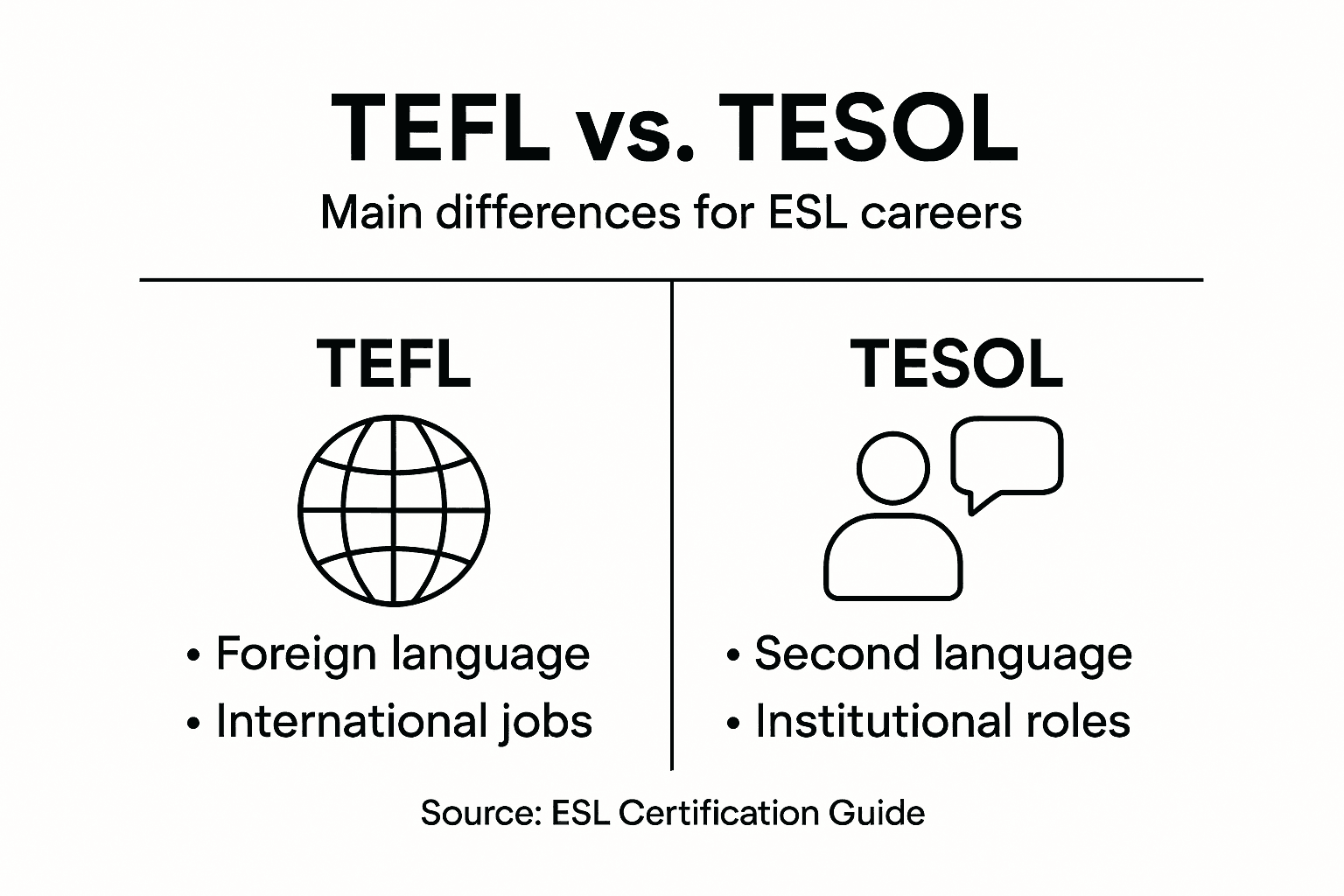
TEFL stands for Teaching English as a Foreign Language. It focuses on teaching English in countries where English is not the primary language—think China, Japan, South Korea, or the Middle East. TEFL is predominantly used outside English-speaking nations.
TESOL stands for Teaching English to Speakers of Other Languages. It encompasses a broader scope, covering both foreign language contexts (like TEFL) and ESL contexts within English-speaking countries. TESOL includes teaching immigrants and refugees in the United States, Canada, Australia, and the United Kingdom.
This distinction matters practically:
- TEFL credentials work best if you’re targeting jobs abroad in non-English-speaking countries
- TESOL credentials open doors in both international settings and English-speaking nations with immigrant populations
- Many employers recognize both, but regional preference varies significantly
Organizational and Credentialing Differences
TEFL certifications come from various training providers worldwide. There’s no single governing body, so quality varies. The most respected TEFL programs follow international standards and include 120+ teaching hours.
TESOL is managed by TESOL International Association, a professional organization with standardized credentials and membership requirements. This centralized structure provides more consistency and professional development pathways.
Below is a comparison of TEFL and TESOL credentials to help guide your certification choice:
| Aspect | TEFL | TESOL |
|---|---|---|
| Main Focus | Teaching abroad | Broader, includes English-speaking |
| Recognition | Asia, Middle East, globally | North America, Australia, UK |
| Employer Demand | Non-English countries | Immigrant-focused, institutions |
| Structure | Various private providers | Centralized, professional association |
TESOL credentials carry stronger professional recognition in North America and English-speaking countries, while TEFL dominates the international teaching market in Asia and the Middle East.
Practical Career Implications
Your choice affects where you can work and your earning potential:
- TEFL certified: Better for teaching abroad contracts, especially in Asia, Middle East, and Latin America
- TESOL certified: Preferred for U.S. and Canadian institutions, university ESL programs, and immigrant-focused positions
- Both certifications: Maximum flexibility across markets
Many successful teachers hold both credentials, combining TEFL’s international recognition with TESOL’s institutional credibility.
Pro tip: If you’re undecided about your teaching location, pursue TEFL first as it’s more widely accepted globally, then add TESOL credentials later if you want to teach in English-speaking countries or advance into institutional roles.
Degree, Certification, and Experience Requirements
Effective ESL teaching demands a combination of three elements: formal education, professional certification, and hands-on classroom experience. These three pillars work together to build credibility and employability in competitive teaching markets worldwide.
Most ESL employers expect candidates to hold a bachelor’s degree alongside professional teacher training. This dual-qualification approach ensures teachers understand subject content while also possessing pedagogical skills specific to language instruction.
The Degree Requirement
A bachelor’s degree in any field typically satisfies the educational foundation. You don’t need an English major. Many successful ESL teachers hold degrees in business, engineering, psychology, or education.
However, certain markets show preference for specific degrees:
- Bachelor’s in English or Linguistics: Strongest for academic positions and university ESL programs
- Bachelor’s in Education: Preferred for institutional roles, curriculum development, and management tracks
- Bachelor’s in any discipline: Acceptable for most private language schools and online teaching
- No degree: Possible for some online platforms, but severely limits international employment options
A bachelor’s degree is the foundation that opens doors internationally; without it, your teaching opportunities restrict dramatically to informal or unaccredited settings.
Professional Certification Expectations
TEFL, TESOL, or CELTA certifications are the professional teaching credentials employers recognize globally. These 120-150 hour programs teach methodology, classroom management, and lesson planning that academic degrees don’t cover.
Certification importance varies by market:
- International schools and competitive markets: CELTA or advanced TEFL required
- Private language schools: Standard TEFL or TESOL accepted
- Online teaching platforms: Certificate sufficient for most positions
- Government positions: Often require recognized certification plus local credentials
Practical teaching experience during certification significantly enhances your readiness and employer confidence. Programs with integrated teaching practice components outperform those without.
Experience and Progression
Experience matters because it proves you can handle real classrooms. Early-career teachers typically start with:
- Practicum hours (50-100+ hours) completed during certification
- First teaching contract in a structured environment
- Documented student outcomes showing your effectiveness
After 2-3 years of teaching, you become competitive for leadership roles, higher salaries, and specialized positions like exam preparation or corporate training.
Pro tip: Pursue a certification program with built-in practicum components rather than theory-only options. The 50-100 observed teaching hours embedded in quality programs accelerate your employment timeline and make you immediately job-ready.
Legal Regulations for Teaching ESL Abroad
Teaching ESL internationally means navigating a complex landscape of legal requirements. These regulations differ dramatically by country and directly impact your employment eligibility, salary, and work stability.
Legal compliance isn’t optional. Recognized certifications and work permits are fundamental requirements in most countries, and ignoring them can result in deportation, fines, or permanent work bans. Accredited institutions verify your legal eligibility before hiring.
Work Permits and Visa Requirements
Almost every country requires formal work authorization to teach legally. You cannot simply arrive and start teaching, even with strong qualifications.
Common work visa types for ESL teachers include:
- Employment visas: Sponsored by schools; most common for international positions
- Working holiday visas: Available in some countries for teachers under age 30-35
- Business visas: Used in countries with less formal teacher visa categories
- Residence permits: Granted after securing employment in some European nations
Processing times vary from 2-6 months, so plan ahead. Starting your visa application before securing employment accelerates your timeline.
Certification and Background Check Requirements
Most destinations require specific certifications alongside degree verification. TEFL, TESOL, and CELTA are globally recognized, but some countries add local requirements.
Background checks are now standard:
- Criminal background verification from your home country
- International background check for countries like China, Japan, and the United Arab Emirates
- Health screening including tuberculosis tests
- Reference checks from previous employers
Legal compliance protections exist for both your safety and learner welfare; institutions following these standards provide stable employment and fair working conditions.
Country-Specific Regulations
Regulations shift constantly. Recent regulatory changes in major teaching destinations mean you must verify current requirements for your target country.
Research before applying:
- Government education ministry website for official requirements
- Embassy resources for visa and work authorization specifics
- Recent employer posts to understand current hiring standards
- TEFL Institute country guides for destination-specific regulations
Many countries raised certification minimums or created new foreign teacher licensing systems in recent years. Outdated information can derail your application.
Legal Status Impact on Your Career
Your legal standing affects everything. Unauthorized work voids employment contracts, eliminates legal protections, and risks criminal charges in the country of employment.
Stay legally compliant to access:
- Enforceable employment contracts and dispute resolution
- Legal recourse if employers withhold pay
- Ability to renew contracts and maintain career continuity
- Professional reputation in the global ESL community
Pro tip: Before accepting any ESL position abroad, contact the country’s education ministry directly to confirm current certification requirements and visa processing timelines specific to teachers, rather than relying on employer descriptions alone.
Common Pitfalls and How to Avoid Them
Aspiring ESL teachers often make preventable mistakes that delay their careers or limit opportunities. Recognizing these patterns helps you move forward strategically.
Many candidates pursue the wrong certification level for their target market. Others invest in qualifications without considering employer demands in specific regions. Some skip practical teaching experience, assuming theory alone satisfies employers. These decisions compound, reducing your competitiveness significantly.
Certification Mistakes
Choosing the wrong certification is costly. You might complete a basic TEFL course, only to discover your target employer requires advanced credentials or specialized micro-certifications.
Common certification errors:
- Pursuing budget options over quality: Ultra-cheap certifications lack practicum hours and employer recognition
- Skipping the practicum component: Theory-only programs leave you unprepared for real classrooms
- Ignoring country-specific requirements: Some nations demand specific certifications you didn’t pursue
- Completing one certification and stopping: Advanced markets expect diploma-level credentials or specialized add-ons
Common teaching mistakes often stem from poor certification planning. Research employer expectations before enrolling in any program.
Credential Gaps
Missing credentials eliminate you from consideration entirely. Many candidates hold certifications but lack the required degree. Others have degrees but no teaching certification.
Avoid these credential gaps:
- Verify degree requirements for your target country before applying
- Confirm certification standards with schools in your destination
- Document everything: Degrees, certifications, transcripts, and teaching hours
- Check expiration dates: Some credentials require renewal or supplementation
Credential gaps aren’t easily fixed mid-career; plan comprehensively before starting your qualification journey.
Experience and Timing Problems
Timing matters more than most candidates realize. Starting your job search without practicum hours completed wastes effort. Employers want teachers ready to teach immediately, not candidates completing certifications.
Avoid timing pitfalls:
- Complete full certifications before job hunting: Including all practicum requirements
- Build documented teaching hours: 50-100 hours from your certification program counts significantly
- Plan visa timelines: Allow 2-6 months for work authorization processing
- Apply to positions during hiring cycles: Many schools recruit quarterly or seasonally
Market Mismatch Errors
Many teachers pursue qualifications for oversaturated markets. Competition in Southeast Asia is fierce; demand is stronger elsewhere. Choosing the right destination affects your employability dramatically.
Research before committing to qualifications:
- Market demand varies by region and season: Middle East and China offer higher salaries but specific requirements
- Employer preferences differ: Private schools, international schools, and online platforms want different credentials
- Specializations open niche opportunities: Business English and exam prep credentials command premium roles
Pro tip: Before pursuing any certification, identify 2-3 specific countries and employers you want to work for, then contact their HR departments directly to confirm exact qualification requirements rather than assuming generic credentials will suffice.
Elevate Your ESL Teaching Career with the Right Qualifications
The journey to unlocking a global ESL teaching career starts with obtaining the right qualifications tailored to your goals and target regions. This article highlighted key challenges such as choosing between TEFL and TESOL certifications, meeting degree and practicum requirements, and navigating complex legal regulations for teaching abroad. If you aspire to stand out in competitive markets, avoid common pitfalls, and gain practical experience, it is essential to select a trusted training program that aligns with these demands.
Explore TEFL Institute’s comprehensive range of online TEFL courses and advanced diplomas designed to prepare you fully for international teaching roles. Benefit from specialized micro-credentials in business English and exam prep, combined with practicum components that ensure you graduate job-ready. Take control of your career trajectory today by visiting our website and discovering how you can meet certification standards recognized worldwide. Start shaping your global ESL teaching future with confident, recognized qualifications now by enrolling at TEFL Institute and access expert resources tailored to your journey.
Frequently Asked Questions
What are the foundational certifications required for ESL teaching?
The foundational certifications for ESL teaching typically include TEFL (Teaching English as a Foreign Language) and TESOL (Teaching English to Speakers of Other Languages). These programs cover essential teaching methodologies, classroom management, and lesson planning.
How important is practical teaching experience in ESL qualifications?
Practical teaching experience is crucial for ESL qualifications. It allows prospective teachers to demonstrate classroom management skills and apply theoretical knowledge in real teaching situations. Many certification programs include practicum components to build hands-on experience.
What is the difference between TEFL and TESOL certifications?
TEFL focuses on teaching English in countries where English is not the primary language, while TESOL encompasses a broader scope, including teaching in English-speaking countries to non-native speakers. Understanding these distinctions can influence job prospects depending on your teaching goals.
How do ESL qualifications affect job opportunities and salary potential?
Your ESL qualifications, including certification level and specialization, directly impact job opportunities and salary potential. Higher-level qualifications like diplomas or graduate degrees open doors to better-paying roles and leadership positions, while entry-level certificates may limit opportunities to basic teaching positions.