

 United Kingdom (UK)
 United States (US)
 Canada
 South Africa
 India
India Australia
 New Zealand
 China
China Russia
 Germany
 France
 Spain
Spain Netherlands
 Vietnam
 United Arab Emirates
 Italy
Italy Poland
 Thailand
 Türkiye





 Algeria


ESL Instructor Jobs: Launching a Global Career
ESL Instructor Jobs: Launching a Global Career

Starting out as an ESL instructor can feel both exciting and overwhelming as you imagine teaching English in classrooms from Tokyo to Toronto. The world is calling for professionals with strong English language skills, cultural sensitivity, and practical teaching qualifications. By understanding what ESL instructor jobs truly involve, you will discover how specialized courses and certifications open doors to meaningful careers that bridge cultures and empower learners everywhere.
Table of Contents
- What ESL Instructor Jobs Involve
- Top Types of ESL Instructor Roles
- Essential Qualifications and Certifications
- Navigating the ESL Job Application Process
- Key Challenges and Common Pitfalls
Key Takeaways
| Point | Details |
|---|---|
| Dynamic Career Opportunities | ESL instructor jobs offer diverse roles across various educational contexts, catering to different student populations. |
| Essential Skills | Successful ESL instructors need strong communication, cultural sensitivity, and adaptability to effectively teach diverse learners. |
| Important Certifications | Key certifications, such as TEFL and TESOL, enhance employability and demonstrate teaching expertise in ESL. |
| Job Application Strategy | A well-prepared application, including a professional resume and tailored cover letter, is crucial for securing ESL teaching positions globally. |
What ESL Instructor Jobs Involve
ESL instructor jobs represent a dynamic and rewarding career path for language professionals seeking global opportunities. These specialized teaching roles focus on helping non-native speakers develop comprehensive English language skills through targeted instruction and cultural engagement. Adult ESL teachers work across diverse educational environments, from community centers to international schools, adapting their teaching strategies to meet unique student needs.
The core responsibilities of ESL instructors encompass a wide range of professional activities:
- Teaching fundamental English language components including reading, writing, speaking, and listening
- Assessing student language proficiency levels
- Developing customized curriculum materials
- Creating supportive and interactive learning environments
- Facilitating cross-cultural communication
- Helping students understand linguistic and cultural nuances
Successful ESL instructors possess a unique blend of skills that extend far beyond traditional teaching techniques. They must demonstrate exceptional communication abilities, cultural sensitivity, and remarkable adaptability. Patience is crucial when working with students from diverse backgrounds who are navigating complex language learning challenges.
Career opportunities for ESL instructors span multiple settings, including:
- Public and private schools
- Community education programs
- Online teaching platforms
- International language institutes
- Corporate training environments
- University language departments
ESL instructors are linguistic bridges, connecting people across cultural and communicative boundaries through the universal medium of English.
Pro tip: Develop strong intercultural communication skills and remain flexible in your teaching approach to maximize your effectiveness as an ESL instructor.
Top Types of ESL Instructor Roles
ESL instruction offers a diverse range of professional opportunities across multiple educational and professional contexts. ESL instructors work in various specialized roles that cater to different learning environments and student populations, each requiring unique skills and expertise.
The primary types of ESL instructor roles include:
- Classroom Instructors: Teaching English in traditional school settings
- Adult Education Specialists: Focusing on language skills for professional and personal development
- Corporate Language Trainers: Providing specialized English instruction in business environments
- Online ESL Teachers: Delivering remote language education through digital platforms
- University Language Program Educators: Teaching English in academic settings
- Curriculum Developers: Creating comprehensive language learning materials
Each role demands specific qualifications and presents distinct challenges and rewards. Classroom instructors typically work with children or adults in structured educational settings, developing comprehensive language skills through interactive teaching methods. Adult education specialists often focus on practical communication skills, helping students navigate professional and social interactions.
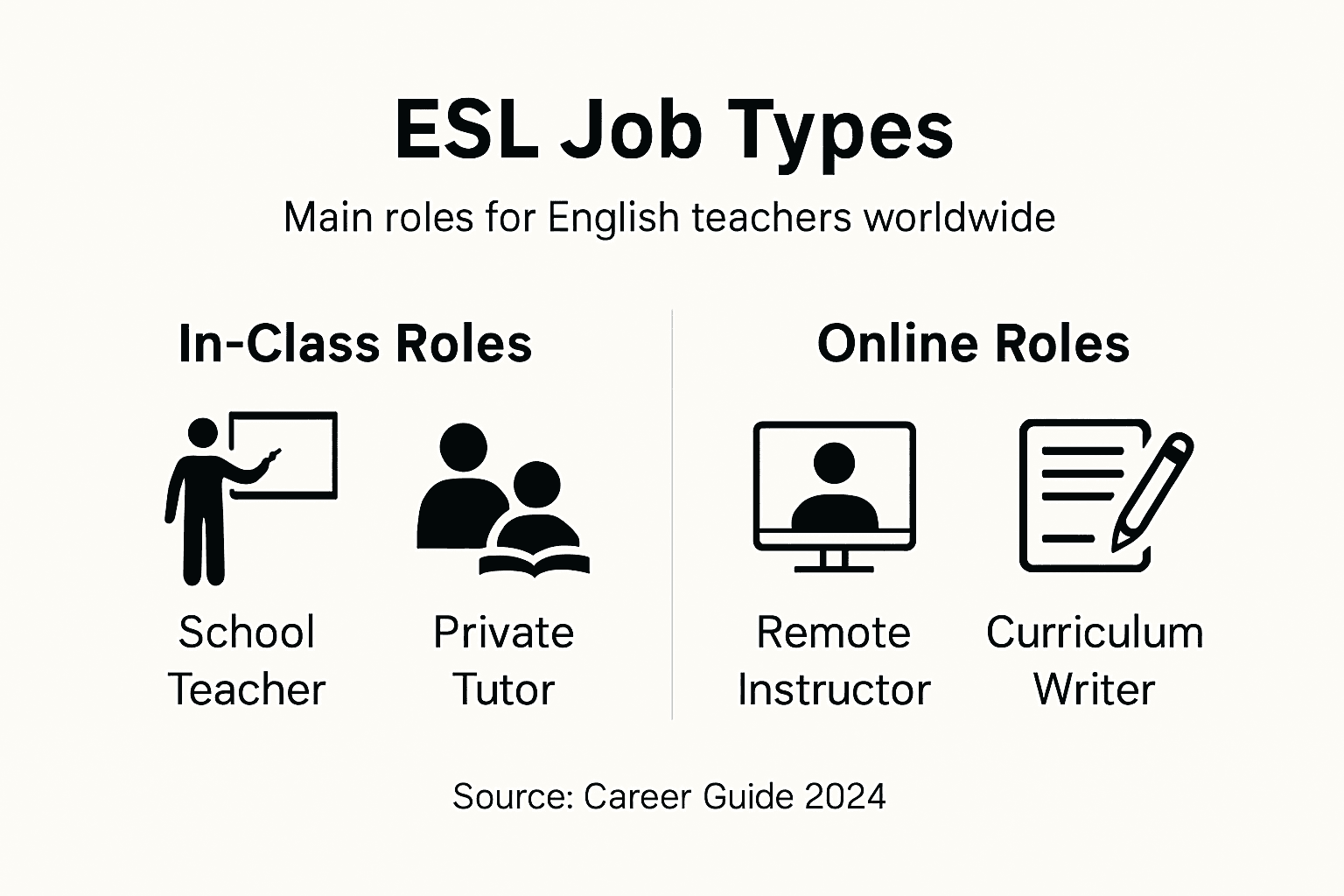
Here’s a quick comparison of common ESL instructor roles and their unique focus areas:
| Role Type | Main Focus | Typical Student Group |
|---|---|---|
| Classroom Instructor | Academic language skills | Children or adults |
| Adult Education Specialist | Everyday communication | Professionals, immigrants |
| Corporate Trainer | Business English | Corporate employees |
| Online ESL Teacher | Digital instruction | Global learners |
| University Educator | Academic English | International students |
| Curriculum Developer | Material creation | All learners and teachers |
Corporate language trainers represent a unique niche, delivering targeted English instruction tailored to specific industry needs. These professionals help employees enhance their professional communication skills, focusing on technical vocabulary and workplace-appropriate language usage. University language program educators typically work with international students, supporting academic English proficiency and research communication skills.
Successful ESL instructors are linguistic chameleons, adapting their teaching strategies to meet the diverse needs of learners across different contexts.
Pro tip: Research and obtain specialized certifications in your preferred ESL instruction area to increase your marketability and expertise.
Essential Qualifications and Certifications
Building a successful ESL teaching career requires a strategic approach to professional qualifications and certifications. International teaching qualifications play a crucial role in demonstrating expertise and expanding global employment opportunities for aspiring ESL instructors.
The foundational certifications every ESL instructor should consider include:
- TEFL (Teaching English as a Foreign Language): Entry-level certification for most international teaching positions
- TESOL (Teaching English to Speakers of Other Languages): Comprehensive certification covering broader language teaching strategies
- CELTA (Certificate in English Language Teaching to Adults): Specialized certification for adult education
- DELTA (Diploma in Teaching English to Speakers of Other Languages): Advanced professional qualification for experienced instructors
- State-Specific Teaching Licenses: Required for public school teaching in many regions
- Specialized Language Proficiency Certificates: Additional credentials demonstrating advanced language skills
Understanding the nuanced requirements of different ESL teaching environments is critical. Academic credentials typically include a bachelor’s degree as a minimum requirement, with many employers preferring candidates holding a master’s degree in education, linguistics, or a related field. Some international positions may require additional state or regional certifications, particularly for public school employment.

The following table summarizes major ESL certifications and their key advantages:
| Certification | Intended Audience | Key Career Benefit |
|---|---|---|
| TEFL | New instructors | Opens entry-level jobs internationally |
| TESOL | Broad teaching roles | Qualifies for varied educational contexts |
| CELTA | Adult learners | Recognized by language schools worldwide |
| DELTA | Experienced teachers | Allows advanced teaching and program leadership |
| State License | Public school instructors | Eligible for regional teaching positions |
Advanced certifications can significantly enhance career prospects. Corporate language trainers and university-level instructors often need more specialized qualifications, including advanced degrees and professional language teaching certificates. These credentials demonstrate not just language proficiency, but also advanced pedagogical skills and a deep understanding of language acquisition methodologies.
Professional development is a continuous journey in ESL instruction, with certifications serving as milestones of expertise and commitment.
Pro tip: Research the specific certification requirements for your target teaching markets and systematically build your credentials to maximize your employability.
Navigating the ESL Job Application Process
Successfully landing an ESL teaching position requires strategic preparation and a comprehensive understanding of the global job market. International job search strategies are essential for identifying and securing the right teaching opportunities across different regions and educational contexts.
The key components of an effective ESL job application include:
- Professional Resume: Highlighting teaching qualifications and international experience
- Comprehensive Cover Letter: Tailoring your narrative to specific job requirements
- Certification Documentation: Organizing and presenting all professional credentials
- Digital Portfolio: Showcasing teaching methodologies and classroom experiences
- Professional References: Selecting and preparing recommenders who can speak to your teaching abilities
- Cultural Adaptation Statement: Demonstrating understanding of international teaching environments
Documentation preparation requires meticulous attention to detail. International employers typically expect a standardized application package that includes verified copies of academic degrees, teaching certifications, passport, and professional references. Many positions also require additional documents such as background checks, health certificates, and professional recommendation letters.
Successful job seekers understand the importance of targeted applications. Different regions and institutions have unique hiring requirements, ranging from strict academic qualifications in Middle Eastern universities to more flexible approaches in Southeast Asian language schools. Understanding these nuanced expectations can significantly improve your chances of securing desirable teaching positions.
The global ESL job market rewards candidates who combine professional qualifications with cultural adaptability and genuine passion for language education.
Pro tip: Create a digital portfolio of your teaching experiences and always customize your application materials to match specific job requirements.
Key Challenges and Common Pitfalls
ESL instructors encounter a complex landscape of professional challenges that demand continuous adaptation and strategic problem-solving. Navigating instructional challenges requires a nuanced understanding of classroom dynamics, cultural complexity, and individual learning differences.
The most significant challenges ESL instructors face include:
- Language Proficiency Variations: Managing classrooms with diverse student skill levels
- Cultural Communication Barriers: Bridging cultural misunderstandings and communication gaps
- Motivation Management: Maintaining student engagement across different learning styles
- Resource Limitations: Working effectively with minimal teaching materials
- Assessment Complexity: Developing fair and comprehensive evaluation methods
- Personal Stress Management: Handling the emotional demands of cross-cultural teaching
Classroom management represents a critical area where many new ESL instructors struggle. Successful teachers develop flexible strategies that accommodate multiple learning speeds and cultural backgrounds, creating inclusive environments that support diverse student needs. Understanding that each learner brings unique linguistic and cultural experiences is fundamental to effective instruction.
Professional development becomes crucial in overcoming these challenges. Experienced ESL instructors continuously refine their teaching approaches, invest in cross-cultural communication skills, and remain open to learning from their students. Reflective practice, ongoing professional training, and a genuine commitment to understanding diverse learning perspectives are essential for long-term success in this dynamic field.
Effective ESL instruction transcends language teaching—it’s about building bridges of understanding across cultural and linguistic boundaries.
Pro tip: Develop a growth mindset and view classroom challenges as opportunities for professional learning and personal development.
Start Your Global ESL Teaching Career with Confidence
Launching a successful career as an ESL instructor means overcoming challenges like certification requirements, adapting to diverse learner needs, and navigating international job markets. If you are ready to build strong professional qualifications such as TEFL or TESOL and want to expand your opportunities across countries and teaching contexts this is the moment to act. With TEFL Institute’s flexible and comprehensive online training courses you can earn recognized certifications that employers worldwide respect.

Take control of your ESL teaching future today by exploring our extensive course catalog designed for both new and experienced instructors. Visit TEFL Institute and discover how our programs with practicum options and niche specialties like IELTS preparation can help you meet your career goals. Don’t wait to become the adaptable, culturally sensitive, and certified ESL educator the global market demands.Start your training now and unlock the door to international teaching opportunities.
Frequently Asked Questions
What skills are essential for ESL instructors?
Successful ESL instructors need exceptional communication skills, cultural sensitivity, patience, and adaptability to effectively teach students from diverse backgrounds.
What qualifications do I need to become an ESL instructor?
To become an ESL instructor, you typically need a bachelor’s degree, along with certifications like TEFL, TESOL, or CELTA, which can enhance your employability in various teaching environments.
What types of ESL instructor roles are available?
There are various ESL instructor roles, including classroom instructors, adult education specialists, corporate trainers, online ESL teachers, university educators, and curriculum developers, each focusing on different student populations and teaching contexts.
How can I navigate the ESL job application process successfully?
To navigate the ESL job application process, create a professional resume, tailor your cover letter to specific job requirements, prepare certification documentation, and consider having a digital portfolio to showcase your teaching experience.
Recommended
- The Expert Guide to Teaching English Online in 2026 | Complete TEFL Roadmap | TEFL Institute
- ESL Teacher Career Pathways: Complete Guide | TEFL Institute
- Best Platforms To Teach English Online in 2026: Complete TEFL Guide | TEFL Institute
- 7 Essential Steps for Landing Teaching Overseas Jobs | TEFL Institute
