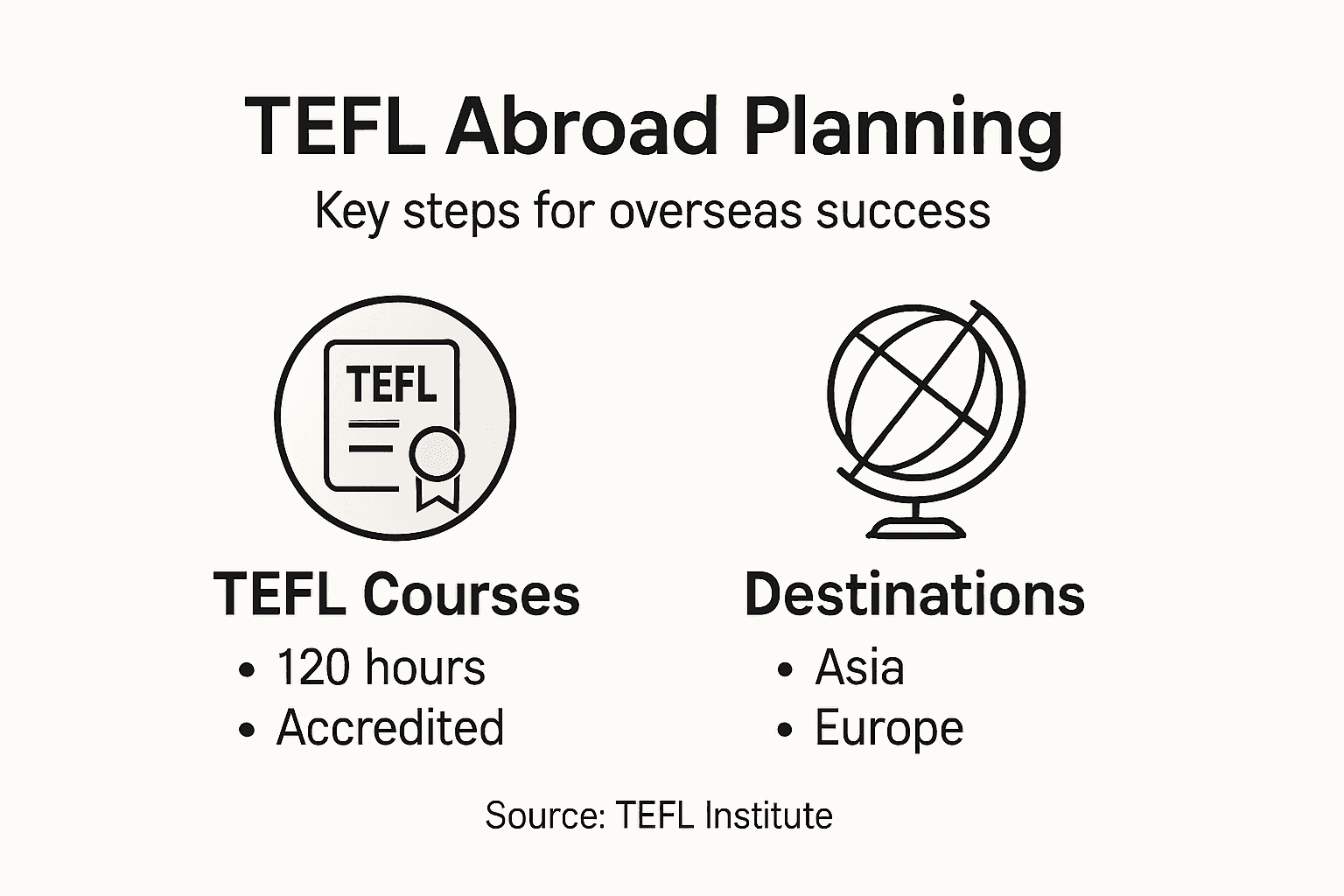
How to Plan for TEFL Abroad: Step-by-Step Success Guide

How to Plan for TEFL Abroad: Step-by-Step Success Guide

Woman planning TEFL abroad at table

For many recent graduates, the idea of teaching English in a new country feels both exciting and overwhelming. Sorting through TEFL qualifications, understanding visa policies, and comparing destinations can quickly get confusing if you do not know where to begin. By breaking down each step, from choosing the right course to confirming travel plans, you can move toward your goal of teaching abroad with confidence. Bold accreditation and careful research will set you apart in the global job market.

Table of Contents

Quick Summary

Key Takeaway Explanation
1. Understand TEFL Qualification Types Research TEFL certificates, diplomas, and specialized courses to choose the one that aligns with your career goals.
2. Evaluate Teaching Destinations Investigate different countries’ demand, salary structures, and visa requirements to find a suitable teaching location.
3. Prioritize Accredited Courses Enroll in accredited TEFL programs to enhance job prospects; accreditation influences recognition and salary potential.
4. Organize Application Materials Prepare necessary documents like transcripts, references, and certifications in advance to streamline the application process.
5. Verify Legal and Financial Readiness Confirm necessary visas and finances to ensure a smooth transition and sustainable living before departure.

Step 1: Assess your TEFL qualification options

Before committing to a certification course, you need to understand what qualifications actually exist and how they differ. This step involves researching the various TEFL credentials available, understanding their recognition levels, and determining which aligns with your career goals and timeline. The qualification you choose will directly impact which schools recruit you, what salary you can command, and where you’re eligible to teach.

Start by distinguishing between the main credential types. TEFL certificates typically require 120-150 hours of study and provide foundational training suitable for entry-level positions. TEFL diplomas, by contrast, demand 200-300 hours and offer deeper pedagogical knowledge, making them more competitive for senior positions and higher-paying roles. Some providers offer specialized credentials like IELTS preparation diplomas or business English certificates if you want to narrow your focus. When evaluating these options, consider that accredited teaching qualifications from recognized bodies ensure providers demonstrate appropriate academic credentials and teaching skills relevant to international contexts. This accreditation matters because schools worldwide specifically look for certifications from established frameworks.

You should also research whether you want an online, in-person, or hybrid program. Online courses offer flexibility, which appeals to North American graduates balancing work and study. In-person intensive courses, typically 4-12 weeks, provide hands-on practicum experience with real students and faster completion. Hybrid models combine both approaches. Beyond these structural differences, compare course pricing carefully. Costs range from $500 for budget online certificates to $3,000+ for respected diplomas with practicum components. Some employers provide tuition reimbursement, so check whether your intended destination country offers teacher sponsorship packages that cover certification costs. Finally, verify that your chosen qualification is recognized in your target country. What works in Southeast Asia might differ from requirements in the Middle East or Latin America.

Pro tip: Compare at least three different qualification types side-by-side using accreditation status, course duration, and graduate employment outcomes before enrolling, since switching programs later costs significant time and money.

Here’s a quick overview of major TEFL credential types and how they suit different teaching goals:

Credential Type Study Hours Ideal For Typical Outcomes
TEFL Certificate 120-150 Entry-level positions Basic eligibility
TEFL Diploma 200-300 Senior/high-paid roles Advanced opportunities
Specialized Diploma 30-60 extra IELTS/Business English Niche market access
CELTA 120+ International schools High recognition

Step 2: Identify suitable destinations and requirements

Choosing where to teach abroad is one of the most significant decisions in your TEFL planning process. Different countries have vastly different demand levels, salary structures, visa requirements, and qualification expectations. This step involves researching potential destinations, understanding their specific credential requirements, and honestly assessing whether your qualifications and lifestyle preferences match what each location demands.

Marking TEFL destinations on world map

Begin by identifying regions where English teaching demand is strongest. Southeast Asia, the Middle East, and East Asia offer abundant opportunities for North American graduates, but each region operates differently. Southeast Asian countries like Thailand and Vietnam typically accept entry-level TEFL certificate holders and offer lower salaries but lower costs of living. The Middle East pays significantly higher salaries, sometimes 40 to 60 percent above comparable positions elsewhere, but often requires TEFL diplomas or bachelor’s degrees and enforces stricter visa regulations. East Asian countries like South Korea and Japan fall somewhere in between, with moderate salaries and growing demand for qualified teachers. Research the specific visa categories each country uses for English teachers. Some countries offer dedicated teaching visas that streamline the process, while others require you to arrive on tourist visas and convert status locally, which creates uncertainty and expense. Understanding essential steps for landing teaching overseas jobs helps you recognize how destination choice connects to your broader job search strategy and qualification requirements.

Once you’ve narrowed your target regions, investigate the exact credential expectations. Check whether schools require TEFL certification at all, or if they prefer CELTA, a bachelor’s degree, or specific subject credentials. Some countries mandate that your degree be officially recognized through credential evaluation services, which adds time and cost to the process. Review salary data honestly. A position advertising $1,800 monthly sounds attractive until you realize it barely covers rent in that city. Factor in cost of living, healthcare access, and whether your employer provides housing or bonuses. Contact current teachers working in your target destinations through online forums and social media groups. They provide realistic perspectives on workload, contract terms, and quality of life that job postings never mention. Finally, consider visa processing timelines. Some countries require background checks, degree verification, and health screenings that take two to four months before you can even apply for a position.

Pro tip: Create a comparison spreadsheet for your top three destinations listing visa requirements, minimum qualifications, average salary, cost of living, and processing timelines so you can see trade-offs clearly before committing to one path.

This table summarizes key differences in English teaching opportunities by global region:

Region Demand Level Salary Range Key Qualification Visa Complexity
Southeast Asia High Low to moderate TEFL certificate Moderate
Middle East Medium-High Highest Diploma/Bachelor’s Complex
East Asia High Moderate to high Certificate/Degree Variable

Step 3: Select accredited TEFL courses and enroll

Now that you understand your options and target destination, it’s time to choose the specific course that fits your situation and commit to enrollment. This step requires careful comparison of accredited providers, understanding what accreditation actually means, and completing your application before deadlines impact your timeline.

Infographic showing TEFL planning steps

Start by prioritizing accredited courses from established institutions. Accreditation matters far more than you might initially think. When schools review applications, they immediately recognize credentials from globally recognized teaching qualifications endorsed by professional bodies like Cambridge English or the British Council. These programs combine theoretical knowledge with practical teaching experience, ensuring you gain real skills rather than just completing coursework. Unaccredited programs may cost less, but employers worldwide question their validity, which limits your job prospects and earning potential. A $2,000 accredited certificate opens more doors than a $500 unaccredited one. Look for accrediting bodies such as Cambridge English, Trinity College London, the British Council, or recognized national bodies in your target country. Check whether the provider holds current accreditation rather than assuming all established companies maintain it. Visit the accreditation body’s website directly and search their course registry to verify active status.

Once you’ve identified accredited programs meeting your needs, request detailed course information and compare specifics. Compare start dates, total cost including materials and exams, whether practicum is included, and what happens if you fail the final assessment. Some providers offer payment plans or scholarships for specific nationalities, so ask directly. Read recent student reviews on independent platforms, not just testimonials on the provider’s website. Contact former students through social media if possible. Ask about instructor qualifications, class size, and whether you receive job placement assistance after certification. Finally, clarify the exact certification you receive upon completion. Some online courses award diplomas that employers don’t recognize, while others issue certificates with identical market value to in-person programs. Once you’ve made your decision, submit your application and confirm receipt. Many courses have rolling admissions but specific cohort start dates, so delays can push you back months.

Pro tip: Enroll at least three months before your target departure date for your destination country, allowing time for course completion, results processing, background checks, and visa applications without rushed stress.

Step 4: Prepare application materials and documentation

Before you apply to teaching positions abroad, you need to gather and organize the documents that schools will request. This step involves collecting transcripts, references, background verification materials, and other credentials that demonstrate your qualifications and trustworthiness to potential employers.

Start by creating a master folder on your computer containing digital copies of all essential documents. You’ll need your bachelor’s degree diploma or transcript, your TEFL certificate once you complete the course, and a valid passport with at least six months of validity remaining. Most schools request official transcripts from your university, not just your diploma. Contact your college registrar and request official transcripts sent directly to you in sealed envelopes. Many schools want originals or certified copies, so order multiple copies now. You’ll also need background verification, which varies by country but typically includes a criminal background check, police clearance certificate, or FBI clearance for Americans. Apply for these immediately because processing takes weeks or months. For FBI clearance, you’ll submit fingerprints at an authorized location and wait four to six weeks for results. Some countries require health certificates proving vaccinations or negative test results for certain diseases, so research your target country’s specific requirements. Some employers request teaching references from previous instructors who can speak to your classroom abilities and professionalism. Contact former professors or teaching coordinators early and explain what you need them to write about. Provide them with a deadline at least one month before you plan to submit applications.

Next, prepare documents about yourself. Write a professional resume highlighting any teaching experience, tutoring, leadership roles, or relevant skills. Tailor it to teaching positions rather than using a generic resume. Create a cover letter template that you can customize for different positions and schools. Schools want to understand why you’re interested in teaching, what you bring to their program, and your teaching philosophy. If you’re relocating from North America, emphasize your commitment and explain what draws you to international education. Collect scanned copies of any certifications, training completion records, or professional development courses beyond your TEFL credential. Have high-quality digital photos ready for your resume and school applications. Finally, organize everything in clearly labeled digital folders and back them up to cloud storage like Google Drive or Dropbox. When schools request documents, you’ll send them immediately rather than scrambling to locate files.

Pro tip: Order background checks and transcripts immediately after completing your TEFL course since these documents take the longest to process, and delays here cascade throughout your entire application timeline.

As your departure date approaches, you need to confirm that all legal requirements are met, your finances are arranged, and you have the necessary travel documents and insurance. This step ensures you can actually enter your destination country and sustain yourself during the transition period and initial months of employment.

Start with your passport and visa situation. Your passport must be valid for at least six months beyond your planned return date, and some countries require even longer validity. If your passport expires soon, renew it immediately since processing takes four to eight weeks through the State Department. Next, research your specific visa requirements. Some countries grant teaching visas upon arrival with an employment contract, while others require you to apply for a work permit before traveling. Contact your prospective school and ask for guidance on their visa sponsorship process. They often provide letters of employment or sponsorship documents that immigration offices require. Begin this process at least three months before your planned departure. Additionally, check international travel requirements and advisories for your destination to understand safety conditions, required vaccinations, and emergency contact information. Some countries require proof of yellow fever vaccination or other immunizations before entry. Schedule appointments with a travel medicine clinic if needed and allow time for vaccines to take effect.

Financially, calculate your actual costs realistically. As part of your pre-departure planning, compare dedicated international health insurance options so you have reliable medical coverage while living and teaching abroad, using resources like international expat health insurance guides.

Many schools offer housing or housing allowances, but confirm this in your contract. Budget for initial flights, visa fees, moving expenses, and living costs for your first month while waiting for your first paycheck. Research whether your destination requires proof of financial resources before granting a visa, as some countries demand bank statements showing minimum balances. Purchase comprehensive travel and health insurance before departing. Your American health insurance likely won’t cover you abroad, and emergency medical costs in some countries exceed $10,000. Look for expat health insurance plans specifically designed for teachers. Finally, notify your bank and credit card companies of your travel dates and new location so they don’t freeze your accounts thinking fraud has occurred. Request an international debit card if yours lacks global access. Consider opening a local bank account in your destination country, though this typically requires an employment contract or local address.

Pro tip: Complete all visa applications and health requirements at least two months before departure to avoid last minute complications that could delay or prevent your travel.

Step 6: Secure job placement and finalize arrangements

With your qualifications, documentation, and legal requirements in order, you’re ready to search for teaching positions and negotiate employment terms. This step involves identifying schools, submitting applications, interviewing, and securing a written contract before you commit to relocating.

Start your job search through multiple channels simultaneously. Online platforms like International Schools Review, Dave’s ESL Cafe, and Facebook groups dedicated to teaching in your target country list thousands of openings. Many schools post directly on their websites, so identify schools you’re interested in and check their career pages regularly. Recruitment agencies specializing in international education placement can match you with schools, though they typically take a commission from your salary. Attend virtual job fairs hosted by organizations in your target region. These events allow you to interview with multiple schools in one day and sometimes result in immediate job offers. When applying, tailor your resume and cover letter for each position. Generic applications get ignored. Research the school thoroughly and reference specific details about their curriculum, mission, or community in your cover letter. Include a link to a professional video introduction where you introduce yourself, discuss your teaching philosophy, and highlight relevant experience. Many schools appreciate seeing your face and hearing your voice before committing to interviews.

Once schools express interest, prepare for video interviews. Treat them as seriously as in-person interviews. Use professional lighting, a plain background, and appropriate attire. Research common interview questions about classroom management, student engagement, and how you handle cultural differences. Have specific examples ready from your teaching experience or TEFL coursework. When negotiating, understand what’s included in your contract. Clarify salary, housing arrangements, health insurance coverage, paid time off, professional development support, and contract length. Some positions include airfare reimbursement or completion bonuses. Request time to review the contract thoroughly before signing. Never accept a verbal offer alone. Get everything in writing. Once you have a signed contract, you can finalize visa applications, book flights, arrange housing, and prepare for departure. Contact your school about arriving early for teacher orientation, which typically occurs before students arrive and helps you acclimate to the environment and meet colleagues.

Pro tip: During salary negotiations, research the going rate for your position in that specific city and country so you know whether an offer is competitive, and don’t accept the first number presented without discussion.

Take Control of Your TEFL Journey with Expert Guidance and Accredited Courses

Planning your TEFL adventure abroad can feel overwhelming with so many qualification options, destination requirements, and application steps to manage. This guide highlights key challenges like choosing accredited training, meeting complex visa criteria, and preparing essential documents—all critical to securing rewarding teaching roles worldwide. If you want to confidently navigate these hurdles and unlock diverse career paths in countries from Southeast Asia to the Middle East, the right support matters.

https://teflinstitute.com

Discover accredited TEFL courses tailored to your goals at TEFL Institute. Our comprehensive online and hybrid programs include advanced diplomas and niche specializations such as IELTS preparation, designed to enhance your employability and meet global standards. With flexible study options, job placement advice, and detailed resource guides, you can prepare thoroughly without delay. Start your application early and explore country-specific requirements with our expert resources to make your teaching abroad dream a reality.

Visit TEFL Institute today to find the perfect course and take the first step toward a successful TEFL career abroad.

Frequently Asked Questions

What are the different types of TEFL qualifications available?

TEFL qualifications primarily include TEFL Certificates, TEFL Diplomas, and Specialized Diplomas. Research each option to determine which best aligns with your career goals and teaching aspirations.

How do I choose the right country to teach abroad with my TEFL certification?

When selecting a country, assess the demand for English teachers, salary expectations, visa requirements, and your personal lifestyle preferences. Create a comparison chart to evaluate at least three different countries based on these criteria.

What should I consider when selecting a TEFL course?

Choose an accredited TEFL course that offers practical teaching experience and aligns with your schedule and budget. Compare at least three courses based on accreditation status, costs, and graduate employment outcomes before enrolling.

How do I prepare my application materials for teaching positions?

Gather essential documents, including your TEFL certificate, degree transcripts, and a valid passport. Organize all documents in labeled digital folders to ensure you can quickly provide them upon request during the application process.

What steps should I take to ensure I’m financially prepared for teaching abroad?

Calculate your initial costs, including flights, visa fees, and living expenses for the first month. Consider budgeting for unexpected expenses and ensure you have enough savings to cover at least one month of living costs in your chosen destination.

How can I secure a teaching position abroad after completing my TEFL course?

Begin your job search by applying through online job boards, school websites, and virtual job fairs. Tailor your resume and cover letter for each application and follow up promptly to demonstrate your interest and commitment.


    0
      0
      Your Cart
      Your cart is emptyBrowse Courses