
 United Kingdom (UK)
 United States (US)
 Canada
 South Africa
 India
India Australia
 New Zealand
 China
China Russia
 Germany
 France
 Spain
Spain Netherlands
 Vietnam
 United Arab Emirates
 Italy
Italy Poland
 Thailand
 Türkiye








 Algeria


The Complete Guide to TEFL Certification in 2026:
Teaching English abroad represents one of the most rewarding career paths available today, offering the unique combination of international travel, cultural immersion, and meaningful professional development. However, before you can step into a classroom in South Korea, Spain, or Saudi Arabia, you’ll need a qualification that employers worldwide recognise and trust: a TEFL certificate.
With the global TEFL certification market projected to reach $3.9 billion by 2033 and growing demand for English teachers across Asia Pacific, Latin America, and the Middle East, there has never been a better time to pursue TEFL certification. But with hundreds of TEFL providers offering courses ranging from 40 hours to 300+ hours, how do you choose the proper certification for your goals?
This comprehensive guide will walk you through everything you need to know about TEFL certification in 2025, from understanding accreditation standards to choosing the course length that matches your career ambitions.
## What is TEFL Certification and Why Do You Need It?
TEFL stands for Teaching English as a Foreign Language. A TEFL certificate demonstrates that you have received specialised training in teaching English to non-native speakers, covering essential methodologies, classroom management techniques, lesson planning strategies, and language assessment approaches.
While a few countries may allow you to teach English with just a bachelor’s degree and native-level fluency, the vast majority of reputable schools, language academies, and online teaching platforms now require TEFL certification as a minimum qualification. This requirement exists for good reason: TEFL training equips you with the pedagogical skills necessary to deliver effective, engaging lessons that help students achieve real language learning outcomes.
Beyond meeting employer requirements, TEFL certification offers tangible benefits that directly impact your teaching career. Certified teachers consistently report higher confidence levels in the classroom, better student engagement, and access to higher-paying positions. In competitive markets like Europe and the Middle East, holding a recognised TEFL certificate can be the difference between securing an interview and having your application overlooked entirely.
## Understanding TEFL Accreditation: What Actually Matters
Not all TEFL certificates carry equal weight with employers. The difference between a respected, career-boosting qualification and a worthless piece of paper often comes down to one critical factor: accreditation.
Accreditation means that an independent, recognised educational authority has thoroughly evaluated your TEFL course provider’s curriculum, teaching methods, assessment procedures, and instructor qualifications. This external validation ensures the course meets established industry standards and provides genuine professional preparation rather than superficial content designed merely to issue certificates.
When researching TEFL courses, look for accreditation from recognised bodies such as Ofqual (Office of Qualifications and Examinations Regulations) in the UK, DEAC (Distance Education Accrediting Commission) in the United States, or specialist TEFL accrediting organisations like ACCREDITAT. Ofqual-regulated qualifications carry particular weight internationally because they align with the UK’s Regulated Qualifications Framework, placing TEFL certifications on the same quality assurance system as GCSEs, A-Levels, and university degrees.
The accreditation process itself is rigorous and comprehensive. Accrediting bodies conduct detailed evaluations of course materials, verify instructor credentials, review assessment methodologies, and ensure that practical teaching components meet professional standards. Some accreditation processes even include site visits and ongoing monitoring to ensure continued quality.
Beware of TEFL providers that claim “accreditation” without naming the specific accrediting body, or those accredited only by organisations they created themselves. Genuine accreditation comes from independent, established educational authorities with no financial stake in the course provider’s success.
## How Many Hours Do You Actually Need?
One of the most common questions aspiring TEFL teachers ask is: “How many hours should my TEFL course be?” The answer depends on your teaching goals, target destinations, and career ambitions.
**The 120-Hour Standard**
The global industry standard for TEFL certification is 120 hours. This benchmark emerged from the original Cambridge CELTA format, which consisted of 120 hours of intensive, in-person instruction over four weeks. Today, most reputable schools and online teaching platforms require a minimum of 120 hours of TEFL training, making this the baseline qualification you should aim for if you’re serious about teaching English abroad.
A quality 120-hour TEFL course covers fundamental teaching methodologies, grammar instruction, lesson planning, classroom management, and teaching practice. This foundation is sufficient for most entry-level positions in Asia, Latin America, and online teaching platforms. Countries like China, Thailand, Vietnam, and Cambodia typically accept 120-hour certifications without issue.
**The Level 5 Advantage: 180+ Hours**
For teachers targeting more competitive markets or seeking higher-paying positions, a Level 5 TEFL certification of 168 hours or more offers significant advantages. Level 5 qualifications sit on the UK’s Regulated Qualifications Framework at a level just below a bachelor’s degree and considerably above A-Levels, signalling substantial academic rigour and professional preparation.
Level 5 TEFL courses typically include tutor-marked assessments, more extensive teaching practice components, and specialised modules covering areas like business English, young learners, or exam preparation. These enhanced qualifications are particularly valued in Europe, the Middle East, and at premium language academies worldwide.
The practical benefits of Level 5 certification are tangible: teachers with these qualifications report increased employability in competitive markets, such as Spain, South Korea, and the UAE, access to positions offering higher salaries, enhanced classroom confidence through more comprehensive training, and greater credibility with employers who scrutinise qualifications carefully.
If you’re planning to make TEFL a long-term career rather than a gap-year adventure, investing in a Level 5 qualification from the outset can pay dividends throughout your teaching journey.
## Online vs. In-Person vs. Combined TEFL Courses
TEFL courses are delivered in three primary formats, each offering distinct advantages depending on your learning style, schedule, and budget.
**Online TEFL Courses**
Online TEFL certification has become the most popular choice for aspiring teachers, offering unmatched flexibility and affordability. Online courses allow you to study at your own pace, fitting coursework around existing work commitments and personal responsibilities. The average cost of online 120-hour TEFL courses ranges from £99 to £250, while Level 5 courses typically cost between £170 and £480, making online learning significantly more affordable than in-person alternatives.
Quality online TEFL courses provide comprehensive video lessons, interactive activities, downloadable resources, tutor support, and practical teaching components. The key is choosing a provider whose online course meets the same accreditation standards as their in-person offerings.
**In-Person TEFL Courses**
In-person TEFL courses, typically lasting four weeks of intensive daily instruction, offer immersive learning experiences with immediate instructor feedback and peer collaboration. These courses excel in providing extensive face-to-face teaching practice and are ideal for those who thrive in structured, classroom-based learning environments.
The trade-offs are cost and time commitment. In-person courses at home typically cost £ 900- £ 2,000, while courses taken overseas can exceed £2,000 when factoring in travel and accommodation costs. You’ll also need to dedicate four consecutive weeks to full-time study, which may not be feasible for everyone.
**Combined TEFL Courses**
Combined courses offer a middle ground, pairing online coursework with in-person teaching practice. These programs typically involve completing the majority of theory and methodology modules online (often 148 hours), followed by a practical teaching component (20 hours) conducted face-to-face with real students.
Combined courses cost approximately £ 700- £ 1,000, positioning them between purely online and entirely in-person options. This format offers the flexibility of online learning while providing hands-on classroom experience under the guidance of experienced instructors.
## What Countries Need English Teachers Most in 2026?
The demand for qualified English teachers remains robust across multiple regions, with certain countries experiencing particularly acute shortages.
**Asia Pacific: The Largest Market**
Asia continues to dominate the global TEFL job market, with the Asia Pacific region projected to grow at a CAGR of 12.1% through 2033. China, despite recent policy changes, remains a massive employer that requires teachers to hold a bachelor’s degree, possess a TEFL certificate, and undergo a clean background check. South Korea offers excellent salaries (averaging £ 1,634 monthly) with benefits including housing and airfare, making it an ideal destination for teachers looking to save money. Vietnam provides a lower cost of living with strong demand, while Cambodia and Thailand offer easier entry requirements and rich cultural experiences.
**Latin America: Growing Opportunities**
Brazil, Colombia, and other Latin American countries are experiencing booming demand for English teachers driven by business expansion and tourism growth. While salaries tend to be lower than in Asia, the cost of living is also lower, allowing teachers to break even while enjoying vibrant cultures and diverse experiences. Many positions don’t require a bachelor’s degree, although TEFL certification remains essential.
**Middle East: Premium Salaries**
The Gulf Arab States — including Saudi Arabia, the UAE, Qatar, and Oman —offer the highest salaries in the TEFL industry, with teachers earning £ 2,000- £ 5,000 monthly, often tax-free, with housing and flights included. These positions typically require a bachelor’s degree, TEFL certification, and sometimes prior teaching experience, but the financial rewards can be substantial for qualified candidates.
**Europe: Competitive but Rewarding**
Spain remains the most accessible European market for TEFL teachers, with Madrid offering the largest concentration of opportunities. While salaries aren’t particularly high, the quality of life, cultural richness, and location make Spain a perennially popular destination. Most European positions require Level 5 TEFL qualifications, bachelor’s degrees, and native-level English proficiency.
Every TEFL opening, salary and deadline that matters.
In your inbox every two weeks. Free, no spam, unsubscribe any time.
Teacher pay by country
New TEFL openings
Programme and visa dates
## Essential Requirements for Teaching English Abroad
While requirements vary by country and institution, most TEFL positions require a similar baseline of qualifications.
You’ll typically need native or near-native English fluency (C1 or C2 level), with some countries accepting proficient non-native speakers who can demonstrate advanced English capabilities. A TEFL certificate of at least 120 hours from an accredited provider is standard; however, 168 hours or more is increasingly preferred for competitive positions.
Many countries, particularly in Asia and the Middle East, require a bachelor’s degree in any field of study. This requirement relates to visa regulations rather than teaching ability, so don’t assume you can’t teach abroad without a degreeâ€. Destinations like Brazil, Cambodia, Colombia, and some online platforms remain accessible.
You’ll also need a valid passport, typically with at least six months of validity remaining, and a clean criminal background check is universally required for positions working with children and young adults.
Age restrictions exist in some markets, with China capping foreign teachers at 55, South Korea at 62, and certain other countries having similar policies. However, many destinations welcome teachers of all ages, so age need not be a barrier to your TEFL career.
## How to Choose the Right TEFL Course Provider
Selecting the right TEFL provider is one of the most critical decisions in your teaching journey. Start by verifying accreditation credentials, ensuring the provider displays clear information about their accrediting bodies and that you can independently verify this accreditation.
Scrutinise the curriculum. Quality courses should cover teaching methodology, grammar and language analysis, lesson planning, classroom management, and assessment techniques. Look for classes that include practical teaching components or observed teaching practice with real students, not just peer teaching exercises.
Tutor support makes a significant difference in your learning experience. Check whether the provider offers qualified tutors who provide feedback on assignments and respond to questions promptly. Read reviews from past students on independent platforms like Trustpilot, Reddit, and specialised TEFL forums to get unfiltered perspectives on course quality and provider responsiveness.
Consider what additional support the provider offers beyond the certificate itself, such as job placement assistance, CV and interview preparation, ongoing professional development resources, and alums networks.
Finally, be wary of deals that seem too good to be true. Groupon courses and heavily discounted certificates often lack proper accreditation, comprehensive content, or meaningful tutor support. Your TEFL certificate is an investment in your professional future; prioritise quality over bargain pricing.
## The Investment: What Does TEFL Certification Actually Cost?
TEFL certification costs vary significantly based on course length, delivery format, and the provider’s reputation. Online 120-hour Level 3 courses average £ 170-£- £ 215 across major providers, while Level 5 courses (180 hours) typically cost £ 385- £ 480. Combined courses with in-person teaching practice components average around £ 800- £ 1,000.
At the lower end, introductory 120-hour online courses can be found for as little as £99, while premium Level 5 courses with extensive support and resources may cost up to £970. In-person courses represent the highest investment, ranging from £900 to £2,000 when taken domestically, and potentially exceeding £2,000 when completed abroad, once travel and accommodation costs are factored in.
When evaluating cost, consider the return on investment. Even a mid-range Level 5 course costing £450 can be recouped within your first month or two of teaching abroad, particularly in well-paying markets like South Korea, China, or the Middle East. The enhanced employability and higher salary potential of a quality qualification far outweigh the initial cost difference between budget and reputable providers.
## Starting Your TEFL Journey: Next Steps
Now that you understand the fundamentals of TEFL certification, you’re equipped to make informed decisions about your teaching future. Start by clarifying your goals: Are you seeking a gap-year adventure or a long-term career? Which countries interest you most?
What’s your budget and timeline?
Research providers that meet your criteria, focusing on those with proper accreditation, comprehensive curricula, and strong student reviews. Don’t hesitate to contact providers directly with questions about their courses, accreditation, and graduate outcomes.
Remember that obtaining your TEFL certificate is just the beginning of your teaching journey. The real adventure and the real learning begin when you step into your first classroom, connect with students from diverse cultural backgrounds, and discover the profound impact that skilled, passionate teaching can have on people’s lives.
The world needs qualified English teachers. With proper certification, cultural sensitivity, and genuine enthusiasm for teaching, you can build a career that combines professional fulfilment with personal growth, financial stability with global exploration, and meaningful work with unforgettable experiences.
Your TEFL journey begins with selecting the proper certification. Make sure it’s one that employers respect, that prepares you thoroughly for classroom success, and that opens doors to the opportunities you’re seeking. The investment you make today in quality TEFL training will pay dividends throughout your teaching career and beyond.
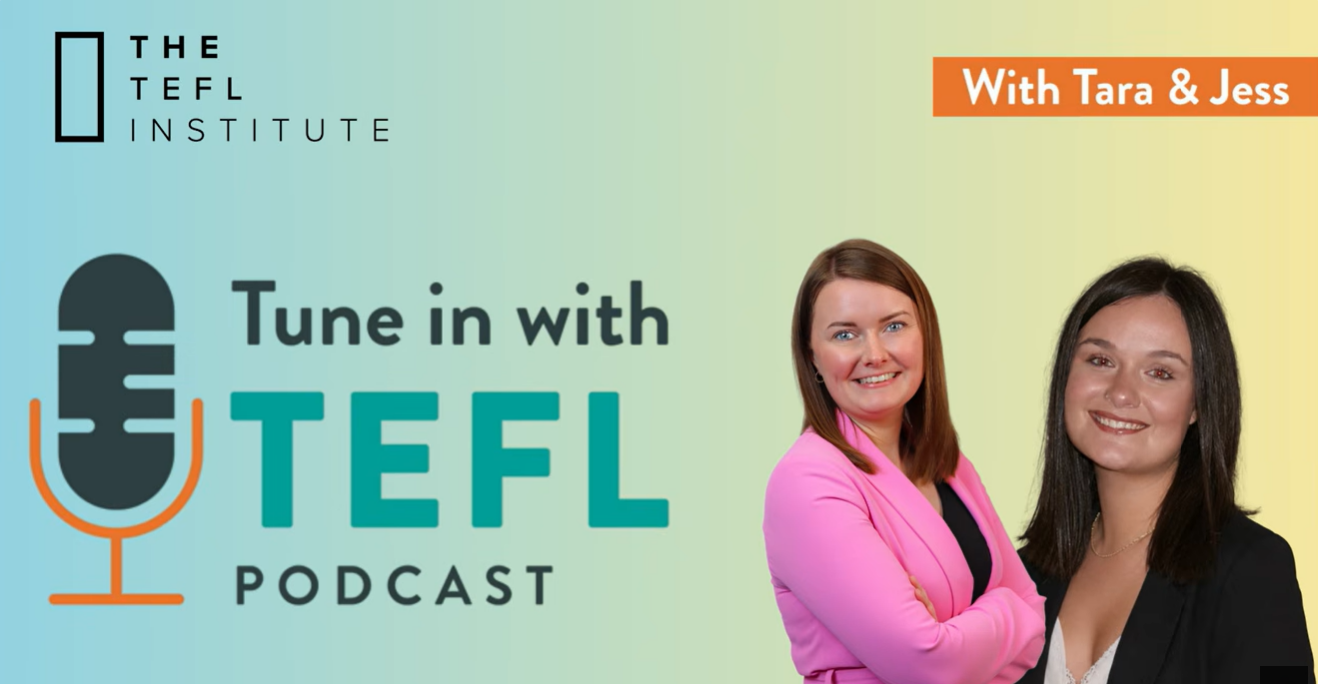
Tara and Jess talk through different TEFL and EFL topics, from finding work abroad to life in the classroom.