
 United Kingdom (UK)
 United States (US)
 Canada
 South Africa
 India
India Australia
 New Zealand
 China
China Russia
 Germany
 France
 Spain
Spain Netherlands
 Vietnam
 United Arab Emirates
 Italy
Italy Poland
 Thailand
 Türkiye








 Algeria


Successfully Teach English in Korea: A Step-by-Step Guide
Successfully Teach English in Korea: A Step-by-Step Guide
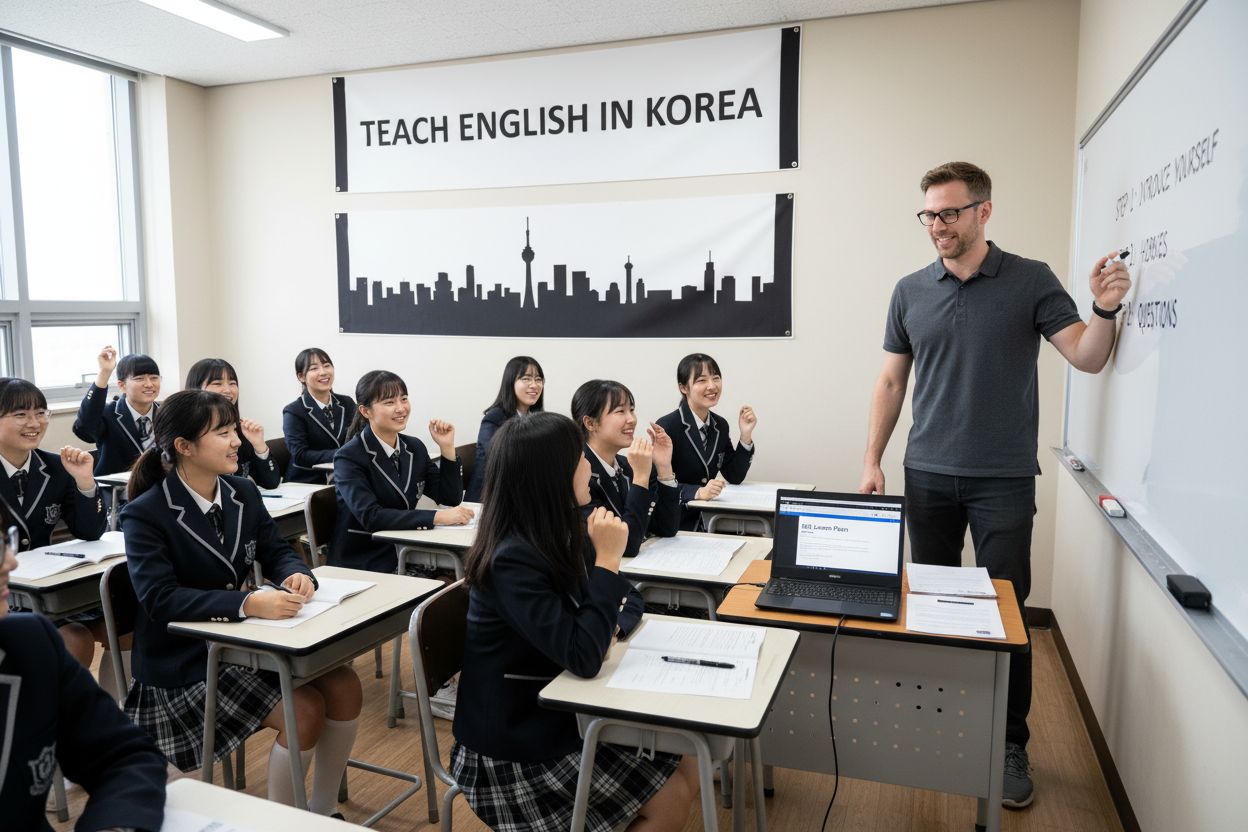
Teaching English in Korea sounds like an adventure, and thousands of teachers make the leap every year. You might expect rigid entry requirements to shut out most applicants, but the reality is surprisingly open. Most teaching jobs only require a bachelor’s degree and a TEFL certification. That means starting a new life on the other side of the world is closer than you might think.
Planning a move? Read our guide to teaching English in South Korea for salaries, visa rules and living costs.
Table of Contents
- Step 1: Research Teaching Opportunities And Requirements
- Step 2: Obtain Necessary Qualifications And Certifications
- Step 3: Apply For Teaching Positions In Korea
- Step 4: Prepare For Your Move And Cultural Adaptation
- Step 5: Execute Your Teaching Role Effectively
- Step 6: Evaluate Your Experience And Future Perspectives
Quick Summary
| Key Point | Explanation |
|---|---|
| 1. Research teaching opportunities thoroughly | Understand various pathways, from government programs to private academies, to find the best fit for your teaching goals. |
| 2. Secure TEFL certification | Obtain a recognized TEFL certification of at least 120 hours, enhancing your employability for teaching positions. |
| 3. Create a competitive application package | Prepare translated documents and a detailed resume showcasing qualifications and teaching experience for Korean employers. |
| 4. Understand cultural adaptation | Learn about Korean cultural norms and workplace etiquette to facilitate a smoother transition into your teaching role. |
| 5. Reflect on your experience for growth | Conduct a self-evaluation post-teaching to leverage gained skills and connections for future career opportunities. |
Step 1: Research Teaching Opportunities and Requirements
Starting your journey to teach English in Korea requires strategic research and understanding the diverse teaching landscape. Before packing your bags, you need to comprehensively explore the available opportunities and specific requirements that will shape your teaching experience. South Korea offers multiple pathways for English instructors, including public school programs like EPIK (English Program in Korea), private language academies known as hagwons, international schools, and university positions.
To begin your research, focus on understanding the core requirements for foreign English teachers. Most positions mandate that candidates hold a bachelor’s degree from an accredited institution. Native English speakers from countries like the United States, Canada, United Kingdom, Australia, New Zealand, and South Africa are typically preferred. Additionally, many employers require a clean criminal background check and a TEFL certification to demonstrate your professional teaching capabilities. Learn more about essential TEFL skills that can strengthen your application.
When investigating teaching opportunities, explore multiple recruitment channels. Government programs like EPIK offer structured placement with predictable salaries and benefits, while private hagwons provide more flexible hiring timelines and potentially higher compensation. University positions are often the most competitive but also offer the most attractive working conditions. Consider reaching out to recruitment agencies specializing in Korean teaching placements, who can provide personalized guidance and match your profile with suitable positions.
Here is a comparison table that outlines the main pathways for teaching English in Korea, helping you choose the best fit for your goals and qualifications:
| Pathway | Hiring Cycle | Requirements | Pros | Cons |
|---|---|---|---|---|
| EPIK (Public Schools) | Structured (spring/fall) | Bachelor’s, TEFL, native | Stable job, benefits, paid vacation | Competitive, set locations |
| Private Hagwons | Year-round, flexible | Bachelor’s, TEFL preferred | Potentially higher pay, various cities | Longer hours, mixed job stability |
| International Schools | Varies, often annual | Bachelor’s, teaching lic. | Higher salaries, better facilities | Most competitive, strict requirements |
| Universities | Annual, mostly spring/fall | Master’s often preferred | Best salary/hours, prestigious | Limited openings, advanced qualifications |
Key research resources for prospective teachers include official government websites, reputable job boards focused on teaching abroad, and professional TEFL networks. Websites like Dave’s ESL Cafe, RedOak TEFL, and official Korean education portals offer comprehensive job listings and insights into the teaching landscape. Network with current and former teachers through online forums and social media groups to gain real world perspectives on working conditions, salary expectations, and cultural adaptation strategies.
Verify your readiness by creating a comprehensive checklist of requirements. Confirm you have:
- A bachelor’s degree from an accredited institution
- A valid passport
- A clean criminal background check
- TEFL certification
- Native or near-native English proficiency
- Willingness to commit to a typical one-year contract
By meticulously researching opportunities and understanding requirements, you’ll position yourself as a competitive candidate for teaching English in Korea, setting the foundation for an exciting professional adventure.
Step 2: Obtain Necessary Qualifications and Certifications
Navigating the qualifications landscape for teaching English in Korea requires strategic planning and deliberate skill development. Your primary focus will be securing a TEFL certification and ensuring you meet the specific academic and professional requirements demanded by Korean educational institutions. A comprehensive approach involves understanding the nuanced certification requirements and selecting the right training program to maximize your employability.
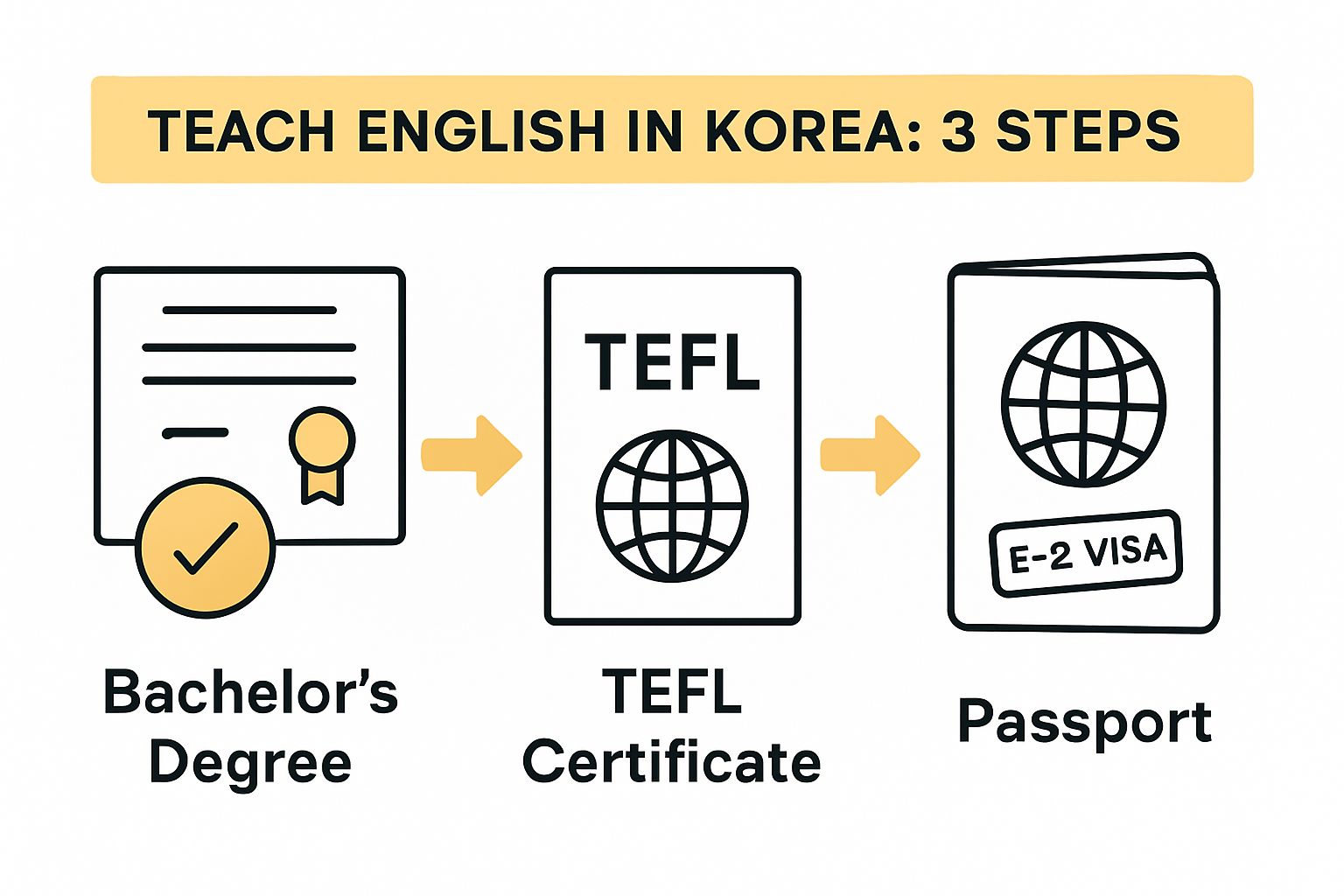
A TEFL certification is practically mandatory for most teaching positions in Korea. These internationally recognized credentials demonstrate your professional teaching capabilities and provide essential pedagogical skills. When selecting a TEFL course, prioritize programs offering at least 120 hours of comprehensive training, which is the standard minimum requirement for most reputable schools and language academies. Online courses provide flexibility, while hybrid or in-person programs offer more interactive learning experiences. Explore our guide on crafting the perfect teaching resume to understand how your certification can enhance your professional profile.
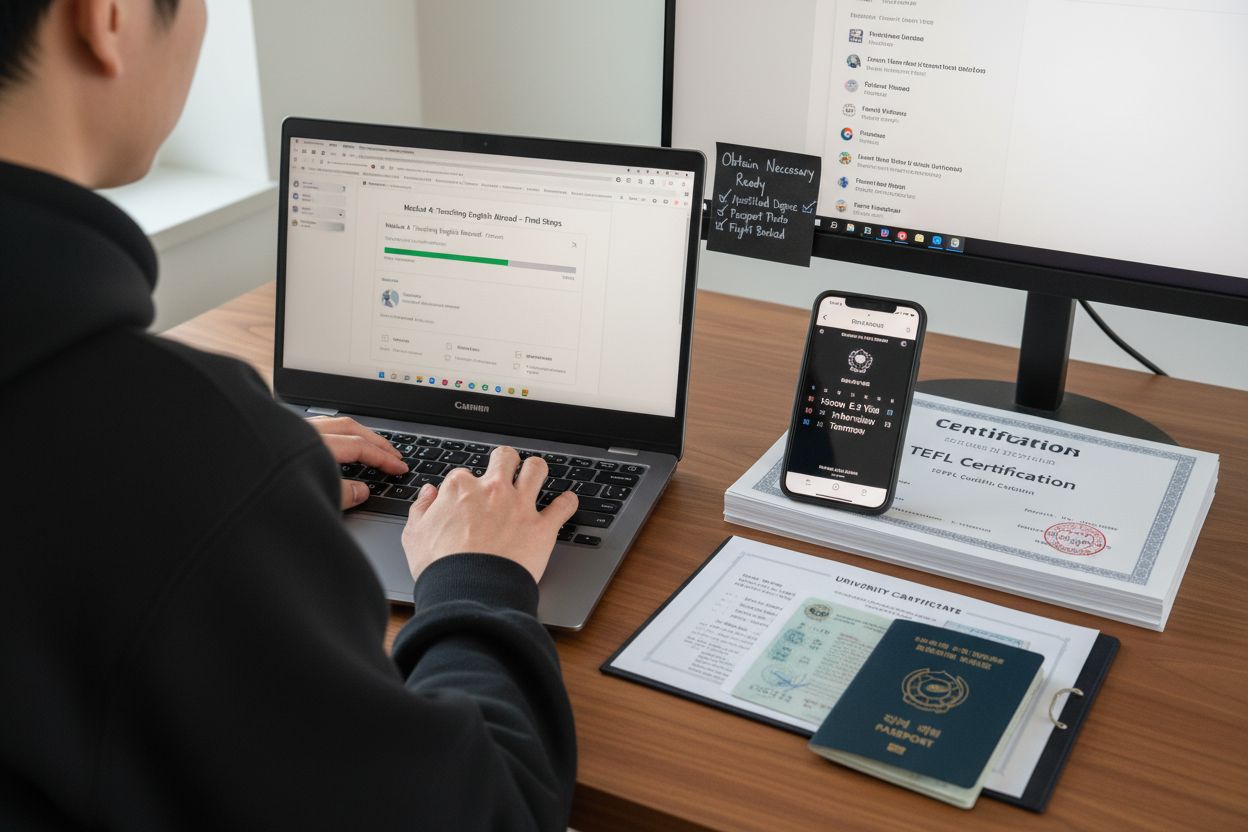
Beyond TEFL certification, you’ll need to compile a robust documentation portfolio. This includes obtaining an apostilled bachelor’s degree (a special authentication required for international document verification), a clean criminal background check, and official transcripts. The apostille process involves getting your degree officially certified by your home country’s designated authority, typically the Secretary of State’s office or equivalent governmental department. Some recruiters and schools may also require sealed, original transcripts directly sent from your university.
Consider additional qualifications that can distinguish your application. Advanced certifications like CELTA (Certificate in English Language Teaching to Adults) or specialized TEFL diplomas can provide a competitive edge. Some teachers pursue supplementary credentials in areas like business English, young learner instruction, or online teaching methodologies. These specialized certifications not only improve your chances of securing desirable positions but can also potentially negotiate higher salaries.
Verify your qualifications readiness by ensuring you have:
- A TEFL certification of at least 120 hours
- Authenticated bachelor’s degree with apostille
- Clean criminal background check
- Passport valid for at least 18 months
- Original, sealed academic transcripts
- Professional headshot and comprehensive resume
By methodically obtaining and organizing your professional credentials, you transform yourself from a potential candidate into an attractive, professionally prepared English teaching prospect ready to embark on your Korean educational adventure.
Step 3: Apply for Teaching Positions in Korea
The application process for teaching English in Korea demands meticulous preparation and strategic execution. Your goal is to transform your carefully assembled qualifications into a compelling professional profile that attracts potential employers. Discover essential insights about TEFL requirements in South Korea to refine your approach and understand the nuanced job market.
Begin by identifying your preferred teaching pathway: public school programs like EPIK, private language academies (hagwons), international schools, or university positions. Each platform requires slightly different application strategies. Recruitment typically happens through government programs, specialized recruitment agencies, and online job boards dedicated to teaching opportunities in Korea. Websites like Dave’s ESL Cafe, Korean Recruiting, and official EPIK portals serve as primary resources for job seekers.
Prepare a comprehensive application package that goes beyond a standard resume. Korean employers expect professionally translated documents, including academic credentials, TEFL certification, and a detailed resume highlighting your teaching experience and cultural adaptability. Your application should showcase not just professional qualifications but also your potential to integrate into Korean educational environments. Professional headshots are standard in Korean job applications, so invest in a high-quality, formal photograph that meets local professional standards.
Navigation of the application process involves understanding seasonal hiring cycles. Most public school programs recruit twice annually – typically for spring (February/March) and fall (August/September) semesters. Private academies have more flexible hiring timelines. Develop a systematic approach by creating a tracking spreadsheet to monitor application status, submission dates, and follow-up communications. Prepare for potential video interviews, which have become increasingly common in international recruitment.
Ensure your application is competitive by addressing these critical elements:
- Professionally translated academic documents
- Notarized and apostilled diploma
- Clean criminal background check
- Professional resume highlighting teaching skills
- Formal headshot photograph
- Copies of TEFL certification
- References from previous teaching or professional experiences
By crafting a thorough, culturally sensitive application and understanding the intricate recruitment landscape, you position yourself as a desirable candidate ready to embark on an exciting teaching journey in Korea. Patience, persistence, and professionalism will be your greatest allies throughout this transformative process.
Step 4: Prepare for Your Move and Cultural Adaptation
Transitioning to life and work in Korea requires comprehensive preparation that extends far beyond packing a suitcase. Your successful adaptation hinges on thoughtful planning, cultural understanding, and practical logistics. Learn about travel safety and official requirements to ensure a smooth transition into your new professional environment.
Use this checklist table to ensure you have all necessary documents and preparations in place before your move to Korea:
| Requirement | Description | Status (Ready/Needed) |
|---|---|---|
| Valid Passport | Minimum 18 months validity remaining | |
| Apostilled Bachelor’s Degree | Degree authenticated for use in Korea | |
| Clean Criminal Background Check | Recent and apostilled as per visa requirements | |
| TEFL Certification | Minimum 120 hours; increases employability | |
| Original & Sealed Transcripts | Sent directly from your university if required | |
| Professional Headshot | Formal photograph for job applications | |
| International Health Insurance | Coverage for the entire contract period | |
| Basic Korean Language Resources | Apps or books for initial language learning |
Begin with essential documentation and visa preparations. You’ll need to secure an E-2 teaching visa, which demands a meticulously assembled application package. This includes your signed employment contract, apostilled degree, criminal background check, passport, and health documentation. Many employers will assist with visa processing, but understanding the requirements prevents potential complications. Schedule a comprehensive medical examination, as Korean immigration requires a standard health screening to verify your fitness for teaching.
Financial preparation is equally critical. Research the cost of living in your specific Korean city, understanding that expenses vary dramatically between metropolitan Seoul and smaller regional towns. Open an international bank account that allows easy international transfers, and investigate mobile banking options. Korean banks often require local documentation, so many expatriate teachers initially rely on international banking services with robust overseas support. Budget for initial setup costs like apartment deposit, initial living expenses, and potential unexpected costs.
Cultural adaptation requires proactive learning and emotional intelligence. Invest time in learning basic Korean language skills through mobile apps, online courses, or language exchange platforms. Understanding fundamental cultural norms around professional interactions, dining etiquette, and social expectations will dramatically smooth your transition. Korean workplace culture emphasizes hierarchical respect, group harmony, and indirect communication. Familiarize yourself with basic cultural protocols like using two hands when receiving items, removing shoes indoors, and understanding appropriate social gestures.
Prepare your relocation checklist by confirming these essential items:
- Valid passport with at least 18 months remaining
- Completed E-2 visa documentation
- Copies of all important personal documents
- International health insurance
- Adaptable electrical converters
- Sufficient initial funds for setup expenses
- Basic Korean language learning resources
By methodically addressing logistical, financial, and cultural preparation, you transform a potentially overwhelming international move into an exciting, manageable adventure. Your proactive approach will help you navigate the complexities of teaching and living in Korea with confidence and enthusiasm.
Step 5: Execute Your Teaching Role Effectively
Successfully navigating your teaching role in Korea requires more than technical knowledge and lesson planning. It demands cultural sensitivity, adaptive teaching strategies, and a deep understanding of the Korean educational ecosystem. Explore advanced techniques for effective teaching to elevate your professional performance and student engagement.
Understanding the Korean classroom dynamic is crucial for effective instruction. Korean students typically exhibit high respect for educators and value structured learning environments. Your teaching approach should balance professional authority with engaging, interactive methodologies. Public school and hagwon settings have distinct expectations: public schools often require more comprehensive curriculum adherence, while private academies might emphasize conversational English and test preparation. Develop a flexible teaching style that can seamlessly transition between these different institutional expectations.
Lesson planning becomes your primary strategic tool for successful teaching. Create curriculum frameworks that integrate Korean educational standards with communicative, student centered learning techniques. Interactive activities that encourage speaking and listening will be more effective than traditional grammar-focused instruction. Utilize multimedia resources, incorporate cultural exchange elements, and design lessons that make English learning both challenging and enjoyable. Technology can be a powerful ally, so integrate digital tools and interactive platforms that capture student interest and demonstrate contemporary language usage.
Professional relationships within your school environment are equally important. Korean workplace culture emphasizes collective harmony, respect for hierarchical structures, and indirect communication. Build positive relationships with Korean co-teachers, administrators, and support staff by demonstrating reliability, cultural awareness, and a collaborative spirit. Learn basic Korean communication etiquette, participate in school social events, and show genuine interest in understanding the local educational context.
Verify your teaching effectiveness through these key performance indicators:
- Student engagement and participation levels
- Consistent lesson plan execution
- Positive feedback from co-teachers and administrators
- Measurable student language progression
- Adaptability to different classroom scenarios
- Maintenance of professional and cultural standards
By approaching your teaching role with strategic preparation, cultural intelligence, and pedagogical flexibility, you transform a professional assignment into a profound cross cultural educational experience. Your success depends not just on linguistic expertise, but on your ability to connect, inspire, and facilitate meaningful learning environments.
Step 6: Evaluate Your Experience and Future Perspectives
Reflecting critically on your teaching experience in Korea transforms a temporary assignment into a strategic career development opportunity. This final step represents more than a mere conclusion; it’s a comprehensive professional assessment that will shape your future international education trajectory. Discover strategies for advancing your TEFL career to maximize the long term potential of your Korean teaching experience.
Begin by conducting a systematic self evaluation of your professional growth. Document your achievements, challenges overcome, and specific skills developed during your teaching tenure. Korean teaching environments offer unique professional development opportunities that extend beyond traditional language instruction. You will likely have enhanced cross cultural communication skills, gained experience in adaptive teaching methodologies, and developed a nuanced understanding of international educational practices. Create a detailed portfolio highlighting these professional competencies, which can become a powerful asset for future international teaching opportunities.
Career progression in international education requires strategic networking and continuous learning. Connect with fellow expatriate teachers, join professional TEFL networks, and maintain relationships with colleagues and administrators from your Korean teaching experience. Many teachers transition into roles such as educational consultants, curriculum developers, international school administrators, or pursue advanced degrees in education or language acquisition. Some professionals leverage their Korean teaching experience to explore opportunities in other Asian educational markets or specialized language training programs.
Financial and personal reflections are equally important. Assess your economic outcomes, including savings potential, professional development investments, and the broader financial impact of your Korean teaching experience. Many teachers use this opportunity to pay off student loans, save for future educational pursuits, or fund additional international travel. Personal growth metrics are equally significant consider how your cultural adaptability, language skills, and global perspective have transformed during your time in Korea.
Evaluate your experience through these comprehensive perspectives:
- Professional skill development
- Cultural adaptation capabilities
- Financial outcomes and savings
- Personal growth and international experience
- Potential future career trajectories
- Networking and relationship building
By approaching your teaching experience as a holistic professional development journey, you transform a temporary assignment into a profound, transformative global education experience. Your time in Korea becomes not just a teaching role, but a strategic investment in your international career potential.
Unlock Your TEFL Teaching Success in Korea Today
Are you worried about navigating complex requirements like TEFL certification, apostilled documents, and adapting to Korean classrooms? This step-by-step guide highlights the real barriers future teachers face: making your application stand out, building genuine lesson planning skills, and preparing emotionally for an exciting move overseas. The dream of teaching English in Korea starts with the right preparation and guidance. Dive deeper with the expert resources at TEFL Institute to put yourself ahead of the competition when it matters most.
Thousands of successful teachers have launched global careers by choosing the right professional development at the perfect moment. Sharpen your expertise with our flexible online TEFL courses and specialist certifications. Download clear resource guides, compare opportunities, and discover practical tips for your journey. Take the first step to transform your teaching career—visit TEFL Institute’s main site now and secure your place in Korea’s thriving classrooms.
Frequently Asked Questions
What qualifications do I need to teach English in Korea?
Most teaching positions require a bachelor’s degree from an accredited institution and a TEFL certification of at least 120 hours. Additionally, many employers prefer native English speakers from certain countries and may require a clean criminal background check.
How can I find teaching opportunities in Korea?
You can find teaching opportunities through government programs, private language academies, international schools, and university positions. Websites like official government portals, ESL job boards, and professional TEFL networks can serve as valuable resources for job listings.
What documents are needed for a teaching visa in Korea?
To obtain an E-2 teaching visa, you’ll need a signed employment contract, an apostilled bachelor’s degree, a clean criminal background check, your passport, and health documentation. Ensuring your application is complete will help prevent complications during the visa process.
How can I adapt to the cultural differences while teaching in Korea?
It’s essential to invest time in learning basic Korean language skills and understanding cultural norms, such as hierarchy and indirect communication styles. Being open-minded, respectful, and proactive in engaging with your students and colleagues will greatly aid your cultural adaptation.
Recommended
TEFL Institute guides

Italy
Jobs, pay and visa routes
Mexico
Jobs, pay and cities
Japan
JET, ALT and eikaiwa pay
Dubai
Pay, requirements and visas
Spain
Jobs, pay and visa routes