
 United Kingdom (UK)
 United States (US)
 Canada
 South Africa
 India
India Australia
 New Zealand
 China
China Russia
 Germany
 France
 Spain
Spain Netherlands
 Vietnam
 United Arab Emirates
 Italy
Italy Poland
 Thailand
 Türkiye










 Algeria


Step by Step TEFL Visa Application: 2026 Guide
Step by Step TEFL Visa Application: 2026 Guide

TL;DR:
- Applying for a TEFL visa requires certified qualifications, verified documents, and country-specific procedures.
- Most teachers must obtain a 120-hour TEFL certificate, apostille their degree, and secure a verified job offer.
Applying for a TEFL visa is defined as the formal process of obtaining legal authorization to work as an English teacher in a foreign country, requiring certified qualifications, verified documents, and country-specific procedural steps. The step by step visa application TEFL process is more structured than most teachers expect. A 120-hour TEFL certificate is the recognized industry minimum, and immigration authorities in countries like China, Vietnam, and the UAE treat it as a non-negotiable threshold. Document legalization and criminal background checks add weeks to the timeline. Getting these details right from the start is what separates a successful application from a rejected one.
What documents do you need before starting your TEFL visa application?
Gathering the right documents before you apply is the single most time-consuming part of the entire TEFL visa process. Most teachers underestimate how long this stage takes, and that delay costs them job offers.
The core document set required by most countries includes a passport valid for at least 6 months beyond your intended stay, an apostilled bachelor’s degree, a 120-hour TEFL certificate (apostilled if the destination country requires it), and a recent criminal background check. An employment contract or acceptance letter from your school is also typically required. Each of these documents must meet the specific standards of your destination country, not just your home country.
The apostille and legalization process is usually the slowest part of the application. Processing times vary significantly by destination: Thailand and Taiwan take 2–4 weeks, Vietnam and the UAE take 4–8 weeks, China takes 6–8 weeks, and Japanese and European programs can take 2–4 months. Plan your timeline around the slowest document, not the fastest.
Criminal background checks carry their own deadline pressure. Most countries require a background check no older than 6 months at the time of visa submission. That window closes faster than you think when apostille processing is already eating into it.
Pro Tip: Start your apostille and background check processes the moment you decide to teach abroad, not after you receive a job offer. Employers typically expect all documents within 30 days of contract signing, and FBI background checks alone can take 4–6 weeks even when expedited.
| Document | Apostille Required | Typical Processing Time |
|---|---|---|
| Bachelor’s degree | Yes, in most countries | 2–8 weeks depending on destination |
| TEFL certificate (120-hour) | Yes, in China, Vietnam, UAE | 2–8 weeks depending on destination |
| Criminal background check | No apostille, but must be recent | 4–6 weeks (FBI); 2–4 weeks (local) |
| Passport | No | Ongoing; must be valid 6+ months |
| Employment contract | No | Provided by employer after hiring |

How do you complete the TEFL visa application step by step?
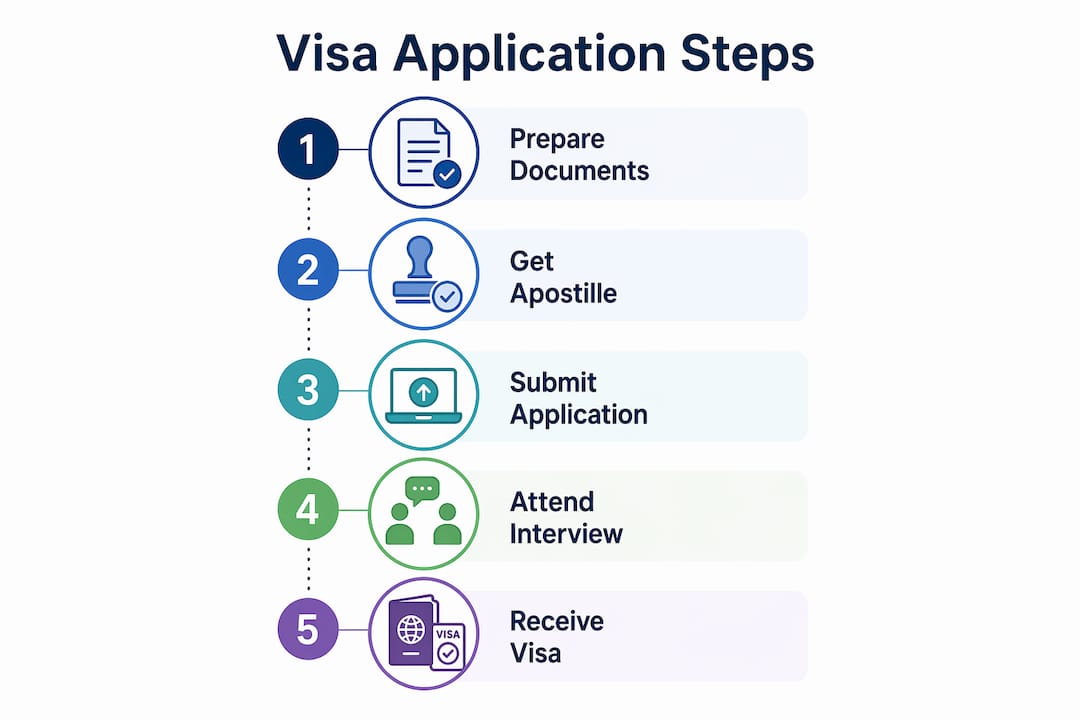
The TEFL visa process follows a clear sequence. Skipping or reordering steps is the most common cause of application failure. The steps below reflect the standard workflow for most teaching destinations in 2026.
- Obtain your 120-hour TEFL certificate. Complete an accredited program before applying for any teaching position. Certificates below 120 hours are routinely rejected by immigration authorities in Asia and the Middle East.
- Start background checks and apostille processing immediately. Do not wait for a job offer. FBI background checks can take 4–6 weeks even on an expedited basis. Apostille timelines vary by country and can extend to several months.
- Secure a verified job offer with employer sponsorship. Most teaching visas require your employer to initiate or co-sponsor the visa application. Confirm that your employer is legally registered and authorized to sponsor foreign workers before signing any contract.
- Compile your full document package. Gather your apostilled degree, apostilled TEFL certificate, background check, passport copies, passport photos, and employment contract. Verify that every document meets the destination country’s specific format requirements.
- Complete the visa application form accurately. Most countries offer online submission portals, but some require in-person visits to a consulate or embassy. Fill out every field exactly as it appears on your supporting documents. Discrepancies between your application form and your passport are a leading cause of rejection.
- Attend a consular interview if required. Some countries, including China and South Korea, may require an in-person interview. Prepare to explain your teaching qualifications, your employer, and your intended role clearly and concisely.
- Submit your application and track its status. Keep copies of every document you submit. Follow up with the consulate or embassy if you have not received a response within the stated processing window.
Pro Tip: Before submitting, verify every detail with both your employer and the relevant embassy. Confirm that your employer’s registration number, school name, and address on the contract match exactly what appears on any government-issued sponsorship documents. A single mismatch can delay your visa by weeks.
What are the most common mistakes in the TEFL visa application process?
Most TEFL visa rejections are preventable. The errors below account for the majority of failed applications, and each one has a clear solution.
- Submitting a TEFL certificate under 120 hours. Immigration authorities in China, Vietnam, and the UAE treat the 120-hour standard as a hard cutoff. A 60-hour or 80-hour certificate will not qualify, regardless of the issuing institution’s reputation.
- Using an expired background check. A background check older than 6 months at the time of submission is invalid in most countries. If your application process runs long, you may need to request a new one.
- Missing or incomplete apostilles. Submitting a degree or TEFL certificate without the required apostille is one of the most common document errors. Check the specific requirements for your destination country before you finalize your package.
- Accepting a job offer from an unverified employer. Employers who cannot provide a formal employment contract or who ask you to enter on a tourist visa are serious red flags. Working on the wrong visa can result in fines, deportation, and entry bans.
- Underestimating document processing timelines. Teachers who begin document preparation after receiving a job offer frequently miss employer deadlines. The apostille process alone can take 2–4 months for some destinations.
Each of these mistakes shares a common root: starting too late and assuming the process is simpler than it is. The TEFL application checklist approach, where every document is tracked against a deadline, eliminates most of these risks before they become problems.
How does your TEFL certification affect your visa application?
Your choice of TEFL certification directly determines whether your visa application succeeds or fails. This is not a matter of preference. It is a compliance requirement.
The 120-hour accredited TEFL certificate functions as a quality filter for both immigration authorities and recruiters. Countries like China, Vietnam, South Korea, and the UAE have codified this standard into their work permit requirements. Attempting to apply with a shorter or unaccredited certificate leads to disqualification, not just a lower ranking in the applicant pool. The 120-hour threshold also affects hireability independently of visa compliance. Schools in competitive markets use it to screen candidates before interviews.
Hiring windows close while you scroll.
Deadlines, salaries and visa notes for teaching jobs worldwide, checked against official sources and sent free every two weeks.
Get on the WireCertificate costs typically range from $200 to $400, with course durations of 3–6 weeks for online programs. That investment pays for itself in visa eligibility alone, before factoring in salary competitiveness. For teachers targeting the Middle East, where visa requirements are particularly strict, Teflinstitute’s guidance on regional certification standards outlines exactly what each country expects.
| Certificate Type | Hours | Visa Eligible (China/Vietnam/UAE) | Apostille Required |
|---|---|---|---|
| Standard online TEFL | 120 | Yes | Often yes |
| Short course | Under 120 | No | Not applicable |
| Advanced/Master TEFL | 240+ | Yes | Often yes |
| In-person TEFL/TESOL | 120+ | Yes | Varies by country |
For teachers who need to legalize their certificate after completion, Teflinstitute provides detailed guidance on the certificate legalization process, including country-specific timelines and submission requirements.
Key takeaways
A successful TEFL visa application requires a 120-hour accredited certificate, fully apostilled documents, a verified employer, and a timeline that accounts for 4–8 weeks of document processing before any submission deadline.
| Point | Details |
|---|---|
| 120-hour certificate is mandatory | Certificates under 120 hours are rejected by immigration in China, Vietnam, and the UAE. |
| Start documents before the job offer | Background checks and apostilles take 4–8 weeks; waiting costs you employer deadlines. |
| Verify your employer’s legal status | Employers who cannot provide a formal contract or sponsor a work visa are red flags. |
| Apostille timelines vary widely | China takes 6–8 weeks; Thailand takes 2–4 weeks. Plan around the slowest document. |
| Accuracy on forms prevents rejection | Discrepancies between your application and your passport are a leading cause of delays. |
What I’ve learned from watching teachers get this wrong
Most teachers who struggle with the TEFL visa process share one habit: they treat document preparation as something to handle after the exciting part, meaning the job offer, is done. That sequence is backwards, and it causes real damage. Employers set 30-day post-contract deadlines for document submission. FBI background checks take 4–6 weeks on an expedited basis. Apostille processing for China takes 6–8 weeks at minimum. The math does not work if you start late.
The 120-hour certification requirement surprises more teachers than it should. I have seen candidates with genuine teaching talent lose positions because they completed a 60-hour course and assumed it would be sufficient. Immigration authorities do not make exceptions. The 120-hour standard exists because it signals a minimum level of pedagogical preparation, not just course completion.
My strongest advice for 2026 applicants is this: treat your visa application as a project with a fixed deadline and work backward from it. Identify the slowest document in your package, whether that is an FBI check, a degree apostille, or a TEFL certificate legalization, and start that process first. Keep a physical or digital checklist of every document, its current status, and its expected completion date. Verify every detail with your employer and the relevant consulate before submitting anything. Persistence and organization are the two qualities that separate teachers who get their visas from those who miss their start dates.
— Muller
Teflinstitute courses that meet 2026 visa standards
Teachers who need a visa-eligible TEFL certification have a clear starting point. Teflinstitute’s 120 Hour Elective TEFL Course meets the standard immigration threshold recognized by authorities in China, Vietnam, South Korea, the UAE, and most other major teaching destinations. The course is accredited, completed online, and designed for teachers who need certification within a realistic timeframe.
For teachers who want stronger job competitiveness alongside visa eligibility, the 240 Hour Master TEFL Course provides a higher-level credential that stands out in competitive markets. Both courses include the documentation support you need to begin the legalization process immediately after completion.
FAQ
What is the minimum TEFL certification required for a visa?
The industry standard minimum is a 120-hour accredited TEFL certificate. Certificates under 120 hours are rejected by immigration authorities in China, Vietnam, and the UAE.
How long does the TEFL visa application process take?
The full process typically takes 2–4 months from document preparation to visa approval. Document apostille and background check processing account for most of that time.
Do I need an apostille on my TEFL certificate?
Most countries that require a TEFL certificate for visa purposes also require it to be apostilled or legalized. China, Vietnam, and the UAE are the most common examples. Check your destination country’s specific requirements before submitting.
What happens if I work on the wrong visa?
Working without a valid work visa can result in fines, deportation, and a formal entry ban. Employers who suggest entering on a tourist visa are not operating legally and should be avoided.
When should I start preparing my visa documents?
Start immediately after deciding to teach abroad, not after receiving a job offer. FBI background checks take 4–6 weeks even when expedited, and apostille processing can take up to several months for some destinations.
Recommended
TEFL Institute guides

Thailand
Visas and teaching licences
Estonia
Jobs, pay and work routes
Japan
JET, ALT and eikaiwa pay
Taiwan
Buxibans, pay and visas
Italy
Jobs, pay and visa routes