
 United Kingdom (UK)
 United States (US)
 Canada
 South Africa
 India
India Australia
 New Zealand
 China
China Russia
 Germany
 France
 Spain
Spain Netherlands
 Vietnam
 United Arab Emirates
 Italy
Italy Poland
 Thailand
 Türkiye









 Algeria


Step by Step Teaching Abroad: Your 2026 Career Guide
Step by Step Teaching Abroad: Your 2026 Career Guide

TL;DR:
- Teaching English abroad involves five key stages: certification, job search, document authentication, visa application, and arrival preparation. Delays in one stage cause sequential delays, making early planning and thorough vetting essential for success. Proper documentation, professional certifications, and cultural readiness significantly impact a teacher’s experience and opportunities abroad.
Teaching English abroad is defined as a structured international career process that begins with TEFL certification and ends with classroom deployment in a foreign country. The step by step teaching abroad process covers five core stages: earning your certification, searching for a job, preparing official documents, securing a work visa, and adapting to your new teaching environment. Each stage has specific requirements, timelines, and common pitfalls. This guide walks you through every stage with the practical detail you need to move forward with confidence, drawing on real examples like South Korea’s E-2 visa system and tools like the FBI Identity History Summary and apostille authentication.
What does the step by step teaching abroad process look like?
The international teaching process follows a predictable sequence. Skipping or reordering steps is the most common reason applications stall or fall apart entirely. The five stages are certification, job search, document preparation, visa application, and arrival. Each stage feeds directly into the next, which means delays in one create delays in all that follow.
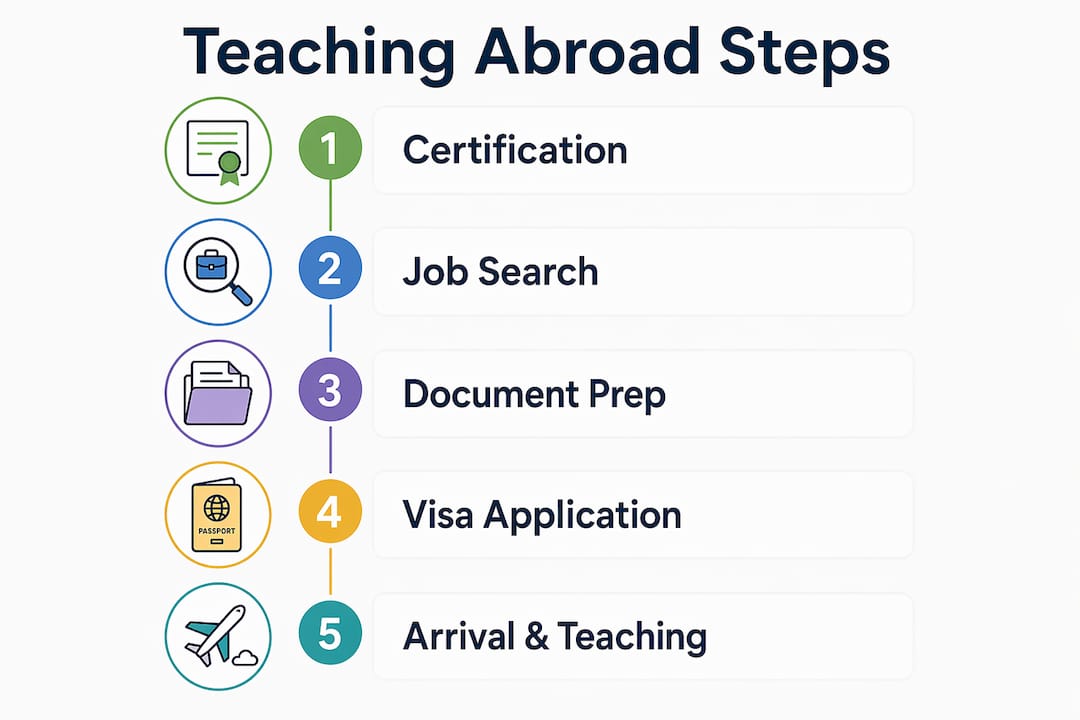
Most countries require proof of English teaching qualifications before they will issue a work visa. South Korea, Japan, China, and most of Southeast Asia all operate on this model. The full teaching abroad roadmap published by Teflinstitute outlines how these stages connect and what each one demands from applicants.
Understanding the sequence upfront saves weeks of wasted effort. Applicants who start their document authentication before securing a job offer, for example, often find that their apostilles expire before they are needed.
What certifications and qualifications do you need?
TEFL, which stands for Teaching English as a Foreign Language, is the standard credential for English teachers working abroad. TESOL (Teaching English to Speakers of Other Languages) is the equivalent term used more commonly in North America and Australia. Both refer to the same category of qualification, and employers treat them as interchangeable.
The most widely accepted entry-level certification is the 120-hour TEFL course, which covers lesson planning, grammar instruction, and classroom management. The 240-hour Master TEFL course provides deeper training and is preferred by competitive employers in countries like South Korea and the UAE. TEFL certification of at least 100 hours is commonly required by sponsoring schools, even when visa law does not explicitly mandate it. That distinction matters because it means your employer, not the government, sets the floor.
Key qualifications most employers require:
- A 120-hour or 240-hour TEFL or TESOL certificate from an accredited provider
- A bachelor’s degree in any subject (required for most work visas, including South Korea’s E-2)
- A clean criminal background check, typically from the FBI or your national police authority
- A valid passport with at least 12 months of remaining validity
- Teaching licenses, where required, for positions in public school systems
Pro Tip: Choose a TEFL program that is externally accredited and includes observed teaching practice. Employers in competitive markets like South Korea and Japan screen for accreditation status before reviewing any other part of your application.
Degree requirements vary by country. South Korea and Japan require a four-year bachelor’s degree for their primary English teaching visa categories. Some countries in Latin America and Southeast Asia accept associate degrees or extensive teaching experience in lieu of a full degree. Check the requirements for teaching abroad for your target country before enrolling in any certification program.
How do you prepare and authenticate your documents?
Document preparation is the stage that most applicants underestimate. Authentication, specifically the apostille process, takes longer than most people expect and cannot be rushed once it is in progress.

An apostille is a government-issued certification that verifies the authenticity of an official document for use in another country. The United States Department of State issues apostilles for federal documents. Individual state governments issue apostilles for state-level documents like university degrees. Apostille timing runs 2–4 weeks for degrees and 3–8 weeks for FBI background checks, making it the most common source of delay in the entire visa process.
The table below summarizes the standard documents required for most teaching abroad visa applications, including South Korea’s E-2 visa:
| Document | Source | Processing Time |
|---|---|---|
| Apostilled university degree | State Secretary of State office | 2–4 weeks |
| FBI Identity History Summary | FBI online portal + US Dept. of State | 21–35 days total |
| Official university transcripts | University registrar (sealed) | 1–2 weeks |
| Passport photos (3.5×4.5cm) | Local photo service | Same day |
| Signed employment contract | Sponsoring school | Varies |
The FBI Identity History Summary must be ordered online, apostilled by the US Department of State, and then translated according to the destination country’s standards before submission to your employer. The full process takes 21–35 days. That timeline assumes no errors in the initial submission, which is why accuracy on the first attempt is critical.
Passport photos sized 3.5×4.5cm and official university transcripts sealed by the registrar are standard requirements across most teaching abroad visa applications. Have multiple copies of each prepared before you need them.
Pro Tip: Start your apostille and FBI Channeler requests on the same day you sign your employment contract. Waiting even one week adds unnecessary risk to your visa timeline.
Common mistakes in this stage include submitting unsealed transcripts, using expired background checks, and failing to get documents notarized before apostilling. Each error restarts the clock.
How to search and apply for teaching jobs abroad
The job search for English teaching positions abroad follows a structured sequence. Treating it as a casual process produces poor results. The standardized job search process developed by Teflinstitute outlines the steps that consistently produce successful placements.
Follow these steps in order:
- Define your target market. Choose a region or country based on salary, lifestyle, and visa accessibility. South Korea, Japan, China, Thailand, and Spain are the most common destinations for first-time teachers.
- Complete your TEFL certification. Employers will not review applications from uncertified candidates. Have your certificate in hand before submitting a single application.
- Build a teaching-specific resume. Highlight education, any tutoring or instructional experience, and language skills. Keep it to one page for most Asian markets.
- Prepare a self-introduction video. South Korea, Japan, and China routinely require a short video introduction as part of the initial application. Record it in a clean, professional setting.
- Search verified job boards. Platforms like Dave’s ESL Cafe, GoOverseas, and Teach Away aggregate listings from vetted employers. Avoid unverified listings on general job sites.
- Vet your prospective employer. Confirm the school’s registration status, visa sponsorship history, and contract terms before accepting any offer. Request references from current or former teachers.
- Sign a formal employment contract. The signed contract is a required document for your visa application. Read every clause, particularly those covering housing, flights, and contract completion bonuses.
Employer vetting is the step most applicants skip. A school that cannot provide documentation of its visa sponsorship history is a significant risk. Legitimate employers expect due diligence and will provide references without hesitation.
How does the visa application and travel process work?
South Korea’s E-2 visa is the most documented and widely used English teaching visa in the world, making it a practical model for understanding the international teaching process in any country. The E-2 visa requires an apostilled criminal background check, an apostilled degree, a medical exam after arrival, and limits applicants to citizens of seven designated countries: the United States, Canada, the United Kingdom, Ireland, Australia, New Zealand, and South Africa.
The visa application sequence for South Korea’s E-2 visa follows this path:
- Receive a Visa Issuance Number (VIN) from your sponsoring school after submitting your documents
- Book an appointment at the nearest South Korean consulate or embassy
- Attend the consulate appointment with your full document set, including passport, photos, apostilled degree, and apostilled background check
- Receive your E-2 visa stamp, typically within 3–5 business days of the consulate appointment
- Travel to South Korea and complete a medical exam within the first weeks of arrival
- Register for an Alien Registration Card (ARC) after passing the medical exam
Medical exams for E-2 visa applicants include HIV and drug tests conducted after arriving in South Korea as part of the ARC registration process. The ARC functions as your official identification and work authorization document in the country.
Pro Tip: Allow 6–10 weeks from contract signing to arrival date. That window accounts for apostille processing, consulate scheduling, and any document corrections. Starting paperwork immediately after signing is the single most effective way to protect that timeline.
What should you expect in your first months teaching abroad?
The first 90 days abroad combine professional adjustment with cultural adaptation. Both require deliberate effort. Teachers who prepare for this phase perform better in the classroom and report higher job satisfaction.
Practical steps for a strong start:
- Learn basic phrases in the local language. Even minimal proficiency in Korean, Japanese, or Thai builds immediate goodwill with students, parents, and colleagues.
- Study local classroom culture before you arrive. Classroom authority dynamics, student participation norms, and grading expectations vary significantly by country. South Korea’s classroom culture, for example, places high value on teacher authority and structured lesson delivery.
- Use structured lesson planning resources. Teflinstitute’s English teaching resources include lesson plans and materials organized by level and topic, which reduces preparation time significantly in your first weeks.
- Connect with the local expat teaching community. Facebook groups, Reddit communities like r/teachingabroad, and local meetups provide practical advice that no guidebook covers.
- Pursue continued professional development. Programs like the Fulbright TEA Program offer international teachers structured professional development through academic seminars and classroom practicums. Participation strengthens your resume for future positions.
Cultural adjustment is not a minor inconvenience. It is a documented phase that affects performance and wellbeing. Teachers who acknowledge it and plan for it recover faster and stay longer in their positions.
Key takeaways
Teaching English abroad requires completing five sequential stages: certification, job search, document authentication, visa application, and arrival preparation. Skipping or delaying any stage creates compounding delays in all stages that follow.
| Point | Details |
|---|---|
| Certification comes first | Complete a 120-hour or 240-hour TEFL course before submitting any job applications. |
| Start documents immediately | Begin apostille and FBI background check requests the day you sign your contract. |
| Vet your employer thoroughly | Confirm visa sponsorship history and request references before accepting any offer. |
| Allow 6–10 weeks for visa processing | Build this window into your timeline from contract signing to departure date. |
| Prepare for cultural adjustment | Research classroom norms and local customs before arrival to reduce the adjustment period. |
What the process taught me about teaching abroad
The single most underestimated part of this entire process is document timing. Every experienced teacher I have spoken with says the same thing: they wish they had started their apostille requests earlier. The FBI background check alone takes 21–35 days under ideal conditions. Add apostille processing, translation, and consulate scheduling, and you are looking at a 10-week window that most applicants do not account for when they accept a job offer.
Employer vetting is the second area where applicants consistently cut corners. A school that hesitates to provide references or cannot explain its visa sponsorship process clearly is not a school worth working for. Legitimate programs are transparent about their processes because they have nothing to hide.
The cultural adjustment phase is real and it is longer than most people expect. The teachers who thrive abroad are not the ones who had the most international experience before they arrived. They are the ones who stayed curious, asked questions, and used every resource available to them, including online communities, professional development programs, and the teaching abroad checklist tools that help them track what they still need to do.
One more thing: the countries that seem most intimidating on paper, South Korea, Japan, China, often have the most organized onboarding processes for foreign teachers. The paperwork is extensive, but it is well-documented. Follow the sequence, start early, and the process is manageable.
— Muller
Start your teaching career with Teflinstitute
Teflinstitute offers accredited TEFL certification courses designed for aspiring English teachers at every stage of preparation. The 120 Hour Elective TEFL Course provides the foundational certification most sponsoring schools require, while the 240 Hour Master TEFL Course delivers advanced training for teachers targeting competitive markets in Asia and the Middle East. Both courses are externally accredited and completed entirely online.
Teflinstitute also offers a 30 Hour IELTS Teacher Training Course for teachers who want to specialize in exam preparation instruction, one of the highest-demand skill sets in private language schools across Asia and Europe. Browse the full course catalog at Teflinstitute to find the program that matches your target market and career goals.
FAQ
What TEFL certification level do most employers require?
Most sponsoring schools require a minimum of 100–120 hours of TEFL certification, even when visa law does not explicitly mandate it. A 120-hour course from an accredited provider meets this threshold for the majority of positions worldwide.
How long does the full teaching abroad process take?
From starting your TEFL certification to arriving in your host country, the process typically takes 3–6 months. Document authentication and visa processing alone require 6–10 weeks after contract signing.
What documents are needed for a teaching abroad visa?
Standard documents include an apostilled university degree, an apostilled FBI background check, sealed official transcripts, passport photos sized 3.5×4.5cm, and a signed employment contract from your sponsoring school.
Do i need a degree to teach english abroad?
A four-year bachelor’s degree is required for most work visas in South Korea, Japan, and China. Some countries in Southeast Asia and Latin America accept candidates without a degree, though a TEFL certificate remains required in nearly all cases.
Can i teach english abroad without prior teaching experience?
Yes. Most entry-level positions abroad do not require prior classroom experience. A recognized TEFL certification, a clean background check, and a valid degree are the standard baseline requirements for first-time teachers.
Recommended
TEFL Institute guides

Italy
Jobs, pay and visa routes
Cambodia
Pay, requirements and visas
South Korea
EPIK, hagwons and pay
Portugal
Jobs, pay and visa routes
Germany
Freelance work and pay