

 United Kingdom (UK)
 United States (US)
 Canada
 South Africa
 India
India Australia
 New Zealand
 China
China Russia
 Germany
 France
 Spain
Spain Netherlands
 Vietnam
 United Arab Emirates
 Italy
Italy Poland
 Thailand
 Türkiye





 Algeria


Online TEFL TESOL Certification: Unlocking Global Teaching Opportunities
Online TEFL TESOL Certification: Unlocking Global Teaching Opportunities

Choosing the right path to teach English abroad or online can be confusing, especially with so many programs that promise global opportunities. For many North American and European educators, TESOL certification is essential for teaching non-native speakers, whether in another country or at home. This overview breaks down the differences between online TEFL and TESOL certifications, what each offers, and how to select an accredited program that aligns with your international teaching goals.
Table of Contents
- Defining Online TEFL and TESOL Certification
- Types of Accredited TEFL TESOL Programs
- Essential Course Content and Learning Outcomes
- Certificate Requirements and Recognized Standards
- Costs, Duration, and Common Pitfalls
- Career Opportunities and Job Placement Support
Key Takeaways
| Point | Details |
|---|---|
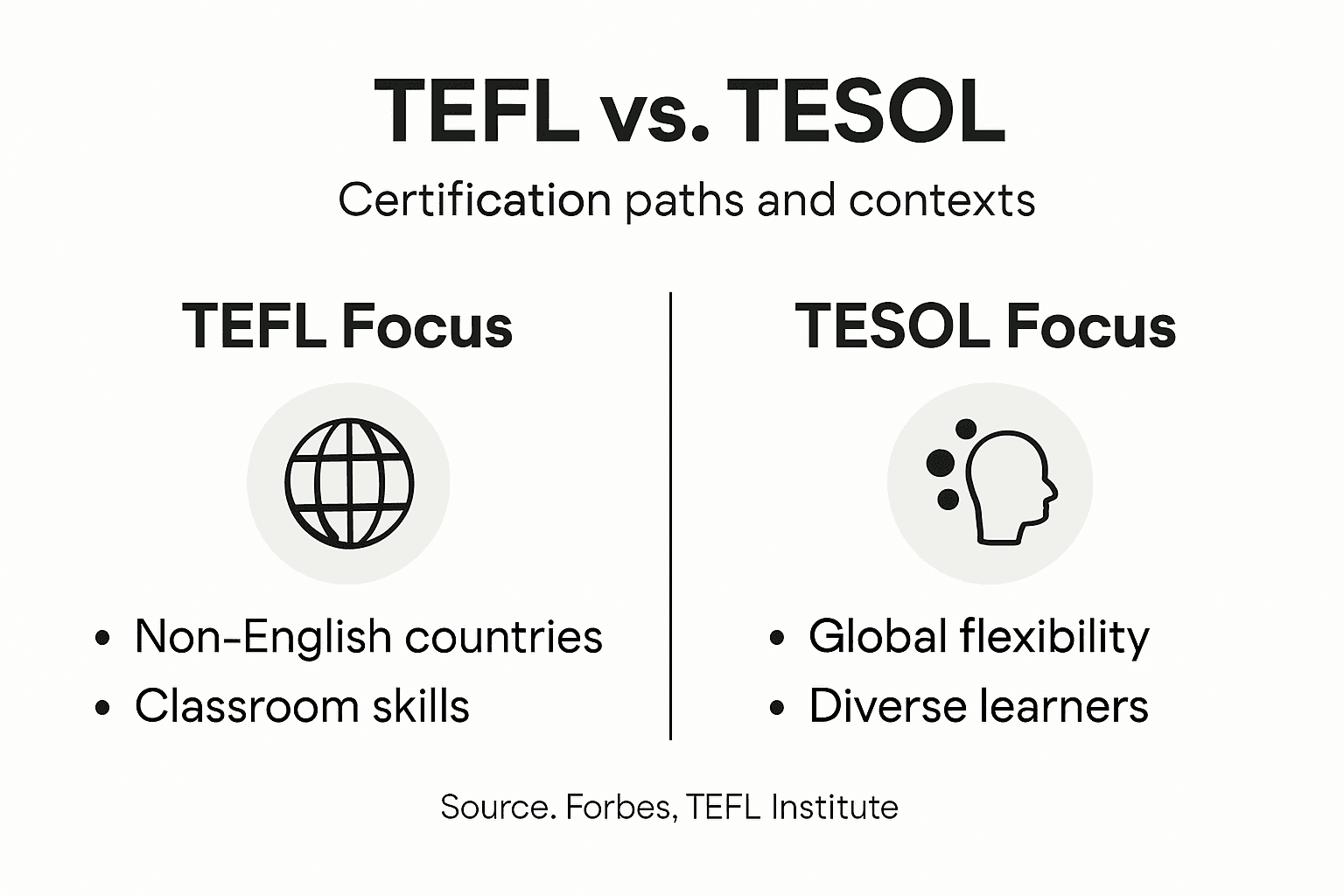
| TEFL vs. TESOL | TEFL focuses on teaching English in non-English-speaking countries, while TESOL covers teaching in both international and English-speaking contexts. |
| Accreditation Importance | Always verify that your TEFL or TESOL program is accredited to ensure its recognition and effectiveness in the job market. |
| Certification Components | Look for programs that include practical teaching components, comprehensive curricula, and support for job placement to enhance your teaching prospects. |
| Career Pathways | TEFL and TESOL certifications open various teaching opportunities worldwide, including international schools, corporate training, and online instruction. |
Defining Online TEFL and TESOL Certification
Online TEFL (Teaching English as a Foreign Language) and TESOL (Teaching English to Speakers of Other Languages) certifications are specialized training programs designed to prepare educators for teaching English internationally and domestically. These digital credentials enable professionals to acquire the skills and qualifications necessary for teaching English to non-native speakers across diverse global contexts.
The core distinctions between TEFL and TESOL certifications lie in their specific focus and application:
- TEFL typically concentrates on teaching English in countries where English is not the primary language
- TESOL provides a broader framework for teaching English both internationally and within English-speaking countries
- Both certifications require comprehensive training in language instruction methodologies
According to Forbes, TESOL certification is essential for English instructors working with non-native speakers globally. These online programs offer flexible training options that can be completed entirely through digital platforms, making professional development accessible to aspiring educators worldwide.
Here’s a comparison of TEFL and TESOL certifications to clarify their focus and benefits:
| Certification Type | Primary Focus | Typical Teaching Context | Professional Recognition |
|---|---|---|---|
| TEFL | English abroad | Non-English-speaking countries | Widely accepted globally |
| TESOL | English worldwide | English and non-English countries | Broad international acceptance |
This summary will help you distinguish which certification best suits your career goals.
Modern online TEFL and TESOL certification programs typically include:
- Comprehensive language teaching methodologies
- Classroom management strategies
- Curriculum development techniques
- Cultural competency training
- Digital teaching tools and technologies
Pro tip: Research accredited online certification programs that offer international recognition to maximize your teaching opportunities.
Types of Accredited TEFL TESOL Programs
Accredited TEFL and TESOL programs offer diverse training options designed to meet the evolving needs of aspiring English language educators. These professional certification programs provide comprehensive preparation for teaching English both domestically and internationally, with accredited courses offering critical professional validation.
The primary types of accredited TEFL TESOL programs include:
- Online Certification Programs: Fully digital courses allowing complete remote learning
- Hybrid Certification Programs: Combining online coursework with in-person practical training
- University-Affiliated Programs: Academic certifications through established educational institutions
- Specialized Niche Programs: Focused training for specific teaching contexts like business English or young learners
These certification programs typically vary in duration, depth of study, and professional recognition. Professional-level programs often range from 120 to 180 hours of comprehensive training, providing in-depth understanding of language teaching methodologies, classroom management, and cultural competency.
Key considerations when evaluating accredited TEFL TESOL programs include:
- Accreditation status from recognized educational bodies
- Course curriculum comprehensiveness
- Practical teaching components
- Job placement support
- International recognition of certification
Professional-level TEFL certifications demonstrate a serious commitment to language education and significantly enhance teaching opportunities worldwide.
Pro tip: Always verify the accreditation and international recognition of your chosen TEFL TESOL program before enrollment to maximize your professional prospects.
Essential Course Content and Learning Outcomes
TEFL and TESOL certification programs are meticulously designed to equip aspiring language educators with comprehensive skills and knowledge. Language acquisition theories and teaching strategies form the cornerstone of these professional development courses, ensuring teachers are prepared for diverse classroom environments.
The essential course content typically encompasses several critical learning domains:
- Linguistic Foundations: Understanding language structure, grammar, and communication principles
- Pedagogical Techniques: Developing effective instructional strategies for different learning styles
- Cultural Competency: Navigating cross-cultural communication and educational contexts
- Technological Integration: Utilizing digital tools and resources for language instruction
- Assessment Methods: Creating and implementing effective evaluation techniques
Key learning outcomes for TEFL TESOL certification programs are designed to transform participants into skilled, adaptable language educators. Participants can expect to develop advanced skills in:
- Designing comprehensive lesson plans
- Managing diverse classroom environments
- Implementing interactive teaching methodologies
- Understanding language acquisition processes
- Adapting instruction to various student needs
Successful TEFL TESOL certification demonstrates a professional’s commitment to excellence in language education and global communication.
Professional-level programs typically require between 120-180 hours of intensive training, covering theoretical frameworks and practical application of language teaching principles. These comprehensive courses ensure educators are fully equipped to meet the complex demands of modern language instruction.

Pro tip: Select a certification program that offers practical teaching components and robust support for translating theoretical knowledge into real-world classroom skills.
Certificate Requirements and Recognized Standards
TEFL and TESOL certifications have evolved into rigorous professional credentials that demand specific standards and comprehensive requirements. Employers verify TEFL credibility through a multi-faceted evaluation of certification quality, training depth, and professional recognition.
Standard certificate requirements typically encompass several critical components:
- Minimum Training Hours: Most reputable programs require 120-180 hours of comprehensive instruction
- Practical Teaching Components: Demonstration of actual classroom or online teaching skills
- Pedagogical Knowledge Assessment: Rigorous evaluation of language teaching methodologies
- Cultural Competency Modules: Understanding diverse educational and linguistic contexts
- Technology Integration Skills: Proficiency in digital teaching platforms and resources
Recognized international standards for TEFL TESOL certifications are established by several key accreditation bodies:
- Cambridge Assessment English
- Trinity College London
- College of English Language Teachers (CELTA)
- International Association of Teachers of English to Speakers of Other Languages (IAATESL)
Comprehensive certification goes beyond mere documentation—it represents a commitment to professional excellence in language education.
Additional critical elements that distinguish high-quality certifications include independent assessment, practical teaching practicum, and alignment with global educational standards. Prospective teachers should carefully evaluate certification programs based on international recognition, depth of curriculum, and potential for career advancement.
The following table presents a quick overview of major accreditation organizations and what sets them apart:
| Accreditation Body | Geographic Reach | Distinguishing Strength |
|---|---|---|
| Cambridge English | Global | Highly rigorous standards |
| Trinity College London | Europe, Asia | Strong practical component |
| CELTA | Global | Internationally recognized diploma |
| IAATESL | International | Focus on diverse teaching contexts |
Refer to this guide when evaluating certification credibility.
Pro tip: Prioritize certification programs that offer comprehensive training, practical teaching components, and recognized accreditation from established international bodies.
Costs, Duration, and Common Pitfalls
TEFL and TESOL certification programs represent a significant investment in professional development, with program costs and duration varying widely. Aspiring educators should approach this investment strategically, understanding the financial and time commitments required for quality certification.
Typical cost and duration ranges for TEFL TESOL certification include:
- Budget Programs: $200-$500, typically 4-8 weeks in duration
- Standard Programs: $500-$1,200, ranging from 3-6 months
- Comprehensive Programs: $1,200-$2,500, spanning 6-12 months
- Advanced Diploma Programs: $2,500-$5,000, often including specialized modules
Common pitfalls that prospective students should carefully avoid include:
- Selecting non-accredited certification programs
- Underestimating time commitment requirements
- Overlooking practical teaching components
- Failing to verify international recognition
- Choosing programs without job placement support
Investing in a high-quality certification is crucial—cheap programs often mean limited professional opportunities.
The most successful candidates approach TEFL TESOL certification as a strategic career investment, carefully evaluating program components, accreditation, and potential return on investment. Comprehensive programs that offer practical teaching experience, robust curriculum, and recognized credentials provide the most significant professional advantages.
Pro tip: Compare multiple certification programs, request detailed syllabi, and verify accreditation before making your financial commitment.
Career Opportunities and Job Placement Support
TEFL and TESOL certifications open diverse and expansive career pathways for language educators across global markets. Professional certification transforms aspiring teachers into competitive candidates capable of accessing international teaching opportunities in multiple contexts and educational settings.
Key career opportunities for certified TEFL TESOL professionals include:
- International School Teaching: Positions in public and private schools worldwide
- Corporate Language Training: Teaching business English in multinational companies
- Online English Instruction: Remote teaching platforms and digital education services
- Private Language Academies: Specialized language centers in multiple countries
- University Language Programs: Academic positions teaching English composition and communication
Successful job placement typically involves multiple strategic approaches:
- Leveraging certification network connections
- Utilizing institutional job placement resources
- Exploring international recruitment platforms
- Developing specialized teaching portfolios
- Attending international education job fairs
Strategic career development requires more than certification—it demands proactive networking and continuous professional growth.
Many comprehensive TEFL TESOL programs offer robust job placement support, including resume workshops, interview preparation, and direct connections with international hiring networks. These support services significantly enhance graduates’ abilities to secure meaningful teaching positions across diverse geographical regions.
Pro tip: Build a comprehensive digital portfolio showcasing your certification, teaching philosophy, and professional achievements to stand out in competitive international job markets.
Accelerate Your Career with Accredited Online TEFL TESOL Certification
Many aspiring educators face challenges finding accredited programs that offer comprehensive training, practical teaching experience, and international recognition. This article highlights the importance of choosing a certification that meets rigorous standards like 120+ training hours and practical teaching components, addressing your goal to unlock global teaching opportunities with credibility and confidence.
At TEFL Institute, we understand these pain points and offer flexible, fully online and hybrid TEFL TESOL certification courses designed to fit your schedule while providing the in-depth training needed to excel as an English language teacher worldwide. Whether you are starting your teaching journey or looking to enhance your credentials, our courses cover essential content from language acquisition theories to cultural competency, all recognized by top international standards.
Ready to take the next step toward a rewarding teaching career abroad or online explore our course offerings today and join a global community of certified educators.
Start your certification now to gain the skills, confidence, and recognized qualifications that employers demand. Visit TEFL Institute’s website and transform your passion for teaching English into a worldwide opportunity.
Frequently Asked Questions
What is the difference between TEFL and TESOL certifications?
TEFL focuses on teaching English in countries where English is not the primary language, while TESOL covers teaching English both internationally and within English-speaking countries.
How long does it take to complete an online TEFL or TESOL certification?
The duration typically ranges from 120 to 180 hours of training, depending on the program type, with most courses designed to be completed over a few months.
What are the essential components of TEFL and TESOL certification programs?
Essential components include linguistic foundations, pedagogical techniques, cultural competency, technological integration, and assessment methods, aimed at equipping educators with comprehensive teaching skills.
How can I ensure the TEFL or TESOL program I choose is accredited?
Always verify the accreditation status from recognized educational bodies and check for international recognition of your certification to ensure it meets industry standards.
