

 United Kingdom (UK)
 United States (US)
 Canada
 South Africa
 India
India Australia
 New Zealand
 China
China Russia
 Germany
 France
 Spain
Spain Netherlands
 Vietnam
 United Arab Emirates
 Italy
Italy Poland
 Thailand
 Türkiye










 Algeria


ESL Teacher Career Pathways: Complete Guide
Over 1.5 billion people worldwide study English, making American ESL teachers more sought after than ever. Whether you are new to teaching or aiming for a leadership role, ESL teaching career paths offer opportunities that go far beyond traditional classroom jobs. From online language instruction to international program management, understanding these evolving career pathways helps educators make strategic choices while building a rewarding and flexible future in the field.

Table of Contents
- Defining ESL Teacher Career Pathways
- Types of ESL Teaching Roles Worldwide
- Essential Qualifications and Certification Requirements
- Career Progression and Advancement Opportunities
- Legal Considerations and Common Challenges
Key Takeaways
| Point | Details |
|---|---|
| Dynamic Career Pathways | ESL teaching offers diverse opportunities for growth across multiple sectors, not limited to traditional classroom roles. |
| Essential Qualifications | A bachelor’s degree and TEFL certification are primary requirements; ongoing professional development is crucial for standing out. |
| Legal Considerations | Understanding work visa and professional certification regulations is essential for successful international teaching careers. |
| Continuous Adaptability | Successful ESL professionals must stay adaptable and skilled in cross-cultural communication to manage diverse teaching environments effectively. |
Defining ESL Teacher Career Pathways
ESL teacher career pathways represent dynamic professional routes that offer educators multiple opportunities for growth, specialization, and international experience. Importantly, these pathways extend far beyond traditional classroom teaching, encompassing diverse roles that leverage language education expertise across multiple sectors and global contexts.
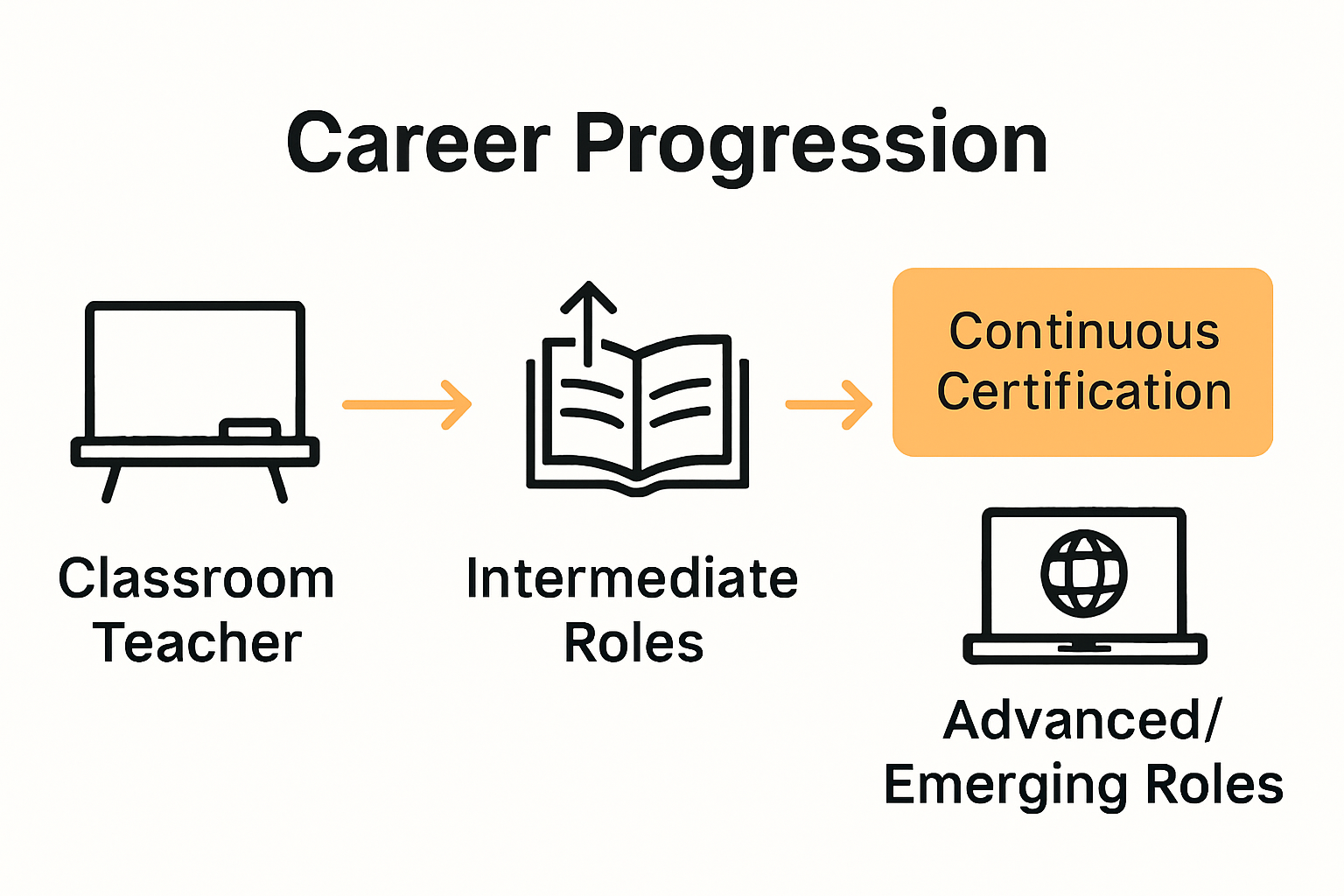
Typical ESL career pathways include progressive stages of professional development, starting with entry-level teaching positions and advancing toward specialized roles. Professionals can progress through several strategic career stages:
- Entry Level: Classroom teaching in language schools or international programs
- Intermediate Level: Academic program coordination, curriculum development
- Advanced Level: Educational administration, teacher training, program management
- Specialized Roles: Online education design, corporate language training, international education consulting
Understanding these career pathways requires recognizing the multifaceted nature of language education. Global teaching opportunities have expanded dramatically, creating numerous professional avenues for skilled ESL instructors. Successful educators often blend classroom experience with continuous professional development, acquiring additional certifications, language skills, and cross-cultural competencies that enhance their marketability and career potential.
Career progression in ESL teaching is not linear but rather a dynamic landscape of interconnected opportunities. Professionals can transition between academic, corporate, and international teaching environments, leveraging their communication skills, cultural adaptability, and specialized training. The key to sustainable career growth lies in strategic skill acquisition, network building, and maintaining a flexible, global perspective on language education.
Types of ESL Teaching Roles Worldwide
ESL teaching roles have dramatically expanded beyond traditional classroom environments, offering professionals diverse opportunities across multiple sectors and global contexts. Emerging career opportunities now encompass a wide range of professional settings that leverage language education expertise and communication skills.
The primary categories of ESL teaching roles include:
- Traditional Classroom Teaching
- Public school language programs
- Private language institutes
- International schools
- Corporate Language Training
- Business English instruction
- Professional communication workshops
- Workplace language skill development
- Online Teaching Platforms
- Virtual language instruction
- One-on-one tutoring
- Group language classes
- Specialized Educational Roles
- Academic program coordination
- Curriculum development
- Teacher training and mentorship
Professionals can strategically navigate these roles by developing specialized skills and understanding the unique requirements of different teaching environments. Global teaching careers increasingly demand adaptability, with educators transitioning between online and in-person settings, corporate and academic contexts, and different cultural environments.
The modern ESL teaching landscape is characterized by flexibility and continuous professional growth. Successful educators combine linguistic expertise, cross-cultural communication skills, and technological proficiency to create meaningful learning experiences across various platforms and student demographics. The ability to adapt and continuously learn remains the most critical factor in building a sustainable and rewarding ESL teaching career.
Essential Qualifications and Certification Requirements
Building a successful ESL teaching career requires a strategic combination of academic credentials, professional certifications, and specialized training. TEFL certification processes have evolved to address the complex demands of modern language education, creating comprehensive pathways for aspiring educators.
The fundamental qualifications for ESL teaching typically include:
- Academic Requirements
- Bachelor’s degree (in any field)
- TEFL/TESOL certification
- Native or near-native English proficiency
- Professional Certifications
- Online TEFL certificates
- Advanced TEFL diplomas
- Specialized ESL endorsements
- Additional Recommended Credentials
- State teaching licenses
- Graduate-level education degrees
- Subject-specific language teaching credentials
Most employers require a minimum of a bachelor’s degree and a recognized TEFL certification. Comprehensive certification programs now offer flexible training options, including online courses, hybrid models, and specialized endorsements that can significantly enhance career prospects.

Successful ESL teachers invest in continuous professional development, understanding that certifications are not static achievements but dynamic credentials that demonstrate ongoing commitment to educational excellence. The most competitive candidates combine formal qualifications with practical experience, cultural competence, and a genuine passion for language instruction and cross-cultural communication.
Career Progression and Advancement Opportunities
ESL teaching offers a dynamic and multifaceted career trajectory with numerous pathways for professional growth and specialization. Global teaching careers provide educators with opportunities to expand their expertise and transition between different educational environments.
Typical career advancement stages for ESL professionals include:
- Entry Level
- Classroom teaching
- Online language instruction
- Junior curriculum roles
- Intermediate Level
- Academic program coordination
- Senior language instructor
- Specialized training roles
- Advanced Level
- Educational administration
- Curriculum development leadership
- International education consulting
- Specialized Tracks
- Corporate language training
- Test preparation specialists
- Educational technology integration
Professional development is crucial for career progression, with successful educators continuously expanding their skills through advanced certifications, specialized training, and cross-cultural experiences. Building a global teaching career requires a strategic approach to skill acquisition and professional networking.
The most successful ESL professionals demonstrate adaptability, cultural intelligence, and a commitment to ongoing learning. By cultivating a diverse skill set that includes technological proficiency, advanced language pedagogy, and intercultural communication skills, educators can create unique career opportunities that extend far beyond traditional teaching roles.
Legal Considerations and Common Challenges
ESL teaching professionals must navigate a complex landscape of legal requirements, professional regulations, and institutional expectations that vary significantly across different countries and educational contexts. Professional recognition challenges highlight the critical importance of understanding local legal frameworks and institutional standards for successful career development.
Key legal and professional challenges include:
- Work Visa and Immigration
- Country-specific work permit requirements
- Passport and documentation verification
- Work authorization restrictions
- Professional Certification
- Regional teaching credential validation
- Background check requirements
- Ongoing professional development mandates
- Contract and Employment Considerations
- International employment contract nuances
- Tax implications for foreign workers
- Healthcare and insurance requirements
- Ethical and Professional Standards
- Academic integrity protocols
- Cultural sensitivity guidelines
- Professional conduct expectations
Successful ESL teachers must develop a proactive approach to understanding and managing these legal complexities. TEFL certification processes have increasingly incorporated legal and professional preparation to help educators anticipate and navigate potential challenges.
Professional adaptability remains the most critical skill for managing legal and institutional challenges. Educators who invest time in understanding local regulations, maintaining comprehensive documentation, and developing cross-cultural communication skills will be best positioned to build sustainable and rewarding international teaching careers.
Unlock Your ESL Teaching Potential With Expert Training
Navigating the diverse and evolving landscape of ESL teacher career pathways can feel overwhelming. From earning essential certifications like TEFL to advancing into specialized roles such as curriculum development or corporate training, the challenge lies in acquiring the right skills and credentials that open doors worldwide. If you are ready to overcome visa complexities, enhance your qualifications, and confidently pursue international or online teaching opportunities, a comprehensive training solution is your first step.
Discover how TEFL Institute’s flexible and in-depth online courses can guide you through every stage of your ESL career. Next, our programs include advanced diplomas, niche courses, and hybrid options with practicum components tailored to boost your professional growth. Then, take control of your future by gaining recognized certifications and practical knowledge designed to help you adapt and excel in various teaching environments. Ultimately, visit TEFL Institute to explore course options, access valuable career resources like salary calculators and certification verification, and start building a rewarding ESL teaching career today.
Frequently Asked Questions
What are the typical career pathways for ESL teachers?
ESL teachers typically follow a career pathway that includes entry-level classroom teaching, intermediate roles such as academic program coordination, advanced positions like educational administration or teacher training, and specialized roles in online education or corporate language training.
What qualifications are needed to become an ESL teacher?
To become an ESL teacher, individuals should have a bachelor’s degree, a TEFL or TESOL certification, and near-native proficiency in English. Additional professional certifications or state teaching licenses can enhance job prospects.
How can ESL teachers advance their careers?
ESL teachers can advance their careers by gaining experience, pursuing additional certifications, and expanding their skills in areas such as curriculum development, educational administration, or specialized language training.
What legal considerations should ESL teachers be aware of when seeking employment?
ESL teachers need to understand work visa requirements, professional certification validation, and employment contract nuances. Keeping informed about local regulations and maintaining proper documentation is essential for a successful career in ESL teaching.
Recommended
- ESL Teaching Opportunities Explained: Global Paths | TEFL Institute
- How to Make ESL Learning fun with Game? TEFL Institute
- 7 Key Steps to Launching Your ESL Jobs International Career | TEFL Institute
- 180 Hour Level 5 TEFL Diploma | Ofqual Regulated | USA
- 21st Century Teaching Skills: Everything You Need to Know – Projector Display
TEFL Institute guides

China
Z visa, pay and cities
Vietnam
Work permits and requirements
Italy
Jobs, pay and visa routes
Portugal
Jobs, pay and visa routes
Estonia
Jobs, pay and work routes