
 United Kingdom (UK)
 United States (US)
 Canada
 South Africa
 India
India Australia
 New Zealand
 China
China Russia
 Germany
 France
 Spain
Spain Netherlands
 Vietnam
 United Arab Emirates
 Italy
Italy Poland
 Thailand
 Türkiye











 Algeria


TEFL Jobs Remote: Unlocking Flexible Career Paths
TEFL Jobs Remote: Unlocking Flexible Career Paths

Exploring remote TEFL jobs can feel overwhelming for educators eager to teach English online while navigating job placement and salary concerns. As global demand for English instruction expands, remote positions offer unmatched flexibility and diverse opportunities. Yet misconceptions persist, often masking the professional rigor and technological expertise required for success. This overview will clarify what remote TEFL roles actually involve and outline which certifications and digital skills help teachers stand out in a competitive market.
Table of Contents
- Remote TEFL Jobs Defined And Misconceptions
- Types Of Remote TEFL Positions Worldwide
- Essential Skills And Certification Requirements
- Remote TEFL Job Platforms And Hiring Processes
- Salary Expectations, Tax, And Safety Risks
Key Takeaways
| Point | Details |
|---|---|
| Remote TEFL Jobs Are Evolving | English educators can now leverage digital platforms to teach globally, surpassing traditional classroom boundaries. |
| Technological Proficiency Is Essential | Successful remote TEFL instructors need robust technical skills, including proficiency in video conferencing and digital teaching tools. |
| Certification Enhances Credibility | Obtaining TEFL/TESOL certifications is critical for distinguishing qualified educators and improving job prospects. |
| Diverse Opportunities Exist | Remote TEFL positions range from corporate training to academic support, each requiring unique skills tailored to specific student needs. |
Remote TEFL Jobs Defined and Misconceptions
Remote TEFL jobs represent a dynamic and evolving professional landscape where English language educators can leverage digital platforms to teach students worldwide without traditional classroom constraints. Global demand for online English instruction continues to expand, creating unprecedented opportunities for qualified teachers.
Unlike traditional teaching roles, remote TEFL positions require a specific skill set and technological proficiency. These jobs typically involve:
- Live online classroom instruction
- One-on-one tutoring sessions
- Pre-recorded video lesson creation
- Curriculum development for digital platforms
- Interactive language learning support
Common misconceptions about remote TEFL jobs often stem from oversimplified perceptions of online teaching. Many assume that anyone with basic English skills can become an online instructor, but professional remote teaching demands rigorous preparation, technical skills, and specialized training.
Technological Requirements for effective remote TEFL instruction include:
- High-speed, reliable internet connection
- Professional-grade computer or tablet
- Quality webcam and microphone
- Stable digital teaching platform access
- Proficiency in video conferencing software
Certification remains crucial in distinguishing qualified instructors. Professional TEFL credentials validate an educator’s ability to design engaging online learning experiences and effectively communicate across cultural boundaries.
Remote TEFL teaching is not just about speaking English—it’s about creating meaningful, interactive educational experiences through digital platforms.
Pro tip: Invest in continuous professional development and stay updated on emerging online teaching technologies to remain competitive in the remote TEFL job market.
Types of Remote TEFL Positions Worldwide
The landscape of remote TEFL positions has dramatically expanded, offering educators diverse opportunities to teach English online across global platforms. Remote TEFL teaching strategies have evolved to accommodate multiple teaching models and student needs.
Remote TEFL positions can be categorized into several distinct types:
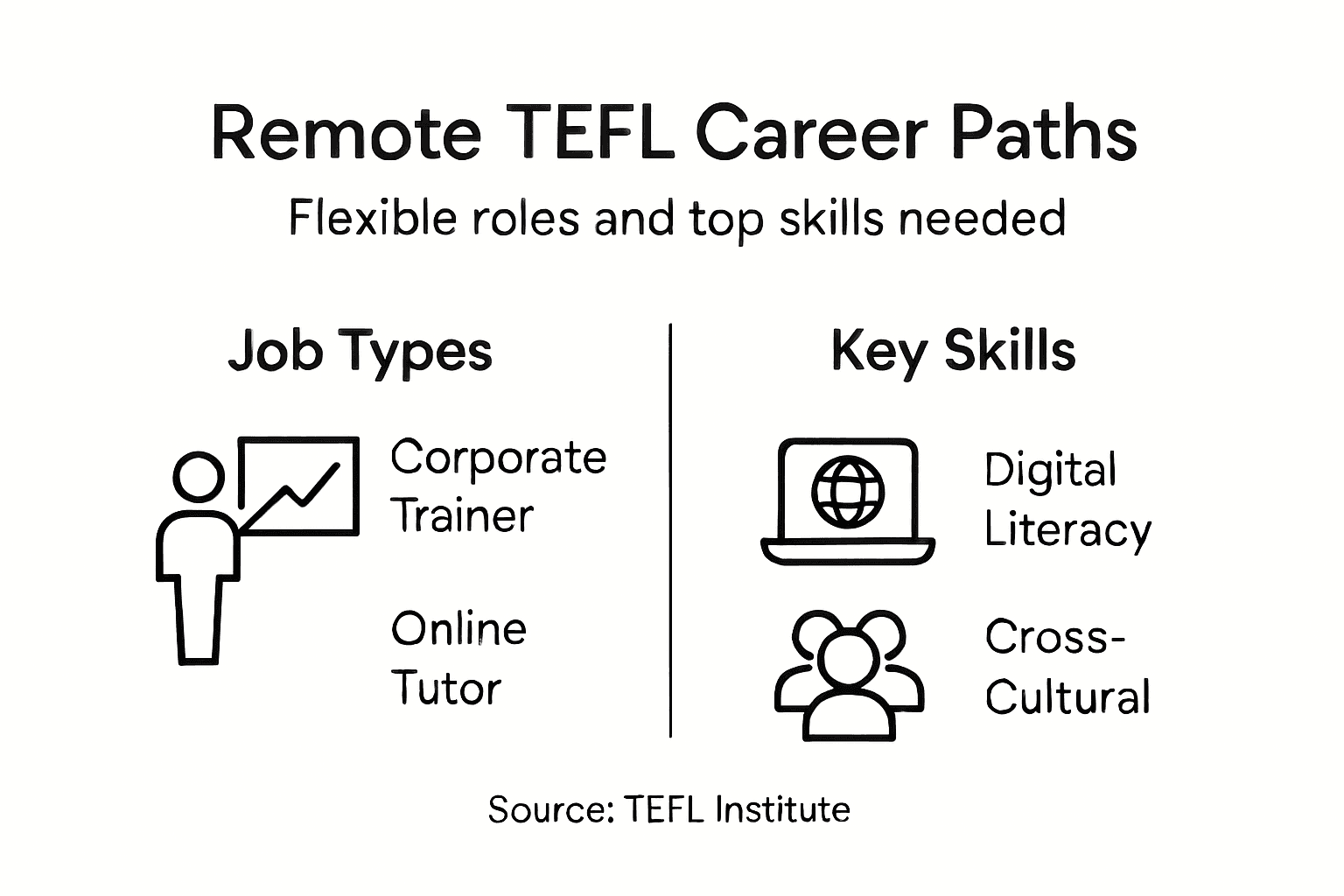
- Corporate English Training: Teaching professional communication skills to international business professionals
- Children’s Online Language Programs: Specialized instruction for young learners through interactive digital platforms
- Adult Conversational English: One-on-one and group conversation classes focusing on practical language skills
- Test Preparation Courses: Specialized instruction for international English proficiency exams like IELTS and TOEFL
- Academic English Writing: Supporting students in developing academic writing and research communication skills
Each remote TEFL position requires unique skills and approaches. Corporate training demands professional communication expertise, while children’s programs necessitate high-energy, engaging teaching techniques. Adult conversational classes prioritize practical language application and cultural exchange.

Here’s a quick comparison of remote TEFL teaching roles and the specialized skills they require:
| TEFL Job Type | Key Skills Needed | Typical Student Profile |
|---|---|---|
| Corporate Training | Professional communication, business vocabulary | International professionals |
| Children’s Programs | Engaging digital techniques, classroom management | Young learners (ages 3-16) |
| Adult Conversational | Intercultural communication, practical language use | Adult learners, travelers |
| Test Prep Courses | Exam-specific strategies, assessment skills | Exam candidates (IELTS, TOEFL) |
| Academic English | Writing instruction, research guidance | College/university students |
Emerging Digital Teaching Platforms have transformed how educators connect with students globally:
- Dedicated language learning websites
- Video conferencing tools with interactive features
- Asynchronous learning management systems
- Mobile application-based teaching platforms
- Virtual reality language immersion environments
The future of remote TEFL is not just about language instruction, but creating meaningful cross-cultural communication experiences through innovative digital technologies.
Pro tip: Develop a diverse skill set that includes digital literacy, multimedia presentation skills, and cross-cultural communication to maximize your remote TEFL job opportunities.
Essential Skills and Certification Requirements
Successful remote TEFL professionals must develop a comprehensive skill set that goes beyond traditional language teaching. Teaching English certification pathways are critical for establishing credibility and competence in the online education marketplace.
Core Technical Skills required for remote TEFL positions include:
- Advanced digital literacy
- Proficiency in video conferencing platforms
- Multimedia content creation
- Online classroom management
- Digital assessment and feedback techniques
- Cross-platform technology adaptation
Certification requirements vary depending on the specific remote teaching context. Most reputable online platforms and employers expect candidates to possess:
- TEFL/TESOL Certification: Minimum 120-hour accredited course
- Bachelor’s degree (preferred, but not always mandatory)
- Native or near-native English proficiency
- Basic technical computer skills
- Professional teaching background or equivalent experience
Soft Skills are equally important in remote TEFL environments. Successful online educators demonstrate:
- Strong intercultural communication abilities
- Adaptability to different learning styles
- Patience and empathy
- Clear and concise verbal communication
- Active listening skills
- Ability to maintain student engagement through digital platforms
Remote TEFL success depends not just on language expertise, but on the ability to create meaningful connections across digital landscapes.
● THE HIRE WIREHiring windows close while you scroll.
Deadlines, salaries and visa notes for teaching jobs worldwide, checked against official sources and sent free every two weeks.
Get on the Wire
Pro tip: Continuously update your digital skills and seek additional micro-credentials to distinguish yourself in the competitive remote TEFL job market.
Remote TEFL Job Platforms and Hiring Processes
The digital landscape of remote TEFL employment has dramatically transformed, offering educators multiple pathways to connect with international students. Top TEFL job platforms provide diverse opportunities for teaching English online across global markets.
Primary Remote TEFL Job Platforms include:
- Italki
- Verbling
- Preply
- LanguaTalk
- Verbal Planet
- Tutoroo
- Premier TEFL
- Bridge Education Group
Typical hiring processes for remote TEFL positions involve several structured steps:
- Create a comprehensive professional profile
- Submit verified teaching credentials
- Complete platform-specific application
- Undergo background screening
- Participate in demo teaching evaluation
- Set personal teaching rates and availability
Key Hiring Requirements most platforms mandate:
The following table summarizes core requirements for landing a remote TEFL position on leading platforms:
| Requirement | Why It Matters | Impact on Employment |
|---|---|---|
| TEFL/TESOL Certification | Demonstrates formal training | Access to better-paying jobs |
| Professional Profile | Builds credibility | Attracts more student bookings |
| Tech Setup | Ensures teaching quality | Reduces disruptions in class |
| Demo Lesson | Shows teaching approach | Required for most platform approval |
- Valid TEFL/TESOL certification
- Native or near-native English proficiency
- Clear video communication setup
- Professional teaching background
- Reliable high-speed internet connection
- Basic digital teaching technology skills
Remote TEFL platforms prioritize instructor quality, technological competence, and ability to engage students across digital environments.
Pro tip: Create a standout digital teaching profile by showcasing your unique teaching approach, technology skills, and cross-cultural communication abilities.
Salary Expectations, Tax, and Safety Risks
Remote TEFL teaching offers diverse financial opportunities, with earning potential varying significantly across different platforms and regions. TEFL teacher salary insights reveal important considerations for prospective online educators.
Typical Hourly Rate Ranges for remote TEFL positions include:
- Beginner tutors: $10-$20 per hour
- Intermediate experienced teachers: $20-$35 per hour
- Advanced specialized instructors: $35-$50 per hour
- Corporate English training: $40-$75 per hour
- Test preparation specialists: $30-$60 per hour
Tax considerations for remote TEFL professionals can be complex and vary based on several critical factors:
- Residential tax status
- Employment classification (independent contractor vs. employee)
- Country of income origin
- Duration of international teaching
- Bilateral tax treaties
Potential Safety Risks in remote TEFL employment encompass:
- Digital platform security vulnerabilities
- Payment processing inconsistencies
- Potential online harassment
- Intellectual property protection
- Personal data privacy concerns
- Cross-border legal complications
Remote TEFL teaching requires careful financial planning and proactive risk management strategies to ensure professional stability and personal security.
Pro tip: Maintain comprehensive documentation of your international income and consult with a tax professional specializing in digital nomad and remote work taxation to navigate complex financial landscapes.
Unlock Your Flexible TEFL Career with Expert Training
Many aspiring remote TEFL teachers struggle with navigating certification, mastering digital teaching tools, and standing out in the competitive online English teaching marketplace. This article highlights key challenges such as obtaining a professional TEFL credential, building advanced digital literacy, and adapting to diverse student needs across platforms like Italki and Verbling. If you want to break free from uncertainty and gain the skills that truly unlock global teaching opportunities, a well-structured training program is essential.
Take control of your career path by enrolling in TEFL Institute’s comprehensive certification courses. Our programs include advanced diplomas, micro-credentials, and niche training like IELTS preparation designed specifically to equip you for success in remote TEFL jobs. Start building your digital expertise and intercultural communication skills today. Visit TEFL Institute now and transform your passion for teaching into a rewarding, flexible profession that thrives in the digital age.
Frequently Asked Questions
What are remote TEFL jobs?
Remote TEFL jobs are positions where English language teachers leverage digital platforms to teach students around the world without being confined to a traditional classroom setting.
What qualifications do I need for remote TEFL jobs?
To qualify for remote TEFL jobs, you typically need at least a TEFL/TESOL certification, proficiency in English, and basic technical skills. Some positions may also require a Bachelor’s degree and prior teaching experience.
How do I find remote TEFL job opportunities?
You can find remote TEFL job opportunities through various online platforms dedicated to English teaching, such as Italki, Verbling, and Preply, which connect teachers with students globally.
What are the salary expectations for remote TEFL teachers?
Salary expectations for remote TEFL teachers can vary widely, typically ranging from $10 to $75 per hour, depending on factors like experience, specialization, and the type of English instruction being provided.
Recommended
- Remote TEFL Teaching: How It Transforms Language Careers | TEFL Institute
- The Expert Guide to Teaching English Online in 2026 | Complete TEFL Roadmap | TEFL Institute
- 10 Benefits of Working Remotely | TEFL Institute
- Benefits of Teaching English Online: Flexibility and Impact | TEFL Institute
- Как организовать эффективное удаленное собеседование
- 7-Step Remote Sales Team Management Checklist for Growth
TEFL Institute guides

Taiwan
Buxibans, pay and visas
South Korea
EPIK, hagwons and pay
Vietnam
Work permits and requirements
Cambodia
Pay, requirements and visas
Germany
Freelance work and pay