
 United Kingdom (UK)
 United States (US)
 Canada
 South Africa
 India
India Australia
 New Zealand
 China
China Russia
 Germany
 France
 Spain
Spain Netherlands
 Vietnam
 United Arab Emirates
 Italy
Italy Poland
 Thailand
 Türkiye








 Algeria


What Do I Need to Teach English Abroad Today

Landing a teaching job in Thailand or Colombia requires more than just fluent English. Many recent graduates are surprised to learn that schools look for TEFL certification and proven instructional skills before hiring. With countries like Japan and Chile setting strict requirements for foreign teachers, understanding the differences between TEFL course types and the credentials you need can open doors to rewarding careers in Asia or Latin America. This guide clears up common misconceptions and helps you plan for every step.
Table of Contents
- Defining TEFL and Common Misconceptions
- TEFL Certifications and Course Types Explained
- Country Requirements and Hiring Preferences
- Work Visas, Legalities, and Documentation
- Common Barriers and How to Avoid Them
Key Takeaways
| Point | Details |
|---|---|
| TEFL Certification is Essential | TEFL certification provides necessary training beyond fluency, ensuring effective teaching to non-native speakers. |
| Different Course Types Available | TEFL courses vary in format, with online, hybrid, and intensive options catering to diverse needs and schedules. |
| Understand Regional Hiring Requirements | Aspirants must research country-specific requirements for teaching positions, including necessary degrees and documents. |
| Be Prepared for Documentation and Legalities | Navigating work visas and documentation is critical; maintain a well-organized collection of essential papers for smooth applications. |
Defining TEFL and Common Misconceptions
Teaching English as a Foreign Language (TEFL) represents a dynamic professional pathway for individuals seeking international teaching opportunities. At its core, TEFL certification provides educators with specialized training to teach English to non-native speakers in countries where English is not the primary language.
Contrary to popular belief, becoming a TEFL instructor involves much more than simply being a native English speaker. Understanding language acquisition processes requires comprehensive training and strategic instructional approaches. Many aspiring teachers mistakenly assume that speaking English fluently automatically qualifies them to teach effectively.
Common misconceptions about TEFL include:
- Anyone who speaks English can teach it professionally
- TEFL certification is unnecessary for international teaching
- Teaching methods are identical across all language learning contexts
- English instruction follows a one-size-fits-all curriculum
- International teaching opportunities are limited
Successful TEFL professionals recognize that effective language instruction demands specialized pedagogical skills, cultural understanding, and adaptive teaching strategies. Certification programs provide crucial training in:
- Classroom management techniques
- Curriculum development
- Language assessment methods
- Cross-cultural communication skills
- Grammar instruction strategies
- Interactive teaching approaches
Professional language educators understand that teaching English abroad requires more than linguistic knowledge. It demands cultural sensitivity, instructional creativity, and a deep commitment to student learning.
Pro tip: Research specific country requirements and preferred TEFL certification standards before selecting your training program to maximize your international teaching opportunities.
TEFL Certifications and Course Types Explained
Teaching English as a Foreign Language (TEFL) certification represents a critical pathway for educators seeking international teaching opportunities. Certification programs vary widely in format, duration, and instructional approach, offering aspiring teachers multiple options for earning professional credentials.
TEFL certification courses typically fall into three primary categories:
- Online Self-Paced Courses: Flexible learning with digital modules
- Hybrid Courses: Combination of online study and in-person practicum
- Intensive In-Person Training: Comprehensive classroom-based instruction
The most recognized TEFL certifications generally require 120 hours of comprehensive training, which includes both theoretical coursework and practical teaching components. Different programs offer unique advantages:

Here’s a summary of popular TEFL course types and their key benefits:
| Course Type | Flexibility Level | Practical Experience | Typical Duration |
|---|---|---|---|
| Online Self-Paced | Very high | Minimal | 2-6 months |
| Hybrid (Online & In-Person) | Moderate | Substantial | 1-3 months |
| Intensive In-Person | Low | Extensive | 3-6 weeks |
- Online courses provide maximum scheduling flexibility
- Hybrid programs offer practical teaching experience
- Intensive courses deliver rapid, immersive training
Terminology Clarification: While often used interchangeably, TEFL, TESL, and TESOL represent related but distinct qualifications. TEFL specifically focuses on teaching English in countries where English is not the primary language, making it the most internationally recognized certification for global teaching opportunities.
Employers worldwide increasingly prioritize candidates with structured TEFL certification, viewing it as a marker of professional competence and pedagogical understanding. The certification demonstrates not just language proficiency, but also advanced instructional skills and cross-cultural communication abilities.
Pro tip: Verify the specific certification requirements for your target countries, as some regions have unique regulations for English-language teaching credentials.
Country Requirements and Hiring Preferences
International teaching requirements vary dramatically across different regions, creating a complex landscape for aspiring English teachers. While opportunities are abundant, each country maintains unique standards for hiring international educators.
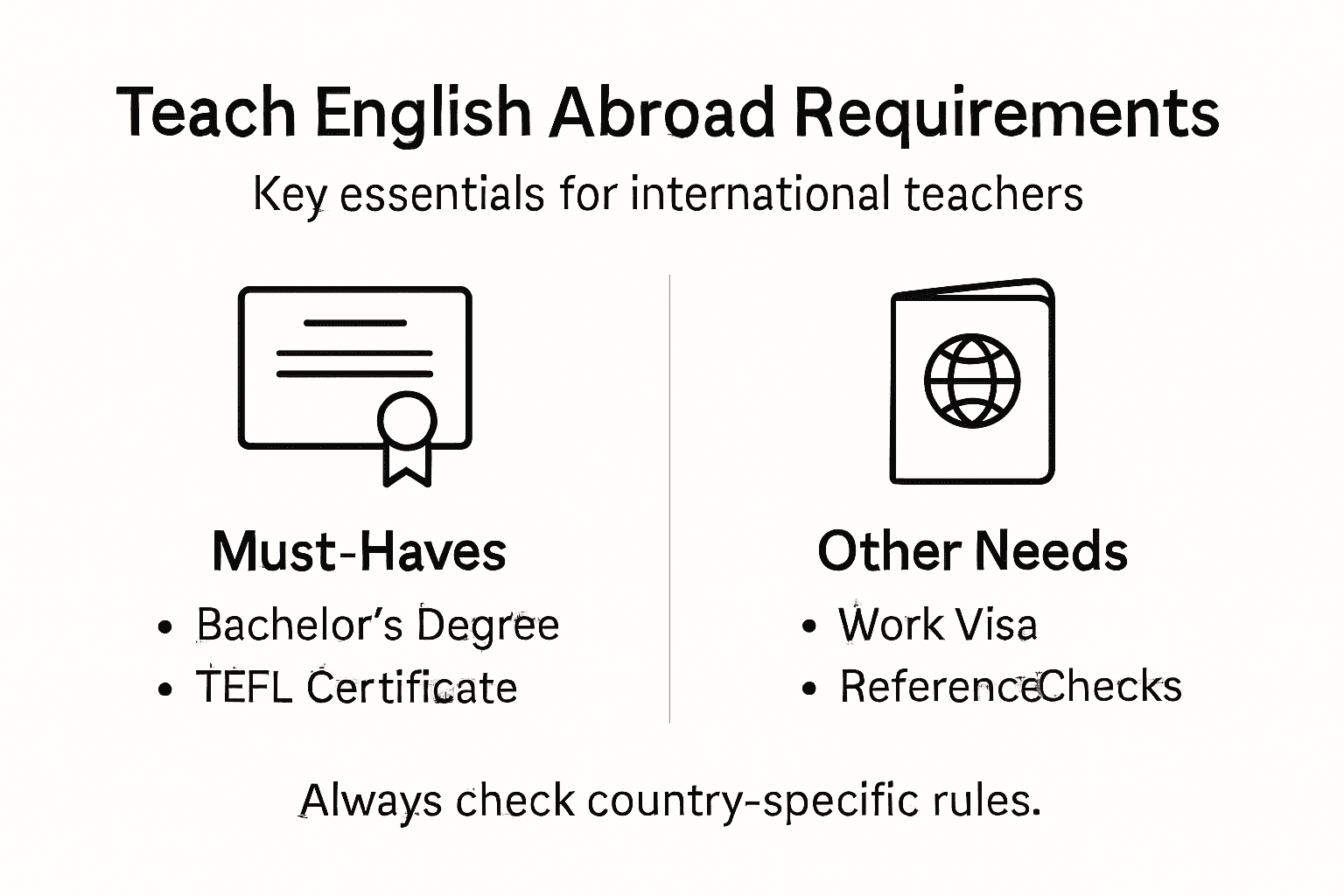
Key requirements typically include:
- Bachelor’s degree (in any field)
- Native or near-native English proficiency
- Valid TEFL/TESOL certification
- Clean criminal background check
- Valid passport
- Age restrictions (typically 21-55 years)
Regional hiring preferences differ significantly:
- Asia: Often prefer younger teachers, strict degree requirements
- Middle East: Higher salaries, more competitive positions
- Latin America: More flexible age and qualification standards
- Eastern Europe: Varied requirements, growing market for English teachers
Documentation Essentials: Most countries require authenticated academic credentials, including degree certificates and official transcripts. Some nations mandate additional paperwork, such as health clearance certificates or sealed university recommendations.
Employment contracts range from short-term programs to multi-year assignments. Compensation packages vary widely, with some countries offering comprehensive benefits including housing allowances, flight reimbursements, and health insurance.
Every TEFL opening, salary and deadline that matters.
In your inbox every two weeks. Free, no spam, unsubscribe any time.
Teacher pay by country
New TEFL openings
Programme and visa dates
Compare key hiring differences across regions for English teachers:
| Region | Degree Preference | Salary Range | Common Benefits |
|---|---|---|---|
| Asia | Bachelor’s required | Moderate to high | Housing, flights, bonus |
| Middle East | Graduate degree preferred | High | Housing, health insurance |
| Latin America | More flexible | Low to moderate | Minimal extras |
| Eastern Europe | Varies | Moderate | Some housing, local perks |
Pro tip: Research specific visa regulations and work permit requirements for your target country at least six months before your intended departure date.
Work Visas, Legalities, and Documentation
Work authorization processes represent a critical component of international teaching, requiring careful navigation of complex legal requirements. Each country maintains unique regulations for foreign educators, making thorough preparation essential for successful international employment.
Key documentation typically required includes:
- Valid passport with at least 6 months remaining
- Original degree certificates
- TEFL certification documents
- Criminal background check
- Health clearance certificates
- Professional reference letters
- Official transcripts
Visa categories for English teachers generally fall into several primary classifications:
- Tourist Visa Conversion: Short-term teaching opportunities
- Work Permit Visas: Long-term employment authorization
- Cultural Exchange Visas: Specialized teaching programs
- Temporary Resident Visas: Extended teaching assignments
Documentation Complexity: Many countries require document authentication through processes such as apostille certification, which verifies the authenticity of official documents for international use. Some nations mandate translated and notarized copies of all critical documents.
Employers often play a crucial role in the visa application process, providing sponsorship and supporting documentation. The specific requirements can vary dramatically between countries, with some requiring extensive paperwork and others maintaining more streamlined processes.
Pro tip: Create a dedicated digital and physical folder with multiple certified copies of all essential documents to streamline your international teaching application process.
Common Barriers and How to Avoid Them
Language barriers challenge international educators in complex and nuanced ways, requiring strategic preparation and adaptable communication skills. Understanding these challenges is crucial for successfully navigating international teaching environments.
Common barriers experienced by international English teachers include:
- Cultural misunderstandings
- Communication gaps
- Classroom management differences
- Administrative complexity
- Personal adjustment challenges
- Unexpected bureaucratic hurdles
Strategies for overcoming these barriers involve:
- Developing cross-cultural communication skills
- Learning basic local language phrases
- Practicing active listening techniques
- Understanding non-verbal communication cues
- Maintaining professional flexibility
- Cultivating cultural humility
Professional Adaptation: Successful international teachers recognize that effective communication transcends language proficiency. This requires emotional intelligence, patience, and a willingness to learn from local contexts and teaching practices.
Additional challenges often involve navigating different educational systems, understanding unspoken cultural norms, and managing expectations from students, administrators, and local colleagues. Preparation and an open mindset are critical for long-term success.
Pro tip: Develop a personal cultural adaptation toolkit that includes language learning resources, communication strategies, and stress management techniques before departing for your international teaching assignment.
Ready to Teach English Abroad with Confidence Today
The journey to becoming a successful international English teacher starts with the right certification and preparation. This article highlights the importance of obtaining a recognized TEFL certification, understanding country-specific requirements, and overcoming challenges like visa documentation and cultural adaptation. If you are feeling overwhelmed by the many prerequisites and want to stand out as a qualified educator, our comprehensive range of courses at TEFL Institute can guide you every step of the way.
Take control of your teaching career by enrolling in flexible and accredited online TEFL courses designed to fit your schedule and goals. Whether you seek practical in-person training or self-paced learning, our offerings include advanced diplomas, micro-credentials, and specialized programs to match your ambitions. Visit TEFL Institute now and access essential resources including certification verification and salary calculators. Start your path to teaching English abroad with confidence and seize international opportunities today.
Frequently Asked Questions
What qualifications do I need to teach English abroad?
To teach English abroad, you typically need a bachelor’s degree in any field, native or near-native English proficiency, and a valid TEFL certification. Some countries may also require specific credentials or experience.
Is a TEFL certification necessary for teaching English overseas?
Yes, a TEFL certification is generally necessary for teaching English abroad, as it provides essential pedagogical skills and demonstrates your commitment and understanding of teaching methodologies.
What types of TEFL certification courses are available?
TEFL certification courses come in several formats, including online self-paced courses, hybrid courses that combine online and in-person training, and intensive in-person training, each providing different levels of flexibility and practical experience.
How can I prepare for legal requirements and work visas when teaching abroad?
To prepare for legal requirements and work visas, gather essential documentation such as your passport, degree certificates, TEFL certification, and any required health clearances well in advance. Researching the specific visa regulations for your target country is crucial for a smooth application process.
Recommended
- Can I Teach English Abroad Without a Degree? Complete Guide with Country Requirements | TEFL Institute
- The Expert Guide to Teaching English Online in 2026 | Complete TEFL Roadmap | TEFL Institute
- 7 Essential Steps for Landing Teaching Overseas Jobs | TEFL Institute
- Best Platforms To Teach English Online in 2026: Complete TEFL Guide | TEFL Institute
- Understanding International Travel Tips for Savvy Explorers – PilotTravelDeals.com

Tara and Jess talk through different TEFL and EFL topics, from finding work abroad to life in the classroom.