

 United Kingdom (UK)
 United States (US)
 Canada
 South Africa
 India
India Australia
 New Zealand
 China
China Russia
 Germany
 France
 Spain
Spain Netherlands
 Vietnam
 United Arab Emirates
 Italy
Italy Poland
 Thailand
 Türkiye




 Algeria


How to Teach IELTS Preparation: Step-by-Step Guide for Teachers
How to Teach IELTS Preparation: Step-by-Step Guide for Teachers

Over one and a half million candidates take the IELTS exam each year, but many struggle to reach their desired band score without a clear teaching plan. Understanding every student’s unique needs is the foundation of successful IELTS instruction and leads to lasting results. This guide outlines proven steps for building a personalized approach that improves learner motivation, targets skills effectively, and drives higher test performance.
Table of Contents
- Step 1: Assess Learner Needs And IELTS Goals
- Step 2: Design Targeted IELTS Curriculum And Materials
- Step 3: Deliver Effective IELTS Lessons And Strategies
- Step 4: Integrate Practice Tests And Mock Exams
- Step 5: Evaluate Progress And Provide Targeted Feedback
Quick Summary
| Key Point | Explanation |
|---|---|
| 1. Conduct thorough needs assessments | Understand each student’s goals and proficiency to develop personalized IELTS preparation strategies. |
| 2. Customize the IELTS curriculum | Design a curriculum that addresses students’ specific proficiency levels and includes all four IELTS components. |
| 3. Implement authentic practice tests | Regularly administer mock exams to replicate real test conditions and build student confidence. |
| 4. Provide structured feedback | Use detailed progress evaluations to guide students in improving their language skills and exam performance. |
| 5. Foster student ownership of learning | Encourage self-evaluation and goal-setting to empower students in their IELTS preparation journey. |
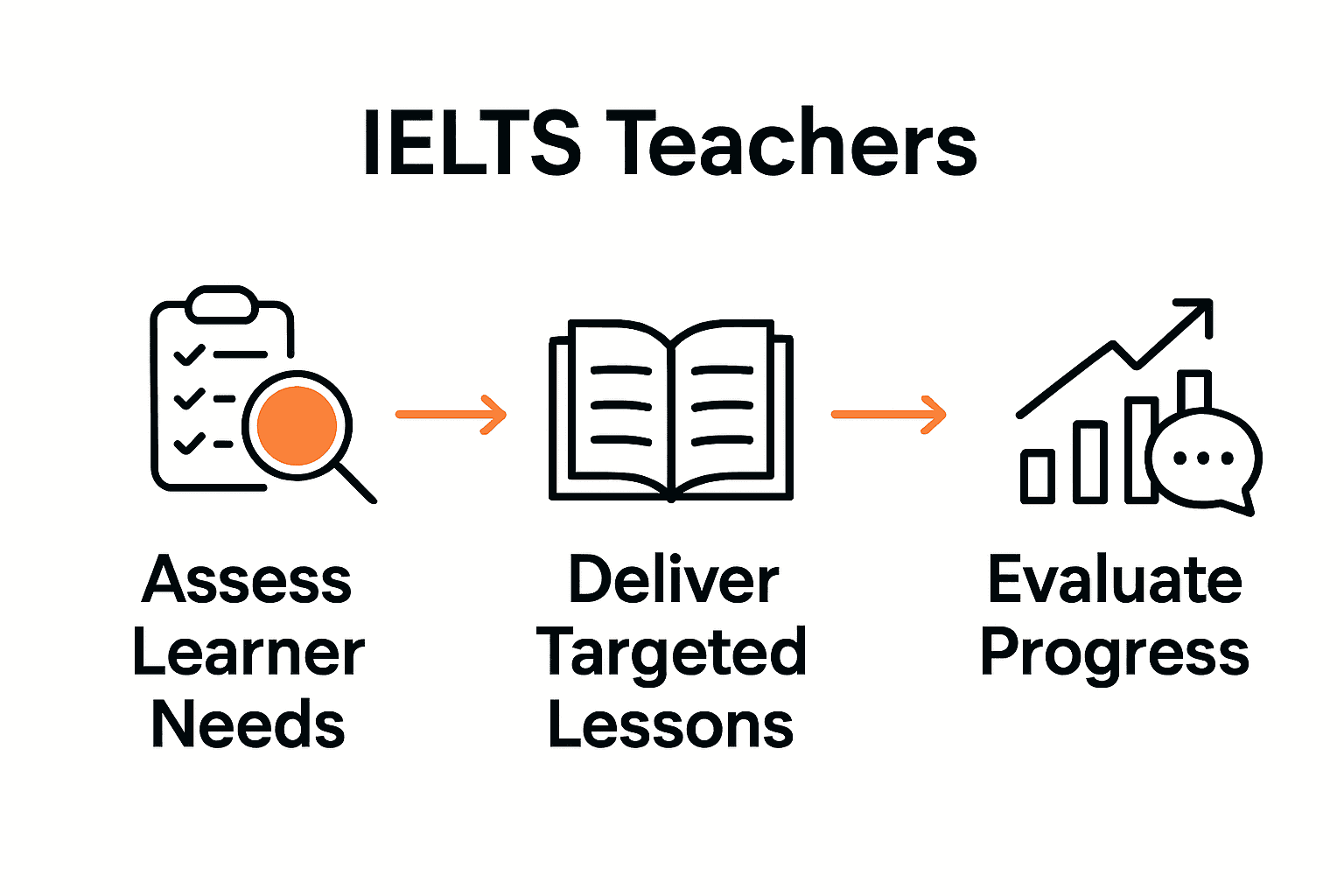
Step 1: Assess Learner Needs and IELTS Goals
Teaching IELTS preparation requires a strategic approach that begins with comprehensive learner needs assessment. Your primary goal is to understand each student’s unique language learning objectives and current proficiency level before designing an effective preparation strategy. As research from rsisinternational.org indicates, needs analysis is crucial in aligning course content with specific learner requirements and enhancing student motivation.
To effectively assess student needs, start by conducting an initial diagnostic evaluation through a combination of methods. Develop a comprehensive questionnaire that explores students’ academic and professional goals, current English proficiency, target IELTS band score, and specific areas of language challenge. During the initial consultation, engage students in a detailed conversation about their motivations for taking the IELTS exam whether for university admission, professional certification, or immigration purposes. This dialogue helps you create a personalized learning roadmap that addresses their unique linguistic and strategic preparation needs.
Pro tip for teachers: Remember that each student’s IELTS journey is unique. Avoid adopting a one-size-fits-all approach. Instead, create flexible learning plans that can be dynamically adjusted based on ongoing assessment and student progress. Your ability to adapt and customize instruction will significantly impact student success and confidence in their IELTS preparation.
Once you have completed the initial needs assessment, you will be ready to design a targeted preparation strategy that addresses each student’s specific language skills and exam readiness.
Step 2: Design Targeted IELTS Curriculum and Materials
Designing an effective IELTS preparation curriculum requires a strategic and nuanced approach that addresses the specific needs of your students. According to research from csdlkhoahoc.hueuni.edu.vn, successful course design involves tailoring materials and objectives to different proficiency levels, such as specific band score ranges like 4.5–6.0 or 6.0–6.5.
Begin by mapping out a comprehensive curriculum that covers all four IELTS exam components: reading, writing, listening, and speaking. As insights from eflcafe.net suggest, create micro-checklists and learner friendly success criteria that mirror actual exam conditions. Your curriculum should include diagnostic assessments, targeted skill building exercises, mock tests, and personalized feedback sessions. Develop or curate materials that progressively challenge students while building their confidence across different linguistic skills.
Pro tip for teachers: When selecting or creating IELTS preparation materials, prioritize authenticity and variety. Use a mix of official IELTS practice resources, academic journals, news articles, and multimedia content that represent the diverse contexts students will encounter in the actual exam. For additional guidance on building robust teaching materials, check out our ESL teaching materials guide.

Once your curriculum is structured, you will be prepared to implement targeted teaching strategies that systematically improve your students IELTS performance.
Step 3: Deliver Effective IELTS Lessons and Strategies
Delivering effective IELTS lessons requires a strategic approach that goes beyond traditional teaching methods. Research from ej-edu.org highlights the critical importance of integrating cognitive, metacognitive, and affective learning strategies to enhance student performance, particularly in challenging areas like Writing Task 2. Your primary goal is to create an engaging learning environment that systematically builds students confidence and skills across all four IELTS exam components.
To maximize lesson effectiveness, implement a multifaceted teaching approach that combines targeted skill development with strategic exam preparation. As insights from arxiv.org suggest, incorporate self regulated learning techniques and collaborative learning opportunities that extend beyond traditional classroom boundaries. This might include interactive workshops, peer review sessions, and technology assisted learning tools that help students develop independent study skills. Break down complex exam tasks into manageable components, providing clear success criteria and frequent opportunities for practice and feedback.
Pro tip for teachers: When designing IELTS lessons, focus on creating authentic learning experiences that mirror actual exam conditions. Use a variety of resources like academic journals, news articles, and multimedia content to keep students engaged. For additional strategies and lesson planning techniques, explore our ESL lesson planning guide.
With these strategies in place, you will be prepared to guide your students toward confident and successful IELTS exam performance.
Step 4: Integrate Practice Tests and Mock Exams
Integrating practice tests and mock exams is a critical component of IELTS preparation that helps students develop confidence and strategic test taking skills. According to research from cambridgeenglish.org, educators should utilize online tutorials that familiarize students with test content and measurement objectives, ultimately improving their performance in simulated exam environments.
Design a comprehensive mock exam strategy that progressively challenges students across all four IELTS components. As insights from files.eric.ed.gov highlight, practice tests are instrumental in identifying individual performance gaps and helping learners develop targeted improvement strategies. Schedule regular mock exams that replicate actual test conditions, including strict time management, authentic question formats, and minimal instructor intervention. After each practice test, conduct detailed feedback sessions where students can analyze their performance, understand their mistakes, and develop personalized improvement plans.
Pro tip for teachers: When administering practice tests, create an environment that closely mimics the actual IELTS exam. This means implementing similar seating arrangements, using official timing protocols, and maintaining a serious yet supportive atmosphere. For additional guidance on effective test preparation techniques, explore our everything you need to know for teaching IELTS guide.
With a robust practice test integration strategy, you will systematically build your students confidence and preparedness for the actual IELTS examination.
Step 5: Evaluate Progress and Provide Targeted Feedback
Effective progress evaluation is essential in IELTS preparation to help students systematically improve their language skills. Research from cambridgeenglish.org highlights the importance of integrating self reflection activities and assessment rubrics that enable students to autonomously monitor their own learning progress across different language components.
Develop a comprehensive feedback strategy that goes beyond traditional grading methods. As insights from arxiv.org suggest, leverage advanced assessment techniques that provide nuanced and personalized insights into student performance. Conduct regular individual feedback sessions where you break down each students strengths and areas for improvement across reading, writing, listening, and speaking skills. Use a combination of quantitative scores and qualitative observations to create detailed performance maps that students can use as roadmaps for targeted skill development.
Pro tip for teachers: Create a structured feedback framework that balances constructive criticism with positive reinforcement. Encourage students to actively participate in their own assessment by developing self evaluation skills and setting personal improvement goals. For comprehensive strategies on effective language teaching approaches, explore our IELTS teaching guide.
With a robust evaluation and feedback system, you will empower your students to take ownership of their IELTS preparation journey.
Elevate Your IELTS Teaching Skills with Expert Training
Teaching IELTS preparation involves understanding unique learner goals, designing targeted curricula, and delivering engaging lessons that build confidence and exam readiness. If you find it challenging to create personalized learning plans, integrate effective practice tests, and provide nuanced feedback, you are not alone. Many teachers struggle with balancing these complex needs while aiming to boost student performance toward specific IELTS band scores.
At TEFL Institute, we offer specialized courses designed to equip you with advanced strategies and practical tools for IELTS instruction. Our programs help you master learner needs assessment, curriculum design, and mock exam implementation, so you can confidently guide your students to success. Discover relevant insights and training options that align perfectly with the step-by-step methods outlined in the How to Teach IELTS Preparation: Step-by-Step Guide for Teachers.

Ready to transform your teaching approach and empower your students to achieve higher IELTS band scores? Explore our comprehensive catalog of online TEFL courses and IELTS preparation training today. Take the next step toward becoming the IELTS instructor you aspire to be by visiting TEFL Institute and enrolling now.
Frequently Asked Questions
How can I assess my students’ needs for IELTS preparation?
To assess your students’ needs effectively, start with a diagnostic evaluation that includes a comprehensive questionnaire. This should explore their academic and professional goals, current English proficiency, and target IELTS band score.
What should I include in the IELTS curriculum I design for my students?
Your IELTS curriculum should cover all four exam components: reading, writing, listening, and speaking. Create diagnostic assessments, skill-building exercises, mock tests, and personalized feedback sessions to ensure each student can progressively improve.
How can I deliver effective lessons for IELTS preparation?
Deliver effective lessons by integrating cognitive, metacognitive, and affective learning strategies. Use a multifaceted approach that includes targeted skill development and collaborative learning opportunities, such as interactive workshops and peer review sessions.
How often should I administer practice tests to my IELTS students?
Administer practice tests regularly to build confidence and identify performance gaps. Aim to schedule these mock exams at intervals that allow students to integrate feedback and develop targeted improvement strategies over a few weeks.
What feedback methods should I use to evaluate my students’ progress?
Use a combination of quantitative scores and qualitative observations to provide detailed feedback. Conduct regular individual sessions to help students understand their strengths and areas for improvement, allowing them to set personal development goals.
How can I create a positive learning environment for IELTS preparation?
To create a positive learning environment, focus on providing authentic learning experiences that mimic actual exam conditions. Foster a supportive atmosphere that encourages student engagement and open communication throughout the preparation process.
Recommended
- Everything you need to know for teaching IELTS | TEFL Institute
- 300 Hour Regulated Level 5 Advanced TEFL Diploma
- 180 Hour Level 5 TEFL Diploma | Ofqual Regulated | USA
- 190 Hour Hybrid Level 5 TEFL Diploma | TEFL Institute
- Preparación Cambridge: Todo Lo Que Debes Saber – Academia Atenea
- interview preparation guide – ParakeetAI
