

 United Kingdom (UK)
 United States (US)
 Canada
 South Africa
 India
India Australia
 New Zealand
 China
China Russia
 Germany
 France
 Spain
Spain Netherlands
 Vietnam
 United Arab Emirates
 Italy
Italy Poland
 Thailand
 Türkiye





 Algeria


Top Ways to Boost TEFL Salary for Higher Earnings
Top Ways to Boost TEFL Salary for Higher Earnings

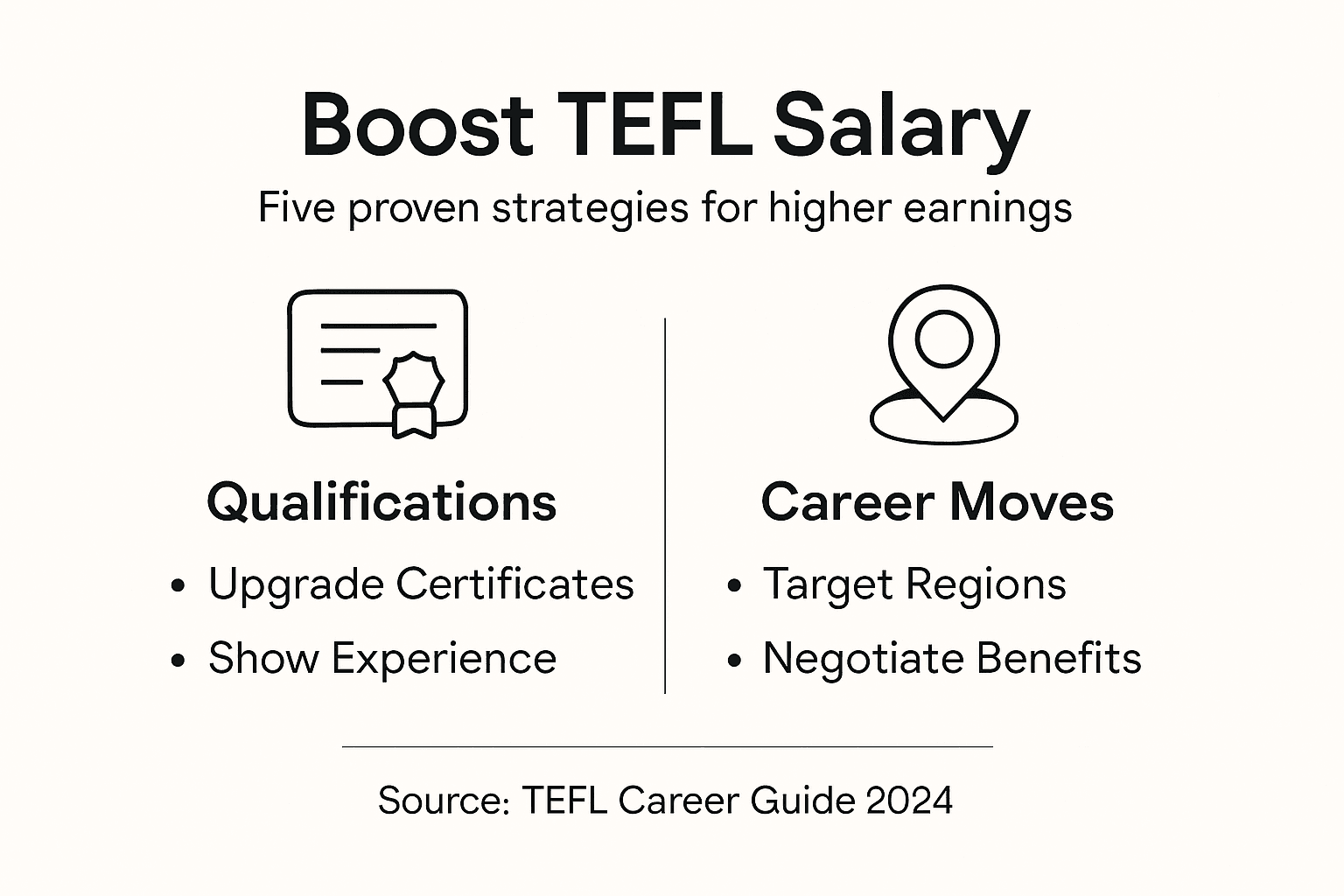
Every TEFL teacher faces the challenge of turning their qualifications into higher earnings. Understanding how your certifications, training, and teaching experience stack up is vital if you want to secure the most rewarding international roles. By focusing on both advanced credentials and smart market research, you can stand out in competitive regions like South Korea or the Middle East and negotiate salary packages that truly reflect your value. Bold salary negotiation strategies and benchmarking tools help ensure you get paid what you deserve.
Table of Contents
- Step 1: Assess Current TEFL Qualifications And Experience
- Step 2: Pursue Advanced TEFL Certifications Or Specialties
- Step 3: Target High-Paying Regions And Job Markets
- Step 4: Negotiate Salary And Benefits Effectively
- Step 5: Verify Increases Using Salary Tools And Benchmarks
Quick Summary
| Key Insight | Explanation |
|---|---|
| 1. Assess Your Current Qualifications | Understand your TEFL certifications to identify areas for improvement and enhance your employability. |
| 2. Pursue Advanced Certifications | Obtain specialized TEFL certifications to increase your marketability and earning potential in competitive job markets. |
| 3. Target High-Paying Job Markets | Research regions with high salaries and favorable benefits to maximize your teaching income opportunities. |
| 4. Negotiate Your Compensation Effectively | Prepare to negotiate salaries and benefits to reflect your unique qualifications and make the most of job offers. |
| 5. Use Salary Verification Tools | Leverage salary benchmarking resources to validate your earning potential and ensure informed negotiations. |
Step 1: Assess current TEFL qualifications and experience
Successfully boosting your TEFL salary starts with a thorough understanding of your current professional credentials. This critical first step involves strategically evaluating your existing qualifications to identify potential enhancement opportunities.
To begin, compile a comprehensive inventory of your current TEFL certifications, degrees, and professional teaching experience. Not all TEFL credentials are created equal – some hold significantly more weight in the international job market. When assessing your qualifications, pay close attention to details like course hours, accreditation, and specialization. Teaching English certification requirements typically mandate at least 120 hours of comprehensive training to demonstrate professional competency.
Key elements to evaluate in your current profile include:
- Level of TEFL/TESOL certification
- Academic degrees related to education or language instruction
- Previous international or domestic teaching experience
- Language proficiency in your target teaching markets
- Specialized training or micro-credentials
Employers often look for candidates with robust, well-rounded credentials that showcase both theoretical knowledge and practical classroom skills. Consider documenting your experience meticulously, highlighting any unique training or specialized expertise that sets you apart from other candidates.
Pro tip: Create a professional digital portfolio showcasing your certifications, teaching experiences, and language skills to make a compelling first impression with potential employers.
Step 2: Pursue advanced TEFL certifications or specialties
Elevating your TEFL earning potential requires strategic investment in advanced professional credentials that distinguish you in the competitive international teaching market. This step focuses on identifying and obtaining specialized certifications that can significantly boost your marketability and salary potential.
Advanced TEFL certifications go beyond basic entry-level training, offering deeper pedagogical insights and specialized skills that employers value. Advanced certification programs provide comprehensive training that often includes practical teaching experience, preparing teachers for complex international teaching environments. Consider pursuing credentials that offer specialized focus areas such as:
- Business English instruction
- Young learner specialization
- Online teaching methodologies
- Academic English preparation
- Test preparation instruction (IELTS, TOEFL)
When selecting advanced certifications, prioritize programs with robust curriculum, international accreditation, and practical components like teaching practicums. Look for courses offering 150 hours or more of training, which signal a comprehensive approach to language instruction. Investigate whether potential certifications provide additional benefits like job placement assistance or global recognition.
Here’s a comparison of advanced TEFL certifications and their career impact:
| Certification Type | Typical Duration | Market Value | Career Benefits |
|---|---|---|---|
| General TEFL (120 hours) | 4-6 weeks | Entry-level | Access to standard teaching jobs |
| Business English | 2-4 weeks extra | High in businesses | Increases corporate demand |
| Young Learner Specialist | 2 weeks extra | High for schools | Expands opportunities in schools |
| Online Teaching | 2-3 weeks extra | Growing rapidly | Access to remote positions |
| Exam Preparation (IELTS) | 2-4 weeks extra | High for test prep | Enables higher hourly rates |
Pro tip: Research certification programs that offer micro-credentials or stackable certifications, allowing you to incrementally build your professional qualifications while maintaining flexibility.
Step 3: Target high-paying regions and job markets
Maximizing your TEFL earning potential requires strategic targeting of global regions with the most lucrative teaching opportunities. This step focuses on identifying and researching international job markets that offer competitive salaries and attractive professional benefits.
Best countries for teaching English reveal several standout regions with exceptional compensation packages. Your research should prioritize destinations known for high salaries and additional perks:
- Middle Eastern countries (Qatar, UAE, Saudi Arabia)
- East Asian nations (South Korea, Japan, China)
- Southeast Asian markets (Taiwan, Vietnam)
- Online international platforms with global reach
Key considerations when evaluating potential teaching markets include:
- Base salary rates
- Cost of living expenses
- Tax implications
- Housing and travel allowances
- Contract duration and renewal opportunities
Some regions offer remarkable financial advantages beyond base salary. Middle Eastern countries frequently provide tax-free income, while Asian markets often include additional housing stipends that significantly enhance overall compensation. Research each potential destination thoroughly, understanding not just salary figures but total compensation packages.

This summary highlights key salary influencers in TEFL job markets:
| Region | Typical Perks | Salary Range (USD/month) | Notable Advantages |
|---|---|---|---|
| Middle East | Tax-free income, housing | $2,000–$4,500 | High savings potential |
| East Asia | Housing, flight allowance | $1,800–$3,200 | Strong job security |
| Southeast Asia | Housing, bonuses | $1,200–$2,200 | Lower living costs |
| Online Platforms | Remote flexibility | $10–$35/hour | Work from anywhere |
Comprehensive market research can uncover teaching opportunities that offer substantially higher earnings compared to traditional entry-level positions.
Pro tip: Network with current international teachers through professional forums and social media groups to gain insider insights about actual earning potential in different global markets.
Step 4: Negotiate salary and benefits effectively
Successful salary negotiation is a critical skill that can dramatically impact your TEFL earning potential. This step focuses on developing strategic approaches to maximize your compensation package and demonstrate your professional value.
Salary negotiation techniques require careful preparation and a confident, professional approach. Before entering negotiations, compile comprehensive evidence of your qualifications, teaching achievements, and unique skills that set you apart from other candidates. Your negotiation strategy should encompass multiple compensation elements:
- Base salary expectations
- Housing and travel allowances
- Professional development opportunities
- Contract renewal terms
- Additional benefits like healthcare or performance bonuses
Key negotiation principles include:
- Research market rates for your specific region and qualifications
- Quantify your professional contributions
- Practice your negotiation script
- Maintain a professional and collaborative tone
- Be prepared to discuss alternative compensation options
Successful negotiations are about creating mutual value, not just demanding higher pay.
Remember that total compensation package matters more than base salary alone. Some employers might offer lower base pay but provide significant additional benefits like free housing, flight reimbursements, or professional development funding.
Pro tip: Always request the complete compensation package in writing and carefully review all terms before making a final decision.
Step 5: Verify increases using salary tools and benchmarks
Validating your potential earnings requires strategic research and leveraging comprehensive salary comparison resources. This step empowers you to make data-driven decisions about your TEFL compensation by understanding market rates and industry standards.
Salary benchmarking strategies provide critical insights into competitive compensation across different TEFL markets. Your verification process should encompass multiple research approaches to ensure accuracy:
- Government labor statistics
- International education job boards
- Professional TEFL networking platforms
- Regional salary comparison websites
- Crowdsourced salary databases
When utilizing salary verification tools, consider these key factors:
- Match your specific qualifications and experience level
- Account for regional cost of living variations
- Compare total compensation packages, not just base salary
- Check data recency and source credibility
- Consider multiple sources for comprehensive insights
Reliable salary data helps you understand your market value and negotiate more effectively.
Pay special attention to geographic salary differentials and emerging market trends that might impact compensation. Some regions offer significantly higher salaries based on demand, certification levels, and specialized teaching skills.
Pro tip: Create a spreadsheet tracking salary ranges from multiple sources to develop a nuanced understanding of your potential earning potential.
Unlock Higher TEFL Salaries with Expert Certification and Resources
Struggling to boost your TEFL salary despite solid experience and basic credentials is a common challenge. The article highlights crucial strategies like advancing your TEFL certification, targeting high-paying regions, and mastering salary negotiation. If you want to overcome these hurdles and maximize your earnings, investing in specialized training and reliable salary tools is essential. Advanced certifications and niche courses such as IELTS preparation can set you apart and open doors to better-paying positions worldwide.
Take control of your teaching career today by exploring the comprehensive online TEFL courses and career resources at TEFL Institute. Gain access to micro-credentials, hybrid diploma programs with practicum options, and trusted salary calculators designed to empower your negotiation strategies. Don’t wait to elevate your qualifications and tap into global teaching markets with confidence. Visit TEFL Institute’s course catalog now to start your journey toward higher earning potential and professional success.
Frequently Asked Questions
How can I assess my current TEFL qualifications?
To assess your current TEFL qualifications, compile a list of all your certifications, teaching experience, and related academic degrees. Focus on details like the number of course hours and any specializations to identify areas for enhancement.
What advanced TEFL certifications should I consider to boost my salary?
Consider pursuing advanced TEFL certifications that specialize in areas like Business English, Online Teaching, or Exam Preparation. These certifications typically require additional training hours and can significantly enhance your marketability and salary potential within a few months.
Which regions typically offer the highest TEFL salaries?
Regions like the Middle East and East Asia are known for offering lucrative TEFL salaries and additional perks. Research compensation packages including base salary, housing allowances, and tax implications to find the best opportunities.
How should I negotiate my TEFL salary effectively?
To negotiate your TEFL salary effectively, come prepared with evidence of your qualifications and unique teaching contributions. Practice your negotiation points, focusing on creating mutual value and discussing not only salary but also total compensation packages within 30 days of receiving an offer.
What salary verification tools can help me understand my earning potential?
Use salary benchmarking strategies that include government labor statistics and professional networks to verify your earning potential. Gather data from multiple sources to create a comprehensive understanding of competitive salary ranges in your field and apply it when negotiating your salary.
How can I enhance my teaching portfolio to boost my TEFL salary?
Enhance your teaching portfolio by documenting all your qualifications, teaching experiences, and relevant skills in a professional format. Showcase any specialized training or certifications to make a compelling case to potential employers within 60 days.
Recommended
- Which Cities Pay the Most in South Korea for TEFL Teachers | TEFL Institute
- Best TEFL Certifications for Teaching English in Asia 2026: Japan, Korea, China, Thailand, Vietnam & Cambodia | TEFL Institute
- What Cities Pay the Highest Salary in Japan for TEFL Teachers | TEFL Institute
- TEFL Teacher Salary Guide: Complete Earnings Breakdown by Country | TEFL Institute
- How to Improve Teamwork for Success in College and Work – Optio Station: Best Project Management App for Prioritization
