

 United Kingdom (UK)
 United States (US)
 Canada
 South Africa
 India
India Australia
 New Zealand
 China
China Russia
 Germany
 France
 Spain
Spain Netherlands
 Vietnam
 United Arab Emirates
 Italy
Italy Poland
 Thailand
 Türkiye








 Algeria


Understanding What is Online Language Teaching
Understanding What is Online Language Teaching

Online language teaching is changing how people learn across the globe. Picture this. Nearly every major platform now offers real time language lessons that fit any schedule and reach students anywhere. Most assume digital classrooms are just video calls with a textbook, but the real innovation comes from adaptive algorithms, immersive simulations, and instant feedback tools that make learning faster and more personal than ever before. The real surprise is how these platforms do more than teach language skills—they open doors to entire worlds of connection and opportunity.
Table of Contents
- Defining Online Language Teaching: A New Era Of Education
- The Importance Of Online Language Teaching In Today’s World
- How Online Language Teaching Works: Platforms And Technologies
- Key Concepts And Methods In Online Language Teaching
- Real-World Applications And Benefits Of Online Language Teaching
Quick Summary
| Takeaway | Explanation |
| Online language teaching offers global accessibility | Learners can access high-quality instruction from anywhere, breaking geographical barriers to education. |
| Personalization enhances the learning experience | Adaptive learning algorithms tailor content to suit individual student needs, promoting effective skill acquisition. |
| Flexibility supports diverse learning schedules | Online platforms accommodate various time commitments, making language learning manageable for busy professionals and students. |
| Interactive tools boost engagement | Features like real-time translation and multimedia resources foster dynamic and immersive language learning experiences. |
| Professional skills development is prioritized | Online language teaching equips learners with essential communication skills vital for success in global job markets. |
Defining Online Language Teaching: A New Era of Education
Online language teaching represents a transformative approach to language education that leverages digital technologies to deliver comprehensive linguistic instruction across global platforms. This innovative educational model transcends traditional classroom boundaries, enabling learners to acquire language skills through virtual interactions, digital resources, and interactive multimedia platforms.
The Core Characteristics of Online Language Teaching
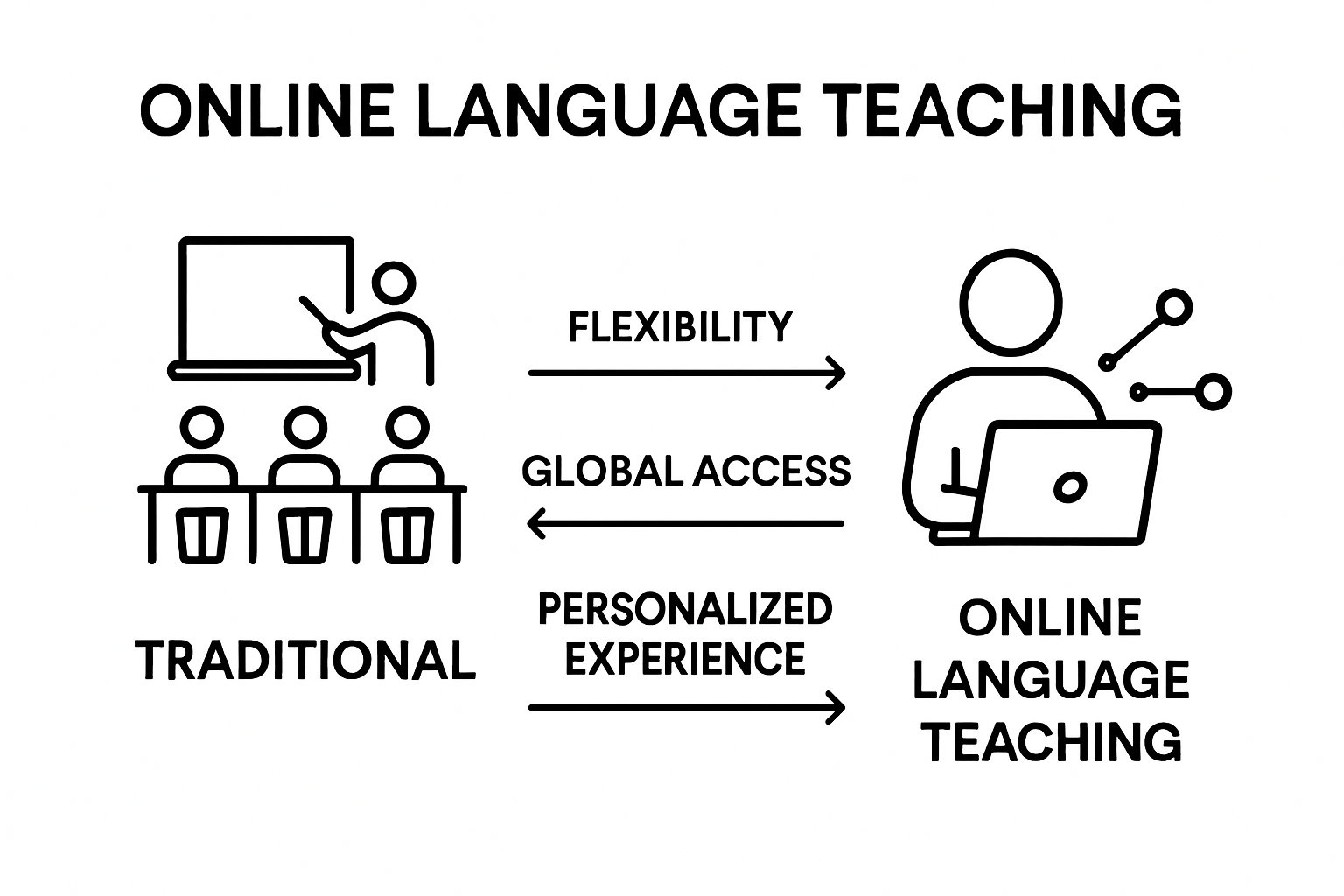
At its essence, online language teaching is a technology mediated educational strategy that connects language learners with instructors through internet based platforms. Research from the Asian-Pacific Journal of Second and Foreign Language Education highlights several key technological dimensions that define this emerging educational paradigm:
- Flexible learning environments that accommodate diverse student schedules
- Advanced communication tools facilitating real time interaction
- Personalized learning experiences tailored to individual student needs
- Global accessibility regardless of geographical constraints
Technological Infrastructure and Pedagogical Approaches
The technological infrastructure supporting online language teaching goes beyond simple video conferencing. Modern platforms integrate sophisticated features like:
- Interactive whiteboards
- Real time language translation tools
- Adaptive learning algorithms
- Multimedia content repositories
- Performance tracking and assessment systems
These technological components work synergistically to create immersive learning experiences that mimic and often surpass traditional classroom interactions. [Learn more about our specialized online teaching approaches
Below is a table outlining the core technological features and pedagogical integrations that distinguish online language teaching from traditional models.
| Feature | Description |
| Flexible Learning Environments | Accommodate diverse student schedules and preferences, providing access anytime and anywhere. |
| Advanced Communication Tools | Enable real-time interaction between instructors and learners through videoconferencing and chat. |
| Personalized Learning Experiences | Adaptive algorithms and technology tailor lessons to suit each student’s abilities and goals. |
| Global Accessibility | Remove geographical barriers, connecting students with educators internationally. |
| Interactive Whiteboards | Support visual collaboration and multimodal instruction beyond standard video calls. |
| Real-Time Language Translation Tools | Enhance understanding for multilingual groups or when comprehension needs a boost. |
| Performance Tracking & Assessment Systems | Offer immediate feedback, monitor progress, and support data-driven instruction. |
| Multimedia Content Repositories | Provide access to diverse learning materials including video, audio, and interactive exercises. |
Online language teaching represents more than a temporary trend. It is a fundamental reimagining of language education that democratizes learning, breaks down geographical barriers, and provides unprecedented flexibility for students worldwide. By combining cutting edge technology with sophisticated pedagogical strategies, this approach is reshaping how individuals acquire and master new languages in the digital age.
The Importance of Online Language Teaching in Today’s World
In an increasingly interconnected global landscape, online language teaching has emerged as a critical educational strategy that addresses multiple contemporary learning challenges. The significance of this approach extends far beyond traditional language instruction, offering transformative opportunities for personal and professional development.
Global Connectivity and Professional Advancement
According to the OECD, online language teaching provides unparalleled opportunities for learners to develop essential communication skills necessary for global professional environments. The ability to learn languages through digital platforms enables individuals to:
- Overcome geographical barriers to education
- Access high quality instruction from international experts
- Develop cross cultural communication competencies
- Enhance career prospects in multinational organizations

Economic and Personal Empowerment
Online language teaching democratizes education by making linguistic skill acquisition accessible and affordable. Unlike traditional classroom models, digital platforms offer flexible learning pathways that accommodate diverse schedules and learning styles. This accessibility is particularly crucial for working professionals, students, and individuals in remote locations who previously had limited language learning opportunities.
Moreover, digital language learning platforms integrate advanced technological tools that personalize the learning experience. Adaptive learning algorithms, interactive multimedia resources, and real time performance tracking enable students to progress at their individual pace. Learn more about our innovative online teaching strategies.
The profound impact of online language teaching extends beyond skill acquisition. It represents a paradigm shift in educational methodology, transforming how individuals engage with language learning. By breaking down traditional educational barriers, these digital platforms are not just teaching languages they are creating global citizens equipped with essential communication skills for the 21st century.
How Online Language Teaching Works: Platforms and Technologies
Online language teaching operates through sophisticated digital ecosystems that seamlessly integrate advanced technological platforms, interactive communication tools, and adaptive learning methodologies. These interconnected systems create comprehensive virtual learning environments that transcend traditional educational boundaries.
Technological Infrastructure and Communication Platforms
Research from the Computer-Assisted Language Learning Electronic Journal highlights the complex technological infrastructure supporting online language instruction. Modern platforms utilize multiple interconnected technologies to facilitate effective language learning:
- Videoconferencing software enabling real time face to face interactions
- Cloud based collaborative document sharing platforms
- Interactive multimedia learning management systems
- Automated language assessment and performance tracking tools
Learning Experience Design and Technological Integration
The technological architecture of online language teaching goes far beyond simple video communication. Advanced platforms incorporate sophisticated features that create immersive, personalized learning experiences. These include adaptive learning algorithms that adjust content difficulty based on individual student performance, machine learning powered pronunciation assessment tools, and AI driven language comprehension modules.
Interactive technologies enable multiple engagement modes, allowing students to practice listening, speaking, reading, and writing skills through diverse digital interfaces. Explore our comprehensive teaching platform options to understand how these technologies transform language education.
The convergence of educational technology and linguistic pedagogy represents a revolutionary approach to language learning. By leveraging cutting edge digital platforms, online language teaching creates flexible, accessible, and highly personalized educational experiences that adapt to individual learner needs, breaking down traditional barriers to language acquisition and global communication.
Key Concepts and Methods in Online Language Teaching
Online language teaching represents a sophisticated educational approach that combines pedagogical expertise with advanced technological methodologies. This intricate process involves strategic instructional design, innovative communication techniques, and technology mediated learning frameworks that fundamentally transform language acquisition strategies.
Theoretical Foundations and Instructional Design
Research from the Education and Information Technologies journal highlights critical conceptual frameworks underlying online language teaching. The core methodological approaches emphasize:
- Learner autonomy and self directed learning
- Technology mediated communication strategies
- Multimodal instructional design
- Adaptive and personalized learning experiences
Communication and Interaction Strategies
Effective online language teaching transcends traditional lecture models by creating dynamic, interactive learning environments. Sophisticated communication strategies enable meaningful linguistic exchanges through various digital platforms. These strategies include synchronous and asynchronous interaction modes that facilitate comprehensive language skill development.
Interactive technologies enable learners to engage with language content through diverse modalities, including video discussions, collaborative document editing, virtual role playing scenarios, and real time linguistic feedback mechanisms. Discover alternative pathways to online language teaching that accommodate diverse learning styles and professional backgrounds.
The integration of advanced pedagogical methods with cutting edge technological platforms represents a paradigm shift in language education. By combining sophisticated instructional design, adaptive learning technologies, and learner centered communication strategies, online language teaching creates flexible, accessible, and highly personalized educational experiences that respond dynamically to individual learning needs and global communication challenges.
Real-World Applications and Benefits of Online Language Teaching
Online language teaching has transformed from an experimental educational approach to a robust, globally recognized method of linguistic skill development. By leveraging digital technologies and innovative pedagogical strategies, this approach offers substantial real world benefits across personal, professional, and academic domains.
Professional and Career Development
Research from the National Institutes of Health demonstrates that online language teaching provides multiple professional advantages through multimedia and interactive learning platforms. These advantages include:
- Enhanced global communication skills
- Increased employability in multinational organizations
- Opportunities for cross cultural professional networking
- Flexibility in learning around existing work schedules
Academic and Personal Growth Opportunities
Online language teaching transcends traditional educational boundaries, creating unprecedented opportunities for learners worldwide. The digital learning environment enables individuals to develop sophisticated linguistic competencies while simultaneously acquiring critical 21st century skills such as digital literacy, self directed learning, and technological adaptability.
Interactive multimedia resources allow learners to engage with language content through diverse modalities, including immersive video scenarios, collaborative digital platforms, and personalized learning pathways. Explore alternative routes to language teaching expertise that accommodate diverse professional backgrounds and learning preferences.
The convergence of advanced technology and sophisticated pedagogical methodologies represents a fundamental shift in language education. By providing accessible, flexible, and personalized learning experiences, online language teaching empowers individuals to overcome geographical limitations, expand their communication capabilities, and unlock global professional and personal opportunities.
Here is a table comparing the major real-world benefits of online language teaching across professional, academic, and personal domains.
| Application Domain | Benefits |
| Professional Development | Enhanced global communication, increased employability, flexible learning for working schedules, networking skills |
| Academic Growth | Improved linguistic competency, access to international instructors, support for digital literacy |
| Personal Empowerment | Greater confidence, access for remote learners, self-directed learning, affordable and flexible learning options |
| Cross-Cultural Opportunities | Exposure to global peers, development of intercultural communication competencies |
| Technological Adaptability | Advanced digital skills, familiarization with new tools, capacity to learn through innovative platforms |
Bridge the Gap Between Possibility and Expertise with TEFL Institute
Are you inspired by the new possibilities found in online language teaching, yet feel overwhelmed by what it takes to start? The article highlights challenges like mastering advanced technology, accessing global students, and building real-world language teaching skills. Many readers want flexible training programs and expert guidance to move confidently into the digital classroom.
Step into your teaching future today at TEFL Institute. Our accredited TEFL courses, including options for specialized online methodologies, are designed to give you practical experience with proven digital tools and adaptive strategies. You can also explore innovative resources and guides tailored to every stage of your teaching journey. Transform your passion into a meaningful online career now before the opportunity passes by. Visit TEFL Institute to enroll and redefine your teaching potential.
Frequently Asked Questions
What is online language teaching?
Online language teaching is a digital educational approach that connects language learners with instructors via internet-based platforms, enabling comprehensive language instruction through virtual interactions and digital resources.
How does online language teaching work?
Online language teaching utilizes advanced technological platforms and communication tools, enabling real-time interactions, adaptive learning, and the use of immersive multimedia resources to create an engaging learning experience.
What are the benefits of online language teaching?
The benefits of online language teaching include flexibility in learning schedules, access to high-quality instruction from anywhere in the world, personalized learning experiences, and enhanced global communication skills that are essential for professional advancement.
What technologies are used in online language teaching?
Technologies utilized in online language teaching include videoconferencing software, interactive whiteboards, cloud-based document sharing platforms, adaptive learning algorithms, and multimedia learning management systems.
Recommended
TEFL Institute guides

Dubai
Pay, requirements and visas
Italy
Jobs, pay and visa routes
Czech Republic
Pay, visas and cities
Japan
JET, ALT and eikaiwa pay
Spain
Jobs, pay and visa routes