
 United Kingdom (UK)
 United States (US)
 Canada
 South Africa
 India
India Australia
 New Zealand
 China
China Russia
 Germany
 France
 Spain
Spain Netherlands
 Vietnam
 United Arab Emirates
 Italy
Italy Poland
 Thailand
 Türkiye








 Algeria


Types of Advanced TEFL Diplomas: Complete Guide
Types of Advanced TEFL Diplomas: Complete Guide

More than 60 percent of English language teachers now seek advanced TEFL diplomas to stay competitive in the global job market. This growing demand shows that teaching credentials are not all equal—specialized, in-depth training opens doors to better positions and higher salaries. If you want to go beyond basic qualifications, understanding these advanced diplomas can help you achieve targeted career goals and stand out in a crowded field.
Table of Contents
- Defining Advanced TEFL Diplomas And Credentials
- Major Types Of Advanced TEFL Diplomas
- Key Features And Specializations Explained
- Requirements And Eligibility For Advanced Diplomas
- Comparing Advanced Diplomas To Other Certifications
- Choosing The Right Advanced TEFL Path
Key Takeaways
| Point | Details |
|---|---|
| Advanced TEFL credentials | Represent a significant professional enhancement over standard certificates, offering in-depth training and international recognition. |
| Career Advancement | Pursuing advanced diplomas can lead to higher-level teaching roles and better marketability in the international job market. |
| Specialization Opportunities | Advanced diplomas allow educators to focus on niche areas, enhancing their expertise in specific teaching contexts. |
| Rigid Entry Requirements | Eligibility typically includes a bachelor’s degree, basic certification, and teaching experience, ensuring high educational standards. |
Defining Advanced TEFL Diplomas and Credentials
Advanced TEFL diplomas represent sophisticated professional credentials designed for educators seeking specialized training beyond standard teaching certificates. These advanced qualifications go far beyond basic entry level programs, offering in-depth pedagogical knowledge, advanced methodology training, and comprehensive understanding of complex language teaching techniques.
Typically, advanced TEFL diplomas are distinguished by their rigorous academic standards and extensive curriculum components. Unlike standard certificates, these credentials often require significant academic hours, practical teaching experience, and demonstrate a deeper commitment to professional development. Understanding Advanced TEFL Diplomas Guide for Teachers highlights that most advanced diplomas incorporate multiple specialized modules covering areas like curriculum design, learner psychology, and specialized teaching methodologies.
The key characteristics of advanced TEFL diplomas include:
- Minimum 120-300 academic training hours
- Comprehensive theoretical and practical teaching components
- Advanced modules in language acquisition theories
- Specialized teaching techniques for diverse learning environments
- International recognition from regulated educational bodies
Professional educators pursuing these advanced credentials are typically motivated by several strategic career objectives. These include enhancing their professional marketability, accessing higher-level teaching positions, qualifying for more competitive international roles, and demonstrating a serious commitment to language education excellence. TEFL Diploma Vs. Certificate emphasizes that advanced diplomas represent a significant career investment, offering substantially improved professional opportunities compared to standard entry-level certifications.
Major Types of Advanced TEFL Diplomas
Advanced TEFL diplomas come in several sophisticated categories, each designed to meet specific professional development needs and career trajectories for language educators. The landscape of advanced credentials includes comprehensive programs that offer nuanced specializations and targeted training approaches.
The primary categories of advanced TEFL diplomas typically include:
- Level 5 Regulated Diplomas
- Highest academic level of professional TEFL certification
- Government-regulated qualifications
- Comprehensive curriculum covering advanced teaching methodologies
- Internationally recognized credentials
- Specialized Subject Diplomas
- Focus on specific teaching contexts
- Targeted training for business English, academic English, or online teaching
- Develop expertise in niche language education areas
- Hybrid Advanced Diplomas
- Combine online learning with practical teaching components
- Flexible training options for working professionals
- Integrate theoretical knowledge with hands-on experience
For educators seeking the most comprehensive advanced training, the 300 Hour Regulated Level 5 Advanced TEFL Diploma represents an exceptional professional development pathway. These diplomas provide in-depth training that goes well beyond standard teaching certificates, offering sophisticated pedagogical skills and international recognition.
Professional educators can choose from multiple advanced diploma formats to match their specific career goals. The 180 Hour Level 5 TEFL Diploma and Hybrid Level 5 TEFL Course demonstrate the flexible options available for teachers seeking to elevate their professional credentials and expand their teaching opportunities in diverse global contexts.
Key Features and Specializations Explained
Advanced TEFL diplomas offer sophisticated specializations that transform educators from generic language instructors into targeted, high-value professional language training experts. These specialized credentials go beyond basic teaching skills, enabling professionals to develop deep expertise in specific language teaching domains.
Key Specialization Areas include:
- Business English instruction
- Academic English preparation
- Online and digital language teaching
- English for Specific Purposes (ESP)
- Young learner instruction
- Exam preparation training
The landscape of TEFL specializations continues to evolve, with Teaching English for Specific Purposes emerging as a critical professional pathway. This approach allows educators to develop targeted language training skills for precise professional contexts like corporate environments, academic settings, and industry-specific communication needs.
Modern advanced TEFL diplomas distinguish themselves through comprehensive features that set them apart from standard certifications. These features typically include:
- Rigorous academic curriculum
- Practical teaching practicum components
- Comprehensive assessment methodologies
- Advanced pedagogical training
- International recognition and accreditation
Professional development in TEFL specializations requires strategic thinking. 7 Best TEFL Specializations for 2025 highlights emerging trends that demonstrate how targeted training can dramatically enhance career prospects. By selecting a specialized diploma, educators can position themselves as high-value language professionals with unique, marketable skill sets tailored to specific teaching contexts and learner requirements.

Requirements and Eligibility for Advanced Diplomas
Advanced TEFL diplomas establish specific entry requirements designed to ensure candidates possess the foundational knowledge and professional readiness necessary for comprehensive language teaching certification. These prerequisites help maintain high academic and professional standards across advanced teaching credentials.
Typical eligibility criteria for advanced TEFL diplomas include:
- Bachelor’s degree (in any discipline)
- Basic TEFL/TESOL certification
- Minimum 1-2 years of teaching experience
- Native or near-native English proficiency
- Digital literacy and technological competence
- Passing an initial skills assessment
Professional educators must carefully evaluate their background against specific program requirements. The entry standards can vary significantly between different advanced diploma programs, with some offering more flexible pathways for experienced teachers looking to enhance their qualifications.
The application process for advanced TEFL diplomas typically involves multiple stages of evaluation. Candidates must typically submit:
- Academic transcripts
- Professional teaching portfolio
- Letters of recommendation
- Detailed statement of professional goals
- Proof of English language proficiency
Most advanced diploma programs recognize the diverse backgrounds of language professionals. Teaching English for Specific Purposes suggests that programs increasingly value practical experience and demonstrated teaching skills over rigid academic requirements. 7 Best TEFL Specializations for 2025 further indicates that flexible entry pathways are becoming more common, allowing educators from various professional backgrounds to access advanced certification opportunities.
Comparing Advanced Diplomas to Other Certifications
Advanced TEFL diplomas represent a significant professional leap beyond standard teaching certifications, offering comprehensive training that transforms language educators from entry-level instructors to sophisticated teaching professionals. These advanced credentials distinguish themselves through depth of curriculum, academic rigor, and comprehensive pedagogical preparation.
Key differences between advanced diplomas and standard certifications include:
- Academic Depth: Advanced diplomas provide extensive theoretical and practical training
- Professional Recognition: Higher-level credentials with international validation
- Career Advancement: Greater opportunities for specialized teaching roles
- Comprehensive Curriculum: Multifaceted approach to language education
- Specialized Modules: In-depth focus on specific teaching methodologies
British Council’s accreditation handbook notes that advanced diplomas and Master’s degrees in English Language Teaching can be considered equivalent when they meet specific validation criteria, including comprehensive teaching practice and input components.
The comparative landscape of TEFL credentials can be understood through a hierarchical progression:
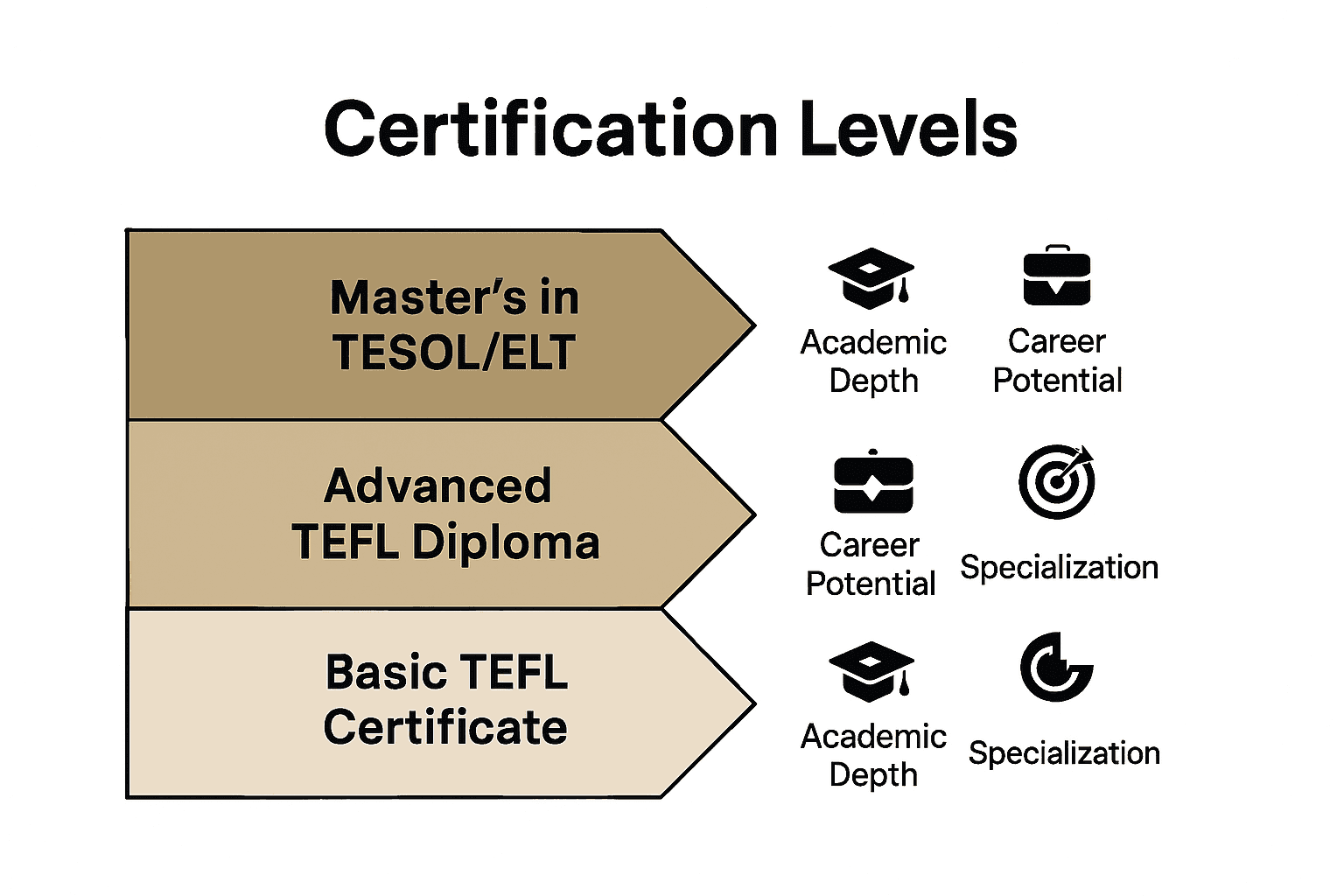
- Basic TEFL Certificate (Entry Level)
- Advanced TEFL Diploma (Professional Level)
- Master’s in TESOL/ELT (Academic Level)
Professional educators should recognize that advanced diplomas offer a strategic middle ground between standard certificates and full academic degrees. They provide specialized training, enhanced professional credibility, and targeted skill development without the extensive time and financial investment required for a complete master’s program. This makes advanced diplomas an attractive option for teachers seeking meaningful professional growth and specialized expertise in language education.
Choosing the Right Advanced TEFL Path
Selecting the ideal advanced TEFL diploma requires strategic self-assessment and a clear understanding of personal and professional goals. Educators must carefully evaluate their current teaching experience, career aspirations, and the specific requirements of different advanced certification pathways.
Key considerations when choosing an advanced TEFL path include:
- Your current teaching experience level
- Specific career trajectory goals
- Geographical teaching preferences
- Budget and time constraints
- Personal learning style
- Desired specialization focus
Professional development is not one-size-fits-all. How to Choose Best TEFL Course suggests that educators should conduct a comprehensive self-evaluation, matching their individual needs with the most appropriate advanced diploma program. This involves critically analyzing personal strengths, professional gaps, and long-term teaching objectives.
Comparing certification options requires careful analysis. CELTA Certification vs Level 5 TEFL Course provides insights into the nuanced differences between various advanced teaching credentials. Prospective students should consider factors like:
- International recognition
- Depth of curriculum
- Practical teaching components
- Specialization opportunities
- Cost-effectiveness
Ultimately, the right advanced TEFL path is a personal journey that aligns professional aspirations with targeted skill development. Educators must view their diploma choice as a strategic investment in their teaching career, selecting a program that not only enhances their current capabilities but also opens doors to future international teaching opportunities.
Unlock Your Potential with Advanced TEFL Diplomas
Are you ready to move beyond basic certification and gain the comprehensive skills that define a true language education expert? This guide highlights the challenges many teachers face when seeking specialized training and advancement. Whether your goal is mastering Level 5 Regulated Diplomas, exploring niche areas such as business or academic English, or balancing practical experience through hybrid courses, meeting eligibility requirements and choosing the right path can be overwhelming.
At TEFL Institute, we understand the importance of investing in your professional growth with internationally recognized and flexible advanced diplomas designed for educators like you. Explore our selection of 300 Hour Regulated Level 5 Advanced TEFL Diploma, 180 Hour Level 5 TEFL Diploma, and Hybrid Level 5 TEFL Course. Take the next step to elevate your career, expand your teaching opportunities, and specialize in the areas that will set you apart globally. Don’t wait to transform your teaching journey into a rewarding international career. Visit https://teflinstitute.com today and enroll in the advanced diploma program that matches your ambitions.
Frequently Asked Questions
What are Advanced TEFL diplomas?
Advanced TEFL diplomas are sophisticated professional credentials for educators seeking specialized training beyond standard teaching certificates, covering advanced pedagogical knowledge and methodologies.
What distinguishes Level 5 regulated diplomas from other advanced TEFL diplomas?
Level 5 regulated diplomas are the highest academic level of TEFL certification, featuring a comprehensive curriculum and government-regulated qualifications that are internationally recognized.
What key features should I look for in an advanced TEFL diploma?
Key features include rigorous academic curriculum, practical teaching components, comprehensive assessment methodologies, advanced pedagogical training, and international recognition.
What are the typical eligibility requirements for advanced TEFL diplomas?
Typical requirements include a bachelor’s degree, basic TEFL certification, 1-2 years of teaching experience, native or near-native English proficiency, and passing an initial skills assessment.
Recommended
TEFL Institute guides

Portugal
Jobs, pay and visa routes
Japan
JET, ALT and eikaiwa pay
Mexico
Jobs, pay and cities
Estonia
Jobs, pay and work routes
Czech Republic
Pay, visas and cities