

 United Kingdom (UK)
 United States (US)
 Canada
 South Africa
 India
India Australia
 New Zealand
 China
China Russia
 Germany
 France
 Spain
Spain Netherlands
 Vietnam
 United Arab Emirates
 Italy
Italy Poland
 Thailand
 Türkiye








 Algeria


Complete Guide to TEFL Salary Explained
Complete Guide to TEFL Salary Explained

Did you know that TEFL teachers in the Middle East can earn over £3,000 a month, often tax-free? Choosing where and how you teach English abroad can make a dramatic difference in both your earnings and your quality of life. Understanding how salary, benefits, and cost of living work together helps teachers make choices that fit their financial goals and personal ambitions.
Key Takeaways
| Point | Details |
|---|---|
| TEFL Salaries Vary Globally | Salaries and benefits differ significantly between regions, with Asia and the Middle East often offering the most lucrative packages. |
| Total Compensation is Key | Beyond base salary, benefits like housing, healthcare, and paid time off can greatly enhance overall financial stability and job satisfaction. |
| Professional Credentials Matter | Higher qualifications, specialized skills, and teaching experience directly correlate with increased earning potential in TEFL positions. |
| Cost of Living Affects Real Earnings | Understanding local living expenses and purchasing power is essential for evaluating the true value of TEFL salaries. |
Table of Contents
- Defining TEFL Salary And Compensation
- Global Differences In TEFL Pay Rates
- Key Factors Influencing TEFL Salaries
- Additional Benefits And Allowances For Teachers
- Cost Of Living And Salary Comparison
Defining TEFL Salary And Compensation
A TEFL salary represents the financial compensation teachers receive for providing English language instruction in international settings, which extends far beyond a simple monthly paycheck. When exploring potential earnings, teachers should understand that compensation involves multiple components that collectively determine overall financial potential.
According to research from TEFL organizations, salaries significantly vary across different countries and regions. For instance:
- Chile offers average monthly salaries between £550–£800
- China provides ranges from £1,200–£1,600
- Japan presents higher brackets of £1,600–£2,200
However, raw salary figures only tell part of the story. Compensation packages typically include additional benefits that dramatically enhance total earnings. Research indicates these supplementary offerings often encompass:
- Fully or partially subsidized housing
- Comprehensive health insurance coverage
- Reimbursed flight expenses
- Paid holiday periods
- Professional development opportunities
These supplementary benefits can transform a standard salary into a robust compensation package, allowing teachers to live comfortably while experiencing international cultures. Smart TEFL teachers evaluate total compensation, not just base salary, when assessing job opportunities.
Global Differences In TEFL Pay Rates
Global TEFL pay rates demonstrate remarkable diversity, reflecting complex interactions between economic conditions, local education markets, and international demand for English instruction. Teachers interested in maximizing their earning potential should understand the significant regional variations that dramatically impact compensation.
According to research from TEFL organizations, certain regions consistently offer more lucrative teaching opportunities. Asia and the Middle East stand out as top-tier destinations for English language educators, with substantially higher salary ranges compared to other global markets. These regions not only provide competitive base salaries but also include comprehensive benefits packages that enhance overall compensation.
Regional salary differences often reflect nuanced local economic factors:
- Urban centers typically offer higher salaries to offset increased living expenses
- Metropolitan areas in countries like China, Japan, and South Korea provide premium compensation
- Middle Eastern countries like UAE and Saudi Arabia offer some of the highest tax-free salaries globally
The salary landscape isn’t just about raw numbers. Compensation packages in different regions include unique combinations of financial and lifestyle benefits:
- Housing stipends or free accommodation
- Health insurance coverage
- Annual flight reimbursements
- Professional development opportunities
- Potential savings potential based on local cost of living
Smart TEFL teachers recognize that salary potential extends beyond monthly earnings, considering total compensation, cultural experience, and professional growth opportunities when selecting international teaching destinations.

Key Factors Influencing TEFL Salaries
Professional credentials play a pivotal role in determining TEFL salary potential. Aspiring teachers can maximize their earning potential by understanding the complex ecosystem of factors that directly impact compensation. According to research from specialized TEFL resources, multiple interconnected elements shape an educator’s financial prospects.
The primary influencers of TEFL salaries can be categorized into several key dimensions:
- Qualifications: Recognized TEFL/TESOL certifications significantly enhance earning potential
- Teaching Experience: Years of professional instruction directly correlate with higher salary brackets
- Specialization: Niche expertise like business English or exam preparation commands premium compensation
- Geographic Location: Regional demand and economic conditions dramatically affect salary ranges
Institutional and contextual factors further refine salary structures. Different employment environments offer varying compensation packages:
- Private language schools often provide competitive entry-level salaries
- Universities typically offer more stable, structured compensation
- International schools present comprehensive benefits packages
- Corporate training programs can yield higher hourly rates
Beyond formal qualifications, negotiation skills and understanding local economic nuances can significantly impact total compensation. Factors like cost of living, exchange rates, and future career development opportunities create a complex salary ecosystem where adaptable, strategically positioned teachers can maximize their earning potential. The most successful TEFL professionals view their salary as a holistic combination of monetary compensation, professional growth, and cultural experience.
Additional Benefits And Allowances For Teachers
TEFL compensation extends far beyond basic monthly salaries, with comprehensive benefits packages that can significantly enhance a teacher’s financial and professional experience. Prospective TEFL educators should understand the full spectrum of potential allowances that transform a standard teaching position into an attractive career opportunity.
Hiring windows close while you scroll.
Deadlines, salaries and visa notes for teaching jobs worldwide, checked against official sources and sent free every two weeks.
Get on the WireAccording to research from TEFL industry experts, standard contract benefits typically include:
- Housing Allowances: Direct accommodation support or monthly housing stipends
- Flight Reimbursements: Partial or full coverage of international travel expenses
- Health Insurance: Comprehensive medical coverage
- Paid Vacations: Guaranteed time off with full compensation
- Professional Development: Opportunities for additional training and certification
Regional variations play a crucial role in benefits structures. For instance:
Here’s a comparison of TEFL teacher benefits in different regions:
| Region | Salary Range (GBP/month) | Key Benefits | Typical Living Costs |
|---|---|---|---|
| China | £1,200–£1,600 | Free housing Flight reimbursement Healthcare |
Moderate |
| Japan | £1,600–£2,200 | Higher base pay Partial benefits |
High |
| Chile | £550–£800 | Housing support Quality of life |
Low to moderate |
| Middle East | £1,800–£3,000+ | Tax-free salary Extensive allowances |
Moderate |
| Southeast Asia | £800–£1,200 | Localized benefits Low living costs |
Low |
- China frequently provides free housing, maximizing teachers’ potential savings
- Japan offers higher base salaries but fewer supplementary benefits
- Middle Eastern countries often combine tax-free salaries with extensive allowance packages
- Southeast Asian countries provide modest salaries with localized benefit structures
Smart TEFL teachers evaluate total compensation holistically, recognizing that non-monetary benefits like cultural immersion, professional growth, and life experience are equally valuable. The most attractive positions blend competitive salaries with comprehensive support systems that facilitate personal and professional development while minimizing financial stress.
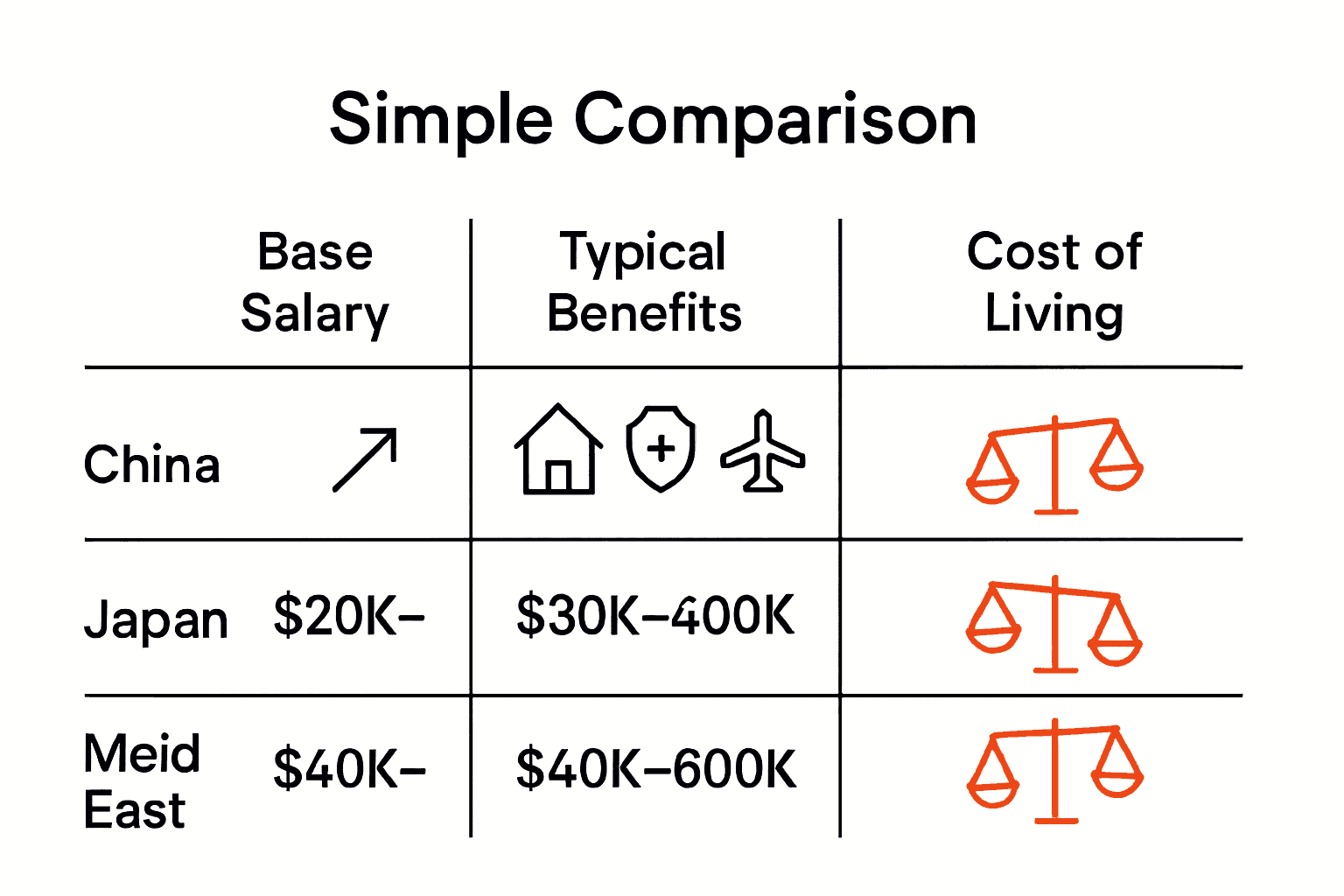
Cost Of Living And Salary Comparison
Purchasing power represents the true measure of a TEFL teacher’s salary, transcending raw numerical compensation. Understanding how local economic conditions impact real earnings is crucial for making informed career decisions in international education.
According to research from TEFL experts, salary evaluation requires a nuanced approach that considers multiple economic factors:
- Absolute Income: Monthly salary amount
- Local Cost of Living: Expenses for housing, food, transportation
- Tax Rates: Impact of local and national taxation systems
- Disposable Income: Actual money remaining after essential expenses
Regional cost of living variations create fascinating salary dynamics:
- Northern European countries offer high nominal salaries but steep living expenses
- Southeast Asian destinations provide modest salaries with significantly lower costs
- Middle Eastern countries combine tax-free incomes with relatively affordable living standards
- Latin American countries like Chile offer lower salaries but exceptional quality of life
Smart TEFL professionals calculate real economic opportunity by analyzing comprehensive financial landscapes. This means looking beyond monthly earnings and examining factors like local prices, healthcare costs, transportation expenses, and potential savings potential. The most successful international educators view their compensation as a holistic financial ecosystem, where earning potential intertwines with lifestyle quality and personal growth opportunities.
Unlock Your True TEFL Earning Power With TEFL Institute
Confused by conflicting TEFL salary numbers and overwhelmed by complex compensation packages? You are not alone. Many future English teachers want to know their actual earning potential but find it hard to compare global pay rates, hidden allowances, and living costs. The article shows how salary figures can be misleading unless you look at the full compensation picture. That means understanding real benefits, savings, and package extras from housing stipends to healthcare. You deserve a transparent path to financial stability and personal growth.

Take control of your TEFL career right now. Start by exploring how the TEFL Institute can help you boost your salary with recognized certification, expert support, and smart planning tools. Discover our trusted TEFL courses that set you apart in the highest-paying countries. Unsure where your credentials can take you or want real salary comparisons? Use our in-depth guides and resources to map your next step. Do not wait for better offers to pass you by. Visit TEFL Institute today and turn your earning potential into reality.
Frequently Asked Questions
What factors influence TEFL salaries?
Various factors influence TEFL salaries, including qualifications, teaching experience, specialization, and geographic location. Recognized TEFL/TESOL certifications and years of professional instruction typically lead to higher salary brackets.
How important are additional benefits when assessing TEFL compensation?
Additional benefits can greatly enhance overall earnings for TEFL teachers. Packages often include housing allowances, health insurance, flight reimbursements, and paid vacation time, all of which can significantly improve a teacher’s financial situation and quality of life.
How does the cost of living affect TEFL salaries?
The cost of living greatly impacts the perceived value of TEFL salaries. Teachers must consider local expenses for housing, food, transportation, and taxation rates to determine their real disposable income and quality of life in a particular region.
Why should teachers consider total compensation rather than just base salary?
Focusing solely on base salary can be misleading. Total compensation encompasses salaries along with benefits, lifestyle support, and cultural experiences, all of which contribute significantly to a teacher’s overall satisfaction and financial stability in their role.
Recommended
TEFL Institute guides

Japan
JET, ALT and eikaiwa pay
Spain
Jobs, pay and visa routes
Cambodia
Pay, requirements and visas
Italy
Jobs, pay and visa routes
Czech Republic
Pay, visas and cities