

 United Kingdom (UK)
 United States (US)
 Canada
 South Africa
 India
India Australia
 New Zealand
 China
China Russia
 Germany
 France
 Spain
Spain Netherlands
 Vietnam
 United Arab Emirates
 Italy
Italy Poland
 Thailand
 Türkiye








 Algeria


International Teaching Jobs: Key Paths and Pitfalls

Securing an international teaching job is more than finding a position abroad. Aspiring English teachers across Europe face a fast-moving global market where qualified educators are in unprecedented demand, fueled by widespread teacher shortages (OECD). The search goes deeper than just TEFL certification, requiring careful attention to visa regulations, contract details, and regional hiring expectations. This guide breaks down what you need to know to confidently pursue teaching roles that offer both professional growth and cultural exchange.
Table of Contents
- Defining International Teaching Jobs Today
- Types of Positions and Global Markets
- TEFL Certification and Qualification Standards
- Visa Requirements and Legal Considerations
- Risks, Contracts, and What to Avoid
Key Takeaways
| Point | Details |
|---|---|
| Diverse Opportunities | International teaching roles have broadened, now offering various positions across international schools, online platforms, and bilingual programs. |
| Market Awareness | Different global regions have unique hiring requirements and benefits, making regional knowledge essential for prospective educators. |
| TEFL Certification Importance | A strong TEFL certification enhances employability and demonstrates preparedness for multicultural classroom settings. |
| Legal and Contractual Scrutiny | Candidates should thoroughly review contracts and understand visa regulations to avoid potential risks in international placements. |
Defining International Teaching Jobs Today
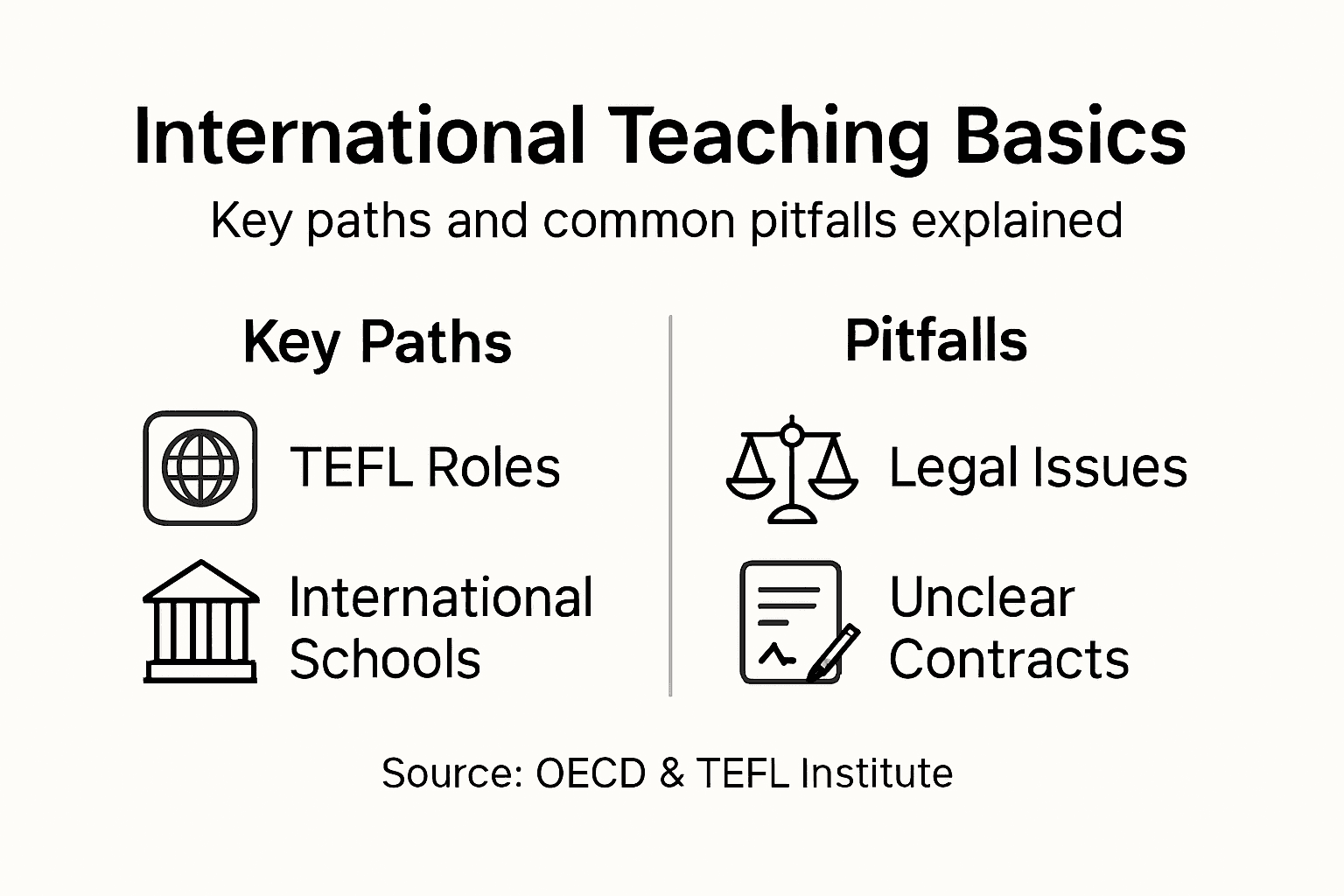
International teaching jobs have evolved into dynamic, multifaceted career pathways connecting educators with diverse global opportunities. These roles extend far beyond traditional classroom instruction, representing a complex ecosystem of cross-cultural professional engagement. Global education trends highlight how international teaching positions are transforming professional landscapes worldwide.
Today’s international teaching jobs encompass several distinctive categories:
- International School Positions: Comprehensive roles in globally recognized schools with international curricula
- English Language Teaching (ELT) Positions: Specialized roles focused on language instruction across different countries
- Bilingual Education Programs: Teaching academic subjects in multiple languages
- Online and Digital Teaching Platforms: Remote instructional roles connecting educators with students globally
The current international teaching landscape reflects significant systemic challenges. According to recent OECD research, widespread teacher shortages are creating unprecedented demand for qualified international educators. These opportunities are not just about teaching – they represent critical pathways for cultural exchange and global understanding.
Pro tip: Research specific country requirements and certification standards before applying to international teaching positions to maximize your employability and smooth transition.
Types of Positions and Global Markets
International teaching positions represent a dynamic and expansive career landscape with diverse opportunities across multiple global markets. International education paths reveal complex employment ecosystems spanning continents and educational platforms.
The global teaching market can be strategically categorized into several key regions:
- Asia-Pacific Market: Highest demand, competitive compensation
- South Korea
- China
- Japan
- Vietnam
- Middle East Market: Lucrative contracts and tax-free salaries
- United Arab Emirates
- Saudi Arabia
- Qatar
- Bahrain
- European Market: Structured educational environments
- Spain
- Germany
- Czech Republic
- Poland
- Latin American Market: Cultural immersion opportunities
- Chile
- Mexico
- Argentina
- Colombia
Different regions demand specific qualifications and expertise. While some markets prioritize native English speakers with bachelor’s degrees, others require advanced certifications like TEFL or specialized subject expertise. Understanding regional nuances becomes crucial for successful international teaching placements.
Here’s a summary of regional hiring expectations for international teaching jobs:
| Region | Common Hiring Requirements | Typical Contract Benefits | Workplace Culture |
|---|---|---|---|
| Asia-Pacific | Bachelor’s degree, native English preferred | Housing, airfare, medical insurance | Fast-paced, competitive |
| Middle East | TEFL certification, advanced degrees valued | Tax-free salary, relocation support | Formal, structured |
| Europe | Native English speaker, local language skills | Pension, paid holidays | Collaborative, academic |
| Latin America | Flexibility, cultural fit, TEFL preferred | Language support, local benefits | Community-oriented, immersive |
Pro tip: Research specific visa requirements and certification standards for each target country to maximize your international teaching job prospects.
TEFL Certification and Qualification Standards
TEFL certification represents a critical foundation for aspiring international English language teachers seeking global employment opportunities. TEFL certification requirements vary widely, encompassing programs ranging from 20 to 200 hours of comprehensive training designed to prepare educators for diverse teaching environments.
Critical components of quality TEFL certification programs include:
- Comprehensive Curriculum
- Language teaching methodologies
- Classroom management strategies
- Lesson planning techniques
- Cultural sensitivity training
- Accreditation Standards
- Internationally recognized credentials
- Rigorous pedagogical training
- Practical teaching components
- Delivery Formats
- Online self-paced courses
- Hybrid learning models
- In-person intensive training
- Distance learning options
Employers worldwide increasingly demand structured TEFL qualifications that demonstrate a teacher’s ability to effectively navigate multicultural classrooms. Advanced certification levels, particularly those with practicum components, provide significant competitive advantages in the international teaching job market.

Reviewing TEFL program features can guide your certification choice:
| Program Feature | Business Impact | Competitive Advantage |
|---|---|---|
| Practicum Experience | Prepares for real classroom challenges | Increases employability |
| Accreditation | Ensures global recognition | Opens more markets |
| Curriculum Breadth | Builds versatile teaching skills | Supports diverse learners |
Employers prioritize TEFL certifications that combine theoretical knowledge with practical teaching experience.
● THE HIRE WIREHiring windows close while you scroll.
Every TEFL opening, salary and deadline that matters.
In your inbox every two weeks. Free, no spam, unsubscribe any time.
In every issue01Salaries
Teacher pay by country02Jobs
New TEFL openings03Deadlines
Programme and visa datesDeadlines, salaries and visa notes for teaching jobs worldwide, checked against official sources and sent free every two weeks.
Get on the Wire
Pro tip: Choose a TEFL certification program that offers both comprehensive theoretical training and practical classroom experience to maximize your international teaching opportunities.
Visa Requirements and Legal Considerations
Navigating international teaching employment involves complex legal considerations and visa requirements. Each country maintains unique regulations governing work authorization for foreign educators, making thorough preparation essential for successful international placements.
Key legal and visa considerations include:
- Documentation Requirements
- Valid passport
- Educational degree certificates
- Professional teaching credentials
- Criminal background checks
- Health clearance documents
- Visa Categories
- Work visas
- Temporary residence permits
- Professional employment visas
- Academic exchange visas
- Compliance Obligations
- Maintain valid work authorization
- Adhere to local employment regulations
- Renew documentation before expiration
- Report changes in employment status
Employers and educational institutions have stringent requirements for international teachers. Most demand comprehensive documentation verifying professional qualifications, academic background, and legal eligibility to work in their specific jurisdiction.
International teaching positions require meticulous attention to legal and immigration details to ensure smooth employment transitions.
Pro tip: Always consult official embassy websites and maintain multiple copies of critical documentation to streamline your international teaching job application process.
Risks, Contracts, and What to Avoid
International teaching opportunities come with complex challenges that demand careful navigation. International teaching contracts require meticulous scrutiny to protect educators from potential professional and legal pitfalls.
Key risks and contract considerations include:
- Financial Red Flags
- Unclear salary payment schedules
- Inconsistent compensation structures
- Hidden deduction policies
- Lack of transparent benefits documentation
- Contractual Warning Signs
- Vague termination clauses
- Undefined work responsibilities
- Restrictive non-compete agreements
- Ambiguous performance evaluation criteria
- Recruitment Process Risks
- Unlicensed recruitment agencies
- Unverified school credentials
- Incomplete job description details
- Lack of clear communication channels
Professional recruiters emphasize the importance of comprehensive due diligence before accepting international teaching positions. Potential educators must thoroughly investigate institutional credentials, verify employment terms, and understand local legal protections.
Successful international teaching careers require careful contract analysis and proactive risk management.
Pro tip: Always request a detailed contract draft, have it professionally translated if necessary, and consult with experienced international educators before signing.
Start Your International Teaching Journey with Confidence
Navigating the complex world of international teaching jobs means addressing challenges like obtaining recognized TEFL certification and understanding regional visa and contract requirements. If you want to avoid common pitfalls and excel in competitive global markets, building a solid foundation through comprehensive training is essential. The article highlights how TEFL certification and practical experience can be your keys to success in diverse teaching environments across Asia-Pacific, the Middle East, Europe, and Latin America.
Unlock these opportunities today by enrolling in specialized courses at TEFL Institute that offer both theoretical knowledge and practicum components. Explore our range of TEFL certification programs designed to meet international standards and increase your employability worldwide. Don’t wait to prepare for a rewarding and culturally rich career abroad. Visit TEFL Institute now and take the first step toward teaching English internationally with confidence.
Frequently Asked Questions
What types of international teaching jobs are available today?
International teaching jobs encompass roles in international schools, English language teaching positions, bilingual education programs, and online/digital teaching platforms, each offering unique opportunities abroad.
What qualifications do I need to obtain an international teaching position?
Most international teaching positions require at least a bachelor’s degree, with some roles needing additional certifications such as TEFL or advanced degrees, depending on the region and school requirements.
How can TEFL certification enhance my chances of getting an international teaching job?
TEFL certification provides foundational training in language teaching methodologies and classroom management, which many employers seek to ensure teachers can handle diverse and multicultural classrooms effectively.
What legal considerations should I be aware of when applying for international teaching jobs?
Key legal considerations include understanding visa requirements, ensuring you have the necessary documentation (like educational and professional credentials), and being aware of local employment regulations to maintain valid work authorization.
Recommended
- Best Platforms To Teach English Online in 2026: Complete TEFL Guide | TEFL Institute
- How The TEFL Institute is Leading the AI Revolution in English Teaching with TEFL Explorer | TEFL Institute
- Can I Teach English Abroad Without a Degree? Complete Guide with Country Requirements | TEFL Institute
- 7 Essential Steps for Landing Teaching Overseas Jobs | TEFL Institute

Tara and Jess talk through different TEFL and EFL topics, from finding work abroad to life in the classroom.