

 United Kingdom (UK)
 United States (US)
 Canada
 South Africa
 India
India Australia
 New Zealand
 China
China Russia
 Germany
 France
 Spain
Spain Netherlands
 Vietnam
 United Arab Emirates
 Italy
Italy Poland
 Thailand
 Türkiye








 Algeria


Essential TEFL Career Development Steps for Success

Most teachers overlook the fact that more than 60 percent of international TEFL employers now require portfolios with verified credentials before hiring. Whether your goal is teaching in European capitals, Asian cities, or working with American students online, understanding these requirements is critical. This guide shows aspiring British and Australian teachers exactly how to define career objectives, meet diverse certification standards, and present a professional resume for global success.
Table of Contents
- Step 1: Assess Personal Goals And TEFL Requirements
- Step 2: Select And Complete Accredited TEFL Training
- Step 3: Build An Effective TEFL Resume And Portfolio
- Step 4: Apply For TEFL Positions Abroad And Online
- Step 5: Verify Teaching Credentials And Seek Feedback
Quick Summary
| Key Insight | Explanation |
|---|---|
| 1. Assess Your Personal Goals | Reflect on your motivations and target locations for teaching, considering factors like salary and professional growth. |
| 2. Choose Accredited TEFL Training | Select a recognized TEFL program that offers robust courses and support for job placement to maximize employability. |
| 3. Create a Strong Resume and Portfolio | Develop tailored resumes and portfolios highlighting your teaching skills and experiences to attract potential employers. |
| 4. Strategically Apply for Positions | Use a comprehensive application strategy, customizing materials for each position and ensuring thorough research of employers. |
| 5. Validate Your Credentials | Ensure your teaching qualifications are verified and seek constructive feedback to improve your teaching practice continuously. |
Step 1: Assess Personal Goals and TEFL Requirements
Your TEFL career journey begins with a strategic self assessment of your professional objectives and understanding specific requirements for international teaching opportunities. This critical first step helps you map a clear pathway toward successful English language instruction abroad.
Starting your goal setting process requires thoughtful reflection on your motivations and desired teaching destinations. Goal setting strategies play a crucial role in self regulated learning, providing a framework for understanding individual needs and contextual adaptation. Consider multiple dimensions like geographic preferences, teaching environments preferred teaching levels, salary expectations, and personal growth objectives. Ask yourself key questions such as: Do you want to teach in Asia, South America, or Europe? Are you interested in university level instruction or primary school classrooms? What professional development milestones matter most to you?
Practical goal assessment involves creating a structured plan that matches your skills and aspirations with realistic TEFL opportunities. Research specific country requirements carefully since certification standards and teaching regulations vary significantly worldwide. Some regions demand advanced degrees or specialized certifications beyond basic TEFL credentials. Explicit goal setting provides critical motivational tools for educators by helping you align your professional trajectory with meaningful targets.
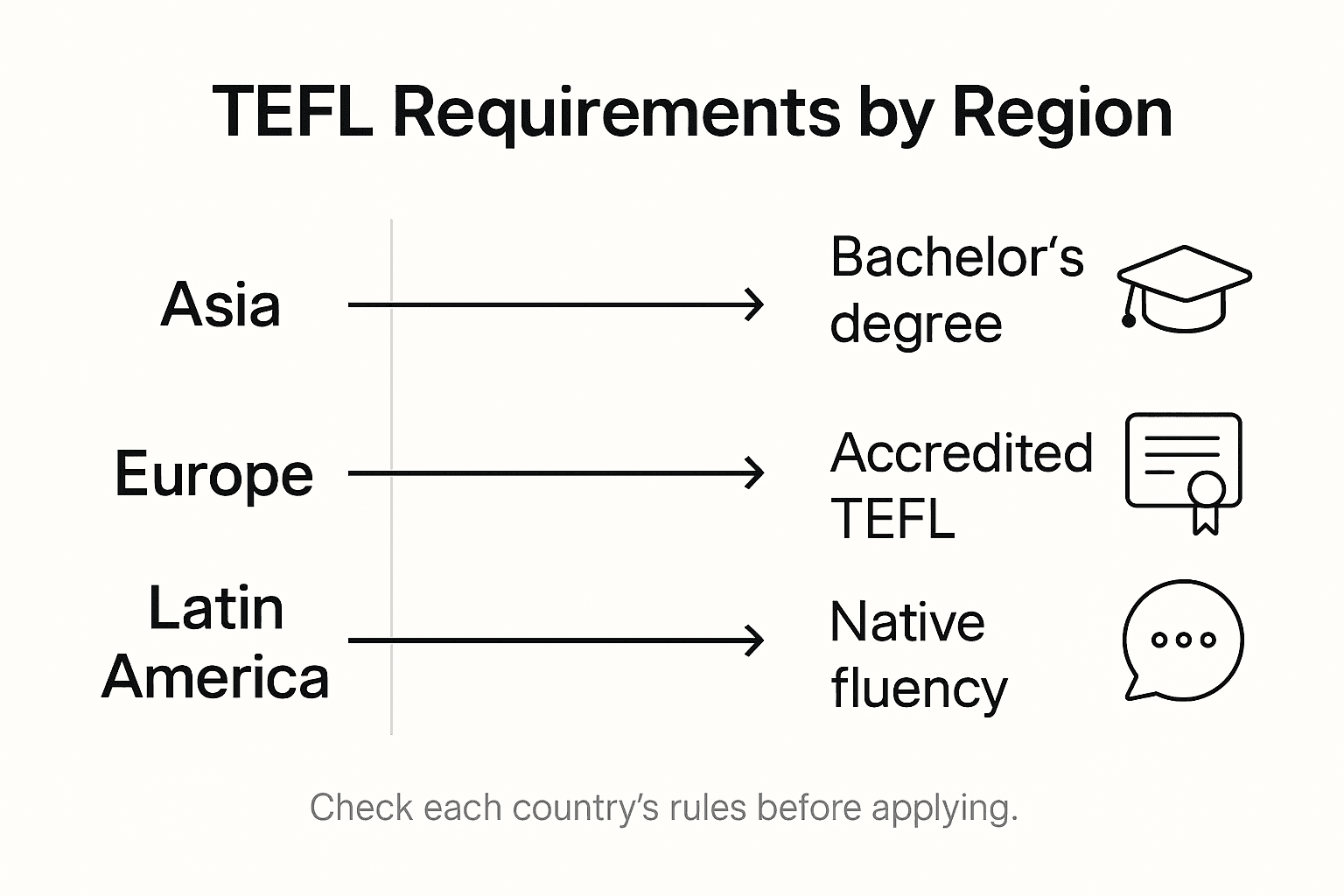
Here is a comparison of TEFL requirements across popular teaching destinations:
| Region | Common Requirements | Notable Regulations |
|---|---|---|
| Asia | Bachelor’s degree, TEFL cert | Age limits in some countries |
| South America | TEFL cert, no degree required | Visa rules vary by country |
| Europe | Degree, TEFL cert, EU citizen preferred | Higher competition for positions |
| Middle East | Advanced degree, experience | High salary, strict background checks |
Pro tip: Create a detailed spreadsheet tracking your teaching goals, including target countries, required certifications, potential salary ranges, and personal development milestones to maintain clarity and motivation throughout your TEFL career exploration.
Step 2: Select and Complete Accredited TEFL Training
Choosing and completing an accredited TEFL training program represents a pivotal milestone in your international teaching career. This step transforms your aspiration into a professionally recognized qualification that opens doors to teaching opportunities worldwide.
Navigating the world of TEFL certification requires careful research and strategic decision making. Comprehensive TEFL courses provide critical academic quality and internationally recognized credentials, ensuring you meet global teaching standards. When selecting a program, evaluate key factors such as course curriculum depth, practical teaching components, instructor qualifications, and alignment with your specific career goals. Look for programs offering robust instruction in language teaching methodologies, classroom management techniques, and cultural adaptation strategies. Understanding why choose an accredited TEFL course becomes crucial in distinguishing high quality training from basic certification.
Successful TEFL training goes beyond simply completing coursework. Seek programs that provide comprehensive support including job placement assistance, interview preparation, and ongoing professional development resources. Some advanced courses offer practicum experiences or digital portfolios that can significantly enhance your employability. Verify the course meets international standards by checking accreditation from recognized educational bodies and confirming the certification will be accepted in your target teaching regions.
Pro tip: Create a detailed comparison spreadsheet of potential TEFL programs including tuition costs, course duration, practical teaching hours, accreditation status, and job placement support to make an informed selection that matches your career objectives.
This summary highlights essential features to evaluate in a TEFL training program:
| Program Feature | Why It Matters | Impact on Career |
|---|---|---|
| Accreditation | Ensures certificate acceptance | Broadens international options |
| Practical Teaching Hours | Confirms hands-on classroom skills | Boosts candidate credibility |
| Job Placement Support | Assists with international job search | Eases transition into teaching abroad |
| Instructor Experience | Guarantees high-quality instruction | Strengthens methodological skills |
Step 3: Build an Effective TEFL Resume and Portfolio
Creating a compelling TEFL resume and professional portfolio is your strategic gateway to international teaching opportunities. This critical step transforms your academic credentials and teaching potential into a powerful professional narrative that captures employers attention across global markets.

Your TEFL resume requires meticulous crafting to showcase your unique qualifications. Professional teaching portfolios document your pedagogical journey and demonstrate continuous development, serving as a comprehensive representation of your teaching philosophy and accomplishments. Focus on highlighting specific skills relevant to international teaching contexts such as language proficiency, cross cultural communication abilities, classroom management techniques, and any specialized certifications. Crafting the perfect resume requires strategic presentation of your TEFL qualifications that align with global employer expectations.
A standout TEFL portfolio goes beyond traditional resume formats by incorporating multimedia evidence of your teaching capabilities. Include digital artifacts like lesson plans, student feedback samples, professional development certificates, and reflective teaching statements that demonstrate your adaptability and commitment to language education. Tailor your portfolio to showcase experiences that prove your effectiveness in diverse classroom environments whether online or international settings.
Pro tip: Digitize your portfolio using cloud storage platforms like Google Drive or Dropbox to ensure easy sharing with potential employers and maintain a consistently updated professional showcase of your teaching credentials.
Step 4: Apply for TEFL Positions Abroad and Online
Successfully applying for TEFL positions requires a strategic approach that combines thorough research, targeted applications, and professional presentation of your unique teaching qualifications. This critical step transforms your certification and portfolio into tangible international teaching opportunities.
Every TEFL opening, salary and deadline that matters.
In your inbox every two weeks. Free, no spam, unsubscribe any time.
Teacher pay by country
New TEFL openings
Programme and visa dates
Navigating TEFL job applications involves understanding program requirements and international placement logistics, including country specific documentation and cultural adaptation strategies. Start by creating a comprehensive job search strategy that encompasses both online and international teaching platforms. Online teaching opportunities have expanded dramatically in recent job markets, presenting multiple pathways for aspiring TEFL professionals. Research potential employers thoroughly examining their requirements for language instructors, preferred qualifications, and specific teaching contexts. Pay close attention to geographic regions that align with your professional goals and personal preferences.
Effective TEFL job applications demand meticulous preparation and adaptability. Customize your application materials for each position highlighting relevant experience and cultural competencies. Develop a flexible approach that allows you to navigate different recruitment processes whether applying through international recruitment agencies, online platforms, or direct school contacts. Prepare comprehensive documentation including your updated resume, professional portfolio, teaching certifications, academic transcripts, and potentially additional language proficiency certificates.
Pro tip: Create a standardized digital application package with easily shareable PDF documents that can be quickly customized and submitted across multiple job applications to streamline your international teaching job search.
Step 5: Verify Teaching Credentials and Seek Feedback
Validating your teaching credentials and actively seeking professional feedback are crucial steps in establishing credibility and continuous improvement in your TEFL career. This stage transforms your certification from a document into a robust professional credential recognized across international education markets.
Credential evaluation provides critical verification of your academic and professional qualifications for global employment, ensuring that your certifications meet international standards. Initiate this process by gathering all relevant academic documents including your TEFL certification, academic transcripts, professional licenses, and any additional teaching credentials. Professional verification demonstrates the legitimacy of your teaching background to potential employers across different educational contexts.
Systematic teacher evaluation integrates multiple feedback sources to support professional development, creating opportunities for growth and refinement of your teaching practice. Actively seek constructive feedback from experienced educators supervisors and peers through classroom observations peer reviews and structured performance assessments. Approach feedback with an open mindset viewing each critique as an opportunity to enhance your teaching skills and adapt to diverse international educational environments.
Pro tip: Maintain a digital portfolio of verified credentials and professional feedback that can be easily updated and shared with potential employers to demonstrate your commitment to ongoing professional development.
Take Control of Your TEFL Career Today
Embarking on your TEFL journey can feel overwhelming with so many steps to navigate from goal setting to credential verification. The challenges of finding accredited courses, crafting standout resumes, and applying effectively for international positions require focused support and clear guidance. The article highlights how strategic planning and professional development are essential to succeed in competitive teaching markets across Asia, Europe, South America, and beyond.
TEFL Institute offers comprehensive online TEFL training programs tailored to meet these exact needs. Explore expertly designed courses that include practical teaching components and career support to align with your goals. Discover resources to build your professional portfolio and accelerate your international teaching applications.
Explore Accredited TEFL Courses to kickstart your certification journey now.
Ready to transform your teaching aspirations into reality Join thousands of successful educators who trust TEFL Institute to deliver quality training and career resources. Visit TEFL Institute and enroll today to take confident steps toward your rewarding TEFL career abroad or online.
Frequently Asked Questions
What are the key steps for developing a successful TEFL career?
To develop a successful TEFL career, start by assessing your personal goals and understanding TEFL requirements, then complete an accredited TEFL training program. Follow this by building an effective TEFL resume and portfolio, applying for positions, and verifying your teaching credentials to ensure growth in your career.
How can I assess my personal goals for a TEFL career?
Begin by reflecting on your motivations for teaching English and your preferred teaching destinations. List factors such as geographic preferences, teaching environments, salary expectations, and personal growth objectives to create a clear roadmap for your career.
What criteria should I consider when selecting a TEFL training program?
Evaluate the depth of the course curriculum, practical teaching components, instructor qualifications, and the program’s alignment with your career goals. Prioritize accredited programs that offer job placement support and comprehensive teaching methodologies.
How do I create a compelling TEFL resume and portfolio?
Craft your TEFL resume by highlighting relevant skills such as language proficiency and classroom management techniques. Additionally, develop a professional portfolio that includes multimedia evidence of your teaching abilities, such as lesson plans and student feedback, to showcase your effectiveness in diverse environments.
What should I include in my TEFL job application materials?
Ensure your application includes an updated resume, a professional portfolio, copies of teaching certifications, academic transcripts, and any relevant language proficiency certificates. Tailor your application materials for each position to reflect the qualifications and teaching contexts desired by employers.
How can I seek feedback and validate my teaching credentials?
Actively request feedback from peers and supervisors through classroom observations and performance assessments. Simultaneously, gather documents such as your TEFL certification and academic transcripts to validate your credentials for potential employers.
Recommended

Tara and Jess talk through different TEFL and EFL topics, from finding work abroad to life in the classroom.