

 United Kingdom (UK)
 United States (US)
 Canada
 South Africa
 India
India Australia
 New Zealand
 China
China Russia
 Germany
 France
 Spain
Spain Netherlands
 Vietnam
 United Arab Emirates
 Italy
Italy Poland
 Thailand
 Türkiye








 Algeria


ESL Teaching Opportunities Explained: Global Paths

Thousands of educators explore ESL teaching opportunities each year, drawn by the chance to make a real difference in students’ lives while experiencing new cultures. With more than 1.5 billion people worldwide learning English as a second language, the demand for skilled ESL teachers continues to grow across continents and online platforms. Whether you are searching for adventure, career advancement, or meaningful connection, ESL teaching offers a dynamic path filled with flexibility, cultural exchange, and lasting impact.
Table of Contents
- What Are ESL Teaching Opportunities?
- Types of ESL Teaching Positions Worldwide
- Essential Qualifications and Certification Requirements
- Countries and Platforms Hiring ESL Teachers
- Legal, Contractual, and Safety Considerations
- Common Challenges and Career Progression Tips
Key Takeaways
| Point | Details |
|---|---|
| Diverse Opportunities | ESL teaching positions are available in various settings, including schools, universities, and online platforms, catering to a range of student demographics. |
| Essential Qualifications | A bachelor’s degree and TEFL/TESOL certification are typically required, alongside strong communication skills and cultural sensitivity. |
| Global Demand | High demand exists across multiple regions, particularly in East Asia and the Middle East, for qualified ESL instructors. |
| Professional Growth | ESL careers offer potential advancement paths, including leadership roles and specialized positions, necessitating ongoing professional development. |
What Are ESL Teaching Opportunities?
ESL teaching opportunities are professional roles where educators teach English to non-native speakers in diverse academic, professional, and cultural environments. According to California State University San Bernardino, ESL instructors work across various contexts, delivering instruction focused on critical language skills including listening, speaking, pronunciation, reading, and writing.
These opportunities span multiple teaching environments, from traditional classroom settings to online platforms. ESL teachers can find positions in public and private schools, universities, language institutes, corporate training programs, and international educational organizations. Some professionals specialize in specific student demographics, such as business professionals, academic preparation, or young learners seeking conversational English skills.
The global landscape of ESL teaching offers remarkable diversity. Teachers might work in countries across Asia, Europe, South America, and the Middle East, each presenting unique cultural experiences and professional challenges. For those interested in exploring international teaching paths, our guide on top paying countries for TEFL teaching provides comprehensive insights into potential destinations and salary expectations.
Key characteristics of ESL teaching opportunities include:
- Flexible work environments (online and in-person)
- Opportunities for international travel
- Competitive salary ranges depending on qualifications
- Cultural exchange and personal growth experiences
- Potential for professional development and advancement
Successful ESL teachers typically possess strong communication skills, cultural sensitivity, adaptability, and a genuine passion for language education and cross-cultural understanding. Whether you’re a recent graduate, career changer, or seasoned educator, ESL teaching presents a dynamic pathway to professional and personal exploration.
Types of ESL Teaching Positions Worldwide
ESL teaching positions offer remarkable diversity across global contexts. According to California State University San Bernardino, these roles span multiple educational and professional environments, including public and private schools, language institutes, universities, and corporate training programs. The positions range from general English instruction to specialized domains like business English and test preparation.
International School Positions represent one of the most sought-after ESL teaching opportunities. These roles typically involve full-time teaching positions in international schools, where educators deliver comprehensive English language curriculum to students from diverse cultural backgrounds. Teachers in these settings often enjoy competitive salaries, housing allowances, and professional development opportunities.
For educators interested in exploring teaching opportunities across different regions, our guide to TEFL teaching in Asia provides comprehensive insights into one of the most dynamic job markets for English language instructors. The global landscape of ESL teaching includes several primary categories:
Here’s an overview of common ESL teaching positions worldwide:
| Teaching Position | Typical Setting | Main Students | Key Qualifications |
|---|---|---|---|
| Public School | Government schools | Children, Teenagers | Bachelor’s, TEFL/TESOL, Native level |
| Private Language Institute | Language centers | Kids Adults Professionals |
Bachelor’s, TEFL/TESOL |
| University Lecturer | Universities | College students Adults |
Master’s preferred Relevant degree |
| Corporate Trainer | Companies, Businesses | Business professionals | Bachelor’s, TEFL, Business experience |
| Online Instructor | Digital platforms | All ages | Bachelor’s usually TEFL/TESOL |
- Public School Positions: Government-sponsored teaching roles in national education systems
- Private Language Institutes: Specialized centers focusing on English language training
- University Lecturer Roles: Academic positions teaching English at tertiary education levels
- Corporate Training Programs: Professional English instruction for business environments
- Online Teaching Platforms: Digital instruction opportunities for remote educators
Each teaching position demands specific skills and qualifications. While requirements vary by region and institution, most ESL roles require a bachelor’s degree, TEFL/TESOL certification, and strong communication skills. Specialized positions like business English instructors might require additional professional certifications or industry-specific experience.
Successful ESL teachers approach their roles with cultural sensitivity, adaptability, and a genuine passion for language education. Whether you’re seeking a classroom experience in Southeast Asia, an online teaching platform, or a corporate training role, the global ESL landscape offers extensive opportunities for professional growth and personal exploration.

Essential Qualifications and Certification Requirements
Qualifying for ESL teaching positions requires a strategic approach to education and professional certification. According to California State University San Bernardino, many ESL teaching jobs demand specific academic credentials, including a bachelor’s degree in English or Linguistics, a TESL/TESOL certificate, or an advanced degree with a specialized focus in language education.
TEFL/TESOL Certification stands as a critical requirement for most international teaching positions. These professional credentials demonstrate a standardized level of language teaching expertise, covering essential pedagogical skills, classroom management techniques, and language instruction methodologies. While entry-level positions might accept basic certifications, advanced roles often require more comprehensive training. For those navigating the complex landscape of certification options, our guide on selecting TEFL certifications provides comprehensive insights into making informed educational choices.
The typical qualifications for ESL teaching positions typically include:
- Bachelor’s degree (in any field, with preference for English, Linguistics, or Education)
- TEFL/TESOL/CELTA certification
- Native or near-native English proficiency
- Basic understanding of second language acquisition principles
- Passport from an English-speaking country (for some international positions)
Additional specialized qualifications can significantly enhance employability. Advanced degrees like a Master’s in TESOL, Applied Linguistics, or Education with a language focus can open doors to higher-level positions in universities, international schools, and specialized language programs. Some employers also value additional language skills, cross-cultural experience, and specialized teaching certifications in areas like business English or test preparation.
Successful ESL teachers combine robust academic qualifications with personal attributes like cultural sensitivity, adaptability, and communication skills. While certifications provide the foundational knowledge, the ability to connect with students from diverse backgrounds ultimately defines an exceptional language instructor. Continuous professional development, staying updated with modern language teaching methodologies, and maintaining a genuine passion for cross-cultural communication are key to long-term success in this dynamic and rewarding field.
Countries and Platforms Hiring ESL Teachers
The global ESL job market offers extensive opportunities across diverse geographical regions and digital platforms. Online teaching platforms have revolutionized how educators connect with students worldwide, creating unprecedented flexibility for language instructors seeking international teaching experiences.
Traditional job markets continue to offer robust opportunities for ESL teachers. For those interested in maximizing their earning potential, our guide to best countries for teaching abroad provides comprehensive insights into top destinations. The most prominent hiring regions include:
Every TEFL opening, salary and deadline that matters.
In your inbox every two weeks. Free, no spam, unsubscribe any time.
Teacher pay by country
New TEFL openings
Programme and visa dates
- East Asian Markets: China, South Korea, Japan, Taiwan
- Middle Eastern Countries: United Arab Emirates, Saudi Arabia, Oman
- Southeast Asian Destinations: Vietnam, Thailand, Cambodia
- Eastern European Countries: Czech Republic, Poland, Russia
- Latin American Regions: Mexico, Brazil, Argentina
Digital Teaching Platforms have emerged as game-changing alternatives to traditional classroom environments. These online marketplaces connect qualified instructors with students globally, offering unprecedented geographic flexibility. Popular online teaching platforms include:
- VIPKid
- Cambly
- iTutorGroup
- Preply
- GoGoKid
- Italki
- EnglishFirst
The rise of remote work has significantly expanded digital teaching opportunities. Modern ESL teachers can now choose between traditional international school positions, corporate language training, and fully remote online instruction. Each platform and country offers unique advantages, from competitive salaries to cultural immersion experiences.
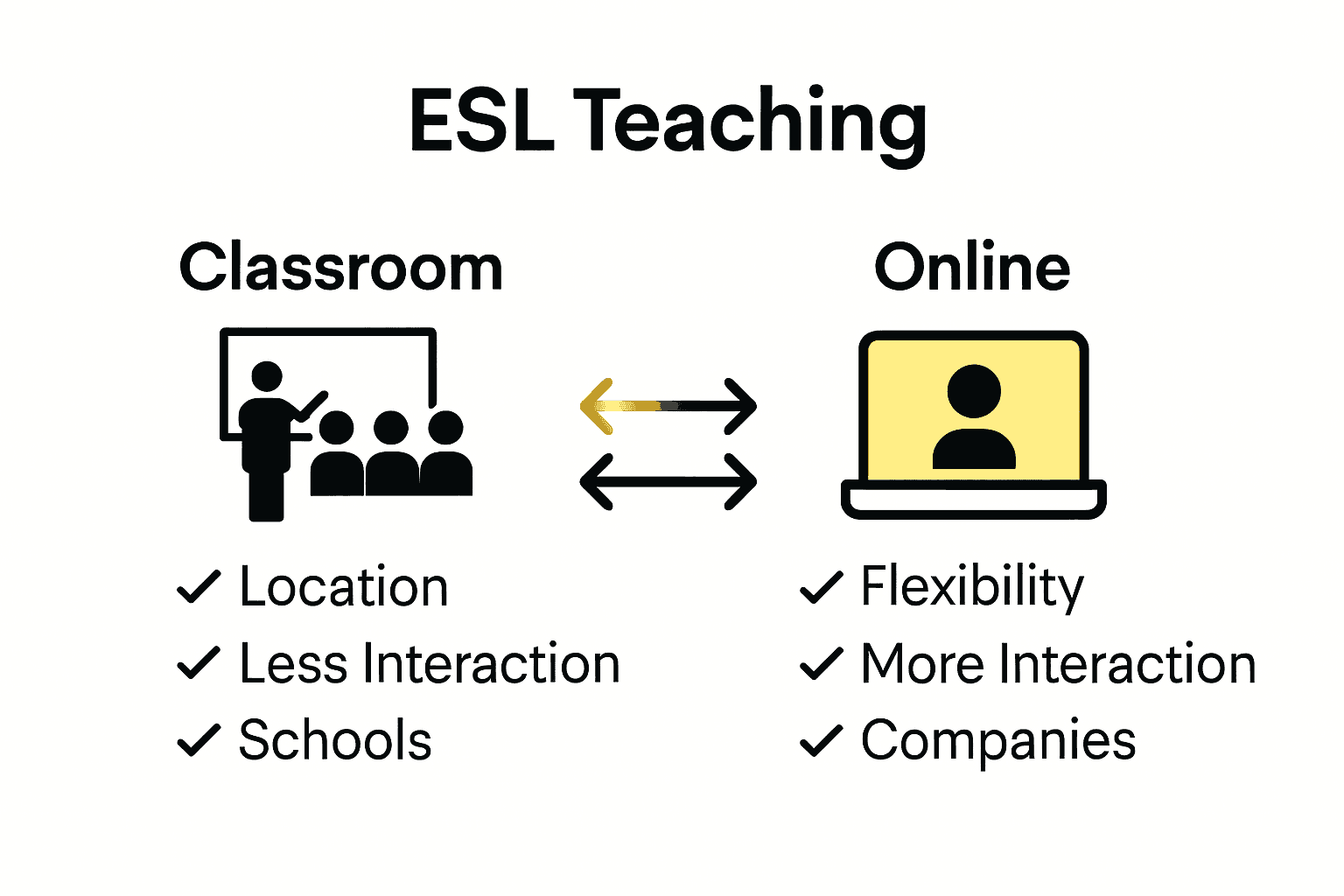
Successful ESL educators approach these opportunities with adaptability, cultural sensitivity, and a genuine passion for language instruction. Whether you’re targeting a specific geographic region or seeking global digital connections, the current ESL landscape provides remarkable pathways for professional and personal growth.
Legal, Contractual, and Safety Considerations
International teaching opportunities come with complex legal and contractual landscapes that demand careful navigation. ESL teachers must thoroughly understand visa requirements, work permits, and employment regulations specific to each country and teaching platform.
Employment contracts for ESL teachers typically include several critical components that protect both the educator and the institution. For international positions, these contracts often encompass:
- Visa Sponsorship: Official documentation for legal work authorization
- Housing Provisions: Accommodation support or stipend details
- Salary Structure: Base pay, potential bonuses, and payment schedules
- Health Insurance: Coverage specifications and medical support
- Termination Clauses: Conditions for contract completion or early departure
Specific regional considerations require careful attention. For instance, our guide to China’s new regulations for ESL teachers highlights the evolving legal landscape in one of the most prominent ESL job markets. Different countries maintain unique requirements for work eligibility, including:
- Background check documentation
- University degree authentication
- TEFL/TESOL certification verification
- Medical health screenings
- Criminal record clearances
Safety Considerations extend beyond legal documentation. Prospective ESL teachers should conduct comprehensive research about:
- Political stability of target countries
- Cultural adaptation challenges
- Local healthcare infrastructure
- Emergency communication protocols
- Personal security recommendations
Successful international ESL educators approach these considerations proactively. Thorough preparation, transparent communication with potential employers, and a comprehensive understanding of legal requirements transform potential challenges into exciting professional opportunities. Maintaining flexibility, conducting diligent research, and prioritizing personal safety are fundamental to a rewarding international teaching experience.
Common Challenges and Career Progression Tips
ESL teaching careers present unique challenges and extraordinary opportunities for professional growth. Navigating the complex landscape of international language education requires strategic planning, continuous learning, and remarkable adaptability.
Professional challenges in ESL teaching often emerge from cultural differences, communication barriers, and rapidly evolving educational technologies. Cultural adaptation stands as one of the most significant hurdles for international educators. Language instructors must develop:
- Cross-cultural communication skills
- Emotional intelligence
- Flexible teaching methodologies
- Rapid problem-solving capabilities
- Resilience in unfamiliar environments
Career progression in ESL teaching follows multiple potential pathways. For educators seeking advanced opportunities, our teaching platforms guide provides insights into expanding professional networks and digital teaching strategies. Potential advancement routes include:
- Online Teaching Leadership Roles
- Curriculum Development Positions
- Academic Coordination
- Teacher Training and Mentorship
- Educational Technology Specialist
Professional Development Strategies are crucial for long-term success. Successful ESL educators invest consistently in:
- Advanced certifications
- Language acquisition research
- Technology integration skills
- Specialized teaching methodologies
- Intercultural competence training
The most successful ESL professionals approach their careers as continuous learning journeys. They remain curious, adaptable, and committed to personal and professional growth. By embracing challenges as opportunities, maintaining a growth mindset, and strategically developing specialized skills, ESL teachers can transform initial teaching experiences into remarkable, globally recognized careers.
Unlock Your Global ESL Teaching Career Today
The journey to becoming a successful ESL teacher starts with overcoming key challenges like securing the right qualifications, understanding diverse job markets, and navigating visa and contract complexities. This article highlights the need for strong TEFL/TESOL certification, cultural adaptability, and knowing where to find the best teaching opportunities around the world. If you are eager to transform your passion for language education into a rewarding career abroad or online, there is no better time to act.
Discover tailored online TEFL courses and advanced diplomas that prepare you for the global ESL landscape at TEFL Institute. Our programs address essential skills and certification requirements, helping you stand out in international schools, corporate training, or popular online platforms. Start building your teaching expertise and confidently explore teaching destinations with expert guidance by enrolling now at https://teflinstitute.com. Your path to a fulfilling ESL teaching adventure is just a click away.
Frequently Asked Questions
What are ESL teaching opportunities?
ESL teaching opportunities refer to professional roles where educators teach English to non-native speakers in various settings, including schools, universities, language institutes, and online platforms.
What qualifications do I need to become an ESL teacher?
Typically, you need a bachelor’s degree, a TEFL/TESOL certification, and native or near-native English proficiency. Advanced positions may require a master’s degree in TESOL or related fields.
What types of ESL teaching positions are available?
ESL teaching positions include roles in public schools, private language institutes, universities, corporate training programs, and online teaching platforms, catering to different student demographics.
How can I progress in my ESL teaching career?
Career progression can be achieved through advanced certifications, pursuing leadership roles, engaging in curriculum development, teacher training, and continuously enhancing your professional skills.
Recommended
- How to Make ESL Learning fun with Game? TEFL Institute
- Why Teach English Abroad: Complete Guide for 2024 | TEFL Institute
- Teaching English For Specific Purposes – TEFL Institute
- Why Teach English in Asia? | Key Insights from TEFL Institute
- Teaching English to children in Asia: All you need to know – EBC Trinity CertTESOL and TEFL courses

Tara and Jess talk through different TEFL and EFL topics, from finding work abroad to life in the classroom.