

 United Kingdom (UK)
 United States (US)
 Canada
 South Africa
 India
 Australia
 New Zealand
 China
 Russia
 Germany
 France
 Spain
 Netherlands
 Vietnam
 United Arab Emirates
 Italy
 Poland
 Thailand
 Türkiye






 Algeria


The best free ESL teacher resources are the British Council’s TeachingEnglish lesson plans, teacher-made worksheets on iSL Collective, and the free AI lesson tools on TEFL.ai. This page lists them, adds copy and paste templates, and links to our guides on warmers, PPP, concept checking questions and AI prompts.
Key takeaways
- Free sources cover each need: TeachingEnglish for lesson plans, iSL Collective for worksheets and TEFL.ai for AI drafted plans and levelled texts.
- A reliable ESL lesson has four moving parts: a short warmer, a clear structure, grammar taught through context, and a quick check that students understood.
- Warmers work best at five to ten minutes and need almost no preparation.
- PPP (Presentation, Practice, Production) is the simplest structure for new teachers because it moves learners from accuracy to fluency.
- Concept checking questions work better than “Do you understand?”, which students nearly always answer with yes.
- AI can draft materials and plans quickly, but you still decide the level, the timing and what suits your class.
What should an ESL teacher have in their toolkit?
An ESL teacher needs five things on hand: warmers, a lesson structure, grammar explanation techniques, a plan for classroom behaviour and a way to cut preparation time. Everything else is built from those.
Many new teachers collect worksheets before they have a system. The result is a folder of unrelated activities and a lot of late nights. A better approach is to build a small set of reusable routines, then fill them with fresh content for each class. That is the idea behind this guide. Each section below answers one practical question and points to a deeper article when you want the detail.
If you are still choosing a course, our Ofqual-regulated Level 5 TEFL Diploma covers lesson planning and classroom methodology as part of the training. You do not need a qualification to use the resources here, though.
Which free ESL teacher resources are worth using?
The free ESL teacher resources worth bookmarking are TeachingEnglish for ready made lesson plans, iSL Collective for editable worksheets, and TEFL.ai for AI drafted plans and levelled texts. Use them as raw material, then shape each lesson with the methods further down this page.
| Resource | What you get | Best for | Cost |
|---|---|---|---|
| British Council TeachingEnglish | Full lesson plans organised by CEFR level, plus activities and teaching tools | Ready made plans for primary, secondary and adult classes | Free |
| iSL Collective | Teacher-made worksheets, presentations and video lessons you can edit | Printable grammar and vocabulary practice | Free, with a free sign-up |
| TEFL.ai Lesson Plan Generator | A lesson plan built from your level, topic and duration | A first draft to edit for your class | Free |
| TEFL.ai Materials Adaptor | Simplifies an authentic text to a chosen CEFR level and adds exercises | Mixed ability classes and graded reading | Free |
| TEFL.ai English Level Test | An A1 to C2 test covering grammar, vocabulary and reading | Placing a new private student | Free |
| TEFL Institute teaching English resources | Planning guidance in one place, plus the guides linked on this page | Method, technique and lesson structure | Free |
TEFL.ai tools were free to use as of 7 November 2026, and some ask for an email address. iSL Collective is community made, so quality varies and each worksheet is worth checking before you print it.
How do you start an ESL lesson well?
Start with a warmer: a short, low pressure speaking activity that gets students using English before any grammar appears on the board. The British Council describes warmers as short activities, ideally five to ten minutes, that are fun, simple to explain and need little preparation (British Council TeachingEnglish webinar slides).
Avoid opening with a grammar rule. Students arrive tired, distracted or nervous about speaking, and a quick game lowers that barrier. Good first choices are Hot Seat, Word Chain, Find Someone Who and Two Truths and a Lie.
Our full guide to ESL warm up activities sorts twelve zero prep warmers by CEFR level. If your class needs a longer energiser, see our guides to ESL games for adults and ESL icebreakers.
How should you structure an ESL lesson?
Use PPP if you are new to teaching: present the language in context, practise it with controlled exercises, then let students use it freely. Each stage has one job, which makes planning and timing far easier.
- Presentation: introduce the grammar or vocabulary inside a realistic situation, not as an abstract rule.
- Practice: use tasks with a clear right answer so you can spot and fix errors early.
- Production: step back and let students use the language in a communicative task such as a role play or a problem solving discussion.
PPP is not the only option. ESA (Engage, Study, Activate) and Task-Based Learning suit different classes, and our guide to ESL teaching methodologies compares them. For a full walk through with a template, read how to write a PPP lesson plan, and see our worked examples of ESL lesson plans.
How do you teach grammar so it sticks?
Teach grammar through a clear context, a visual such as a timeline, and concept checking questions rather than long explanations. Students rarely remember terminology. They remember contrasts, examples and the moment they got it right themselves.
Two habits make the biggest difference. First, keep your own talking time short and give students the chance to notice the pattern. Second, never ask “Do you understand?”, because most learners will say yes to avoid embarrassment. Ask short questions that test the meaning instead. Our guide to concept checking questions gives examples you can reuse, and how to teach present perfect vs past simple applies them to one of the most confusing contrasts in English.
How do you manage large and mixed ability classes?
Give instructions before you hand out materials, use pair work to multiply speaking time, and prepare an extension task for fast finishers. Those three habits solve most problems in large or mixed ability groups.
- Instructions first: once paper is on the desk, students stop listening. Explain, demonstrate, check, then distribute.
- Tiered tasks: give the same task at two levels of support, for example a gap fill with a word bank and one without.
- Extension tasks: have a harder follow up ready so stronger students stay challenged while you help others.
- Routines: use the same signal for silence, the same way to form pairs and the same way to collect work.
For behaviour and routines in more depth, read our guide to classroom management strategies and the explainer on what classroom management means.
How can AI cut your lesson preparation time?
AI tools can draft a reading text, a set of gap fill sentences or a first lesson plan in a couple of minutes, which you then edit for your class. The saving comes from skipping the blank page, not from skipping your judgement.
Always give the tool your CEFR level, the target language and the lesson length. Read every output before it reaches students, because AI texts can drift above or below the level you asked for. TEFL.ai, built by the same group as this site, includes a lesson plan generator that works from level, topic and duration. For ready to use wording, see our AI prompts for ESL teachers, and for the wider picture read AI for English teachers.
Every TEFL opening, salary and deadline that matters.
In your inbox every two weeks. Free, no spam, unsubscribe any time.
Teacher pay by country
New TEFL openings
Programme and visa dates
2. Target language
3. Length
4. Format
5. Answer key to check
What are the most common mistakes new ESL teachers make?
The most common mistakes are planning too much, talking too much and giving unclear instructions. All three are fixable with a simple plan and a little rehearsal.
- Planning too much: a lesson with six tasks in forty five minutes leaves no time for students to think. Cut one task and keep a short extension ready.
- Too much teacher talk: if you are explaining for most of the lesson, students are listening rather than using English. Hand the work to pairs as soon as the meaning is clear.
- Unclear instructions: write the instruction for each activity in one or two short sentences before class, then demonstrate with a student.
- No check of understanding: “Do you understand?” gets a polite yes. Use concept checking questions or a quick practice item instead.
- Using AI output untouched: generated materials can be too hard, too easy or culturally awkward for your class, so edit before use.
Which guide should you read first?
Read the guide that matches your biggest problem right now. The table below maps common classroom problems to the right article.
| If your problem is… | Read this |
|---|---|
| Lessons start flat and students stay silent | ESL warm up activities |
| Lessons feel shapeless and run out of time | PPP lesson plan guide |
| Students mix up present perfect and past simple | How to teach present perfect vs past simple |
| Students say they understand but cannot use the language | Concept checking questions |
| Planning takes far too long | AI prompts for ESL teachers |
| The class is noisy or hard to control | Classroom management strategies |
Which activities suit each stage of a lesson?
Match the activity to the stage: fast speaking games at the start, controlled exercises in the middle and communicative tasks near the end. The timings below are suggestions for a 60 minute class, so adjust them to your students.
| Lesson stage | Suggested time | Main goal | Activity ideas |
|---|---|---|---|
| Warmer | 5 to 8 minutes | Get students speaking and activate what they know | Hot Seat, Find Someone Who, Two Truths and a Lie |
| Presentation | 10 to 15 minutes | Introduce the language in context and check meaning | Short dialogue, timeline, picture story, concept checking questions |
| Controlled practice | 12 to 15 minutes | Build accuracy with one clear answer per item | Gap fill, matching, sentence transformation |
| Freer production | 15 to 20 minutes | Use the language to communicate | Role play, debate, information gap, problem solving |
| Review | 5 minutes | Check what stuck and end on a positive note | Exit question, quick quiz, error correction round |
What free templates can you copy into your own planning?
Copy these three templates into any document or notebook: a PPP lesson plan, a concept checking card and an error log. They turn a worksheet from a website into a complete lesson.
Template 1: PPP lesson plan
Lesson aim (one sentence): ______
Level, age group, class size: ______
Warmer (5 to 8 min): ______
Presentation (10 to 15 min): context ______ / target sentences ______ / concept checking questions ______
Controlled practice (12 to 15 min): task 1 ______ / task 2 ______
Freer production (15 to 20 min): task ______ / example to model ______
Review (5 min): errors to correct ______ / exit task ______
Likely problems and my fix: ______
Extension task for fast finishers: ______
Template 2: Concept checking card
Target sentence: ______
What it means (time, certainty, obligation or function): ______
Questions (three to five, simple words, short answers): ______
Expected answers: ______
Template 3: Error log
Error I heard: ______
Corrected form: ______
Who needs it (whole class or one student): ______
When I will revisit it (review stage or next lesson): ______
For a worked version of the first template, see our PPP lesson plan guide, and for filled in examples of the second, see concept checking questions.
How do you check a ready made worksheet before class?
Check three things before class: the level matches your students, the instructions are short enough to explain in one go, and there is a clear point to the activity. If a worksheet does not support your lesson aim, leave it out.
Qualifications you can verify, not just take our word for
Our courses and provider status are independently listed with the bodies below. Every logo links to the official register or listing so you can check for yourself.
For more free lesson plans, browse the British Council’s TeachingEnglish site, and for planning guidance in one place see our teaching English resources page.
Ready to train as an English teacher?
If you want structured training in lesson planning, classroom methodology and finding work abroad, our 180 Hour Level 5 TEFL Diploma is Ofqual regulated at the same RQF Level 5 as CELTA. If you want a shorter route, the 120 Hour Advanced TEFL Course is our International Standard option.
Get TEFL qualified with the Level 5 TEFL Diploma

Ian O’Sullivan
Founded the group in 2017 to bring honesty to TEFL training. More than 20 years in the field, and Europe’s largest TEFL trainer by teachers certified, with 161,000 graduates in 80 countries.
Last reviewed: 14 November 2026
Sources
- British Council TeachingEnglish, Warmers, fillers and coolers (webinar slides). Checked 14 November 2026.
- British Council TeachingEnglish, Teaching resources. Checked 14 November 2026.
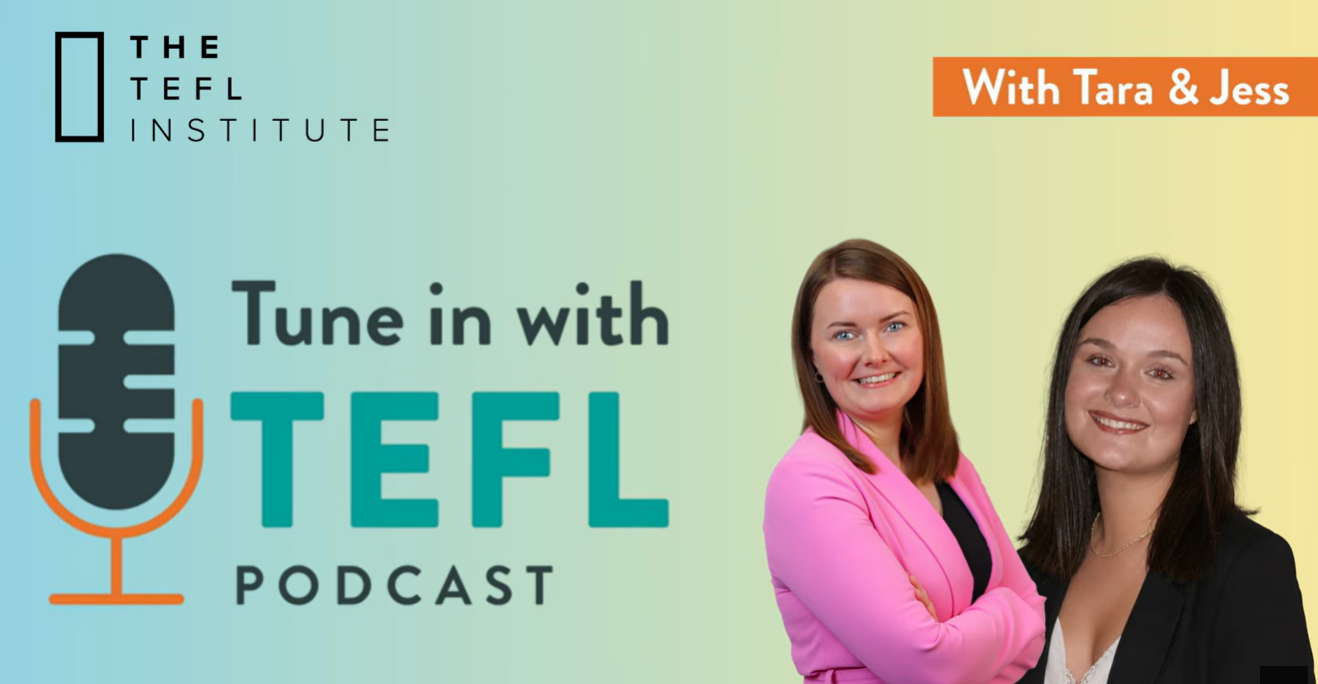
Tara and Jess talk through different TEFL and EFL topics, from finding work abroad to life in the classroom.
FAQs
Questions students ask us
The British Council’s TeachingEnglish site offers full lesson plans organised by CEFR level, iSL Collective hosts free teacher-made worksheets, and TEFL.ai provides free AI tools for lesson plans and levelled texts. This page also gives three copy and paste planning templates and links to our guides on warmers, PPP, concept checking questions and AI prompts.
Most warmers work best at five to ten minutes. The British Council describes them as short, fun activities that are simple to explain and need little preparation. If a warmer runs longer, students lose energy and you lose time for the main part of the lesson.
PPP stands for Presentation, Practice, Production. You introduce language in context, practise it with controlled exercises that have clear right answers, then let students use it freely in a communicative task. It suits new teachers because each stage has a single job and a predictable timing.
Concept checking questions (CCQs) are short questions that test whether students understand the meaning of new language, such as “Is it finished or still happening?” They replace “Do you understand?”, which learners usually answer with a polite yes. Good CCQs use simple words and have clear yes, no or short answers.
Build a reusable lesson template, such as PPP, and fill it with new content each time. Add a ready warmer and a standard review activity, and use an AI tool to draft texts and exercises. Always check the level and edit the output before using it with students.
No. Anyone can use these guides, and they suit new teachers, volunteers and experienced teachers alike. A TEFL qualification gives you structured training, practice with lesson planning and a credential that employers can check, which matters if you want to teach abroad or online.
