

 United Kingdom (UK)
 United States (US)
 Canada
 South Africa
 India
India Australia
 New Zealand
 China
China Russia
 Germany
 France
 Spain
Spain Netherlands
 Vietnam
 United Arab Emirates
 Italy
Italy Poland
 Thailand
 Türkiye





 Algeria


7 Essential Classroom Management Strategies List
7 Essential Classroom Management Strategies List
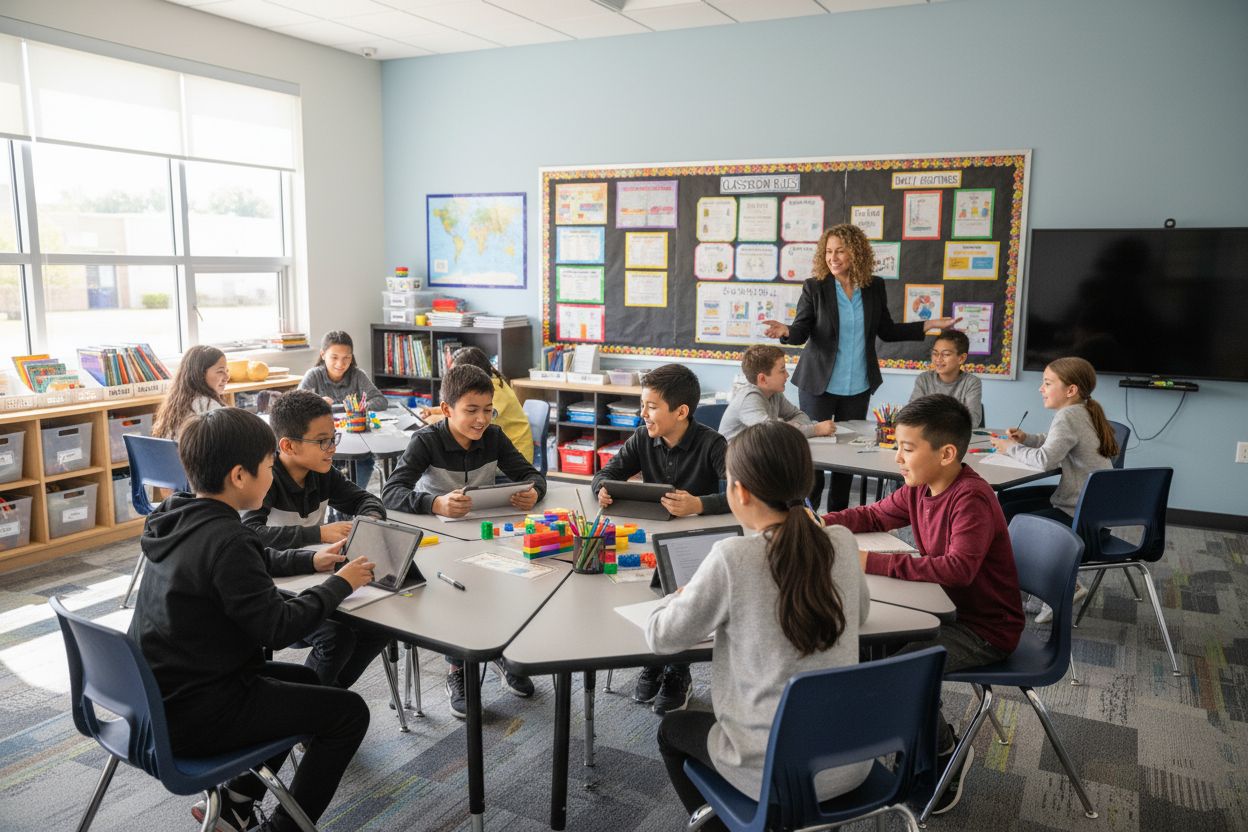
Managing a classroom goes far beyond keeping everyone quiet or handing out detentions. Turns out, teachers who set clear expectations and routines see classroom disruptions drop by up to 30 percent according to recent studies. What most people overlook is that real classroom management magic happens not with rules, but with relationships and daily habits that make students feel seen and supported.
Table of Contents
- 1: Establish Clear Expectations And Rules
- 2: Build Positive Relationships With Students
- 3: Utilize Engaging Teaching Techniques
- 4: Implement Consistent Classroom Routines
- 5: Use Effective Classroom Layout
- 6: Monitor Student Behavior Regularly
- 7: Provide Constructive Feedback And Support
Quick Summary
| Takeaway | Explanation |
|---|---|
| Establish clear expectations and rules | Clearly communicate rules to create a structured, positive learning environment for students. |
| Build positive relationships with students | Engage with students genuinely to foster respect and trust, enhancing collaboration and learning. |
| Utilize engaging teaching techniques | Incorporate diverse instructional strategies to keep students motivated and improve their learning experience. |
| Implement consistent classroom routines | Develop predictable routines to reduce anxiety and help students focus on learning. |
| Provide constructive feedback and support | Offer specific, actionable feedback to encourage student growth and enhance motivation. |
1: Establish Clear Expectations and Rules
Classroom management strategies begin with setting solid foundations through clear expectations and rules. Teachers who proactively communicate behavioral guidelines create structured learning environments where students understand boundaries and performance standards. These initial communication steps are critical for establishing a positive classroom dynamic.
Effective rule establishment requires thoughtful planning and strategic implementation. Educational Psychology Review highlights that students respond best to rules developed collaboratively, which increases their sense of ownership and commitment to following guidelines.
When developing classroom expectations, consider these key principles:
- Rules should be specific and actionable
- Guidelines must be age appropriate
- Expectations need consistent enforcement
Successful classroom management demands transparency about behavioral standards. Teachers should articulate rules verbally and visually, potentially creating a classroom contract or agreement that students can reference. This document serves multiple purposes: establishing clear communication, setting performance benchmarks, and providing a mutual understanding of classroom conduct.
The most effective expectations address multiple dimensions of classroom interaction, including:
- Academic participation requirements
- Respectful communication standards
- Personal responsibility protocols
Implementing these guidelines requires more than simply posting rules. Teachers must model the behaviors they expect, demonstrating integrity and consistency. When students observe educators practicing what they preach, they are more likely to internalize and follow established classroom norms.
Classroom Management Research suggests that rule establishment is not a one time event but an ongoing process. Periodic review and refinement of expectations allow for adaptive management strategies that respond to evolving classroom dynamics.
Ultimately, clear expectations create predictable, safe learning environments where students can focus on academic growth without uncertainty about behavioral boundaries. By investing time in thoughtful rule development, educators lay the groundwork for productive, respectful classroom interactions.
2: Build Positive Relationships with Students
Establishing strong interpersonal connections is fundamental to effective classroom management. Teachers who invest time in understanding and engaging with students create learning environments characterized by mutual respect, trust, and collaboration. Educational Psychology Research demonstrates that positive student teacher relationships significantly impact academic performance and classroom behavior.
Positive relationships are not about being friends, but about creating a supportive and genuine learning atmosphere. This approach requires intentional strategies that communicate care, respect, and genuine interest in students’ individual experiences and potential.
Key approaches to building meaningful student connections include:
- Demonstrate authentic interest in students’ lives
- Practice active and empathetic listening
- Recognize individual student strengths
- Provide consistent and constructive feedback
Communication plays a critical role in relationship building. Nonverbal cues are equally important as verbal interactions. Teachers who maintain approachable body language, make eye contact, and use encouraging facial expressions signal openness and emotional availability.
Developmental Psychology research indicates that students who feel emotionally supported are more likely to participate actively, take academic risks, and demonstrate resilience during challenging learning experiences.
Teachers can further strengthen relationships by creating opportunities for personal interaction beyond traditional classroom instruction. This might involve:
- Brief individual check ins
- Showing interest in students’ extracurricular activities
- Acknowledging personal achievements
- Providing mentorship opportunities
Cultural sensitivity is another crucial component of relationship building. Recognizing and respecting diverse backgrounds, learning styles, and personal experiences helps create an inclusive environment where every student feels valued and understood.
Effective relationship building is not about perfection but consistent, genuine effort. By approaching student interactions with empathy, respect, and authentic care, teachers transform classroom management from a disciplinary task to a collaborative, supportive learning journey.
3: Utilize Engaging Teaching Techniques
Engaging teaching techniques transform traditional classroom instruction into dynamic, interactive learning experiences. Pedagogical variety keeps students motivated and attentive, reducing behavioral challenges and increasing academic participation. Instructional Science Journal confirms that diverse teaching approaches significantly improve student engagement and knowledge retention.
Teachers can create compelling learning environments by incorporating multiple instructional strategies. Effective TEFL teaching methods help educators design lessons that capture student interest and promote active learning.
Key principles for developing engaging teaching techniques include:
- Incorporate multimedia resources
- Use interactive learning activities
- Design problem solving scenarios
- Encourage student led discussions
Technological integration plays a critical role in modern classroom engagement. Digital tools like educational apps, interactive presentations, and collaborative online platforms provide opportunities for dynamic learning experiences. These technologies enable personalized instruction and accommodate diverse learning styles.
Interactive teaching techniques go beyond digital resources. Experiential learning methods such as role playing, simulations, and hands on projects encourage students to apply theoretical knowledge in practical contexts. Educational Psychology Research suggests that active learning approaches increase student motivation and cognitive processing.
Strategies for maintaining student engagement include:
- Varying instructional pace
- Using real world examples
- Implementing collaborative group work
- Providing immediate and constructive feedback
Critical to engaging teaching is understanding individual student learning preferences. Some students thrive with visual demonstrations, while others prefer auditory or kinesthetic learning experiences. Skilled educators adapt their techniques to meet diverse classroom needs.
The goal of engaging teaching techniques is not entertainment but meaningful learning. By creating intellectually stimulating environments that challenge and support students, teachers transform classroom management from a discipline focused approach to an interactive, collaborative educational journey.
4: Implement Consistent Classroom Routines
Classroom routines serve as the structural backbone of effective learning environments, providing predictability and security for students. Educational Management Research demonstrates that consistent routines significantly reduce classroom disruptions and student anxiety, creating a stable framework for academic engagement.
Successful routine implementation requires deliberate planning and clear communication. Teachers must design procedures that are age appropriate, logical, and easy to understand. The goal is creating a seamless workflow that minimizes transition times and maximizes instructional opportunities.
Key considerations for developing effective classroom routines include:
- Establish clear start and end of class protocols
- Create systematic approaches for material distribution
- Design predictable transition mechanisms
- Develop consistent behavior management strategies
Routines extend beyond procedural mechanics. They communicate expectations, reduce cognitive load, and help students develop self regulation skills. When students understand exactly what is expected during various classroom activities, they can focus more energy on learning and less on navigating unclear expectations.
Classroom Management Studies indicate that routines should be introduced gradually, with explicit modeling and opportunities for student practice. Teachers must demonstrate each routine multiple times, providing clear explanations and opportunities for students to ask questions.
Additional routine development strategies involve:
- Practicing routines during initial class sessions
- Reinforcing procedures through consistent application
- Providing gentle reminders when routines deviate
- Adjusting routines based on student feedback
Technology can support routine implementation through digital tracking tools, visual schedules, and interactive checklists. These resources help students internalize procedures and develop independent management skills.
Consistent routines are not about rigid control but creating predictable, supportive learning environments. By establishing clear expectations and systematic approaches, teachers reduce classroom uncertainty and create spaces where students can focus on academic and personal growth.
5: Use Effective Classroom Layout
Physical classroom design plays a critical role in student engagement and classroom management. Environmental Psychology Research demonstrates that spatial arrangement significantly impacts learning behaviors, student interactions, and overall academic performance.
Classroom layout is more than furniture placement. It is a strategic tool for creating dynamic, interactive learning environments that support diverse educational objectives. Thoughtful spatial design can reduce behavioral challenges and promote collaborative learning experiences.
Key principles of effective classroom layout include:
- Maximize visibility for all students
- Create flexible learning zones
- Ensure easy movement pathways
- Design spaces for different learning activities
Advanced TEFL Techniques emphasize the importance of adaptable classroom configurations that support various instructional strategies. Different lesson types require different spatial arrangements, from traditional lecture settings to collaborative group work environments.
Technology integration requires careful spatial considerations. Modern classrooms must accommodate digital tools while maintaining interactive learning spaces. This might involve creating designated technology zones, ensuring adequate power access, and designing layouts that facilitate both individual and group digital interactions.
Strategies for optimizing classroom layout involve:
- Allowing multiple seating configurations
- Creating dedicated learning stations
- Balancing individual and collaborative spaces
- Maintaining clear sight lines for teacher monitoring
Educational Design Research suggests that classroom layouts should accommodate diverse learning styles. Some students perform better in open spaces, while others require more structured environments. Flexible design allows teachers to modify spaces to meet specific lesson objectives and student needs.
Ultimately, effective classroom layout is about creating purposeful, adaptable environments that support learning. By carefully considering spatial design, teachers can transform physical spaces into dynamic educational tools that enhance student engagement and classroom management.
6: Monitor Student Behavior Regularly
Consistent behavior monitoring serves as a critical component of effective classroom management. Educational Psychology Research reveals that proactive observation prevents potential disruptions and creates opportunities for timely interventions.
Successful behavior monitoring requires a nuanced approach that balances observation with positive reinforcement. Teachers must develop keen awareness of classroom dynamics, recognizing subtle behavioral cues that might indicate emerging challenges or potential learning obstacles.
Key strategies for effective behavior monitoring include:
- Maintain consistent visual scanning
- Use nonverbal communication signals
- Track individual and group engagement levels
- Document recurring behavioral patterns
Advanced TEFL Techniques emphasize the importance of developing a systematic approach to behavior observation. This involves creating structured frameworks for tracking student interactions, participation levels, and potential areas of concern.
Technology can support behavior monitoring through digital tracking tools and observation platforms. These resources enable teachers to collect objective data, identify trends, and develop targeted intervention strategies.
Important considerations for behavior monitoring involve:
- Maintaining a neutral and objective perspective
- Avoiding punitive approaches
- Recognizing individual student differences
- Providing constructive feedback
Classroom Management Studies indicate that successful monitoring goes beyond identifying negative behaviors. Effective teachers use observation as an opportunity to recognize positive student contributions, reinforcing desirable classroom interactions.
Behavior monitoring is not about control but understanding. By developing a comprehensive approach to student observation, teachers create supportive environments that promote academic and personal growth. The goal is to establish a proactive system that identifies potential challenges early, allowing for timely and supportive interventions that maintain a positive learning atmosphere.
7: Provide Constructive Feedback and Support
Constructive feedback represents a powerful tool for student growth and classroom management. Educational Psychology Research demonstrates that targeted, supportive communication significantly enhances student motivation, academic performance, and self regulation skills.
Effective feedback transcends simple criticism, focusing instead on developmental guidance that empowers students to understand their strengths and areas for improvement. Meaningful communication creates a supportive learning environment where students feel valued and motivated to progress.
Key principles of constructive feedback include:
- Offer specific, actionable observations
- Balance critical points with positive recognition
- Focus on behaviors and performance, not personal characteristics
- Provide clear pathways for improvement
Advanced TEFL Techniques highlight the importance of timely and personalized feedback mechanisms. Teachers must develop nuanced communication strategies that consider individual student learning styles, cultural backgrounds, and emotional readiness.
Technology can enhance feedback processes through digital assessment tools, personalized learning platforms, and real time performance tracking. These resources enable more precise, data driven communication strategies that support individual student development.
Strategies for delivering supportive feedback involve:
- Using a growth mindset approach
- Creating safe spaces for student reflection
- Encouraging self assessment techniques
- Maintaining consistent, compassionate communication
Classroom Management Studies suggest that effective feedback is not a one way process. Successful educators create dialogue opportunities where students can provide input, share perspectives, and collaborate on improvement strategies.
Ultimately, constructive feedback is about building student confidence and academic resilience. By approaching communication with empathy, specificity, and genuine support, teachers transform feedback from a potentially discouraging experience into a powerful catalyst for personal and academic growth.
Below is a comprehensive table summarizing the 7 essential classroom management strategies discussed in the article to help teachers create positive, effective, and engaging classrooms.
| Strategy | Key Actions and Principles | Main Benefits |
|---|---|---|
| Establish Clear Expectations and Rules | Communicate specific, actionable, and age-appropriate rules; involve students in rule development; consistently enforce expectations. | Provides structure, reduces confusion, increases student buy-in. |
| Build Positive Relationships with Students | Demonstrate genuine interest, practice active listening, show empathy, and respect cultural diversity. | Fosters trust, boosts engagement, improves classroom behavior. |
| Utilize Engaging Teaching Techniques | Incorporate multimedia, interactive activities, problem solving, student-led discussions, and adapt to learning styles with technology. | Increases motivation, participation, and knowledge retention. |
| Implement Consistent Classroom Routines | Design clear, age-appropriate procedures for transitions, materials, and classroom workflows; introduce and reinforce routines gradually. | Reduces anxiety, increases predictability, maximizes learning time. |
| Use Effective Classroom Layout | Arrange flexible seating, ensure visibility, enable easy movement, and create zones for different activities while integrating technology thoughtfully. | Supports engagement, collaboration, and behavior management. |
| Monitor Student Behavior Regularly | Maintain visual scanning, use nonverbal cues, document engagement, and analyze patterns; use objective, non-punitive, and data-driven methods. | Enables timely interventions, reinforces positive behaviors. |
| Provide Constructive Feedback and Support | Offer specific, balanced, and actionable feedback; use a growth mindset, timely responses, and encourage self-reflection through compassionate communication (including digital tools). | Enhances confidence, motivation, and academic/performance growth. |
Transform Your Classroom Management With Proven TEFL Training
Do you ever feel uncertain about maintaining control or consistency in your classroom, even after reading about essential management strategies? Many teachers struggle with establishing positive routines, setting clear expectations, and maximizing student engagement, as highlighted in this article. If you want to deepen your skills beyond the basics—such as creating effective classroom layouts, handling diverse learners, or strengthening constructive feedback—real support and specialized knowledge can make all the difference.

The TEFL Institute empowers both new and experienced educators with flexible online TEFL certification courses and expert resources tailored to the real challenges of classroom management. Explore the full range of teaching courses and micro-credentials designed to help you master proven techniques, develop your teaching confidence, and open doors to worldwide teaching opportunities. Start your journey today and move from managing your classroom to leading it with skill and confidence—browse the TEFL Institute’s online catalog to enroll now.
Frequently Asked Questions
What are the key components of clear classroom expectations and rules?
Establish clear, specific, and age-appropriate expectations and rules to create a structured learning environment. Start with student participation to collaboratively develop these guidelines, which will encourage their commitment and understanding.
How can I build positive relationships with my students?
Foster strong interpersonal connections by showing genuine interest in your students’ lives and practicing active listening. Schedule brief individual check-ins and acknowledge their achievements, which can help them feel valued and promote a collaborative atmosphere.
What are some engaging teaching techniques I can implement?
Utilize a variety of instructional strategies, such as multimedia resources and interactive activities, to keep students motivated. For example, design problem-solving scenarios that encourage student-led discussions to enhance their active participation in learning.
How do I establish consistent classroom routines?
Create and clearly communicate routines that are age-appropriate and logical to provide students with predictability in their learning environment. Introduce these routines slowly, practicing them repeatedly during the initial lessons to help students understand and internalize the procedures.
What should I consider when designing an effective classroom layout?
Focus on maximizing visibility, providing flexible learning zones, and ensuring smooth movement pathways to enhance student engagement. Regularly assess and adjust the layout based on the needs of different activities, prioritizing areas that support collaboration and individual work.
How can I effectively monitor student behavior in the classroom?
Maintain consistent visual scanning and track engagement levels to proactively identify potential disruptions. Document and analyze recurring behavior patterns to enable timely interventions, focusing not just on misbehavior but also recognizing and reinforcing positive contributions.
