
 United Kingdom (UK)
 United States (US)
 Canada
 South Africa
 India
India Australia
 New Zealand
 China
China Russia
 Germany
 France
 Spain
Spain Netherlands
 Vietnam
 United Arab Emirates
 Italy
Italy Poland
 Thailand
 Türkiye










 Algeria



Why pursue advanced TEFL in 2026: boost teaching career
Why pursue advanced TEFL in 2026: boost teaching career

Most TEFL teachers overlook how much an advanced certification can reshape their careers. While basic TEFL qualifications open doors, advanced credentials like Level 5 diplomas unlock higher salaries, better job placements, and deeper pedagogical expertise. In 2026, as the global demand for qualified English teachers intensifies, investing in advanced TEFL training isn’t just about credentials. It’s about positioning yourself as a competitive, skilled educator who delivers measurable student outcomes. This guide breaks down exactly why advanced TEFL matters, what it offers, and how to choose the right path for your teaching goals.
Table of Contents
- Understanding Advanced TEFL Certification
- How Advanced TEFL Improves Teaching Performance
- Career Advantages Of Pursuing Advanced TEFL Certification
- Why Accreditation Matters In Advanced TEFL
- Take Your TEFL Journey Further With The TEFL Institute
- Frequently Asked Questions
Key takeaways
| Point | Details |
|---|---|
| Advanced TEFL enhances teaching methods | Level 5 diplomas provide in-depth training in task-based learning and communicative approaches that improve student engagement. |
| Higher salaries and better job prospects | Advanced certifications lead to 15-25% higher starting salaries and stronger placement rates in competitive markets. |
| Accreditation ensures quality and trust | Accredited programs guarantee course rigor and employer recognition, making your qualification more valuable. |
| Level 5 diplomas offer deeper knowledge | These qualifications provide pedagogical depth beyond basic certificates, making you more employable. |
| Certification plus experience maximizes growth | Combining advanced training with practical teaching experience creates the strongest career trajectory. |
Understanding advanced TEFL certification
Advanced TEFL certification goes far beyond the foundational 120-hour courses that introduce basic classroom management and lesson planning. These higher-level programs, particularly Level 5 diplomas, deliver comprehensive training in modern pedagogical theories, assessment strategies, and specialized teaching contexts. A Level 5 TEFL diploma offers deeper methodological understanding, making graduates significantly more competitive in global job markets.
The distinction between certificates and diplomas matters. Certificates typically cover essential teaching skills and provide entry-level qualifications. Diplomas, especially those at Level 5, are equivalent to the second year of a bachelor’s degree and require 240 to 370 study hours. They explore complex topics like curriculum design, learner psychology, and differentiated instruction. This increased rigor translates into practical classroom advantages.
Advanced courses emphasize evidence-based methodologies that transform how you teach. Key curriculum elements include:
- Task-based learning frameworks that prioritize real-world language use
- Communicative language teaching techniques focused on interaction and fluency
- Advanced grammar instruction methods that balance accuracy with communication
- Assessment and feedback strategies tailored to diverse learner needs
- Technology integration for blended and online teaching environments
These programs demand more time and intellectual engagement than basic courses. You’ll analyze teaching scenarios, design comprehensive lesson sequences, and demonstrate mastery through practical assessments. The depth of study prepares you to handle diverse classrooms, adapt to different learning styles, and troubleshoot complex teaching challenges. For teachers serious about long-term careers in TEFL, this foundational knowledge is indispensable. Explore more about advanced TEFL diplomas to understand program structures and outcomes.
How advanced TEFL improves teaching performance
Advanced TEFL training directly impacts your effectiveness in the classroom by equipping you with methodologies proven to enhance student learning. Research consistently shows that teacher training in modern approaches correlates with improved student engagement and measurable proficiency gains. These aren’t abstract theories. They’re practical frameworks you apply daily to create dynamic, learner-centered lessons.
Task-based learning, a cornerstone of advanced TEFL curricula, shifts focus from rote memorization to authentic language use. Students complete meaningful tasks like planning a trip, solving a problem, or conducting a debate, using English as the tool rather than the subject. This approach mirrors real-world communication and keeps learners actively involved. Communicative language teaching complements this by prioritizing interaction, fluency, and confidence over perfect grammar in every exchange.
Advanced programs also develop your ability to diagnose learning gaps and adjust instruction accordingly. You learn to:
- Design lessons that address multiple proficiency levels simultaneously
- Use formative assessment to guide instruction in real time
- Incorporate scaffolding techniques that support gradual skill development
- Adapt materials for different cultural and educational backgrounds
- Integrate technology tools that enhance engagement without overwhelming learners
These skills translate into classrooms where students participate more, retain information longer, and achieve their language goals faster. Teachers with advanced training report higher student satisfaction and better learning outcomes because they can respond flexibly to classroom dynamics.
Pro Tip: Applying task-based learning increases student motivation because learners see immediate relevance in what they’re practicing, making lessons feel purposeful rather than abstract.
The pedagogical depth you gain also builds your confidence. You’re not just following a textbook. You’re making informed instructional decisions based on learning theory and student needs. This expertise sets you apart in job interviews and performance evaluations. Dive deeper into advanced TEFL course benefits to see how training transforms teaching practice.
Career advantages of pursuing advanced TEFL certification
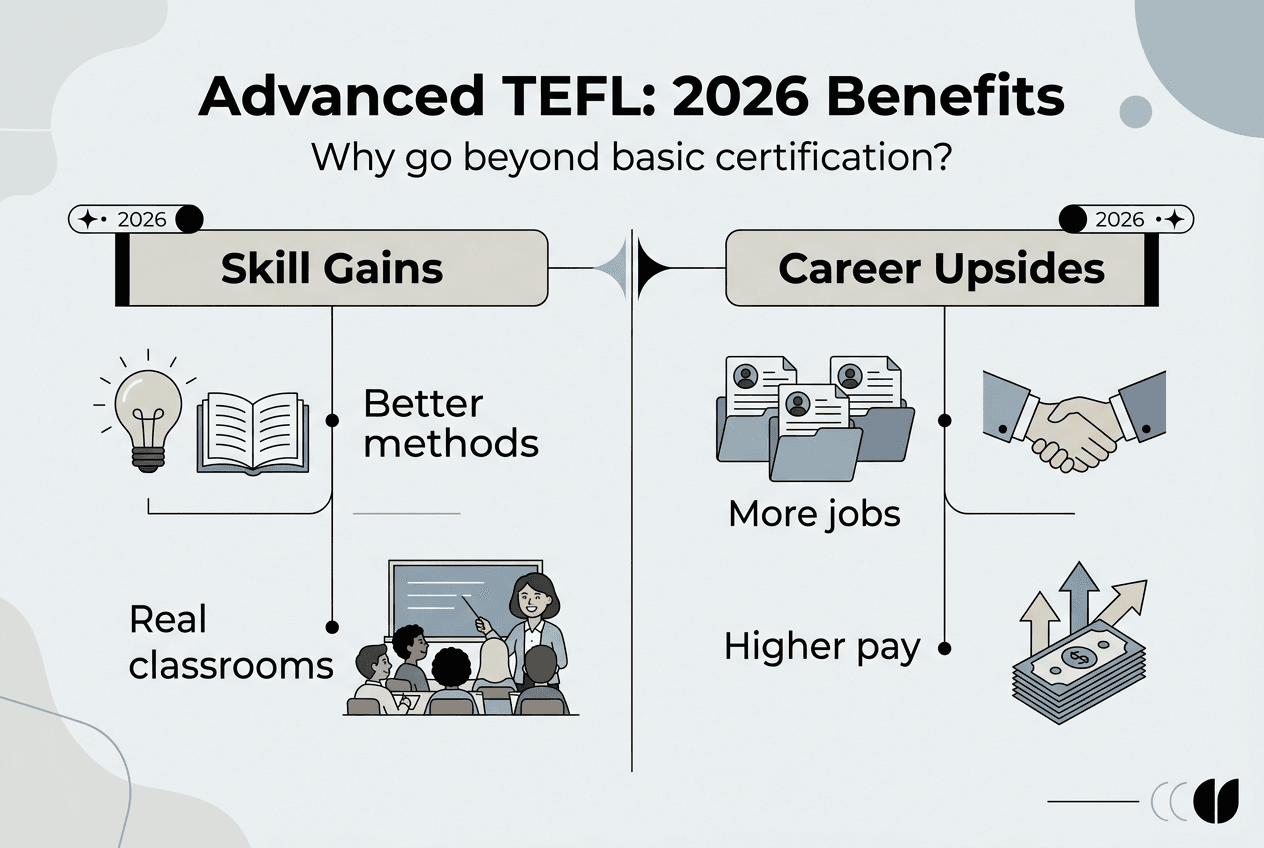
Advanced TEFL certification delivers tangible career benefits that justify the investment in time and money. The most immediate advantage is financial. Teachers with Level 5 diplomas or equivalent advanced qualifications earn 15-25% higher starting salaries compared to those with basic certificates. In competitive markets like the Middle East, East Asia, and Europe, this salary differential can mean thousands of dollars annually.

Job placement rates tell a similar story. Advanced credentials make you eligible for positions that basic certificate holders cannot access. Universities, international schools, and corporate training programs often require or strongly prefer candidates with diplomas. These roles typically offer better contracts, including housing allowances, health insurance, and professional development stipends. The table below illustrates typical salary ranges by certification level in key markets:
| Market | Basic Certificate Salary | Advanced Diploma Salary | Difference |
|---|---|---|---|
| Middle East | $2,500 – $3,000/month | $3,200 – $4,000/month | 28-33% higher |
| East Asia | $1,800 – $2,400/month | $2,400 – $3,200/month | 33% higher |
| Europe | $1,500 – $2,200/month | $2,000 – $2,800/month | 27% higher |
| Online Teaching | $15 – $20/hour | $22 – $30/hour | 47-50% higher |
Beyond salary, advanced certification opens doors to leadership and specialized roles. You become eligible for positions like academic coordinator, curriculum developer, teacher trainer, or program director. These roles offer career progression beyond classroom teaching and often come with administrative responsibilities and higher pay scales.
Employers also view advanced qualifications as proof of commitment and professionalism. In a field where many teachers hold only basic certificates, a Level 5 diploma signals that you take your career seriously. This credibility matters during hiring decisions and contract renewals. Students and parents also recognize the difference, often preferring teachers with stronger credentials.
Pro Tip: Pairing your advanced certification with relevant teaching experience creates the strongest career growth trajectory, as employers value both theoretical knowledge and practical classroom skills.
The competitive advantage extends to remote teaching opportunities. Online platforms increasingly require advanced qualifications for premium teaching slots and higher pay tiers. As remote education continues growing in 2026, having an advanced TEFL diploma positions you for the best opportunities in this expanding market. Learn more about Level 5 TEFL certificates and how they enhance employability.
Why accreditation matters in advanced TEFL
Accreditation serves as the quality assurance mechanism in TEFL training, separating legitimate programs from substandard offerings. When a course is accredited, an independent body has verified that it meets rigorous educational standards for curriculum design, instructor qualifications, and assessment methods. Accreditation guarantees course quality and legitimacy, providing confidence to both teachers and employers.
For employers, accreditation simplifies hiring decisions. They know that candidates with accredited qualifications have completed standardized training that covers essential competencies. Many schools, particularly in regulated markets like the European Union and Middle East, will only consider applicants with accredited certifications. Without accreditation, your diploma may be worthless regardless of how much you learned.
Accreditation also affects course content and delivery. Accredited programs must demonstrate that they:
- Employ qualified instructors with relevant teaching experience and credentials
- Provide comprehensive curricula covering core TEFL competencies
- Use valid assessment methods that accurately measure learning outcomes
- Offer adequate support and resources for student success
- Maintain transparent policies on completion requirements and certification
These standards protect you from wasting time and money on programs that don’t deliver real value. They ensure that your training prepares you for actual classroom challenges rather than just awarding a certificate for minimal effort.
Verifying accreditation requires diligence. Check the accrediting body’s legitimacy by researching its recognition within the education sector. Reputable accreditors include government education departments, recognized international bodies, and established professional associations. Be wary of programs claiming accreditation from obscure or self-created organizations.
When choosing an advanced TEFL program, prioritize those with clear accreditation information prominently displayed. Contact the accrediting body directly if you have doubts. Read reviews from graduates about how employers received their qualifications. This due diligence protects your investment and ensures your certification holds value in competitive job markets. Understand more about TEFL accreditation importance and how to verify program credentials.
Take your TEFL journey further with the TEFL Institute
If you’re ready to elevate your teaching career with advanced TEFL certification, the TEFL Institute offers accredited programs designed for serious educators. Our Level 5 diplomas provide comprehensive training in modern methodologies, classroom management, and specialized teaching contexts. You’ll gain the pedagogical depth and practical skills that employers value most.
Whether you’re starting your TEFL journey or advancing an existing career, we offer flexible learning paths tailored to your goals. Explore TEFL courses in Newcastle for location-specific options, or check out our course extensions to deepen your expertise in areas like business English or young learners. Access our TEFL resources for ongoing support as you build your teaching career. Invest in quality training that opens doors to better opportunities and transforms how you teach.
Frequently asked questions
What is an advanced TEFL certification?
An advanced TEFL certification, typically a Level 5 diploma, provides in-depth training in pedagogical theories, modern teaching methodologies, and specialized instructional contexts. These programs require 240 to 370 study hours and cover topics like task-based learning, curriculum design, and assessment strategies. They’re equivalent to second-year university coursework and prepare teachers for competitive positions in international schools, universities, and corporate training programs.
Is advanced TEFL certification necessary for teaching abroad?
While basic TEFL certificates meet minimum requirements for many entry-level positions, advanced certification significantly improves your job prospects and earning potential. Many premium employers, especially universities and international schools, require or strongly prefer Level 5 diplomas. If you’re serious about a long-term TEFL career with progression opportunities, advanced certification is a strategic investment that pays dividends through higher salaries and better placements.
How does advanced TEFL compare to teaching experience?
Both matter, but they serve different purposes. Advanced certification provides theoretical knowledge and proven methodologies that make you a more effective teacher from day one. Experience builds practical classroom management skills and cultural adaptability. The strongest candidates combine both. If you’re early in your career, prioritize certification to establish credibility. If you have experience but lack formal training, advanced certification fills knowledge gaps and opens doors to higher-level roles.
What’s the cost-benefit analysis of pursuing advanced TEFL?
Advanced TEFL programs typically cost between $500 and $2,000, depending on the provider and program length. Given that advanced qualifications lead to 15-25% higher salaries, you can recoup this investment within the first year of teaching. Beyond immediate financial returns, you gain career mobility, access to better positions, and deeper teaching skills that benefit you throughout your career. The return on investment is substantial for committed teachers.
How do I verify if an advanced TEFL program is properly accredited?
Check the program’s website for accreditation information, noting the specific accrediting body. Research that organization to confirm it’s recognized within the education sector, not a self-created entity. Look for accreditation from government education departments, established international bodies, or reputable professional associations. Contact the accrediting body directly to verify the program’s status. Read graduate reviews about how employers received their qualifications. Legitimate programs provide transparent, verifiable accreditation details.
Recommended
- Why specialize in TEFL: boost your teaching career in 2026 | TEFL Institute
- Teaching English as a career in 2026: certification paths | TEFL Institute
- 7 Best TEFL Destinations 2025 for Aspiring Teachers | TEFL Institute
- Why choose TESOL certification in 2026: career paths | TEFL Institute
- Master the multilingual call center process in 2026