United Kingdom (UK)
 United States (US)
 Canada
 South Africa
 India
 Australia
 New Zealand
 China
 Russia
 Germany
 France
 Spain
 Netherlands
 Vietnam
 United Arab Emirates
 Italy
 Poland
 Thailand
 Türkiye





 Algeria


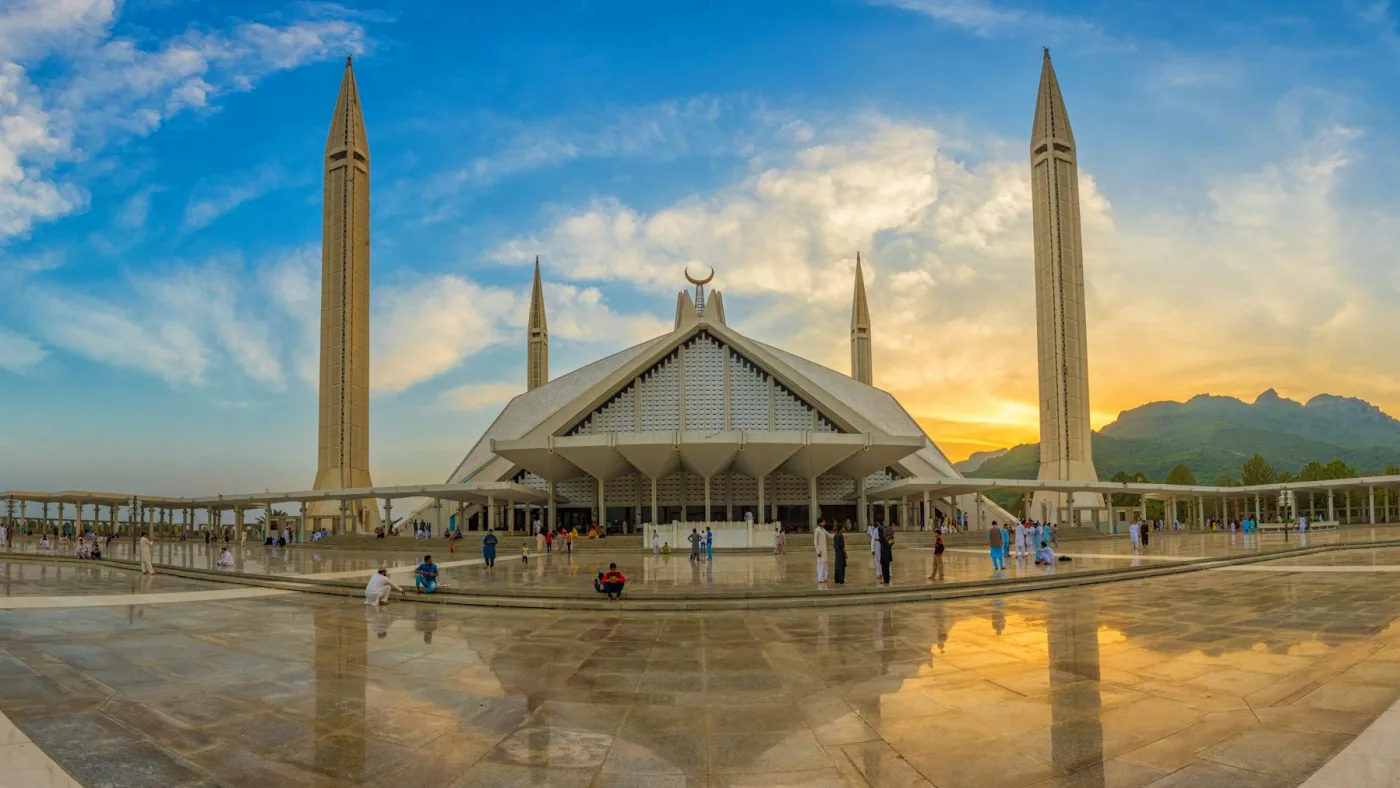
English teacher training in Pakistan is growing fast, and it now reaches well beyond government programmes. Provinces have announced training for tens of thousands of teachers, while private education providers are adding international TEFL qualifications for people who want to teach.
Pakistan starts from a solid base. It ranks 67th of 123 countries in the 2025 EF English Proficiency Index, just above the global average, and speaking is its strongest skill. The next step is turning that confidence into classroom skill.
Key takeaways
- Pakistan ranks 67th of 123 countries in the 2025 EF English Proficiency Index.
- Speaking is the country’s strongest English skill, with a score of 517.
- Sindh agreed in 2025 to train 30,000 teachers with the British Council.
- Punjab announced spoken English training for 35,000 government teachers in 2026.
- Private education providers are adding international TEFL qualifications alongside public programmes.
What is driving English teacher training in Pakistan?
English is a compulsory subject in Pakistan’s schools and colleges. It is also the main working language of government, higher education, and the corporate sector. Even so, many learners find it hard to use English with confidence after years of study, which puts the focus on how it is taught.
Provincial governments are responding with large teacher training programmes.
The proficiency data shows where that effort can add the most. Punjab and Islamabad score well above the national average. Speaking and writing are strong. Listening, the skill learners need to follow a fast conversation or a lesson taught in English, is the weakest.
How big is the provincial training push?
Sindh’s programme builds on a British Council model first used in Punjab, where it reached more than 140,000 teachers. Punjab’s newer programme focuses on spoken English for government school teachers. Together, they show that teacher quality now sits at the centre of English policy in two of Pakistan’s provinces.
For private providers, these schemes can raise expectations of what a trained English teacher can do. That, in turn, may lift demand for practical training outside the state system.
Demand for English also reaches beyond the classroom. Hundreds of thousands of Pakistanis go abroad for work each year. For many of them, English is part of the plan from day one. The 2025 figures include 1,725 teachers.

Who is left outside the public programmes?
Public programmes are built for teachers already in government schools. That leaves a wide group to serve: private school teachers, staff at language academies, graduates who want to teach, and people planning to teach online or abroad.
Each group needs something slightly different. A private school teacher may want stronger classroom methods. A graduate may want a first qualification before applying for roles. Someone teaching online needs to keep a lesson moving through a screen.
Every TEFL opening, salary and deadline that matters.
In your inbox every two weeks. Free, no spam, unsubscribe any time.
Teacher pay by country
New TEFL openings
Programme and visa dates
The EF data is encouraging here. Respondents who work as teachers scored 499, above the national average of 493. That figure covers teachers of every subject, not English specialists alone. It points to a strong base, with practical training as the natural next step.
Three skills sit at the centre of this work:
A certificate that travels matters too. A teacher who trains in Pakistan wants a qualification they can take to a private school in Lahore, an online classroom, or a teaching role overseas.

From study abroad to the classroom: why MAQx added TEFL
MAQx Education Consultancy is based in Islamabad, with a second office in Dubai. It helps students choose courses, apply to universities, and prepare visa applications for study abroad. It also runs English test preparation classes.
In autumn 2026, MAQx became The TEFL Institute’s official partner in Pakistan for the 120-Hour Advanced TEFL Course. Learners study online at their own pace, with support from The TEFL Institute’s tutors, while MAQx guides them from their first enquiry to their certificate.
The main aim of MAQx’s partnership with The TEFL Institute was to support applicants looking to make a meaningful impact in English language teaching.
“At MAQx, we have an applicant-centric approach. We want to provide the best quality of experience and be part of our applicants’ journey while they excel in their careers, whether that is study abroad consultancy, English test preparation classes, or now the 120-hour TEFL course. MAQx actually cares about the X factor you deserve.”
Each side plays to its strengths. MAQx knows its students and guides them locally, and The TEFL Institute supplies the curriculum, tutoring, assessment, and certification.
Three ideas other markets can borrow from Pakistan
Pakistan is not the only country where public and private teacher training are growing side by side. These three ideas travel well:
Start with the students you have
Combine an international certificate with local guidance
Complement public programmes
Could a local partnership work in your market?

Sources
- EF English Proficiency Index 2025, Pakistan fact sheet (ef.com/epi).
- Arab News Pakistan, British Council and Sindh government to train 30,000 teachers (June 2025).
- ProPakistani, Punjab to train 35,000 teachers in spoken English (June 2026).
- ProPakistani, Punjab postpones English training for 35,000 teachers (June 2026).
- Pakistan Observer, Bureau of Emigration and Overseas Employment figures for 2025 (January 2026).
- MAQx Education Consultancy, About us (maqx.org).
- The TEFL Institute, 120-Hour Advanced TEFL Course with MAQx, Pakistan.
Tara and Jess talk through different TEFL and EFL topics, from finding work abroad to life in the classroom.
FAQs
Questions students ask us
Yes. English is a compulsory subject in Pakistan’s schools and colleges. It is also widely used in government, higher education, and business.
Pakistan ranked 67th of 123 countries in the EF English Proficiency Index 2025, with a score of 493. That sits in the “low” band, slightly above the global average of 488. Speaking is the strongest skill, at 517.
TEFL stands for Teaching English as a Foreign Language. A TEFL course covers how to plan lessons, manage a classroom, and teach grammar, vocabulary, and skills to learners of English. A 120-hour course is a common starting point for new teachers.
Yes. The 120-Hour Advanced TEFL Course is studied fully online, with tutor support and six months to complete it. Learners in Pakistan can also enrol through our official partner, MAQx.
The usual route is a partnership with an established provider. The local partner recruits and supports learners, while the provider delivers the curriculum, assessment, and certification. Our Partner Network page explains the options.