

 United Kingdom (UK)
 United States (US)
 Canada
 South Africa
 India
India Australia
 New Zealand
 China
China Russia
 Germany
 France
 Spain
Spain Netherlands
 Vietnam
 United Arab Emirates
 Italy
Italy Poland
 Thailand
 Türkiye











 Algeria


Boost ESL teaching success with lesson planning in 2026
Boost ESL teaching success with lesson planning in 2026

Many ESL teachers view lesson planning as tedious paperwork, a checkbox exercise to satisfy administrators. This misconception couldn’t be further from reality. Effective lesson planning is the foundation of teaching success, directly influencing student motivation, engagement, and language acquisition outcomes. When done right, planning transforms classrooms from passive spaces into dynamic learning environments where students thrive. This guide reveals proven strategies, research-backed frameworks, and practical considerations that help ESL teachers craft lesson plans that genuinely enhance teaching effectiveness and student achievement in diverse learning contexts.
Table of Contents
- Why Lesson Planning Is Crucial For ESL Teaching Success
- Integrating Technology And Interactive Activities In ESL Lesson Plans
- Popular ESL Lesson Planning Frameworks And Adapting To Student Needs
- Practical Strategies For ESL Lesson Planning To Enhance Engagement And Learning
- Explore TEFL Courses To Master ESL Lesson Planning
- Frequently Asked Questions
Key takeaways
| Point | Details |
|---|---|
| Planning drives engagement | Structured lesson plans increase participation by 20-30% and improve test scores by 15-25% in ESL classrooms. |
| Technology boosts outcomes | Integrating tech tools raises motivation by 18% and language proficiency by 12% when used strategically. |
| Frameworks provide structure | Popular models like PPP, ESA, and TBL offer clear organization while allowing flexibility to meet diverse student needs. |
| Flexibility is essential | Effective plans balance structure with adaptability, letting teachers respond to classroom dynamics without losing focus. |
| Materials matter | Careful selection of instructional resources as scaffolds reduces learner anxiety and improves comprehension across proficiency levels. |
Why lesson planning is crucial for ESL teaching success
Lesson planning sets clear objectives and structures classroom activities for maximum student engagement. Without a roadmap, even experienced teachers struggle to maintain focus, manage time effectively, or adapt to unexpected challenges. Student engagement means active, focused participation that drives language acquisition, not passive attendance. Research shows effective lesson planning significantly improves student engagement with a 20-30% increase in participation and 15-25% improvement in test scores across ESL classrooms.
Well-prepared plans support adapting to learner needs while promoting diverse learning activities. Teachers who plan systematically can pivot when students struggle, introduce supplementary materials seamlessly, and maintain lesson momentum. Learner engagement requires active involvement, not just physical presence. Dynamic methods like collaborative tasks, problem-solving activities, and interactive discussions create the conditions for genuine participation.
Planning also builds teacher confidence. Walking into class with a clear structure reduces anxiety and frees mental energy for observation and real-time adjustments. You can focus on student responses rather than scrambling for the next activity. This confidence translates directly to classroom atmosphere, students sense when teachers are prepared and respond with greater trust and willingness to engage.
Consider how planning affects pacing. A well-designed lesson planning workflow ensures activities flow logically, transitions feel natural, and time allocation matches task complexity. Without this structure, lessons drag or rush, leaving students confused or disengaged. Effective planning creates rhythm that keeps learners motivated from opening to closing activities.
Engagement is not passive. It requires teachers to actively involve learners through purposeful activities, meaningful interaction, and clear learning goals that students understand and value.
Key elements of engagement-focused planning include:
- Clear learning objectives communicated at lesson start
- Varied activity types addressing different learning styles
- Built-in opportunities for student interaction and collaboration
- Regular formative assessment checkpoints
- Flexibility points where adjustments can occur naturally
Integrating technology and interactive activities in ESL lesson plans
Technology tools such as apps, videos, and interactive platforms engage students actively when integrated purposefully. Technology integration leads to an 18% increase in student motivation and a 12% improvement in language proficiency. However, technology works best as a means to an end, not the end itself. Select tools that directly support lesson objectives rather than adding tech for novelty.
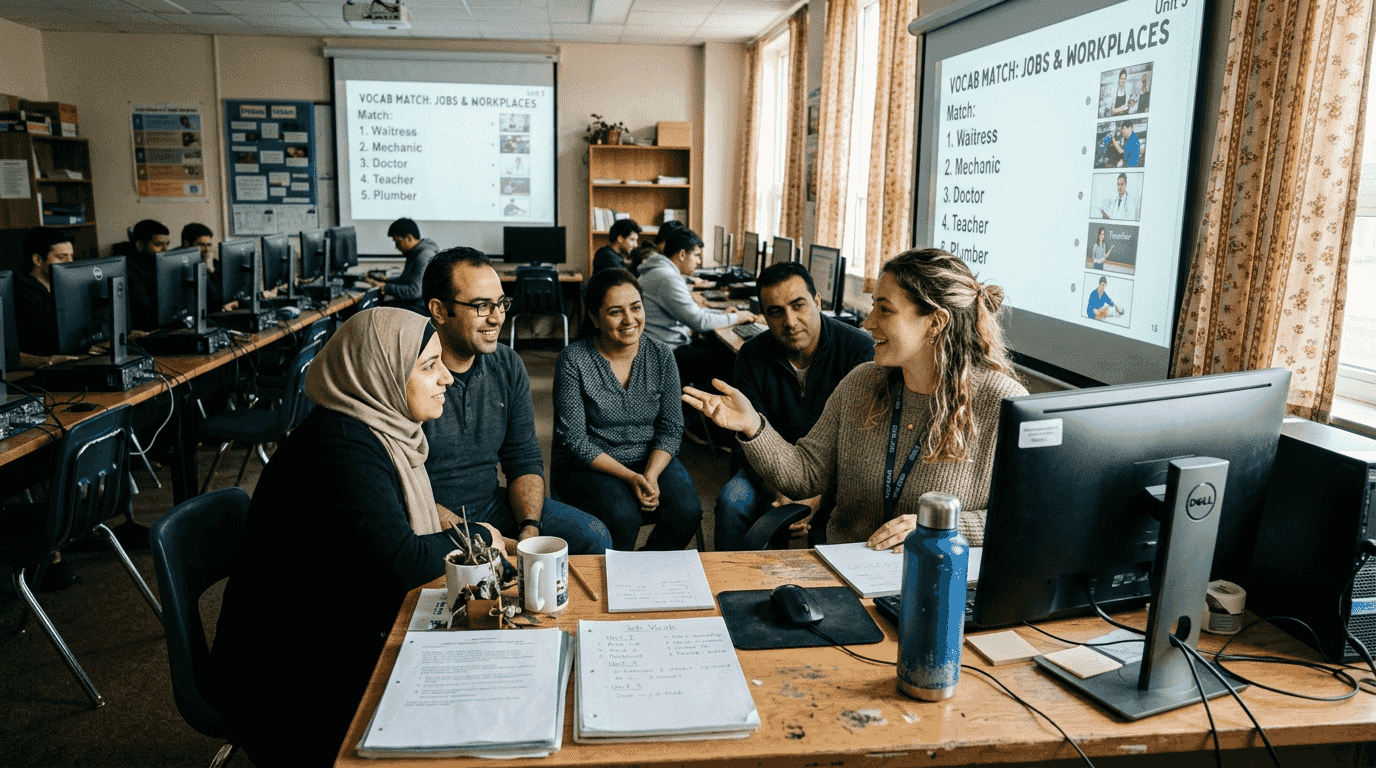
Interactive activities like games and role-plays foster communication and vocabulary retention. Incorporating technology and interactive activities results in a 20% increase in engagement and a 10% improvement in vocabulary retention. Games create low-pressure environments where students practice language naturally. Role-plays build confidence in using target structures for real-world communication.
Balanced use of authentic materials boosts motivation but requires careful consideration. Authentic videos, podcasts, and articles expose students to natural language use. Yet these materials can trigger anxiety if difficulty exceeds student proficiency. Pre-teach key vocabulary, provide viewing guides, and chunk longer materials into manageable segments.
Selecting appropriate tech tools requires matching features to learner proficiency and lesson goals. Beginners benefit from visual-heavy apps with clear feedback mechanisms. Advanced learners need tools supporting nuanced communication practice. Consider these factors when choosing technology:
- User interface simplicity and accessibility
- Alignment with specific language skills being taught
- Opportunities for meaningful student interaction
- Technical requirements and classroom infrastructure
- Time needed for setup versus instructional value gained
Integrating ed-tech without overwhelming lesson flow means starting small. Introduce one tool at a time, demonstrate its use clearly, and provide practice time. ESL gamification strategies show how game elements can transform routine practice into engaging challenges. Digital badges, leaderboards, and progress tracking motivate students when implemented thoughtfully.
Pro Tip: Create a tech toolkit of three to five reliable tools you know thoroughly rather than constantly experimenting with new platforms. Mastery of fewer tools produces better results than superficial use of many.
Interactive activities work best when they require genuine communication. Information gap tasks, where students must exchange information to complete activities, promote authentic language use. Jigsaw reading activities, where different students read different texts then share information, build both comprehension and speaking skills. An essential ESL games list provides ready-to-use activities requiring minimal preparation but delivering maximum engagement.
Balance digital and analog activities to maintain variety and accommodate different learning preferences. Some students thrive with technology while others prefer traditional methods. Mixing approaches ensures all learners find activities that resonate. A lesson might include a digital warm-up game, pair work with physical flashcards, and a collaborative online quiz for review.
Popular ESL lesson planning frameworks and adapting to student needs
ESL teachers use various frameworks to structure lessons effectively. Each framework makes distinct assumptions about how language learning occurs and offers specific advantages. Frameworks like PPP, ESA, TBL, and CLIL improve engagement with reported 20-30% participation increases. Understanding these models helps you select the right approach for specific teaching contexts.
| Framework | Core Approach | Best For | Key Consideration |
|---|---|---|---|
| PPP (Presentation, Practice, Production) | Teacher presents language, students practice controlled then free | Grammar and new structures | Can feel teacher-centered if production stage is weak |
| ESA (Engage, Study, Activate) | Flexible order of engagement, study, and activation phases | Mixed-level classes needing variety | Requires strong classroom management for non-linear flow |
| TBL (Task-Based Learning) | Students complete meaningful tasks using target language | Intermediate to advanced learners | Needs careful scaffolding for lower proficiency students |
| OHE (Observe, Hypothesize, Experiment) | Discovery learning through pattern recognition | Grammar-focused lessons | Time-intensive and requires student readiness for inductive learning |
| TTT (Test, Teach, Test) | Assess knowledge, teach gaps, reassess | Remedial or review lessons | Can demotivate if initial test is too challenging |
| CLIL (Content and Language Integrated Learning) | Teach subject content through target language | Academic English contexts | Requires teacher expertise in both language and content area |
Choosing frameworks based on student proficiency and lesson goals maximizes effectiveness. Beginners often need more structured approaches like PPP that provide clear models and controlled practice. Advanced students benefit from TBL’s communicative focus and authentic language use. Consider your students’ learning styles, cultural backgrounds, and previous language learning experiences when selecting frameworks.
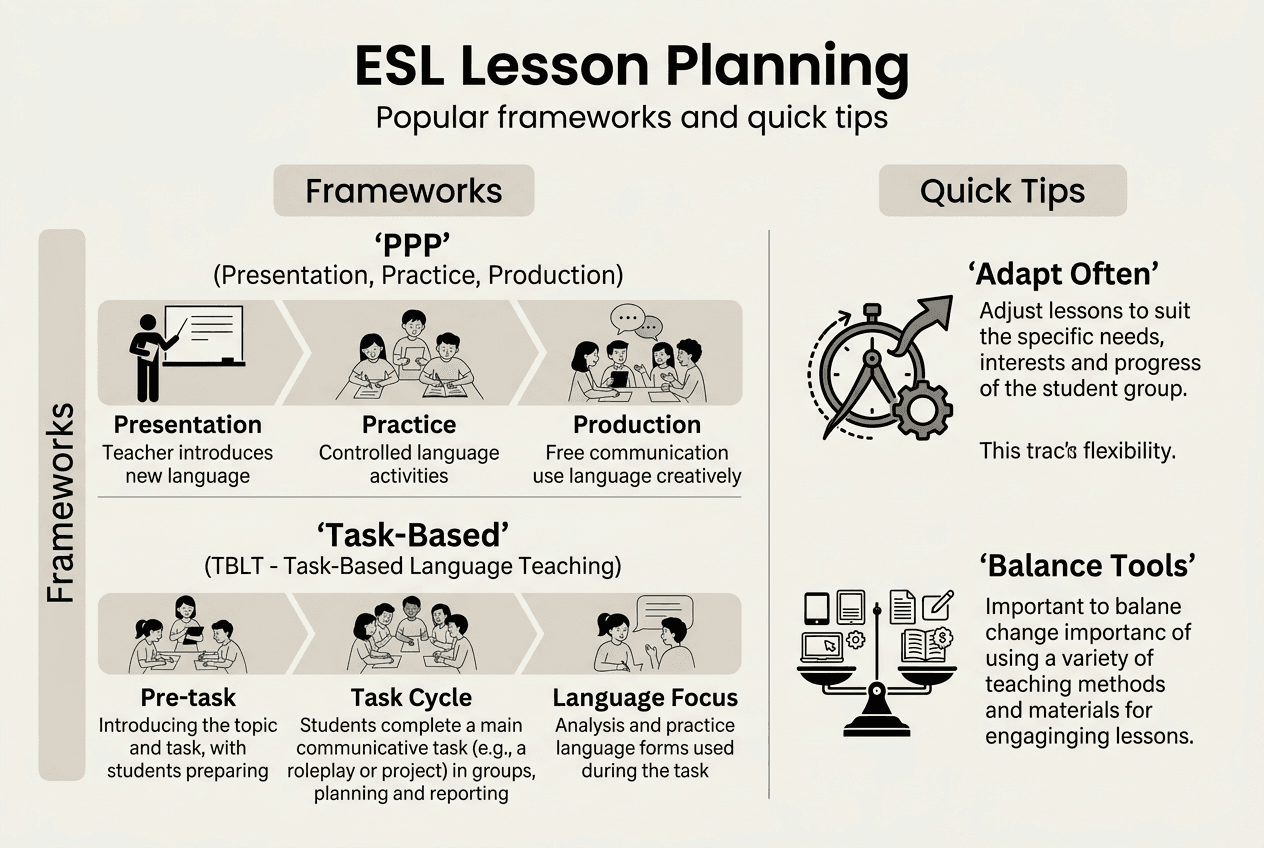
Flexibility prevents rigidity and accommodates classroom dynamics. Lesson plans should remain adaptable, balancing structure with spontaneity to effectively meet student needs. A framework provides the skeleton, but you add the flesh based on real-time observations. If students grasp a concept quickly, compress practice and move to production. If confusion emerges, add scaffolding activities not in your original plan.
Pro Tip: Avoid over-reliance on a single framework by experimenting with different models throughout a course. This variety keeps your teaching fresh and helps you discover which approaches work best for different lesson types and student groups.
Adapting frameworks to specific contexts requires understanding their underlying principles. PPP works well for discrete grammar points but poorly for communicative skills requiring integrated practice. ESA’s flexibility suits classes where student energy and focus fluctuate. TBL excels when students need to use language for real purposes but struggles if learners lack sufficient vocabulary for task completion.
Combining framework elements creates hybrid approaches matching unique classroom needs. You might use PPP’s presentation phase, then shift to TBL for practice, incorporating ESA’s engagement techniques throughout. This eclecticism reflects teaching reality, where pure adherence to one model rarely serves all students equally. Effective lesson planning tips emphasize this adaptive mindset as central to teaching success.
Practical strategies for ESL lesson planning to enhance engagement and learning
Use scaffolds and filters to tailor materials to learner levels and reduce anxiety. Careful selection of instructional materials as scaffolds and filters improves comprehension and reduces anxiety. Scaffolds support students in accessing content slightly above their current level. Filters simplify or modify materials to match proficiency. Pre-reading vocabulary lists, graphic organizers, and sentence frames all function as scaffolds.
Pre-teach vocabulary when designing task-based lessons for low-proficiency students. Task-based language teaching benefits low-proficiency learners but needs careful planning and vocabulary pre-teaching. Without essential vocabulary, students cannot complete tasks successfully, leading to frustration. Identify 5-8 key words crucial for task completion and teach them explicitly before the main activity.
Balance presentation, practice, and production stages to maximize meaningful communication. Many teachers over-emphasize presentation, leaving insufficient time for practice and production. Students need extensive practice opportunities to internalize new language. Production activities should require genuine communication, not just mechanical repetition of taught structures.
Common pitfalls to avoid:
- Overloading presentation with too much information at once
- Providing only controlled practice without communicative activities
- Neglecting to check understanding before moving to production
- Failing to plan transitions between lesson stages
- Creating activities that don’t align with stated learning objectives
A sequential checklist for effective lesson planning:
- Define clear, measurable learning objectives using action verbs
- Analyze student proficiency levels and prior knowledge
- Select or create materials appropriate for student levels
- Design opening activities that activate prior knowledge and build interest
- Plan presentation of new language with multiple examples and clear context
- Create varied practice activities progressing from controlled to free
- Design production tasks requiring authentic language use
- Build in formative assessment checkpoints throughout the lesson
- Plan closing activities that review key points and preview next lesson
- Prepare contingency activities for faster or slower pacing
Align assessment with objectives from the planning stage. If your objective focuses on speaking fluency, assess through speaking tasks, not written tests. This alignment ensures you teach and test the same skills, providing valid feedback on student progress. Build assessment naturally into activities rather than treating it as a separate lesson component.
ESL teaching materials play a crucial role in lesson success. Authentic materials expose students to real language use but require adaptation for lower levels. Created materials can target specific structures but may lack natural language features. Blend both types to provide variety and meet different learning needs.
Consider timing carefully when planning activity sequences. Energetic activities work well after lunch when students feel sluggish. Quieter, focused tasks suit early morning when concentration is high. Build variety into pacing, alternating between high-energy and calmer activities to maintain engagement without exhausting students.
Anticipate potential problems and plan solutions. What if technology fails? Have paper-based backup activities ready. What if students finish early? Prepare extension tasks that deepen rather than simply add more of the same. What if a concept proves more difficult than expected? Keep supplementary explanations and extra practice materials accessible.
Explore TEFL courses to master ESL lesson planning
The strategies and frameworks you’ve explored form the foundation of effective ESL teaching. TEFL Institute offers comprehensive courses that teach these lesson planning approaches in depth, helping you develop adaptable planning skills and up-to-date teaching strategies. Whether you’re starting your teaching journey or refining your practice, professional training provides the knowledge and confidence to create lessons that truly engage students.
Our programs cover everything from basic lesson structure to advanced techniques for diverse learners. TEFL courses in Newcastle and other locations provide hands-on experience with lesson planning frameworks, while course extension options let you specialize in areas like young learners or business English. These qualifications equip you with practical skills that translate directly to classroom success, preparing you to plan lessons that maximize student engagement and learning outcomes in any ESL context.
Frequently asked questions
What is the primary role of lesson planning in ESL teaching?
Lesson planning organizes teaching objectives, activities, and assessments aligned to learner needs. It increases student engagement, motivation, and language acquisition by providing clear direction. Plans offer a flexible roadmap that guides teachers while allowing adaptation to unexpected situations. They also ensure appropriate selection and preparation of instructional materials and tools.
How can ESL teachers balance structure and flexibility in their lesson plans?
Use lesson frameworks as adaptable guides, not rigid scripts. Plan core objectives and key activities but prepare to adjust based on classroom dynamics. Lesson planning should be viewed as a dynamic process balancing structure with adaptation to meet evolving student needs. Build natural flexibility points into your plan where you can extend, compress, or modify activities based on student responses.
What are effective ways to incorporate technology in ESL lesson plans?
Select interactive apps and games aligned with specific lesson objectives rather than adding technology randomly. Use multimedia resources for varied input and engaging practice opportunities. Technology integration increases student motivation by 18% and proficiency by 12%. Balance tech use to avoid cognitive overload, ensuring technology enhances rather than distracts from learning goals. ESL gamification strategies provide practical approaches for meaningful tech integration.
How do ESL lesson planning frameworks enhance student learning outcomes?
Frameworks provide clear lesson structure and learning objectives that guide both teaching and learning. They support varied teaching methods aligned with specific learner needs and proficiency levels. Frameworks like PPP, ESA, and TBL increase participation by up to 30% and improve test scores by up to 25%. Adaptable frameworks promote engagement and meaningful practice while giving teachers proven structures to organize instruction effectively.
Recommended
TEFL Institute guides

Thailand
Visas and teaching licences
Vietnam
Work permits and requirements
Cambodia
Pay, requirements and visas
Estonia
Jobs, pay and work routes
Germany
Freelance work and pay
