
 United Kingdom (UK)
 United States (US)
 Canada
 South Africa
 India
India Australia
 New Zealand
 China
China Russia
 Germany
 France
 Spain
Spain Netherlands
 Vietnam
 United Arab Emirates
 Italy
Italy Poland
 Thailand
 Türkiye








 Algeria


Advanced TEFL Programs: Everything You Need to Know
Over 60 percent of American English teachers consider pursuing advanced TEFL credentials to stand out in the global education market. The gap between entry-level training and these specialized qualifications can shape a teacher’s career trajectory and confidence in international classrooms. By exploring what truly sets advanced TEFL courses apart, you can discover how targeted credentials enhance expertise, earning power, and recognition in a highly competitive field.

Table of Contents
- Defining Advanced TEFL Programs And Credentials
- Specialized Topics And Who Benefits Most
- Key Features Of Advanced TEFL Programs
- Certification Requirements And Career Impact
- Comparing Advanced TEFL With Basic TEFL Training
Key Takeaways
| Point | Details |
|---|---|
| Advanced TEFL courses | Designed for experienced educators, these programs enhance teaching skills and pedagogical expertise for complex contexts. |
| Key specializations | Focus areas like Business English, Academic English, and Exam Preparation provide targeted skills for specific teaching environments. |
| Career impact | Advanced certifications lead to higher salary potential, career advancement, and increased professional credibility. |
| Differences from basic TEFL | Advanced programs offer deeper curricula, extensive practicum components, and specialized knowledge compared to foundational training. |
Defining Advanced TEFL Programs and Credentials
Advanced TEFL courses represent specialized training programs designed for experienced English language teachers seeking to enhance their pedagogical expertise and professional credentials. Unlike standard entry-level TEFL certifications, these advanced programs provide deeper theoretical understanding and practical skills for teaching English in complex international contexts.
According to Wikipedia, the Diploma in Teaching English to Speakers of Other Languages (DELTA) stands as a prominent example of an advanced qualification, recognized at Level 7 on the UK National Qualifications Framework. These advanced credentials typically focus on three critical dimensions: linguistic knowledge, teaching methodology, and professional development.
Advanced TEFL courses generally fall into several key categories:
- Specialized Diplomas: Comprehensive programs targeting experienced educators
- Level 5 and Level 7 Qualifications: Government-regulated certifications with rigorous academic standards
- Professional Development Certificates: Courses emphasizing advanced teaching techniques and specialized language instruction strategies
The primary goal of these advanced credentials is to transform competent language instructors into exceptional, research-informed teaching professionals capable of navigating complex international educational environments. For teachers seeking comprehensive insights into advanced TEFL options, our guide on advanced TEFL diplomas provides an in-depth exploration of available pathways and credentialing opportunities.
Specialized Topics and Who Benefits Most
Advanced TEFL courses offer an array of specialized topics that cater to diverse professional needs and teaching contexts. These targeted programs go beyond standard language instruction, focusing on niche areas that help educators develop advanced skills and unique professional expertise.
Teachers who benefit most from these specialized advanced TEFL courses typically include:
- Experienced Educators: Professionals with 3+ years of teaching experience seeking career advancement
- International School Teachers: Instructors working in complex multilingual educational environments
- Corporate Language Trainers: Professionals delivering specialized business English and professional communication training
- Online Language Instructors: Digital educators looking to differentiate their instructional capabilities
Key specialized topics in advanced TEFL programs often encompass:
- Business English Instruction: Techniques for teaching professional communication skills
- Academic English Preparation: Strategies for supporting students in academic writing and research contexts
- English for Specific Purposes (ESP): Targeted language training for medical, technical, and professional domains
- Exam Preparation Methodologies: Advanced techniques for IELTS, TOEFL, and other standardized language assessments
For teachers seeking to expand their professional toolkit, understanding advanced TEFL diploma options can provide critical insights into selecting the most appropriate specialized training pathway. These advanced credentials not only enhance teaching capabilities but also significantly improve career prospects in the competitive global language education marketplace.

Key Features of Advanced TEFL Programs
Advanced TEFL programs distinguish themselves through comprehensive curriculum designs that go far beyond traditional language teaching certifications. These sophisticated training programs integrate multiple layers of pedagogical expertise, practical skill development, and in-depth theoretical understanding to prepare educators for complex international teaching environments.
Key distinguishing features of advanced TEFL programs typically include:
- Extensive Practicum Components: Hands-on teaching experiences with structured mentorship
- Advanced Linguistic Analysis: Deep exploration of language structure, acquisition theories, and communication strategies
- Professional Portfolio Development: Comprehensive documentation of teaching methodologies and instructional achievements
- Specialized Curriculum Design: Advanced techniques for creating targeted language learning experiences
The most robust advanced TEFL programs incorporate multi-dimensional learning approaches that blend theoretical knowledge with practical application. These typically involve:
- Interactive online learning modules
- Live virtual workshops with experienced instructors
- Peer collaboration and feedback sessions
- Comprehensive assessment and performance evaluation strategies
Teachers considering advanced credentialing can explore our 300 Hour Regulated Level 5 Advanced TEFL Diploma to understand how comprehensive training can transform their professional teaching capabilities. These programs represent a significant investment in educational expertise, positioning instructors at the forefront of global language education.
Certification Requirements and Career Impact
Advanced TEFL certifications represent pivotal professional credentials that significantly transform educators’ career trajectories in international language education. These advanced qualifications demand rigorous prerequisites and offer substantial career advancement opportunities for dedicated language teaching professionals.
According to Wikipedia, credentials like the DELTA require candidates to have prior teaching experience and an initial teaching certification. These advanced credentials can lead to:
- Higher Salary Potential: Increased earning opportunities across global markets
- Career Advancement: Eligibility for senior teaching positions
- Professional Credibility: Enhanced recognition within academic and corporate language training environments
Certification requirements for advanced TEFL programs typically encompass:
- Minimum 2-3 years of teaching experience
- Existing foundational TEFL/TESOL certification
- Demonstrated English language proficiency
- Successful completion of comprehensive theoretical and practical assessments
As Wikipedia highlights, advanced qualifications like the LTCL DipTESOL are accredited at Level 7 on the UK National Qualifications Framework, representing a significant professional milestone for educators seeking to deepen their teaching expertise. For professionals ready to elevate their teaching credentials, our 180 Hour Level 5 TEFL Diploma provides a strategic pathway to advanced professional development.
Comparing Advanced TEFL With Basic TEFL Training
The landscape of TEFL certification encompasses a significant spectrum of training programs, ranging from foundational entry-level credentials to sophisticated advanced qualifications. While basic TEFL training provides essential groundwork, advanced programs represent a transformative educational investment for serious language educators.
According to Wikipedia, basic TEFL training equips educators with general teaching methodologies, whereas advanced TEFL courses delve into specialized areas, preparing teachers for specific contexts and potentially leading to higher-level positions in the field.
Key differences between basic and advanced TEFL training include:
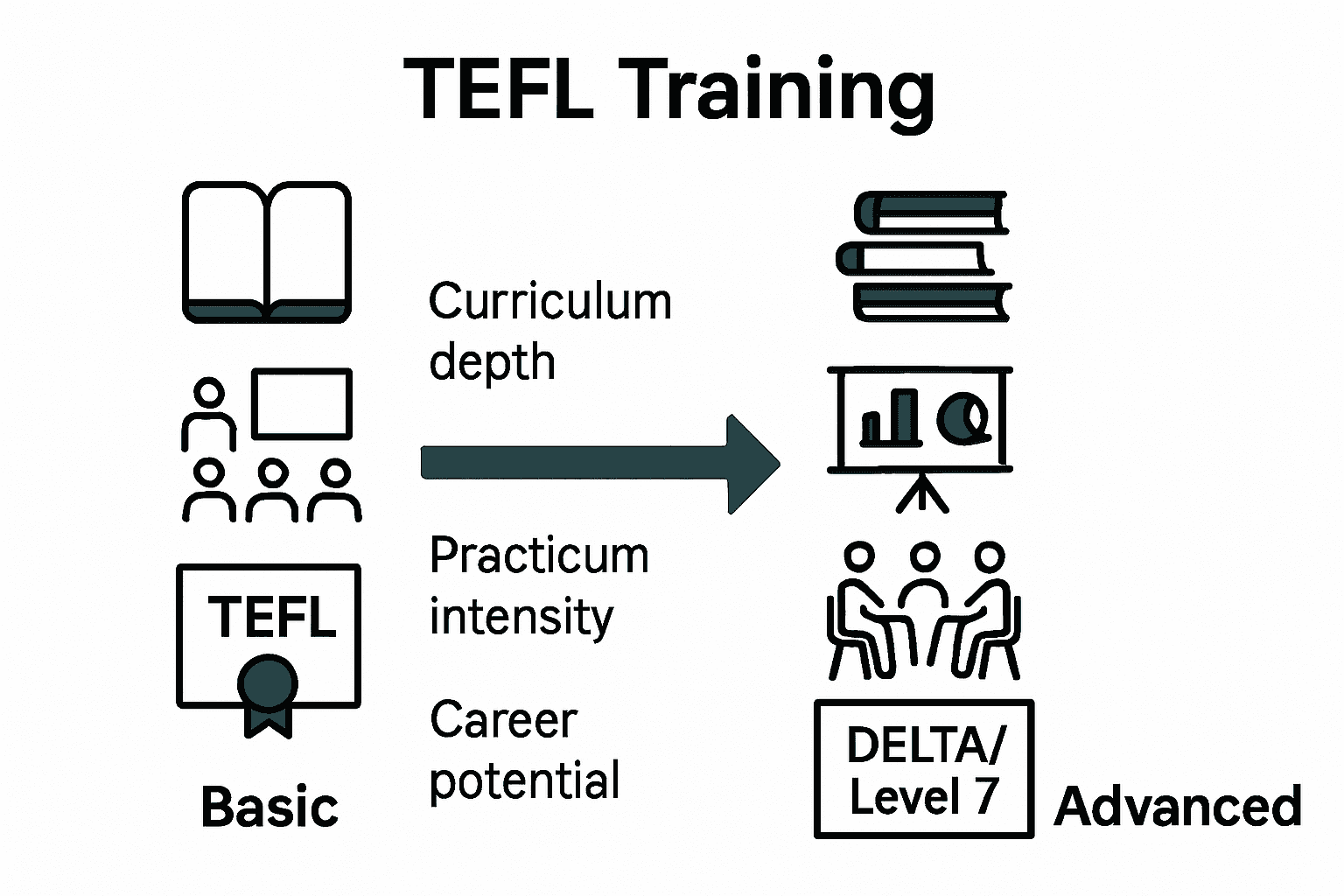
- Depth of Curriculum: Basic courses offer fundamental skills; advanced programs provide comprehensive, nuanced instructional strategies
- Practicum Intensity: Entry-level programs include minimal practical experience, while advanced courses feature extensive hands-on teaching components
- Specialization Focus: Basic training provides generalist approaches; advanced courses offer targeted expertise in specific teaching domains
- Career Advancement Potential: Basic certifications open initial teaching opportunities; advanced credentials unlock senior and specialized positions
For educators seeking to understand the distinctions between different TEFL certification levels, our CELTA Certification vs Level 5 TEFL Course guide offers an in-depth exploration of these critical professional development pathways.
Take Your English Teaching Career to the Next Level Today
Many experienced educators feel stuck with basic TEFL credentials that limit their career growth and earning potential. This article highlights the challenges of navigating advanced TEFL courses and certifications such as Level 5 and DELTA, which demand deeper knowledge, specialized skills, and practical teaching experience. If you want to overcome the frustration of plateauing and become a confident, research-informed professional ready for international or corporate teaching roles, advanced TEFL training is essential.
Boost your teaching expertise and open doors to senior positions by exploring TEFL Institute’s comprehensive programs like the 300 Hour Regulated Level 5 Advanced TEFL Diploma and the 180 Hour Level 5 TEFL Diploma. Visit TEFL Institute now to choose the right course that matches your goals and start transforming your career immediately.
Frequently Asked Questions
What are advanced TEFL programs?
Advanced TEFL courses are specialized training programs aimed at experienced English language teachers who want to enhance their teaching skills and credentials. They offer deeper theoretical and practical knowledge for complex teaching environments.
What qualifications are required for advanced TEFL programs?
Typically, advanced TEFL programs require candidates to have a foundational TEFL/TESOL certification, a minimum of 2-3 years of teaching experience, and demonstrate English language proficiency.
How do advanced TEFL programs differ from basic TEFL training?
Advanced TEFL courses offer comprehensive, nuanced instructional strategies and extensive hands-on teaching components, while basic TEFL training covers fundamental skills and provides minimal practical experience.
What career benefits can I expect from obtaining an advanced TEFL certification?
Obtaining an advanced TEFL certification can lead to higher salary potential, eligibility for senior teaching positions, and enhanced professional credibility within academic and corporate language training environments.
Recommended
- 5 Things About TEFL Courses | TEFL Institute
- Top TEFL Facts You Need to Know | TEFL Institute
- A TEFL School Elective – Interview with our Schools
- What is TEFL – Get TEFL Certified – TEFL Institute
TEFL Institute guides

Cambodia
Pay, requirements and visas
Germany
Freelance work and pay
Japan
JET, ALT and eikaiwa pay
Vietnam
Work permits and requirements
Estonia
Jobs, pay and work routes