United Kingdom (UK)
 United States (US)
 Canada
 South Africa
 India
 Australia
 New Zealand
 China
 Russia
 Germany
 France
 Spain
 Netherlands
 Vietnam
 United Arab Emirates
 Italy
 Poland
 Thailand
 Türkiye






 Algeria


TEFL Institute research · Middle East edition · 2027
Teaching English in the Middle East: The State of TEFL 2027
Teaching English in the Middle East in 2027: how well the region speaks English on the index published this week, what the market says teachers are paid, what the law guarantees where there is no wage floor, and which jobs a TEFL certificate opens. Eight countries. Every figure dated and sourced. Where nothing is published, the report says so.
Download the full report (PDF, 28 pages)
Free. No email required.
- Official A rule or figure set by a government or regulator, and dated. Marked secondary where it was read on someone else’s page.
- Estimate Compiled from job listings in March 2026. Not re-verified.
- Survey or derived A test-taker index, or arithmetic on a published figure.
What is the State of TEFL 2027 Middle East report?
The State of TEFL 2027: Middle East is a free 28-page report from The TEFL Institute on teaching English in the UAE, Saudi Arabia, Qatar, Kuwait, Oman, Bahrain, Jordan and Egypt. It covers English proficiency, pay estimates, minimum wage and end-of-service rules, licences and visas. Every figure is dated and sourced, and gaps are stated.
It is the Middle East edition of The State of TEFL 2027. It is a pay, jobs and visas data report. For where to live and work, see the Institute’s guide to the best cities to teach English in the Middle East; for which certificate employers accept, see the best TEFL certification for the Middle East.
Other regional editions: Teaching English in Africa · Teaching English in Latin America · Teaching English Online Salary · Teaching English in Europe · Teaching English in Asia · The State of TEFL 2027, global report
Research and commercial interests. The State of TEFL is published by The TEFL Institute, an organisation that provides TEFL training and qualifications. The research is produced using publicly available third-party data and official sources. Where the report references qualifications offered by the Institute, this commercial relationship is disclosed. The report does not rank or endorse the Institute’s products. The TEFL Institute is the trading name of The TEFL Institute Limited, registered in Ireland, company number 613324. Registered and principal business address: 4 Shandon Street, Dungarvan, Co. Waterford, X34 A365. Offices: 13 Adelaide Road, Dublin, D02 P950, and 6 Mornington Place, London NW1 7RP.
Ten findings from the report, in citable form
Each sentence stands alone with its source and date, so it can be quoted without the surrounding text. Finding 5 is a finding of absence: quote it with “was found”.
- The Middle East recorded the steepest regional decline in English proficiency in the EF English Proficiency Index 2026, and writing is a distinctive weakness across Arabic-speaking countries (EF, 18 November 2026).
- All seven Middle Eastern countries read for this report score below the 2026 global average of 485: the UAE 482, Egypt 452, Kuwait 447, Qatar 435, Jordan 422, Oman 418 and Saudi Arabia 406 (EF country fact sheets, 2026).
- Qatar’s EF score fell 34 points in a year, from 469 to 435, the largest fall of the seven; Oman’s rose 11 points and Saudi Arabia’s 2 (derived from EF fact sheets, 2025 and 2026).
- Writing is the lowest of the four skills in all seven countries; in Qatar it scores 349 against 491 for speaking, a gap of 142 points (EF country fact sheets, 2026; gap derived).
- No government pay scale for foreign English teachers was found in the UAE, Saudi Arabia, Qatar, Kuwait, Oman, Bahrain, Jordan or Egypt, against six programmes that publish one in Asia and Europe (The State of TEFL 2027, sources read 19 November 2026).
- Market estimates put English-teacher pay at US$3,500 to US$5,500 a month in the UAE, US$2,200 to US$5,000 in Saudi Arabia and US$2,600 to US$4,000 in Kuwait, tax-free and usually with housing (job-listing compilation, March 2026; not re-verified).
- Qatar is the only Gulf state with a minimum wage that covers all workers of all nationalities: 1,000 riyals a month basic, or 1,800 riyals where the employer provides neither housing nor food (Law No. 17 of 2020, in force 20 March 2021; read on secondary pages).
- The UAE has no statutory minimum wage for expatriate workers; a floor of 6,000 dirhams a month applies to Emirati nationals in the private sector from 1 January 2026 (read on secondary pages, 19 November 2026).
- End-of-service pay for foreign employees is set by law in all six Gulf states; in the UAE it is 21 days’ basic wage for each of the first five years and 30 days for each year after (secondary guide citing official sources, read 19 November 2026).
- A private school in Dubai, not the teacher, applies to the regulator to register a member of teaching staff, and class-teacher posts ask for an education degree or a degree with a postgraduate teaching qualification (KHDA service page; press summaries of KHDA rules).
How good is English in the Middle East?
Below the world average in every country read. On the EF English Proficiency Index 2026, published 18 November 2026, the UAE scores highest at 482, three points under the global average of 485, and Saudi Arabia lowest at 406. EF names the Middle East as the region with the steepest decline this year.
EF English Proficiency Index 2026, read 19 November 2026:
| Country | 2025 score | 2026 score Survey | 2026 rank of 117 | Change Derived |
|---|---|---|---|---|
| UAE | 487 | 482 | 67 | −5 |
| Egypt | 458 | 452 | 83 | −6 |
| Kuwait | 455 | 447 | 89 | −8 |
| Qatar | 469 | 435 | 95 | −34 |
| Jordan | 425 | 422 | 100 | −3 |
| Oman | 407 | 418 | 103 | +11 |
| Saudi Arabia | 404 | 406 | 107 | +2 |
Source: EF Education First, EF English Proficiency Index 2026, launch release and country fact sheets. The index ranks people who took EF’s own test in 2025: 2.3 million adults in 117 countries and regions. No 2026 fact sheet was found for Bahrain. The 2025 edition ranked 123 countries, so compare scores, not ranks.
A 34-point fall needs care. EF’s index depends on who took the test. A swing as large as Qatar’s in a small country may reflect a different group of test takers; EF’s sample sizes by country were not read.
Which English skill is weakest in the Middle East?
Writing, in all seven countries read. Reading is the strongest skill in six of them. Qatar is the exception: speaking is its strongest at 491, and its writing score of 349 is 142 points lower. Saudi Arabia’s writing score of 339 is the lowest figure in the report. EF calls writing a distinctive weakness across Arabic-speaking countries.
EF EPI 2026 skill scores, read 19 November 2026:
| Country | Reading | Listening | Writing | Speaking | Reading minus writing Derived |
|---|---|---|---|---|---|
| UAE | 501 | 474 | 453 | 469 | 48 |
| Egypt | 470 | 438 | 405 | 450 | 65 |
| Kuwait | 459 | 452 | 395 | 446 | 64 |
| Qatar | 460 | 410 | 349 | 491 | 111 |
| Jordan | 439 | 422 | 365 | 419 | 74 |
| Oman | 434 | 408 | 382 | 425 | 52 |
| Saudi Arabia | 423 | 410 | 339 | 409 | 84 |
Source: EF country fact sheets, 2026 edition. Bold marks the lowest skill in each row.
Does any Middle East government publish what it pays English teachers?
None was found. Across the UAE, Saudi Arabia, Qatar, Kuwait, Oman, Bahrain, Jordan and Egypt, this report found no government programme or ministry page publishing a pay scale for foreign English teachers. Asia has four programmes that do and Europe two. Every Gulf pay figure in circulation is therefore a market estimate, not an official rate.
The four Asian programmes are set out in Teaching English in Asia and the two European ones in Teaching English in Europe.
A finding of absence. Ministry of education sites were not searched page by page, and regulators in Abu Dhabi, Qatar and Kuwait were not read at source. If an official scale exists that this edition missed, the Institute will add it and record the correction.
How much do English teachers earn in the Middle East?
On market estimates from job listings compiled in March 2026: US$3,500 to US$5,500 a month in the UAE, US$2,200 to US$5,000 in Saudi Arabia and US$2,600 to US$4,000 in Kuwait, tax-free and usually with housing. No estimate was compiled for Qatar, Oman, Bahrain, Jordan or Egypt, and none of these figures is official.
Market estimates, compiled March 2026 for the global edition and not re-verified:
| Country | Monthly pay, US dollars Estimate | Cost of living, US dollars Estimate | Housing Estimate | Lowest pay minus highest cost Derived |
|---|---|---|---|---|
| UAE | 3,500 to 5,500 | 1,200 to 1,900 | Often included | 1,600 |
| Saudi Arabia | 2,200 to 5,000 | 800 to 1,400 | Usually included | 800 |
| Kuwait | 2,600 to 4,000 | 700 to 1,200 | Usually included | 1,400 |
| Qatar, Oman, Bahrain, Jordan, Egypt | No estimate | No estimate | — | — |
Source: The State of TEFL 2027, global edition, from GoOverseas, International TEFL Academy and ESLstarter listings. Listings show asking pay, not what teachers are paid. The last column is arithmetic on estimates, not a savings figure.
The top of each range is school pay for licensed teachers, a job a TEFL certificate alone does not open (see who can hire you). Country guides: teach English in Dubai, teaching jobs in Dubai and teaching English in Saudi Arabia.
Is there a minimum wage for teachers in the UAE, Saudi Arabia or Qatar?
Only in Qatar. Its law sets 1,000 riyals a month basic pay for all workers of all nationalities, or 1,800 riyals where the employer provides neither housing nor food. The UAE, Saudi Arabia and Bahrain set wage floors for their own nationals only. For a foreign teacher in those countries, the contract is the only floor.
Minimum wage rules, read on secondary pages 19 November 2026:
| Country | Rule as read | Covers a foreign teacher? |
|---|---|---|
| Qatar Official | 1,000 riyals a month basic, plus 500 housing and 300 food if not provided: 1,800 in all, about US$495. Law No. 17 of 2020 | Yes |
| UAE Official | No general minimum. 6,000 dirhams a month for Emirati nationals in the private sector from 1 January 2026 | No |
| Saudi Arabia Official | No universal minimum. 4,000 riyals is the level at which a Saudi national counts in full towards an employer’s quota | No |
| Kuwait Secondary | 75 dinars a month | Unresolved: three sources give three answers |
| Oman Secondary | A rate mainly for Omani nationals; figure not read | Not on the sources read |
| Bahrain Secondary | No general private-sector minimum | No |
| Jordan Secondary | 290 dinars a month, about US$409 | Not confirmed for non-Jordanians |
| Egypt | Not read | — |
Read on employer-guide and legal-guide pages (Employsome, Commoner Law, Playroll, wage.is, Activpayroll). No labour ministry page was read directly. Qatar’s dollar figure is derived at the riyal’s fixed rate of 3.64 to the dollar.
The usual check does not work here. Elsewhere in this series the advice is to compare an offer with the legal minimum wage. In five Gulf states there is none to compare with, so the figures written into the contract are the ones that count.
What is end-of-service pay in the Gulf, and how is it calculated?
A gratuity set by law for a departing foreign employee in each of the six Gulf states. The UAE pays 21 days’ basic wage for each of the first five years and 30 days after. Saudi Arabia and Kuwait pay half a month a year, then a month, on a wage that counts allowances. Qatar pays at least three weeks.
End-of-service rules, read on one secondary guide 19 November 2026:
| Country | Rule as read Official | Calculated on |
|---|---|---|
| UAE | 21 days a year for five years; 30 days a year after | Basic wage |
| Saudi Arabia | Half a month a year for five years; one month a year after | Wage including allowances |
| Kuwait | 15 days a year for five years; one month a year after | Wage including allowances |
| Qatar | At least three weeks a year | Basic wage |
| Oman | At least one basic wage a year; a 9% savings system replaces it by 19 July 2027 | Basic wage |
| Bahrain | Employer contributions since 1 March 2024: 4.2% of wage for three years, 8.4% after | Wage |
Source: Teamed, Gulf employment law guide, which cites official sources. The laws themselves were not read; qualifying periods, caps and rules on resignation differ by country and were not read.
Ask for the basic wage as a figure. In the UAE and Qatar the gratuity is calculated on basic wage alone. Two offers with the same monthly total and different basic wages pay different amounts at the end. The PDF works through an example.
Is teaching English in the Gulf really tax-free?
For the country where the work is done, on the sources read, yes, with gaps. Qatar charges no income tax and no social insurance on a foreign worker’s pay. The global edition describes pay in the UAE, Saudi Arabia and Kuwait as tax-free on March 2026 estimates. Oman, Bahrain, Jordan and Egypt were not read.
| Country | Income tax on a foreign teacher’s pay | Basis |
|---|---|---|
| Qatar | None; no social insurance deducted either | Secondary |
| UAE, Saudi Arabia, Kuwait | Described as tax-free | Estimate |
| Oman, Bahrain, Jordan, Egypt | Not read | — |
Home-country tax is separate. Some countries tax citizens or residents on income earned abroad; United States citizens remain within the US tax system wherever they live. No figure is given here. Ask the employer for a sample payslip.
Can you teach in a school in Dubai with a TEFL certificate?
Not as a class teacher. A private school in Dubai registers its teaching staff with the regulator, and class-teacher posts ask for an education degree or a degree plus a postgraduate teaching qualification. A degree with a TEFL certificate fits language institutes, training centres and corporate programmes. Licence rules outside the UAE were not read for this edition.
| Employer | What it asks for | TEFL certificate plus degree enough? |
|---|---|---|
| Private school, class teacher (Dubai) Secondary | Bachelor of Education, or a degree plus a postgraduate certificate or diploma in education | No |
| Private school, subject teacher (Dubai) Secondary | A degree in the subject taught | Ask the school |
| School in Abu Dhabi Secondary | A recognised teaching qualification under the regulator’s licensing system | No |
| Language institute or training centre Estimate | A degree and a TEFL certificate of 120 hours or more | Yes, on provider guidance |
The UAE steps, in order. The school makes the offer. The teacher has the degree and certificates authenticated in the country that issued them, then by the UAE embassy there, then by the UAE Ministry of Foreign Affairs; a Ministry of Education equivalency certificate may follow. The school then applies to register the teacher and sponsors the work visa.
Sources: Knowledge and Human Development Authority, Requesting Faculty Registration (official, seen 19 November 2026); Gulf News and Khaleej Times summaries of KHDA rules; recruiter guidance on Abu Dhabi and on attestation (secondary).
A conflict left open. One source says Dubai’s regulator requires no separate teacher licence; others say a licence under the national system is mandatory. The national rules were not read at source. Ask the school which licence it will apply for and who pays.
More on requirements: how to get qualified to teach English in Dubai.
Teaching English in the Middle East, country by country
Eight countries on five measures. A blank means nothing was found for this edition; the PDF gives each country a profile with what to check before accepting an offer.
| Country | EF 2026 Survey | Pay estimate, US$ a month Estimate | Wage floor for a foreign teacher | End-of-service pay | Visa Estimate |
|---|---|---|---|---|---|
| United Arab Emirates | 482 (rank 67) | 3,500 to 5,500 | None | 21 days’ basic wage a year, then 30 | Degree; TEFL; sponsor; 2 to 4 weeks |
| Saudi Arabia | 406 (rank 107) | 2,200 to 5,000 | None | Half a month a year, then a month | Degree; TEFL; experience; 4 to 8 weeks |
| Qatar | 435 (rank 95) | — | 1,000 riyals basic; 1,800 with allowances | At least three weeks’ basic wage a year | — |
| Kuwait | 447 (rank 89) | 2,600 to 4,000 | 75 dinars; scope disputed | 15 days a year, then a month | — |
| Oman | 418 (rank 103) | — | None on the sources read | One basic wage a year; changing by July 2027 | — |
| Bahrain | Not found | — | None | Funded by employer contributions | — |
| Jordan | 422 (rank 100) | — | 290 dinars; coverage not confirmed | — | — |
| Egypt | 452 (rank 83) | — | — | — | — |
Country pages from The TEFL Institute: Dubai, Qatar and Saudi Arabia. Turkey is covered in the Europe tables of the global report. Egypt appears again in the Africa edition.
Do you need a degree to teach English in the Middle East?
On the estimates read, yes. The UAE’s employment visa and Saudi Arabia’s work visa both list a bachelor’s degree, a TEFL certificate and an employer to sponsor the application; Saudi Arabia’s also lists experience. Processing is put at two to four weeks for the UAE and four to eight for Saudi Arabia.
| Country | Route Estimate | Requirements Estimate | Processing Estimate |
|---|---|---|---|
| UAE | Employment visa | Bachelor’s; TEFL; employer sponsor | 2 to 4 weeks |
| Saudi Arabia | Work visa (iqama) | Bachelor’s; TEFL; experience | 4 to 8 weeks |
| Qatar, Kuwait, Oman, Bahrain, Jordan, Egypt | Not read | Not read | Not read |
Source: The State of TEFL 2027, global edition; embassy and provider guidance compiled March 2026, not re-verified. Processing times cover the visa step only: document attestation, the medical and the background check come first.
Which TEFL qualification can a Middle East employer verify?
A regulated one. A qualification on the Ofqual Register of Regulated Qualifications carries a number any employer can search, with its level, guided learning hours and awarding organisation. In the Gulf, certificates are also attested before a visa is issued. A TEFL qualification is not a teaching licence, which school posts ask for separately.
Regulated qualification references, confirmed against the Ofqual register 1 September 2026:
| Qualification | Number Official | Level | Guided learning | Awarding organisation |
|---|---|---|---|---|
| Level 5 Diploma in TEFL | 610/1571/4 | RQF Level 5 | 180 hours | Highfield Qualifications |
| Level 5 Advanced Diploma in TEFL | 610/1573/8 | RQF Level 5 | 300 hours | Highfield Qualifications |
A framework level describes a qualification in the UK system. It is not a statement that any employer, ministry or immigration office in the Middle East recognises it.
What this report could not find
More than in any other edition of The State of TEFL 2027. The gaps are listed so that a thin table is not mistaken for a complete one.
- Official pay for foreign English teachers, in all eight countries.
- A pay estimate or cost of living for Qatar, Oman, Bahrain, Jordan and Egypt.
- Labour ministry pages: the wage and end-of-service rules were read on secondary pages.
- Who Kuwait’s and Jordan’s minimum wage covers, and any minimum wage for Egypt.
- Licence rules outside the UAE, and visa rules outside the UAE and Saudi Arabia.
- Hiring seasons, teacher headcounts and a regional market size.
- An EF score for Bahrain.
Recruiter and course-provider salary tables were seen for several of these countries and are not used, because none gave a method.
Guides to teaching English in the Middle East
- Where to go: best cities to teach English in the Middle East
- Dubai and the UAE: teach English in Dubai, teaching jobs in Dubai and qualifications and visa rules for Dubai
- Saudi Arabia and Qatar: teaching English in Saudi Arabia and teach English in Qatar
- Certification: best TEFL certification for the Middle East
- Other editions: Teaching English in Africa, Teaching English in Latin America, Teaching English Online Salary, Teaching English in Europe, Teaching English in Asia and The State of TEFL 2027 global report
Questions about teaching English in the Middle East
Which Middle East country pays English teachers the most?
On March 2026 market estimates, the UAE: US$3,500 to US$5,500 a month, tax-free, with housing often included. Saudi Arabia’s range runs from US$2,200 to US$5,000 and Kuwait’s from US$2,600 to US$4,000. No government publishes an official figure, and no estimate was compiled for Qatar, Oman or Bahrain.
Is there a minimum wage for foreign workers in the UAE?
No. The UAE has no statutory minimum wage for expatriate workers. A floor of 6,000 dirhams a month applies to Emirati nationals in the private sector from 1 January 2026. Qatar is the only Gulf state whose minimum wage covers all nationalities, at 1,000 riyals basic, on the secondary sources read.
Can I teach English in Saudi Arabia or the UAE without a degree?
Not on the estimates read. Both the UAE’s employment visa and Saudi Arabia’s work visa list a bachelor’s degree, and the employer must sponsor the application. This report found nothing to suggest a route without a degree in the six countries whose visa rules it did not read.
What is end-of-service gratuity for teachers in the UAE?
On the guide read, 21 days’ basic wage for each of the first five years of service and 30 days for each year after. It is calculated on basic wage, not total pay, so the split between basic wage and allowances in the contract decides its size. Qualifying periods were not read.
Which Middle East country has the best English?
Of the seven read on the EF English Proficiency Index 2026, the UAE, with a score of 482 and a rank of 67 out of 117. Egypt is second at 452 and Saudi Arabia lowest at 406. All seven are below the global average of 485, and the index measures test takers only.
Methodology and sources
Compiled on 19 November 2026 by Ian O’Sullivan, founder of The TEFL Institute, with the Institute’s Research Team. Every figure is marked official, estimate, or survey or derived. This edition leans on secondary pages more than the others: the labour rules were read on employer and legal guides, not at the ministries, and each is marked. EF’s fact sheets were read as search extracts. Pay, cost-of-living and visa figures are carried forward from the global edition’s March 2026 estimates. Pay is kept in US dollars; only Qatar’s fixed exchange rate is used. No figure comes from the Institute’s own customer data. The Institute sells TEFL courses; no course is recommended here.
All sources for this report and the other editions, with publication and check dates, are in the State of TEFL 2027 source register.
- EF Education First, EF English Proficiency Index 2026, launch release of 18 November 2026 and country fact sheets for 2025 and 2026 (read 19 November 2026)
- Knowledge and Human Development Authority, Dubai, Requesting Faculty Registration (seen 19 November 2026)
- Employsome, Commoner Law, Playroll, wage.is, Activpayroll and Niural: minimum wage guides for Qatar, the UAE, Saudi Arabia and Jordan (secondary; read 19 November 2026)
- Teamed, Gulf employment law: the 2026 employer guide (secondary; end-of-service pay; read 19 November 2026)
- Gulf News and Khaleej Times, summaries of KHDA requirements for private school teachers; Teacher Horizons and Suraasa, guides to teaching in the UAE (secondary)
- Market.us, English Language Training Market, 26 August 2025 (global edition)
- GoOverseas, International TEFL Academy, ESLstarter and Teach Away: pay, cost-of-living, visa and requirement estimates (compiled March 2026, not re-verified)
- Ofqual, Register of Regulated Qualifications, confirmed by hand 1 September 2026
- The TEFL Institute, The State of TEFL 2027, global edition, 12 November 2026
How to cite this report. The TEFL Institute, The State of TEFL 2027: Middle East, published November 2026. EF index and labour rules read 19 November 2026; qualification references confirmed 1 September 2026; market estimates compiled March 2026 and labelled as estimates.

About the author. Ian O’Sullivan is the founder of The TEFL Institute Group. He has worked in TEFL since 2002, when he became Ireland country director for an international TEFL company, and founded the group in 2017.
Reviewed by
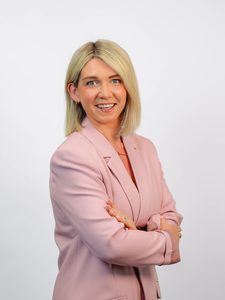
Katie Troy, Managing Director of The TEFL Institute Group. A qualified teacher with a degree in education and years of experience teaching abroad, with the team since 2018.
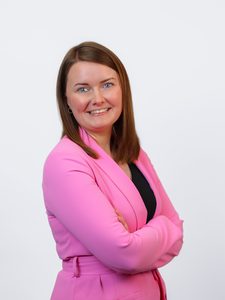
Jessica Jeffery, Recruitment and Partnerships Specialist at The TEFL Institute Group. Holds a business degree plus TEFL and CELTA, and has taught in Thailand and Italy.
About The TEFL Institute. The TEFL Institute is a TEFL course provider. Its Level 5 Diploma in TEFL and Level 5 Advanced Diploma in TEFL are regulated qualifications awarded by Highfield Qualifications and listed on the Ofqual Register of Regulated Qualifications. Commercial-interest disclosure: the Institute sells TEFL courses, including the qualifications referenced above; no course is recommended in this report.